Tag Archives: 2004

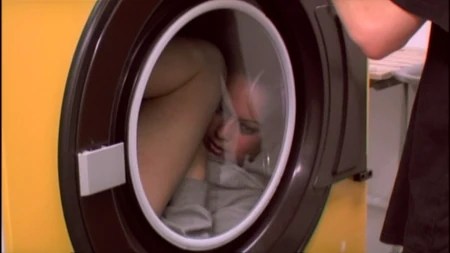
THEY CAME FROM THE READER-SUGGESTED QUEUE: CALAMARI UNION (1985) / THE CALAMARI WRESTLER (2004)

366 Weird Movies may earn commissions from purchases made through product links.

The odds that, out of the near-500 films still in our reader queue, two of them would utilize the very same chewy appetizer in their titles seem awfully remote. Yet here we are, cinematically celebrating this savory treat from Helsinki to Tokyo. So let’s see just what calamari means to these filmmakers, and whether they’d have been better off invoking jalapeño poppers.

CALAMARI UNION (1985)

DIRECTED BY: Aki Kaurismäki

FEATURING: Timo Eränkö, Kari Heiskanen, Asmo Hurula, Sakke Järvenpää, Markku Toikka

PLOT: A collection of petty criminals band together to escape the Kallio district for the greener pastures of Eira; their journey to a new neighborhood, however, will be perilous and filled with obstacles.

COMMENTS: The classic World War II caper The Great Escape is about the daring breakout of more than 80 prisoners from a Nazi prison camp. The plan requires extraordinary levels of cleverness, craftiness, and chutzpah. Even then, the odds are against them, and (spoiler alert for 80-year-old history) only three men eventually get away.

Calamari Union is The Great Escape for idiots. A collection of 14 low-level criminals all named Frank (plus an additional traveler who speaks exclusively in English that he seems to have picked up from watching movies) join forces to escape certain doom in a bad Helsinki neighborhood. Are the cops closing in? Is some crime boss about to bring the hammer down on them? No, they just don’t fit in. Too many hills, with kids and dogs running around willy-nilly. No good can come of all that. They all agree: “A sick branch must seek a healthier tree.” They must escape to the paradise of Eira.

Trouble is, they’re all comically bad at looking out for their own best interests. Upon hijacking a subway to take them to the city center, the train driver shoots one of the Franks, an event met with only casual interest from the rest of the troupe. They all independently gravitate to the same café, despite having been warned that it’s every man for himself. They chase girls, make mildly extravagant purchases, pick fights, anything to delay actually reaching their destination. Getting to the promised land would seem to be the most urgent goal, but no one is in any particular hurry to get anywhere. Even when blessed with useful skills, such as convincing a driver to hand over their vehicle with no debate, they don’t put their talents to any particular use. That, of course, is Calamari Union’s particular breed of surrealism: no one does anything logical. It’s amusing, but as aimless as the petty crooks themselves.

Many of the actors are Finnish rock musicians, which might explain the moment when the Franks all show up for a musical interlude in Continue reading THEY CAME FROM THE READER-SUGGESTED QUEUE: CALAMARI UNION (1985) / THE CALAMARI WRESTLER (2004) →

APOCRYPHA CANDIDATE: THE BIRTHDAY (2004)

366 Weird Movies may earn commissions from purchases made through product links.

The Birthday is currently available for VOD rental or purchase.

Recommended

DIRECTED BY: Eugenio Mira

FEATURING: , Erica Prior, Jack Taylor, Dale Douma

PLOT: Norman Forrester navigates his girlfriend’s father’s birthday party as he waits for the right moment to tell her how he feels.

Still from "The Birthday" (2004)

WHY IT MIGHT JOIN THE APOCRYPHA: Whatever Corey Feldman is doing to portray Norman is up there alongside ‘s turn as a romantic lead in The Room (albeit hovering on the reality-side of believable), and that’s just for starters in this oddball bit of capering which unfurls like a forgotten b-side.

COMMENTS: Norman wears white socks with his tuxedo. His powder-blue ruffled shirt is more appropriate for a high school prom. Alison, his girlfriend, runs hot and cold, making her difficult for him to read. The father, whose birthday is being celebrated, is dismissive of Norman’s pizzeria job. Norman can’t unload a hotel room glass he picked up at the start of the night, an old school buddy insists they watch the strippers together, blackouts begin to plague the main event, and he never finds a moment to give his girlfriend that special gift. All told, it’s not a good night for Norman—and that’s not even taking into account his discovery of a death cult hoping to summon a ian-style god of hopelessness.

Norman is our constant guide for this special evening, whether we want him or not. His eyebrows are always rising and lowering; he often doesn’t know what to do with his hands; and his voice sounds like it should be coming from a tertiary Dick Tracy villain with one line. But we’re with that voice, and that awkwardness, for two hours. It’s a heckuva gambit on the part of both actor Corey Feldman and director Eugenio Mira. This fractured character is what’s needed, though, for channeling this irregular narrative, peopled as it is from the basement to the penthouse with differently aberrant characters. To perform Mira a modest disservice, the dialogue oscillates between the goofiness of The Hudsucker Proxy and the menace of Barton Fink. Is everyone having a great time? Are they doomed? As with life, there’s a bit of both.

The Birthday kicks off with an Art Deco font-flourished title card reading “The Most Amazing 117 minutes in Norman Forrester’s Life,” before fading into a shot of the named character emerging from a creaking elevator whose tinny music, after some repetitions, clarifies itself as a Muzak rendition of “It’s My Party.” Mira’s promise trundles along deliciously for the first hour, as he slaps snips and snatches of eccentricity into the mix—the belligerent father, the Valium-addled mother, the alarmingly eager-but-unhelpful staff, and even the hotel itself, with its strange secrets—culminating in a first act climax of soul-searching and monologue from Forrester as he descends into the basement.

For a reason that baffled me at the time, Mira seems to cut away the entire, hard-earned accumulation of dark wacky and silly foreboding, deciding that the second half will instead travel full bore into a kind of stupid story line. For a stretch, I worried that Yes, the first half is weird enough to carry the film and an apocrypha recommendation, but I’ll have to warn that—and before I knew it, Mira was building again. A final blow-out wraps up this strange birthday party with style and intensity. Norman, who has spent his life ducking down and backing away from conflict, is provided the ultimate test; and despite his white socks, ruffled shirt, and “My Goodness What is that Voice?” timbre, by the very end, my weird hopes had triumphed.

WHAT THE CRITICS SAY:

“…a cinematic enigma that most definitely won’t be for everyone. However, for lovers of the wonderfully weird and mesmerizingly Lynchian, it’s a lost gem begging to be discovered.”–Stephanie Malone, Morbidly Beautiful (2024 re-release)

APOCRYPHA CANDIDATE: ZEBRAMAN (2004)

366 Weird Movies may earn commissions from purchases made through product links.

Recommended

DIRECTED BY: Takashi Miike

FEATURING: Shô Aikawa, Kyôka Suzuki, Naoki Yasukôchi, Kôen Kondô,

PLOT: An inept 3rd-grade teacher with heroic aspirations becomes Zebraman, a superhero from a cancelled 1978 television show.

Still from Zebraman (2004)

WHY IT MIGHT MAKE THE APOCRYPHA: Takashi Miike goes all in with Zebraman, pushing everything—buffoonery, low budget violence, conspiracy, and, erm, eye-catching costumery—to their extremes, while remaining family-friendly and building to an in-your-face zebraction climax which must be zeen to be zelieved.

COMMENTS: All told, Equus quagga is not an animal to take seriously. Its mane lacks the nobility found in fellow members of the genus; the striping confounds; and they spend their days nibbling grass, hoping not to get killed. These traits, however, lend themselves perfectly to Ichikawa (I’ll spare you his official “-san“), an ungainly overseer of third-graders with closet aspirations of middling superhero status. But before you look a gift-zebra in the mouth, consider the sources: director Takashi Miike, forger of god-level violence and oddities, and screenwriter Kankurô Kudô, whose flirtations with the absurd would culminate in the Mole Song shenanigans. Through their powers combined, we’ve got a lot of weird and wacky crammed into an ungainly combatant who’s out “Striping Evil!”

ZEBRA DOUBLE-KICK!

Recently attempting to explain the narrative to a pair of innocent bystanders, I quickly realized that the mounting ridiculousness mounted even more quickly than I had at first surmised. There is a secret Japanese government organization concerned about an alien infestation; its head agent is a suave ladykiller, suffering from a case of crabs. Speaking of crabs, there’s a serial killer on the loose, with crab headgear and brandishing a pair of 10-inch shears in each hand. Speaking of shears, there’s that third-grade teacher toiling away on a DIY Zebraman costume, working from his memory of a television show which was cancelled after seven episodes. Speaking of the television show, the new student at the school also knows about Zebraman, and kindles the would-be vigilante in his teacher. Speaking of vigilante, the school’s principal has formed a security group of school staff to guard against an unspecified danger which appears to be slowly overwhelming the city. (Spoiler Alert: it’s aliens! Little, green, bulbous, adorable aliens.)

ZEBRA CYCLONE!

The premise beggars belief, but Miike and Kudô go all in. Every player is on form, and Zebraman has almost a family drama or character study feel to it. The disillusioned super-agent wants a cause worth fighting for. The new kid, unable to walk after a mysterious incident, wants hope in the impossible. And the principal desperately seeks atonement for his sins. When Ichikawa emerges as Zebraman, he gets lost on his way to the new kid’s house, but hears a cry for help—and suddenly the powers he’s been mimicking (badly) become real. His hair springs up, unsolicited, and he leaves hoof-mark kicks in a dastardly crab-man. As he combats greater dangers, the government agents hone in on their extraterrestrial targets, eventually capturing one and bringing it back to their steam bath/observation lab.

ZEBRA BOMBER!

So much silliness, so much heart, so much drama, so many bad costumes, dumb songs, and gloopy aliens. Just when you expect your head to not explode, Miike pulls the trigger on the finale. The city is spared a neutron bomb drop, but at the cost of a magical display of bombastic action that will leave you shocked and moved. Zebraman somehow manages to achieve a silly charm greater even than its inspirational beast.

WHAT THE CRITICS SAY:

“…Miike refuses to get real, but his gonzo, punch-drunk surrealism has never felt so arbitrary.”–Ed Gonzalez, Slant (contemporaneous)

Zebraman: Ultimate Z-Pack [Blu-ray]
  • Takashi Miike's Complete Zebraman Saga

CAPSULE: A HOLE IN MY HEART (2004)

Ett hål i mitt hjärta

366 Weird Movies may earn commissions from purchases made through product links.

DIRECTED BY:

FEATURING: Björn Almroth, Thorsten Flinck, Goran Marjanovic, Sanna Bråding,

PLOT: A son watches as his father and a pair of actors shoot an increasingly violent and depraved amateur porn movie in their small apartment.

Still from A Hole in My Heart (2004)

COMMENTS: Lukas Moodysson has had a strange career. He began as a poet and novelist before moving into cinema with his debut, Fucking Åmål [AKA Show Me Love], a realistic lesbian romance. After another crowd-pleasing drama, the commune-set Together, he went into darker (but still realistic) territory with Lilya 4-ever, a bleak drama about a Russian girl sold into sex slavery. After this well-received trio, Moodysson was a critical darling with a large home-grown fan base. Seemingly, he decided to blow it all up with the deliberately off-putting experiment A Hole in My Heart.

There’s not much story to Hole. A young man lives with his dad. He rarely leaves his room, partly because the father is using the rest of the apartment as a set to produce a series of amateur porn films with his two live-in actors (one male, one female). In between shoots, the three principals dance and party as the son hangs out alone in his room, tending his earthworms and listening to industrial music on his headphones. The porn scenarios begin as normal sex acts but escalate into pseudo-rapes, force-feeding, and vomit play (the latter somewhat reminiscent of the commune orgies from Sweet Movie.) At one point, the female actor angrily abandons the group, but soon returns to pick up where they left off, acting as if nothing had ever happened. Some character development occurs: the son and father discuss the boy’s dead mother, the actor and male director bond when the latter reveals he has a serious illness (a hole in his heart?) that causes him to occasionally pass out, and the actress flirts with the son, falling short of a seduction but nevertheless producing a bond. Everyone seems to be seeking love, but not finding it. The film ends inconclusively.

The material here is disconcerting enough—the three porn producers block out upcoming scenes using barbie dolls, who sometime lose limbs in the process—but Moodysson deploys infuriating formal tricks to discombobulate the audience. The soundtrack barfs up a lot of grating, staticky noises at random moments. Though the story is ultimately told mostly in chronological order, the editing is often non-linear, crosscutting quiet conversations with sex scenes. There’s a dream sequence featuring crop circles. Moodysson interrupts the flow with snippets of real surgery footage, of both the labiaplasty and the open-heart variety. The entire things is shot faux-documentary style, with indifferent framing, unflattering lighting, and with both product labels and faces of extras fogged out. (At one point, the main cast’s faces are digitally obscured, too, suggesting the characters’ shame and lack of consent to be filmed under these degrading circumstances).

The overall feel of Hole in the Heart is of one of those nihilistic experiments of or . At its best, it approaches a provocation like The Idiots (1998). But Hole fails to generate empathy for the characters inhabiting its squalid setting, leaving little impact other than a dyspeptic stomach. The one thing that saves Moodysson’s experiment from total failure (and a rating) is that the screed does have a particular target, the adult entertainment industry, and it does suggest, through pornographic poetry, how that commercial concern sucks in the vulnerable and distracts humanity from making healthy connections. That’s an intellectually thin message, however, and one that’s largely drowned out by the rivers of blood and vomit on screen.

Moodysson followed up this effort with the even weirder (but less disgusting) Container, an abstract avant-garde movie that nearly cost him all his remaining supporters. Her returned to realism with 2009’s Mammoth, then won fans and critics back with the heartwarming nostalgic coming-of-age story We Are the Best! in 2013. All seven of his features are collected in Arrow’s “The Lukas Moodysson Collection.”

WHAT THE CRITICS SAY:

“…not so much about story as moods, atmosphere and symbolism. At times, its use of sound and flickering images recalls films like ‘Eraserhead’ and the symbolism of early Bunuel. From the beginning, there is a sense of dread and uneasiness, and this feeling only gets stronger by the minute until it feels like the film itself will explode.”–Gunnar Rehlin, Variety (contemporaneous)

IT CAME FROM THE READER-SUGGESTED QUEUE: THEY CAME BACK [LES REVENANTS] (2004)

AKA The Returned

366 Weird Movies may earn commissions from purchases made through product links.

DIRECTED BY: Robin Campillo

FEATURING: Géraldine Pailhas, Jonathan Zaccaï, Frédéric Pierrot, Victor Garrivier

PLOT: A small French town struggles to cope with the sudden appearance of thousands of people who have mysteriously returned after having died years ago; initial bureaucratic problems give way to uncertainty about the motives of the newly resurrected.

Still from They Came Back (2004)

COMMENTS: In a film with arresting imagery, there may be no scene more powerful than that which opens They Came Back: the once dead slowly making their way into town, clean and outwardly healthy and dressed in light pastels and creepy as all get out. It is a high concept made manifest: all those we have lost over the past decade, back in the world as if they’d never been gone. It’s a powerful notion, given strength through the haunting visuals, and it’s something the film will struggle to get back to for the length of its running time.

In contrast to the visceral scares of the many risen-dead flicks that have graced screens in recent decades, They Came Back is more interested in a looming atmosphere of dread. By all appearances, the dead look and behave normally, but everyone begins to notice that they are somehow… off. Indeed, the medical community issues repeated warnings that the resurrected are not quite right (and develop a drug to render them unconscious), and one doctor in particular takes an interest in strange late-night meetings the undead are holding. From the get-go, we’re distinctly aware that there is an unseen threat that no one can understand. But that mystery is only about half the tale.

Writer-director Campillo is equally concerned with how individuals cope with this unprecedented situation. There’s the town’s mayor, who can barely stand to look at his wife when she first beckons to him. Or a couple who have very different reactions to the reappearance of their 6-year-old son. Most prominent is Rachel, a bureaucrat who avoids her lost love Mathieu until he follows her home one day like a beloved puppy. All show a determination to pick up where they left off, but each seems filled with deep and rueful reservations.

This is where the movie’s struggle to balance an examination of people pushed to their limits with a straight-out horror film becomes most acute. There’s still juice in the sight of humans moving resolutely in sync, and in particular, a scene where the mayor is confronted by a group of returnees comes as close as any moment in the film to outright shock, and even then it is far more horrifying to contemplate its ideas than to look upon anything on the screen. The movie knows it has to build to something big, that it needs to throw in something momentous to justify the journey. But it’s just not that kind of movie.

And ultimately, that dictates the finale; it just sort of ends. The dead are gone again, and the living are left to reckon with the impact of what they’ve experienced. It’s nice that the film doesn’t feel pressured to manufacture something big, but it also feels like a cheat. If you’re going to offer a “what if” premise, you probably need to offer some suggestion as to what the “if” would be. As it stands, we have a mix of character study and sci-fi mystery that doesn’t ever fully invest in either.

Like many ideas that are promising but not fully explored, the notion behind They Came Back is solid enough to have returned from the dead itself. There seems to be agreement that a single film doesn’t have the space to explore the conflict and the characters with sufficient weight, and that TV might be a more effective platform. An attempt in 2007 to adapt the material to television in the US didn’t make it past its pilot, but a French series in 2012 was a substantial hit, and eventually the concept finally went stateside with a different Americanized version. Our fascination with the frustrating permanence of death is animating a lot of popular entertainment, so we surely can expect more takes on the idea to return at any time.

WHAT THE CRITICS SAY:

“…an eerily elegant ghost story, all the more surreal for the realist mode of its telling… Campillo’s astonishing debut is as unnervingly oneiric as it is oddly moving.”–Anton Bitel, Projected Figures (originally published in Film4)

(This movie was nominated for review by Dwarf Oscar, who called it “creepy in an unusual way.” Suggest a weird movie of your own here.)