Tag Archives: 1999

CAPSULE: TAKASHI MIIKE’S “DEAD OR ALIVE” SERIES (1999, 2000, 2002)

DIRECTED BY:

FEATURING: ,

PLOT: The original Dead or Alive, is a crime/yakuza adventure with a bizarre ending; Dead or Alive 2: Birds involves two hitmen who eventually join forces to kill for charity; and Dead or Alive 3 is set in a post-apocalyptic world.

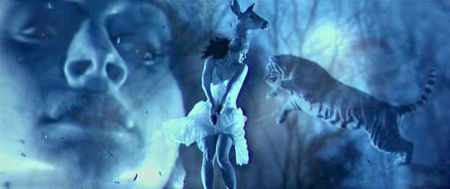
Still from Dead or Alive 2 (2000)

WHY THEY WON’T MAKE THE LIST: The three films in this trilogy are unrelated except that they each star Riki Takeuchi and Shô Aikawa. The best, the original, is the least weird, while the sequels grow increasingly strange, but drop off in quality. They are necessary entries for Miike fans, and worthwhile ones for followers of Japanese extremity and pop-surrealism, but none of the three manage to nail the right combination of weirdness and distinction to earn spots on the List of the Best Weird Movies Ever Made.

COMMENTS: It’s only natural that the first entry in Takashi Miike’s Dead or Alive trilogy would be the best: otherwise, why try to recapture the magic twice more? Not only is it the pick of the three entries, it also starts with the series’ most memorable sequence: a scorching five-minute heavy metal montage of strippers, cocaine, noodles, blood, gunfire, sodomy, and more blood (and more noodles). This virtuoso sequence is equally thrilling and confusing; but, as it turns out, all of a piece, telling a tale of yakuza warfare between rival gangs. What follows is a relatively straightforward, though densely plotted, crime story, with a Chinese gang facing off against a Japanese gang facing off against the cops. Of course, Miike the provocateur can’t resist throwing in a gag-inducing, scatological prostitute drowning. That’s unnerving, but he ends the tale with a bewildering curve ball that abandons the shaky realism of the previous story altogether in favor of a Looney Tunes apocalypticism. There are no survivors, and the audience may feel scorched, too.

The second installment, subtitled Birds, again moves in an unexpected direction. Rather than rivals on opposite sides of the law, Takeuchi and Aikawa are now hit men who, through incredible coincidence, grew up as childhood friends before independently finding their way into the assassination biz and being assigned to take out the same target. Unexpectedly, Birds almost plays like an art-house drama for the first two acts, striking a nostalgic tone as the two killers return to the island orphanage where they were raised and reconnect with each other and the community. Miike always zigs when expected to zag, so it’ s almost natural that he would follow the adrenaline rush of Dead or Alive with the reflectiveness of Birds. The second film morphs, too, with an impressionistic third act that sees the assassins sprout wings and go on a proceeds-to-charity killing spree that includes a Mexican standoff with a dwarf.

Dead or Alive 3: Final is in many ways the weirdest of the series, but unfortunately suffers from lower production values. On Arrow’s DVD, a note appear before the movie explaining that there are no HD masters of the film in existence and they used the best materials available (which include burnt-in Japanese subtitles for scenes in which characters speak untranslated Chinese and English). Most of the video has a jaundiced yellow-green cast to it, which may have been intentional, but does not make for an attractive visual milieu. The plot is inspired by (to the point where you’re tempted to say “rips off”) Blade Runner, but with Miike twists. In this dystopia, an evil mayor with a skinny sax-playing boytoy enforces homosexuality by the use of medication, and procreation is a crime punishable by death. Aikiwa uses his replicant superpowers smoke cigarettes to the filter in a single inhale and to snatch bullets in midair or redirect them with u-shaped tubing that’s lying around post-apocalyptic Japan. The final battle between Takeuchi and Aikawa is a wire-fu spectacle in an abandoned warehouse which ends in a typically nonsensical, out-of-nowhere fashion with the two molded together into a penile mecha.

“What is this?,” Takeuchi asks of the characters’ predicament at the end of Final. “I don’t know,” Aikiwa responds. “It’s this.” That’s probably as good a description of Miike’s whacked-out movies as you’re going to get. In the supplemental material, the director says, “the films I want to make are ones where I can say, ‘I don’t know how I feel about it as a film, but I like it anyway.'” There’s a punkish “take it or leave it” attitude in the Dead or Alive films, which experiment with logic and narrative from within the most formulaic genres, making Miike something of a grindhouse . The series spans the director’s most fertile and febrile period, from 1999-2002, when he was making up to eight films a year. It’s the period that also brought us such singular atrocities as Audition, Visitor Q, The Happiness of the Katakuris, and Ichi the Killer. I wouldn’t count any of the Dead or Alive films as top-rank masterpieces in the Miike universe, although the first comes close. But they are all expressions of the director’s vision: uncompromising unexpectedness, with one brow held high and the other low.

WHAT THE CRITICS SAY:

“… for someone on Miike’s wild and amazingly dexterous wavelength, these films represent nirvana: a hit of pure aesthetic cocaine.”–Chuck Bowen, Slant (DVD series release)

286. AUDITION (1999)

Ôdishon

It’s a pretty strange script, he must’ve been taking some really bad drugs when he was writing this stuff.”–Takashi Miike on Daisuke Tengan’s Audition script

Must See

DIRECTED BY:

FEATURING: ,

PLOT: Seven years after the death of his wife, Shigeharu Aoyama decides it is time to marry again, but he has no idea how to meet an appropriate mate. His movie producer friend comes up with a plan: they will hold a fake audition for a movie role where the widower can secretly interview dozens of women. Aoyama becomes smitten with shy, mysterious Asami and asks her out; but when she disappears just as things start to heat up between them, he goes on a quest to find her, only to discover that his ideal love may not be the innocent creature she seems.

Still from Audition (1999)

BACKGROUND:

INDELIBLE IMAGE: Poster and cover images always feature Asami holding a syringe, a moment that hints at bad things to come. But the weirder images that sticks in my mind are the shots of the mysterious beauty sitting in her apartment, head down, hair covering her face, telephone within arm’s reach. The implication is that she has been sitting there, motionless, in a trance for the entire time she has been offscreen, just waiting for Aoyama’s call. Also, she has something lying in the background. Something wrapped in a burlap bag…

THREE WEIRD THINGS: Thing in the bag; disembodied tongue; torture hallucinations

WHAT MAKES IT WEIRD: Takashi Miike’s most accomplished film, Audition initially shocks because of how normal it seems, before the director slyly pulls the rug from under our feet and launches us headfirst into a nightmare of pain. Fortunately, a perfectly positioned 13-minute hallucination sequence gives this movie the surreal hook (meathook, as it were) needed to elevate this master of the perverse’s best-made movie onto the list of the weirdest movies ever made.


Trailer for Audition

COMMENTS: Audition‘s broad outline is this: an older man falls for a Continue reading 286. AUDITION (1999)

CAPSULE: THE WAR ZONE (1999)

DIRECTED BY:

FEATURING: Freddie Cunliffe, Lara Belmont, ,

PLOT: After moving to North Devon from London, Tom finds there’s little to do but wander the rainy countryside to avoid his family’s stifling cottage, until he discovers something dreadful is going on between his father and his sister.

WHY IT WON’T MAKE THE LIST: Inarguably well made, it is also inarguably hard to watch. The War Zone plays a subtle game at the beginning, but the unrelenting melancholy mixed with something much, much worse isn’t weird so much as harrowing.

COMMENTS: For those who may have been wondering what a Lifetime movie directed by might be like, look no further than The War Zone. Tim Roth’s directorial debut (and, as of this review, only directorial effort) is unceasingly dreary and rainy right up to the point when it gets truly disturbing. An overcast aura permeates the movie—inside, outside, and tonally—soaking the characters and narrative with an altogether melancholy atmosphere that, like the rains of North Devon, never lets up.

Matching Devon’s somber disposition, young Tom (Freddie Cunliffe) mopes through the movie. A sullen teenager, he barely interacts with his seemingly pleasant family. When his mother (Tilda Swinton) goes into labor shortly after their move, the whole family takes a frantic trip to the not-so-nearby hospital. A car crash immediately followed by the miracle of birth seems to bring them closer together. However, Tom discovers that his older sister (Lara Belmont) and his father (Ray Winstone) may be continuing something inappropriate that began in London. Their cottage’s isolation and unpopulated countryside provide the two with opportunities to continue the tryst. Upon Tom’s suspicions being confirmed, things get even more awkward, and spiral into a nasty climax.

Bleak, bleak, and then some. Tom’s only escape from his life is bicycling around outdoors and spending time on the beach, invariably in the rain. He loves his sister, but hates her for what she’s doing. His sister hates herself. The father, given no name (like the mother), is an oddity. Until we know what’s going on, he seems an altogether swell guy—and even after the truth is revealed, Ray Winstone does us no favors by contriving a sympathetic performance. Shot by shot and muddled conversation by muddled conversation, Tim Roth puts misery on parade, never stopping for a break. This movie is dark stuff; straightforward, depressing dark stuff.

Having been among the few to catch this in theaters when it was released eighteen years ago, I remember it as being bleak; re-watching it the sensation was compounded by the DVD’s awkward display. Released as widescreen in the days of square televisions, my newer TV put a box around the film: its claustrophobia magnified by the black bars on all sides. And there’s some unhappy history involving its production and release. Ray Winstone nearly left shooting after having to perform a particularly wrenching scene. During the Toronto Film Festival screening, a man left shouting he couldn’t take it any more, and Tim Roth had to talk him down from pulling a fire alarm. The War Zone is very well shot, very well acted, and very well scored; this generally isn’t a problem, and isn’t one for this movie, per se. However, it does mean that anyone thinking of watching it needs to realize it will grab you forcibly and not let go until it slams the door in your face.

WHAT THE CRITICS SAY:

“I generally have little patience for this brand of art-conscious dragginess, but Roth, there’s no denying, creates considerable suspense out of our desire to confront the forbidden.”–Owen Glieberman, Entertainment Weekly (contemporaneous)

(This movie was nominated for review by “skunky.” Suggest a weird movie of your own here.)]

CAPSULE: EYES WIDE SHUT (1999)

DIRECTED BY:

FEATURING: , , , Todd Field

PLOT: An upscale married couple struggles with the temptations of infidelity in modern Greenwich Village, leading the husband to become enmeshed in a secret sex cult.

Still from Eyes Wide Shut (1999)
WHY IT WON’T MAKE THE LIST: Aside from the creepy centerpiece involving an orgy of masked figures in cloaks, nothing weird happens. Eyes Wide Shut is a serious, deliberate psychological study with some interesting political undertones about power.

COMMENTS: Everyone loves a good sex party, especially when there are masks involved. You can role play, burn incense, and even participate in pagan rituals without worrying about being ratted out. In Eyes Wide Shut, Nicole Kidman, playing the melancholic wife Alice Harford, kicks everything off, posing to show off her pump-raised buttocks, and what follows is an odyssey about power and lust. The tragedy is that this film, Kubrick’s final—starring everyone’s favorite Scientologist and his then real life spouse—has been repeatedly reduced to some kind of vague warning about the dangers of an unchecked elite society (Illuminati, etc.), especially since the juiciest segments of the movie come from interpersonal struggle and subsequent identity distortion. These characters terminally deceive themselves and others. Cruise completely owns his role as the terribly charming but ultimately insecure professional Bill Harford, reminding us why we tolerate his wacky off-screen cult endeavors. Offering a multilayered performance with incredible range, restraint and subtlety, he provokes inquisition into his on-screen psyche. Kubrick is the master auteur he’s always been, while Kidman makes everyone horny, forming a powerful trifecta.

Judicious attention is given to high society, people with power and influence, to how they stew in immorality and the instability of their relationships. Kidman displays aggressive coquetry by teasing a suave ballroom gigolo, while at the opposite end of the party Cruise has two women swooning over him. This is a muddy affair hiding behind a façade of elegance and sophistication. We imagine all of the private lives of the patrons here have the same debased, amoral existence, rooted in treachery and egocentrism. Detachment is prevalent, indicative of wealthy people so confident in their endless supply of bailouts that there’s literally nothing they can’t get away with, nothing that can’t be covered up.

Like any good doctor, Bill Harford enjoys playing God. He’s a man with pride and confidence in his professional demeanor, infinite charm spiraling outwards from an desire to dominate others with his own compassion and experience. “Doctors are so…knowledgeable,” says a flirty party gal to Bill. When the camera closes in on Alice’s beautiful behind once again, the question remains: is it good enough Continue reading CAPSULE: EYES WIDE SHUT (1999)