All posts by Gregory J. Smalley (366weirdmovies)

Gregory J. Smalley founded 366 Weird Movies in 2008 and has served as editor-in-chief since that time. He is a member of the Online Film Critics Society, and his film writing has appeared online in Pop Matters and The Spool.

174. VERTIGO (1958)

“If Vertigo remains, unchallengeably, Hitchcock’s masterpiece, this is surely because there the attitude to the unknown and mysterious is not simply one of terror but retains, implicitly, a profound and disturbing ambivalence.”–Robin Wood, “Hitchcock’s Films”

“Only one film had been capable of portraying insane memory, impossible memory: Alfred Hitchcock’s Vertigo.”—, Sans Soleil

Must See

DIRECTED BY:

FEATURING: James Stewart, , Barbara Bel Geddes

PLOT: During a rooftop pursuit of a fleeing suspect, John “Scottie” Ferguson finds himself hanging from a drainpipe; the uniformed cop who tries to save him slips and falls to his death. Suffering from debilitating acrophobia and vertigo, as well as survivor’s guilt, Scottie quits the police force. An old college acquaintance offers him a job tailing his wife, and Scottie becomes obsessed with the beautiful and mysterious woman who believes she is possessed by the spirit of a suicidal ancestor.
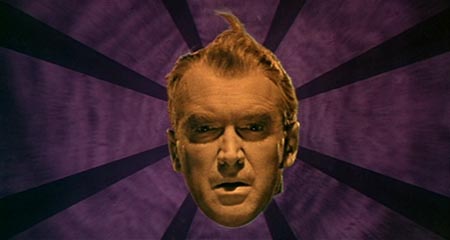
Still from Vertigo (1958)
BACKGROUND:

  • The source of Vertigo was the novel “D’Entre Les Morts” (translated in English as “The Living and the Dead”), by the French writing team of Pierre Boileau and Thomas Narcejac. Hitchcock had wanted to adapt the pair’s first novel, “Celle qui n’était plus,” but the rights were sold to a French company and it was made as Les Diaboliques by Henri-Georges Clouzot. Boileau-Narcejac would later write the screenplay for Les Yeux Sans Visage [Eyes Without a Face] (1960).
  • Hitchcock bought the rights to Vertigo back from Paramount (along with four other 1950s-era films), then willed them to his daughter. The film went out of circulation for many years. The rights eventually ended up with rival studio Universal, who restored and re-released the film theatrically (in 1983 and again, after a major restoration, in 1996) to great acclaim.
  • The dizzying “vertigo” effect (sometimes known as the “dolly zoom” or “trombone shot”) is the film’s most famous technical innovation: the camera tracks backwards on a dolly while simultaneously zooming the lens, resulting in  a disorienting visual experience of moving backwards and forwards simultaneously.
  • Abstract Expressionist painter John Ferren designed the dream sequence.
  • A controversial flashback scene reveals the “twist ending” about two-thirds of the way through the movie. Before the film’s release Hitchcock decided to remove this sequence, over the strenuous objections of his producer, Herbert Coleman. After preview audiences were unimpressed by the flashback-free cut, the studio ordered Hitchcock to return the film to the way it was originally shot.
  • Vertigo, which was exceedingly dark compared to the average Jimmy Stewart vehicle, was not as successful as Hitchcock’s previous hits such as 1954’s Rear Window, and barely broke even at the box office. The scale of its initial failure is often exaggerated, however, for the sake of a good story: it qualified more as a minor disappointment than a flop. The contemporaneous reviews were also mixed (leaning towards positive with reservations about plausibility and pacing), rather than universally negative, as is sometimes implied.
  • In the 2012 Sight & Sound critics poll, Vertigo replaced Citizen Kane, the top vote getter every year since the poll’s inception in 1962, as the greatest movie of all time. (It ranked #7 on the director’s poll, where Tokyo Story took the top spot).

INDELIBLE IMAGE: It has to come from the dream sequence. Although we chose Jimmy Stewart’s head floating against a shifting kaleidoscope background to illustrate this review, the most thematically significant image is the male shadow falling, first onto a terracotta rooftop and then through a white void (this figure is incorporated into the original Saul Bass-designed poster, where it combines with the movie’s other significant motif, the spiral).

WHAT MAKES IT WEIRD: Vertigo may be one of the most subtly strange movies out there. It’s entirely possible to watch it and see it as no more than a conventionally (if implausibly) plotted mystery. But peer into its vortex closer and you’ll see why this brightly lit but oddly dreamlike tragedy has fascinated generations of moviegoers: in its depths hides madness, illusion, necrophilia, sexual domination, a perverse longing for death, guilt, and the grinding gears of merciless fate. There’s a reason Vertigo is a cult movie. It doesn’t give up its secrets easily. Watch it again, with your weird eyes.


Re-release trailer for Vertigo

COMMENTS: Did any movie produced under the Hollywood studio system ever torture its protagonist as mercilessly as Vertigo torments Scottie Continue reading 174. VERTIGO (1958) →

173. THE NIGHT OF THE HUNTER (1955)

“Dream, little one, dream,

Dream, my little one, dream.

Oh, the hunter in the night

Fills your childish heart with fright.

Fear is only a dream.

So dream, little one, dream.”

Lullaby from Night of the Hunter (lyrics by Walter Schumann)

Must See

DIRECTED BY:

FEATURING: , Billy Chapin, ,

PLOT: Harry Powell is a self-ordained Reverend during the Great Depression who makes a living by touring Appalachia and marrying widows, who disappear soon thereafter under mysterious circumstances. In prison for stealing a car, he shares a bunk with Ben Harper, a bank robber on death row who has refused to tell the authorities the location of the $10,000 he has stolen. After his release (and Harper’s execution), Rev. Powell finds the robber’s widow, and learns that his young son John knows where the fortune is hidden.

Still from Night of the Hunter (1955)
BACKGROUND:

  • The film is based on a 1953 novel by Davis Grubb. The book was a bestseller at the time of it’s release but was long out-of-print until a 2014 reprint.
  • Night of the Hunter‘s Harry Powell was based on real-life murderer Harry Powers, nicknamed “The Bluebeard of Quiet Dell,” a West Virginia-based killer responsible for the deaths of two widows and three children.
  • was Laugton’s first choice for Harry Powell but he turned down the role of the serial-killing misogynist preacher, thinking it might damage his career. Robert Mitchum had no such concerns and was eager to play the part.
  • Mitchum’s autobiography contains several inaccurate accounts of the filming, including the allegation that Laughton heavily rewrote James Agee’s original script (an accusation supported by Laughton’s widow Elsa Lanchester). Film scholars who studied Agee’s original script, which was discovered in 2003, reported that the director shot the film almost exactly as written.
  • This was the only film Charles Laughton ever directed. Although the story that he was so stung by the negative critical reaction to the movie that he never directed again is often repeated, Laughton himself claimed that he simply preferred directing theater to working on films.
  • Prior to shooting, Laughton screened silent films by D.W. Griffith to get a feel for the look he wanted for the movie.
  • In 1992, Night of the Hunter was selected for inclusion in the National Film Registry.
  • Ranked #71 in Empire Magazine’s 2008 poll of the Greatest Films of All Time. Ranked #2 on “Cahiers du Cinema”‘s list of the “100 Most Beautiful Movies.”

INDELIBLE IMAGE: Pick a single image from Night of the Hunter? It’s a fool’s errand. As much as it hurts to pass up the vision of the “good” Reverend with his right hand of love wrestling his left hand of hate, or the dreamlike serenity of Willa Harper’s final resting place, we think the most meaningful image must come from the children’s flight downriver—specifically, we chose the shot of the skiff passing before the spiderweb, as John and Pearl (temporarily) float away from their murderous stepfather’s snares.

WHAT MAKES IT WEIRD: The Night of the Hunter is such a massive achievement that we’re invoking 366 Weird Movies’ sliding scale rule: the better a movie is, the less weird it needs to be to make the List. Not that Hunter isn’t strange, by Hollywood standards (and particularly by 1950s Hollywood standards). Film archivist Robert Gitt called this expressionist/Southern Gothic hybrid “the most unusual and experimental film made in Hollywood in the 1950s.” Perhaps that is why director Charles Laughton decided to bring cinematographer Stanley Cortez, who once bragged “I was always chosen to shoot weird things,” onto the crew. Hunter is packed with shadowy, stagey, artificial shots (contemporary critics complained that the effects—both narrative and visual—were “misty”). Mixing fairy tale menace and Freudian killer fathers while masquerading as a titillating potboiler, Hunter was so unique and unexpected that it slid right under the upturned noses of viewers in the 1950s, that most conformist-minded of decades. Generations since have remembered it fondly—well, in their nightmares, at least—and it has since been elevated into the canon of great movies. And now, of great weird movies.


Original trailer for Night of the Hunter

 COMMENTS: An utterly original blend, Night of the Hunter is simultaneously a melodrama, a fairy tale, a film noir, a Southern Gothic, a Biblical Continue reading 173. THE NIGHT OF THE HUNTER (1955) →

CAPSULE: CRAVE (2012)

366 Weird Movies may earn commissions from purchases made through product links.

DIRECTED BY: Charles de Lauzirika

FEATURING: Josh Lawson, Emma Lung, ,

PLOT: A freelance crime-scene photographer romances a younger woman in his apartment building, while suffering delusions and fantasizing about becoming a vigilante.

Still from Crave (2012)
WHY IT WON’T MAKE THE LIST: This movie is trying so hard to be like its big brother Taxi Driver that it’s embarrassing to watch at times; it has a certain grotty charm and good performances, but needs a huge wallop of subtlety. Its hallucinations are so clearly marked off as fantasies that they never threaten to swallow up the viewer, leaving its weird effect highly attenuated.

COMMENTS: An internal monologue of a disaffected white guy who’s convinced that humanity is rotten. The antihero drives aimlessly through the city at night, searching for scenes of depravity to reinforce his misanthropic vision. He awkwardly romances a beautiful woman who’s out of his league. He plans a crime, practices the exact words he will say to his victim. The delusional self-appointed vigilante eventually wreaks a gruesome vengeance on an absuer of women. Stop me if you’ve heard this before.

Taxi Driver was the deconstructed, arthouse revision of puerile crime-anxiety thrillers like Death Wish; Crave is an unneeded, on-the-nose reconstruction of Taxi Driver for the modern age. Crave‘s chief problem, for a movie whose promotional material promises that its photographer protagonist Aiden will be a hero whose “dark imagination starts to leak into reality,” is that the line between fantasy and reality isn’t blurry for the viewer—when redheads tear off their blouses and fall to their knees and Bill Gates shows up offering Aiden bags of cash, it’s fantasy. The clarity of that line and the lack of a radical subjective perspective removes a lot of potential tension that might result if we are wondering if what is happening is really inside Aiden’s head. Nor is Aiden delusional enough to create suspense via the gap between the dangers the audience recognizes and what our protagonist comprehends; he not only realizes his grip on his emotional throttle is slipping, he agonizes about it endlessly in voiceovers and heart-to-hearts with his tough-but-wise stereotype cop buddy. And some of the stuff that clearly is intended to happen in reality doesn’t make a lot of sense, like his hot neighbor’s spur-of-the-moment decision to screw Aiden senseless one afternoon just because he’s not terrible-looking and not obviously a psychopath. That’s bad writing, though, not dark imagination.

The script’s lack of originality and subtlety is a shame, because there is a lot of talent here. Josh Lawson is not bad as Aiden, although he lacks the scruffy anti-charisma necessary to take the role over the top. The supporting players fare better. Adorable Emma Lung somehow comes across as a real person, despite the fact that the only character trait the script gives her to work with is a baffling bad taste in men. Edward Furlong, who we last saw in the miserable This Is Not a Movie, redeems himself here as a hipster cad who nonetheless doesn’t deserve his torturous fate. Ron Perlman’s square mug is, as always, a welcome sight; inhabiting his character with ease, he lends instant credibility to any project. The movie’s technical qualities are pro throughout. The neon-noir vistas of Chicago streets at night are memorable, as is the shot of spinning pinwheels reflected in Aiden’s eye. De Lauzirika, who has previously specialized in directing special features for major DVD releases (including Alien, Blade Runner, and three of the extras on the “Twin Peaks” Gold Box set), is a talented director who shoots a good-looking film and elicits fine performances from his actors. But, he may better serve his career in the future by directing scripts written by someone else.

WHAT THE CRITICS SAY:

“[The performances are] undermined by not just the clichéd story but director/co-writer Charles de Lauzirika’s misguided tone, which veers from straight-up impotent fury to a clunky humor that’s just not funny in the story’s overall context.”–Maitland McDonagh, Film Journal International (contemporaneous)

171. SIN CITY (2005)

366 Weird Movies may earn commissions from purchases made through product links.

“It’s pretty damn weird to eat people.”–Marv, Sin City

Recommended

DIRECTED BY: , , (“special guest director”)

FEATURING: , , , , Nick Stahl, Jaime King, , , , ,

PLOT: The movie tells three stories (with some common characters) set in the mythical Basin City: in one, a police detective risks his life to stop a child-killer. In a second, a brutal, mentally ill criminal hunts down the men he believes killed the only woman who ever showed kindness to him. A final strand tells of a suave assassin who attempts to prevent someone else’s accidental killing from turning into an all-out war between the cops, the mafia, and the self-governing prostitutes of Old Town.

Still from Sin City (2005)
BACKGROUND:

  • A fan of Frank Miller’s original series of Sin City comics, Robert Rodriguez wanted to make the movie as true to the book as possible: “a translation, not an adaptation.” The actual comics were used as the storyboards. The stories selected were “The Hard Goodbye,” “The Big Fat Kill,” and “That Yellow Bastard” as well as the short “The Customer is Always Right.”
  • Rodriguez shot the opening segment, “The Customer is Always Right,” in one day as a proof-of-concept to convince Miller that he could do justice to the art style. He then used that clip to convince actors such as Bruce Willis and Benicio Del Toro to sign on to the project.
  • Rodriguez insisted that Miller receive a co-director credit on the film, but the Directors Guild of America objected to the credit (they do not allow co-directing). He then decided to give Miller full credit, but Miller refused. Rodriguez then resigned from the Guild so the co-directing credit could remain.
  • Quentin Tarantino directed a single scene in the movie (a segment from “The Big Fat Kill” involving a conversation between the severed head of Del Toro’s “Jackie-Boy” and Clive Owen’s “Dwight”). Tarantino directed for a salary of $1 as a way to repay Rodriguez for composing music for Kill Bill: Vol. 2 for $1.
  • The movie was entirely shot on Rodriguez’s “digital backlot” (green screen studio) near his home in Austin, Texas.
  • Sin City screened in competition at Cannes and won the Technical Grand Prize.
  • Plans for a sequel (based on Miller’s “A Dame to Kill For“) were announced immediately after the film was completed; the followup feature was delayed until 2014, however.

INDELIBLE IMAGE: From the very first frame—a woman in a blood-red backless cocktail dress on a balcony staring out over a steel-grey city—Sin City‘s pulp Expressionism is consistently startling and poetic. Since we’re fascinated by the weird, we’ll select the first sight of the Yellow Bastard, the bald, satellite dish-eared pedophile killer dyed the color of French’s mustard, as our unforgettable take-home image from the movie.

WHAT MAKES IT WEIRD: A marriage between the mythologies of film noir and violent comics, Sin City‘s bloody tales are set in an abstract urban hellscape inhabited by invulnerable tough guys and rough sexy dames. They play like the lost works of Raymond Chandler’s alternate universe grandson, written to scrape up a few bucks for a bottle of booze while he was down and out in Gotham City. With a cast of cannibal serial killers, jaundiced pedophiles and ninja hookers, the adventures of the hard-boiled demigods of Sin City are as fantastical as its random splotches of color in a monochrome landscape are visually unreal.


Original trailer for Sin City

COMMENTS: Sin City earns its “recommended” label almost solely on the basis of its visuals (bolstered by some finely weird touches), and not for its Continue reading 171. SIN CITY (2005) →

CAPSULE: WRONG COPS (2013)

366 Weird Movies may earn commissions from purchases made through product links.

DIRECTED BY:

FEATURING: Mark Burnham, , Arden Myrin, , , Marilyn Manson

PLOT: Los Angeles cops sell weed (hidden in dead rats), harass aerobics dancers, blackmail each other, and compose electronica; anything but fight crime.

Still from Wrong Cops (2013)
WHY IT WON’T MAKE THE LIST: With a few exceptions (like a fatally wounded music aficionado who refuses to kick the bucket), this black comedy is missing the unique conceptual meta-humor of Quentin Dupieux’s first two movies. It plays more like mildly edgy sketch comedy—it’s almost mainstream.

COMMENTS: One strange lesson you’ll take out of Wrong Cops is that American peace officers love European-style techno music. The other lesson is that, although Quentin Dupieux does surreal comedy well, his general outlook is too bemusedly sunny (a la genial absurdists like ) to create a truly biting satire about policemen behaving badly. True nastiness doesn’t seem to be in Dupieux’s makeup, so Wrong Cops ends up being more like Bad Grandpa than Bad Lieutenant. Although the movie’s cops are intended to be morally corrupt, only Mark Burnham‘s Officer Duke comes off as totally depraved; Eric Wareheim’s breast-obsessed patrolman, for example, is far too teddy-bearish to disturb, even when he’s forcing women to disrobe at gunpoint. The desire to make a black comedy about cops behaving badly mixes poorly with this director’s basic lack of cynicism. (The unexpected sweetness of Dolph’s search for his missing dog in Wrong was a better fit for his sensibilities.) The not-quite-dead body that is never disposed of is one dark moment that works, as is Officer Duke’s spontaneous, pot-fueled eulogy about Hell on Earth that closes the film, but in general the somewhat flat comedy routines are more mild than wild.

With five cops to follow (plus a pair of gay officers who show up occasionally but don’t have a plotline of their own), there’s a lot going on, and Dupieux makes the movie into something of a L.A. block party by inviting a number of recognizable bit players. Eric Roberts stops by as a movie director, and is in there for a few minutes, while her “Twin Peaks” hubby has a slightly larger role as a police chief presiding at a funeral. Marilyn Manson (out of makeup) plays a hassled teenager; despite the fact that he’s in his forties, he is actually surprisingly convincing as a misfit kid. Unobtrusive but obvious references to Rubber and Wrong are also placed in the movie for Dupieux fans. The sprawling cast adds to the sketch-comedy feel, although the overarching plot (which is partly told out of sequence) is more carefully constructed than most viewers give it credit for: if Officer Duke never harasses David Delores Frank about his taste in electronica, the movie’s big tragedy never occurs. Dupieux’s core fan base will probably be pleased with this entry—and it does have its weirdly funny moments—but personally, I’m getting diminishing returns on his unique sense of humor with each subsequent film. The abstract meta-comedy that seemed rule-rewriting in Rubber has become expected and merely entertaining by the time we reach Wrong Cops.

WHAT THE CRITICS SAY:

“…tonally weird and totally forgettable.”–Marc Savlov, The Austin Chronicle