Tag Archives: Period piece

366 UNDERGROUND: THE SUDBURY DEVIL (2023)

366 Weird Movies may earn commissions from purchases made through product links.

The Sudbury Devil can be rented or purchased on-demand.

DIRECTED BY: Andrew Rakich

FEATURING: , , , ,

PLOT: In 1678, 2 years after King Philip’s War, two Puritan witch hunters from Boston, John Fletcher (Guinness) and Josiah Cutting (Popa), are sent to a town in the Massachusetts sticks to investigate allegations of witchcraft and deviltry in the nearby woods by Isaac Goodenow (Van Guessel), where they encounter Patience Gavett (Gregg) and her companion Flora (Unique).

Still from "The Sudbury Devil" (2023)

COMMENTS: American folk horror is an established genre in literature, but it hasn’t quite made the jump to movies or television to the extent that its British cousins have. Outside of adaptations of Washington Irving’s “The Legend of Sleepy Hollow” and Nathaniel Hawthorne’s works (“The House of the Seven Gables”, “Young Goodman Brown” to name a couple), ‘s Eyes of Fire is probably the film people would point to, along with Ravenous and The Witch.1

The Sudbury Devil is a good addition to that slim lineup, and even more impressive for accomplishing what it does on its budget; of the films mentioned, it’s certainly the one that qualifies as microbudgeted, and it makes the most of its available resources.

If you mashed up A Field in England with Ravenous and The Witch,  you’d get The Sudbury Devil. It’s more than apparent that director/writer Rakich is a hardcore fan of the aforementioned films, and it’s to his and his cast and crew’s credit to have produced a film which goes further than its predecessors, as proper Hellspawn should.

Director/writer/actor Andrew Rakich is known for his Atun-Shei YouTube page, where he utilizes his knowledge and interest in history—he was a ‘living historian’ at Gettysburg National Military Park and a New Orleans tour guide—to produce work that amuses and informs. Starting from highlighting sites and events in New Orleans, he progressed to a Civil War series, “Checkmate, Lincolnites!”, which takes on the mythology of the South’s “Lost Cause” propaganda in entertaining fashion. Entertaining here means comedic, which makes sense; hard and unflattering truths tend to be accepted easier if there’s a laugh or joke involved, and once hooked, thinking can begin (ask filmmaker .) The same effect can be obtained by replacing laughs and jokes with dread and horror in Sudbury (although there is a touch of black humor in what the filmmakers describe as a “mischievous indictment of America’s foundational rot”).

As Sudbury lays it out, hypocrisy is at the heart of that rot. The justification of King Phillip’s War, which eradicated much of the indigenous population of New England, still weighs heavily on Fletcher in his nightmares. The “piety” of Cutting and Reverend Russell allows their disdain of women (specifically Patience). Russell supports  Mosley’s Company and the war, despite actively avoiding any involvement in it. Cutting dsiplays racism towards the original inhabitants of the land and towards Flora, despite his attraction.

While sex has always been a part of folk horror, it’s usually presented obliquely rather than directly. Sudbury puts it upfront: polyamory, homoeroticism, masturbation, gender-shifting, and even a climatic double penetration (although not in the way that you might expect.) Sex and sexual freedom is usually presented as aligned with devilry in folk horror, though Sudbury subverts that expectation.

In that sense, Sudbury is not only folk horror, but also a subset of what could be termed ‘Woke Horror’ (Get Out, Us, Harvest Lake, The Angry Black Girl and Her Monster). This vein of film includes the works of , ‘s The People Under the Stairs (1991), and others; a long established tradition, so ‘Woke Horror’ isn’t such a new thing after all.

The Sudbury Devil will be available on VOD today, December 21—in time for Xmas!— on Rakich’s website, Atun-Shei Films. Other related work that may help in understanding the nuances of the film (King Phillip’ War, Sudbury area history, and specifics in the film) can be viewed there and on YouTube, as well as the webseries Checkmate, Lincolnites and The Witchfinder General, a lighter look at Puritanism. A physical media release may also happen sometime in 2024.

A note of interest for those literary horror aficionados who notice the name Tabitha King as an executive producer: yes, it is that Tabitha King (novelist and wife of an obscure writer named Stephen King). As Rakich explained in the Pod 366 interview, she is also a noted genealogist and had heard about the production and contributed to it.

Listen to our interview with Andrew Rakich and producer Veronika Payton about The Sudbury Devil.

  1. I’m certain there will be “That Guy” who pops in with some titles not named. That’s a protracted discussion for another time, after Vol. 2 of “All the Haunts Be Ours” is released… ↩︎

APOCRYPHA CANDIDATE: THE DRAUGHTSMAN’S CONTRACT (1982)

366 Weird Movies may earn commissions from purchases made through product links.

Recommended

DIRECTED BY: Peter Greenaway

FEATURING: Anthony Higgins, Janet Suzman, Anne-Louise Lambert, Hugh Fraser

PLOT: At the finale of the 17th-century, the wife of a boorish aristocrat contracts with a draughtsman to contrive a series of drawings; unexpected pictographic clues appearing in the artist’s renderings suggest a deadly conspiracy.

WHY IT MIGHT JOIN THE APOCRYPHA: Greenaway tackles his first feature-length narrative with such structure, symmetry, and formalism that it might conceivably collapse into its own pretentious confinement. However, regular spikes of ornate bawdiness and cryptic banter, alongside Nyman’s jaunty film score, render the whole affair so baroquely flippant that the inclusion of a living garden statue is merely the ultimate, strange garnish on this eccentric appetizer to Greenaway’s impending career.

COMMENTS: “It has been fancifully imputed that Mr. Neville saw you as a deceived husband.” If that withering—and scandalous—insult vexes you, I strongly recommend against attempting to endure Peter Greenaway’s high-falutin’ whodunnit. On the other hand, if you wish to pry, peep, poke, and peek at the behind-closed-doors (and at times, on-the-lawn-somewhat-obscured-by-a-parasol) doings of the sickeningly wealthy and witty, the droll and devastating—veritably, the very cream of late-17th-century excess—Greenaway’s soufflé of mannerisms, ostentation, lines, lists, longitudes, and lasciviousness baked into this country-house mystery will not only fit the bill, but fit it perfectly with a stretch of laced linen that will leave you petrified to touch it with your coarse peasant hands.

Mr. Neville (Anthony Higgins), whose observations Mr. Noyes infers from prior insinuations and sketch-work, is a draughtsman by trade, and a haughty rake by inclination. On the eve of Mr. Herbert’s departure, Neville attends a soirée hosted by Mrs. Herbert, who wishes, she claims, to furnish her husband with a set of exterior drawings of their estate as a gift upon his return, in hopes of salvaging, at least, some civility in their marriage. Initially disinclined, Neville agrees only after much pursuit by Mrs. Herbert (and her daughter, Mrs. Talmann), and the inking of a curious contract which delineates recompense both financial and sexual. Mr. Herbert leaves for business, and Mr. Neville ensconces himself as he begins his work—and play.

I beg your indulgence for what is, even for me, an excess in flowery language; but such is the overwhelming effect of this strange matrix of conflicting impulses and shifting conspiracies. Greenaway kicks the door down for this one (doubtless because its vertical line displeased him) and comes swinging in full force with his painterly mise-en-scène and artful dialogue thronging the screen and speakers. Frames within frames, within frames; candlesticks joining and isolating conversers, sometimes positioned as an extension of a phallus-above-the-table (Neville’s, naturally); ordered chaos—there is nothing, it appears, left to ill-rendered whim nor faith in dreamscapes.

The “conflicting impulses” mentioned play out primarily between the pristine structure of the film (pacing, staging, scoring, framing, &c.) and the often-hilarious, invariably biting dialogue, which itself is masked with powder-splotched cosmetics and finery that could pass for a migraine. And Greenaway looooves sex on shameless display. As if imitating the outward prudish mien of its characters, The Draughtsman’s Contract conveys all manner of carnality, some of it extreme, while only ever exposing a single breast on screen. Anthony Higgins—witness to this breast, among other parts and places—is perfectly cast as the cocksure draughtsman, believing he is outwitting the conspiratorial axis of Mrs. Herbert and her daughter. Though doomed from the start, he careens toward his fate on a cloud of magniloquent artistry, wit, and lasciviousness.

As far as I could determine, the extras on Kino Lorber’s 40th anniversary, 4K release of The Draughtsman’s Contract were lifted straight from the preceding UK-only disc. Though they are scant, the included introduction from Peter Greenaway is a delightful and informative ten-minute essential, outlining the director’s intentions and providing a brief history of the film. The even briefer interview with Michael Nyman succinctly and charmingly relates how these two lovers of lists began their collaboration. Last, and by no means least, the video and sound are perfection in itself—and as Greenaway would observe, it is the deft combination of those elements that filmmaking is all about.

WHAT THE CRITICS SAY:

“Agatha Christie this ain’t, but it is weirdly wonderful… the film shows a unique talent getting to grips with narrative cinema to create something which is as engaging and alluring as it is baffling and perplexing.”–Mark Kermode, BFI

FANTASIA 2023: APOCRYPHA CANDIDATE: WHERE THE DEVIL ROAMS (2023)

366 Weird Movies may earn commissions from purchases made through product links.

Recommended

DIRECTED BY: , , 

FEATURING: Toby Poser, John Adams, Zelda Adams

PLOT: A scrappy family trio travel Depression-era Catskills pursue an ascension into big time carnival show-biz, all while executing harsh justice.

Still from Where the Devil Roams (2023)

WHY IT SHOULD MAKE THE APOCRYPHA: It probably shouldn’t—if not for that final shot. My goodness.

COMMENTS: Dark times bring forth dark magic in this meditative and macabre motion picture from the renowned indie horror team the Adams Family. They entered our collective awareness with The Deeper You Dig, knocked off socks (and knocked out ear-balls) with the metal-infused follow-up Hellbender, and gloriously return once more with Where the Devil Roams. Tobey, John, Zelda, and Lulu continue to hone their craft as a family-filmmaking team (and unlike the Ormonds, these are fun-time, fun-filming folk). Their “tiny” movie explores big ideas, delivers big gore, and proves to have a big heart beating at its tattered core.

The slow death of the carnival business grinds down the poor carnies of upstate New York, perhaps none more so than Maggie, Seven, and their daughter Eve. This trio aspire to earn a place at the “Buffalo Horror Show,” the last remaining big to-do in the circuit. While traveling along with their bare-bones circus group, they drop in on various ill-doers—a cruel landlord, a crooked financier—smiting the enemies of the little man with a smiling viciousness. Maggie wields the weapon, Seven speaks the scripture, and Eve, born mute, captures their handiwork on camera with a quiet relish.

Taking a moment to consider the inputs for this film—third- and fourth-hand props and costumes, self made sets, musical chairs camerawork (who ever was not in a frame at the time was typically behind the lens), and the mystical fusion of American myth with homemade magick—the film is impressive. But then, it feels impressive even without that qualifier. I mention those elements to share how much heart and soul went into this little wonder; and that’s not mentioning the blood. Papa Seven cannot abide further carnage after his time as a medic in WWI, so Mama Maggie applies his blindfold before the blood and fury. These grisly doings are a grisly delight: either through the sheer bluntness of a chiming skillet, or a deadly harpooning with a fire poker, it’s always fun to watch these righteous murderers. And with the black magic tied in (heh), there is an unreal aura whose moral ambiguity becomes darker and darker.

The image gets a bit dark, too, and strange: beginning in a full-palette, it flickers and devolves into grainy, black-and-white harshness. By the end, as the family’s already meager fortunes collapse (along with a couple of their bodies), we enter a saturated, white-light nightmare.

Which brings me to the punchline. In the penultimate shot, our heroine Eve has transformed from an angel of light to one of darkness, who escorts an unknown entity down one of those looong corridors typically reserved for nightmares. With a reassuring bend of her finger, she beckons to her follower, along with us, to go through the final door to end stage. A song emerges from her lacquered lips, a spotlight jolts into life, and BAM!

Listen to Giles Edwards’ interview with the Adams family about Where the Devil Roams.

WHAT THE CRITICS SAY:

“…a conscious homage to early cinema traditions… Formally, the film is audacious, again pulling off stylistic flourishes that in the hands of less confident, skilled filmmakers could feel hokey or cliched.”–Alexandra Heller-Nicolas, AWFG.org (festival screening)

CAPSULE: BROOKLYN 45 (2023)

366 Weird Movies may earn commissions from purchases made through product links.

DIRECTED BY: Ted Geoghegan

FEATURING: Anne Ramsay, Ezra Buzzington, Archibald Stanton, Kristina Klebe, , Ron E. Rains, Jeremy Holm

PLOT: Following the close of the Second World War, Colonel Hockstatter invites his friends over for a séance in the hopes of contacting his dead wife; the evening turns out to be far more illuminating than any of the attendants would have hoped for.

Still from Brooklyn 45 (2023)

COMMENTS: One could, theoretically, craft a languid melodrama in which old friends with unspeakable pasts gather one evening at Yuletide, weighed down by the tension of physical proximity and psychological burdens, until revelations crash through the civil veneer. But, thank goodness, Ted Geoghegan said, “Nuts to that.” Brooklyn 45 is a ghost story, thriller, chamber drama—and I emphasize the singularity of “chamber” here—and contemplation on the horrors of war. Brooklyn 45 makes its zippy pacing believable by taking full advantage of its catalyst: a séance.  A communication with the dead. The past. And there are few groups of five characters with as messy a shared history as Marla, a former interrogator; Bob, a Pentagon desk-jockey; Archie, a real Yankee doodle dandy; Paul, an all-brass veteran; and Clive, a broken widower.

Brooklyn 45 is a period piece that plays out like a period production. It would be at home as a TV special from the 1970s, with its faded-candy-colored sets, props, and costumes. The dialogue isn’t stilted, but echoes vintage radio. The action (so to speak) rests at the intersection of Clue! and Twelve Angry Men. It even features a delightfully subtle opening of a curtain, as we see three people arrive at their place of judgement, and then later closing on three of the players exiting the bloody drama. We are watching performances; we are listening to reminiscences; we are being told a story.

This story is, at least, five stories. And while a keen attention to period detail anchors the viewer (I particularly enjoyed the empty packet of “Westerfields”), that doesn’t mean we’ve been abandoned in a do-nothing room. Various punctuations act as triggers: a door is sealed; a light switch turned off; the radio is silenced; and, before expected, a gun is fired. Geoghegan’s self-assurance is apparent here, as he does not shy away from the tools a contemporary teller of tales has on-hand. Time is of the essence, and there is much to learn as we are locked in a room with war criminals, spies, torturers, and ghosts.

We’re also in this room with Bob, the milquetoast bureaucrat. His wife, Marla, moving so assuredly with cane in hand and firm tone on her lips, intrigues from the start. Archie alternately charms and disappoints (morally speaking) as a semi-closeted homosexual awaiting a war crimes trial. Major DiFranco hits all the right notes;  a highly moral military man with some serious regrets. And Colonel Hockstetter evinces confusion and pity. But Bob, whose mild-manner immediately telegraphs he is doomed to a radical shift, is introduced as, and remains, a cipher. Brooklyn 45 is about the past, and the weight it bears down on the present. With this cryptic character, Geoghegan demonstrates that, even though he plays many cards in this film, he’s still keeping a few close to his chest. I’m looking forward to seeing more of them.

WHAT THE CRITICS SAY:

” I was very pleasantly surprised to find a film so very oddly tender and tragic at the heart of a story that also features ectoplasmic seances and Geoghegan’s trademark pension for schlocky gore…”—Hunter Heilman, Elements of Madness (contemporaneous)

Brooklyn 45 [Blu-ray]
  • Feature length audio commentary by writer/director Ted Geoghegan

APOCRYPHA CANDIDATE: INU-OH (2021)

366 Weird Movies may earn commissions from purchases made through product links.

犬王

Recommended

DIRECTED BY: Masaaki Yuasa

FEATURING: Voices of Avu-chan,

PLOT: A blind itinerant priest crosses paths with “the King of Dogs”, a vivacious and deformed creature with a talent for dancing; through the priest’s music and the dancer’s storytelling, they attempt to lay the lost souls of the Heike clan to rest.

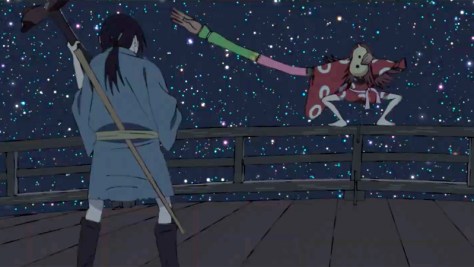
WHY IT SHOULD MAKE THE LIST: I have come to the conclusion that perhaps everything in Masaaki Yuasa’s œuvre should get canonized, particularly as we now have the elbow room to do so. (Night is Short, Walk on Girl was shortchanged due to numeric constraints.) Inu-oh brings an unlikely legend to bombastic life, fusing rock opera, ballet, pyrotechnics, spirits, curses, gender self-discovery, physical transformation; it’s a 21st-century story about a 14th-century performance troupe unearthing the secrets of an 12th-century war.

COMMENTS: It tickles me that Inu-Oh is Masaaki going “commercial.” This stems to a great extent, of course, from the fact that here in the United States, film norms are sickeningly normal: we are reigning kings of the lowest white bread denominator (so much so that it was controversial when Disney took a belated and modest stand against overtly bigoted legislation in its home state). Among the many themes explored in Inu-Oh, gender identity is near the fore, along with the nuances of parental acceptance of someone’s true self.

But let me stop that vein of thought for the moment. This is film for, and about, entertainment. It’s about musical revolution, and the delineation of the esteemed Noh tradition, which harkens back to the middle of last millennium. Inu-Oh follows Noh’s traditional story arc, lacing it with modern rock sensibilities. (Well, maybe not “modern” rock, but certainly strains of Buddy Holly through Jimmie Hendrix and Freddie Mercury.) The titular character is a born performer, despite—or because of—the fact he is a born monstrosity: an unnamed son of a proto-Noh performer, a boy of ambiguous shape, deformed face, and a long, strong arm. He embraces his outcast status, at one point referring to himself as “the Horrible Gourd” in honor of his misshapen mask. But as the son of a dance troupe leader, it comes as no surprise that Inu-Oh was born to jump and jive.

Tomona, the biwa priest, has a comparatively subtler trajectory. The son of a salvage diver, he is blinded at a young age when he and his father retrieved cursed regalia. Masaaki’s visual treatment of this unseeing musician is a treat, as total darkness gains rough outline of form with each sound Tomona hears. Being unable to see, the priest-musician (a biwa is never without his four-string shamisen and bachi) does not fear Inu-Oh, and is so able to help the mutant through his journey. Tomona’s personal journey is also about transformation as he evolves into an increasingly feminine entity, adopting the name Tomaori by the film’s end. The morphing of their name allows them to grow into their true form, but plays havoc with the spirit world, and with their ancestors—as one’s given, or accepted, name is what allows Tomona/Tomaori’s father to maintain contact from the afterlife.

While the first half of Inu-Oh is “merely” steeped in music, song, and dance, the second half is one long string of hand-clapping, foot-stomping musical numbers showcasing the monumental talents Tomona and Inu-Oh share as natural performers. They give the forgotten fate of the Heike spirits full-throated treatment, with Inu-Oh performing transgressively non-traditional storytelling through song and dance, while Tomona positively shreds it on their shamisen. Contemporary shogunate politics play a role in the story as well, as does the concurrent, tragic tale of Inu-Oh’s fame-obsessed father. Masaaki Yuasa never settles for half measures, and every theme—friendship, salvation, transformation, politics, and music—ties together in an animated vortex of vivacity and sonic rollercoaster of rocking melody.

WHAT THE CRITICS SAY:

“This anachronistic rock musical promises a return to the playful, literary surrealism of ‘The Tatami Galaxy’ (2010) and its 2017 spin-off, ‘Night Is Short, Walk On Girl,’ but comes up short… There are individual sequences that reach the psychedelic heights of Yuasa’s best work. But too often, this tale of the liberating power of art is about as mind-expanding as an early-afternoon set at Fuji Rock Festival.”–James Hadfield, Japan Times (contemporaneous)