Tag Archives: Crime

CHANNEL 366: COPENHAGEN COWBOY (2023)

366 Weird Movies may earn commissions from purchases made through product links.

DIRECTED BY:

FEATURING: Angela Bundalovic, Andreas Lykke Jørgensen, Li Ii Zhang, Jason Hendil-Forssell

PLOT: Miu, an 18-year-old girl with mysterious powers, becomes involved in the Copenhagen crime scene after being sold to a pimp’s sister as a “lucky coin.”

Still from Copenhagen Cowboy, Season 1 (2023)
Copenhagen Cowboys. COURTESY OF NETFLIX © 2022

COMMENTS: If any Refnheads are somehow unaware of the quiet debut of six episodes of slow, stylized, depravity from Denmark, well… you’re about to be thrilled. Refn continues the style he’s honed through Drive (2011), Only God Forgives (2013), and The Neon Demon (2016): minimalist plot development spiked with bouts of brutal violence, glowing primary color lighting, and noirish criminality, adding a stronger-than-usual dose of stylish conceptual weirdness.

Angela Bundalovic, in a performance that can only be described as “restrained,” centers the movie in an inscrutable charisma. Rail-thin and clad in baggy clothes, Miu begins as an androgynous figure, opening with a scene where a gaggle of Eastern European women take snips off of her bowl haircut for luck. (It’s surprising to learn waifish Bundalovic is actually 27-years-old; she almost looks too young to be Miu’s professed 18.) Later attempts to sexualize Miu will fail; she’s neither feminine nor masculine, but (perhaps literally) alien. Standing quietly and staring with an unreadable expression is her signature move. Circumstances will force her hand and, through clever editing and choreography, reveal her to be a deadly hand-to-hand fighter. That it’s believable that this stick of a chick could pulverize manly men in single combat is a testament to the quiet confidence she exudes. By the time a corrupt criminal lawyer who knew her from before she was sold to the brothel encounters her again, we aren’t surprised that his face betrays more than a tinge of fear. Miu is one badass lady, and season one does not approach the limits of whatever power she possesses.

“Copenhagen Cowboy” languorously makes its way through various red-and-blue-neon-lit chambers, as Miu migrates from the hellish brothel to a Chinese restaurant, with a stopover at a pig farm. The series indirectly explores immigrant experience in the EU, as nearly all the main characters, whether Eastern European or Asian, are undocumented and driven into a common underground criminal counterculture. As the series goes on, a worthy adversary for Miu emerges: a decadent, lily-white, aristocratic moneyed family. They have closets full of perversions: ritual sadism, a phallic sex cult, and strong hints of incest. Are they the indigenous Danish elite, feeding on the underclass? Perhaps, but it turns out that they, like Miu, may be alien to this world, products of witchcraft—or worse. That sounds like a lot of plot development—and we haven’t even mentioned the Chinese gang, or Miu’s brief stint as a drug dealer—but everything spreads sparely across the series’ six-hour runtime, with reveals coming in drips. And fear not, there are plenty of weird adornments to Refn’s moody backgrounds: a man who only communicates in pig squeals, a dead sister resurrected, Miu’s face flowerized.

Probably the biggest issue with the series is its incomplete nature. Episode 6, “The Heavens Will Fall,” hints at answers to Miu’s origin while leaving the actual nature of her newest occult antagonist up in the air. Refn has some pull with a small audience, and brings Netflix a niche prestige they enjoy, but his following isn’t big enough to make a second season a sure bet (about two-thirds of the streamer’s series get picked up for round two, with prospects dropping significantly for a third go). Ending “Copenhagen” on what is, by Refn standards, a cliffhanger is a gamble. It would be disappointing if we didn’t get to see where Miu’s winding path takes her next.

WHAT THE CRITICS SAY:

“…so weird, it’s shocking Netflix took a risk on it… fans of the unpredictable, the bizarre, and the deviant will be delighted to see the streamer investing so heavily in the auteur’s flights of phantasmagoric fancy.”–Nick Schager, The Daily Beast (contemporaneous)

(This series was nominated for review by Parmesan74 (letterboxd). Suggest a weird movie of your own here.)

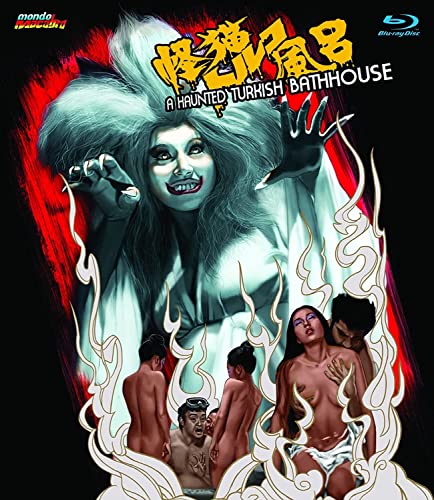
CAPSULE: A HAUNTED TURKISH BATHHOUSE (1975)

366 Weird Movies may earn commissions from purchases made through product links.

Bakeneko Toruko furo

DIRECTED BY: Kazuhiko Yamaguchi

FEATURING: Naomi Tani, , Tomoko Mayama, Misa Ohara,

PLOT: A prostitute reincarnates as a vengeful ghost cat to seek revenge on her abusive pimp husband.

Still from A Haunted Turkish Bathhouse (1975)

COMMENTS: A Haunted Turkish Bathhouse is the softcore/yakuza/melodrama/horror mashup obscurity you’ve been waiting for (if you’re the “you” in the above formulation, you’ll know it). This breathless nonsense hits its soapy plot points with ruthless economy as it rushes towards its demonic vengeance, with nothing to interrupt the flow except for gratuitous rape, torture, and sex scenes. The lavish sets and painted sunsets make it look as good as a mainstream film of the era, but make no mistake: this ain’t art, it’s overproof exploitation.

Japan’s 1957 ban on public prostitution supplies the initial plot hook, as brothel workers migrate from legal sex work to going undercover at a “Turkish bathhouse” serving as a front for prostitution. Only Yukino (Tani) refuses to make the switch, preferring to take this as an opportunity to retire and spend more time with her husband (and her black cat). Hubby (a scenery-chewing Murota) is no prize, however; he stages an elaborate ruse to fake a debt to the yakuza to convince Yukino to go back to work, then invites her virgin sister to live with the couple so he can rape her. He’s also somehow hiding the fact that he’s second in command at the brothel Yukino’s been working at for years, while simultaneously starting up an affair with the bathhouse madame and owner’s wife. After Yukino gets pregnant and refuses an abortion, he and the madame make sure she’s taken care of (in a very sick torture scene), walling up the corpse a la Poe. In the second act, Yukino’s disgraced sister shows up and goes undercover at the bathhouse looking for revenge, but when she proves the most popular courtesan, the other girls get jealous and decide to beat her, until Yukino’s cat flies (literally!) into the brawl to scratch up hooker faces. As you can see, there’s a lot of plot going on here, but nevertheless the script finds time about every ten minutes to squeeze in a scene of bathhouse girls lathered up with soap, rubbing their naked bodies over clients who mug for the camera with expressions of comical ecstasy. And so it goes until the third act, when the vengeful cat spirit finally arrives in all its Kabuki kitty glory, turning the final twenty minutes into an intense stalking scene (interrupted by only a single bubble bath sex romp). Having sliced up the evildoers with cat claws or burned them to a crisp, an angelic Yukino recedes into the painted sky. Roll credits.

Production values—the bright cinematography, imaginative camera angles, relatively extensive sets and costumes, and a screechy, psyched-out rock soundtrack—are vastly superior to what you would find in a Western sleaze movie. In the Japanese studio system, there was less of a budgetary distinction between, say, a historical drama and a raunchy “pink film.” With one studio (here Toiei) making both prestige and exploitation movies, productions shared casts, directors, crews, and sets; a stalwart like Taiji Tonoyama could act in an S&M-tinged pink movie like this in-between roles in films. This gives a quickie like Bathhouse an unusual aura of professionalism, for a movie that’s basically a wacky, hastily plotted romp designed to put butts in seats and boners in pants.

Mondo Macabro puts out another fine-looking, expensive-feeling disc. The main bonus here is a passionate commentary from film writer Samm Deighan, who provides a great deal of context and information about the Japanese industry, the players, and the history of the various subgenres colliding here (while also, I would say, overselling the movie as a serious artistic effort.) A couple of featurettes from Japanese cult movie historian Patrick Macias, one on horror at Toei Studios in general and one specifically devoted to A Haunted Turkish Bathhouse, further supplement Deighan’s extensive background information. About fifteen minutes of trailers, for Bathhouse and other sexy/violent Mondo Macabro titles, round out a presentation that makes for a satisfying night at the movies for those willing to overlook the violent misogyny inherent in the pink genre.

WHAT THE CRITICS SAY:

“…an outrageous horror-sex Toei production that packs more into 80 minutes than many viewers’ brains will be able to handle.”–Nathaniel Thompson, Mondo Digital (Blu-ray)

A Haunted Turkish Bathhouse

    List Price : 29.95 $

    Offer: 17.59 $

    Go to Amazon

    APOCRYPHA CANDIDATE: LET THE CORPSES TAN (2017)

    Laissez bronzer les cadavres

    366 Weird Movies may earn commissions from purchases made through product links.

    DIRECTED BY: ,

    FEATURING: Elina Löwensohn, Stéphane Ferrara, Michelangelo Marchese, Hervé Sogne, , Marc Barbé

    PLOT: After hitchhikers interrupt an otherwise precision gold heist, the thieves find themselves pinned down in a sex artist’s derelict haunt by an out-gunned but tenacious motorcycle cop.

    WHY IT MIGHT MAKE THE LIST: During the first half I felt inclined to write this one off as an overstylized Frenchy heist-Western. Then I realized two things: a rather strange undercurrent kept bobbing to the surface throughout, and “overstylized Frenchy heist-Westerns” are very few and far between.

    COMMENTS: There must be an archetype to explain the character of Luce (Elina Löwensohn), a sex-goddess artiste fighting to her last smoky breath against law, society, and age. Her coastal hideaway reflects her mind: grandiose but crumbling, free but tortured, joyous but destructive. This setting is the anchor for machinations involving a gang of hard men, a scumbag lawyer, a drunken novelist, and two determined law enforcers. Let the Corpses Tan sets off a precision-rigged narrative bomb within the confines of an evil ant-farm.

    At Luce’s dilapidated estate, a mountaintop retreat for various decadents, a gaggle of toughs has assembled to commit a daring robbery. The execution of Rhino’s (Stéphane Ferrara) plan goes like clockwork, with gunshots punctuating the passing of time. His young driver keeps the gas pedal to the floor, swerving the intricate route away from the armored car, now relieved of its 250 kilos of gold, as he nervously watches the clock. Up the hill, a burnt-out writer (Marc Barbé) attempts to sleep off his eternal hangover; on the road down the hill, the driver nearly crashes into a young woman. She is the nanny of the writer’s son, who has been brought with his mother to find the reclusive novelist. The few seconds the crooks could spare are taken up collecting the trio before zig-zagging back. The authorities are soon on the lookout for the missing persons and the missing gold. Before you can say “existentialist ennui,” two no-nonsense motorcycle cops ascend upon the villa and things start going very badly for everyone. Except Luce. She can’t get enough of this deadly violence and frantic backstabbing.

    This movie feels wrenched from the 1970s, complete with vintage Ennio Morricone score, but reprocessed in a Cuisinart. Intertitles appear throughout, simultaneously grounding viewers with demarcations of the exact minute of the action while disorienting them by shunting between all the characters as they travel madly like ants around the ancient monastery in which the cops and robbers find themselves holed up. This motif is made explicit with a series of ant-covered aerial shots of the clutch of ruins. The resulting effect is a neo-pagan feel, itself established further with a series of flashbacks to the days when these grounds were used for some very personal performance art on the part of the endlessly drinking, smoking, and often-topless Luce. Flashbacks show the many explicit rites (lustful, shadowy acolytes and lactation-inducing bondage, among other things) that cemented Luce’s psyche to the very grounds the characters find themselves trapped upon.

    Let the Corpses Tan is a gloriously explosive ratatouille-Western that immediately captures the viewer’s attention with hectic editing and smirking heartlessness. Assembling all the best elements from arthouse and grindhouse, Cattet and Forzani blast a Frenchy shot across cinema’s bow as they stand by, taking a drag on a cigarette. Watching it is akin to watching your philosophy seminar turn into a bullet-riddled hostage crisis.

    WHAT THE CRITICS SAY:

    “It’s a profoundly weird film but hypnotic nonetheless. – Mark Medley, Toronto Globe and Mail (festival screening)

    CAPSULE: FELIDAE (1994)

    366 Weird Movies may earn commissions from purchases made through product links.

    Recommended

    DIRECTED BY: Michael Schaack

    FEATURING: Voices of Ulrich Tukur, Mario Adorf, Wolfgang Hess, Helge Schneider, Mona Seefried, Klaus Maria Brandauer

    PLOT: Francis, a housecat who has relocated to a new neighborhood with his human, stumbles into a mystery involving a strange cult, nefarious characters, and a feline serial killer. Still from Felidae (1994)

    WHY IT WON’T MAKE THE LIST: Although a neo-noir/serial killer story where most, if not all, of the main characters are cats might qualify as “weird”—and, I admit, it’s a mighty thin line—the events and behavior involved aren’t surreal. They are just seen from a different perspective than we’re used to, to force us to consider our own behavior.

    COMMENTS: “What I was watching wasn’t exactly a scene out of ‘The Aristocats’.”

    Coming after feline members of a cult electrocute themselves in spiritual thrall, that line’s a definite understatement—and a cheekily self-aware one at that. Although the animation style is reminiscent of Don Bluth’s films, Felidae‘s approach to the material is more closely modeled on the adaptations of the Richard Adams novels Watership Down and The Plague Dogs. Perhaps not that surprising, since this story is also based on a literary allegory: in this instance, a book by Akif Pirinçci.

    Felidae is a very good pastiche of film noir detective tropes: the dogged investigator, his reluctant friend/sidekick, moronic thugs, the ‘Good Girl’ who becomes a victim and the driving force for the investigator to pursue the case to the end, the ‘Bad Girl’ who appears to be a distraction but ends up being an integral piece of the puzzle, colorful characters adding flavor, and a nemesis who thoroughly pays off on the buildup. It also deals in the dark subject matter of noir: the violence and cruelty of life, religion and how it ends up being a tool of control, grisly farce, and sex… lots of sex. Placing those events in the world of cats, domesticated and feral, just strengthens the critique of human society, and adds another subject to the mixture: animal testing and its cruelty.

    When it comes to quality animation intended for an adult audience, you have to look overseas and be prepared to do some digging.  Aside from Japanese anime, a piece in this genre won’t get much exposure to a North American audience except at a few film festivals, if it’s lucky. Felidae would’ve been a tough sell in America; in addition to a serial killer mystery with eugenics being the main key, there’s lots of violence, a sex scene, a couple of standout nightmare set pieces, and graphic depictions of animal experimentation—all with the look of a nice animated film with cats.

    Felidae never got a release in North America. Although an English dub was prepared, it was only released in Australia, with the voice cast not credited (the IMDB list for the English voices is highly suspect). There was a R2 DVD release which had both the German and English language tracks, plus extras like a commentary and a “Behind the Scenes” featurette (in German only), but that is now OOP and going for high prices on the secondary market. YouTube searches turn up copies in German with English subs, or the English dubbed version. It would be great if Felidae gets rediscovered and issued on home video like Watership Down and The Plague Dogs were recently.

    WHAT THE CRITICS SAY:

    “…an imaginative, disturbing and ex-tremely adult thriller… Francis’ violent nightmares provide the most outrageously surreal images since the golden age of Bakshi.”–Stephen Puchalski, Shock Cinema (DVD)

    OTHER LINKS OF INTEREST:

    Felidae was scored by Anne Dudley (Art of Noise) and featured a theme song co-written & sung by George O’ Dowd (AKA Boy George), which did get an OST release.

    There are eight books in the Felidae series, though only three of the books have been translated to English. The author, Akif Pirinçci, has recently been mired in controversy, which led to both his German & American publishers cancelling his contracts and no longer selling his books. Still from Felidae (1994)

    Felidae (4k UHD + Blu-ray)
    • The long sought-after German animated mystery about a series of unexplained murders among a group of domestic cats

    LES VAMPIRES (1915)

    366 Weird Movies may earn commissions from purchases made through product links.

    Andre Breton was among the Surrealists who considered Louis Feuillade as one of their own. The silent serial filmmaker probably never heard of the term (he died in 1925, as the movement was in its infancy), and likely would have disavowed it and continued cranking out his serials, oblivious to just how weird they are. Feuillade directed 700 films. Of course, most of these are shorts, and are lost. Although his work ranged from comedies to Bible dramas, Feuillade’s reputation today rests on three pulpy silent serials: Fantomas (1913), Les Vampires (1915), and Judex (1916).

    A few years ago, Les Vampires, the most famous of the three, was found (after being considered lost for years), restored and rediscovered. Kino’s Blu-ray edition is exemplary, as usual, and the way to go.

    A bit about Feuillade: his parents sent him to seminary in hopes he that he would become a priest. That didn’t happen, but that Catholic experience is credited with his late Gothic style. He showed an early interest in literature and drama, worked in vaudeville, married, struggled before success making films for the Gaumont studios, lived in the suburbs, and was a workaholic. In other words, he was unremarkable—except for his trilogy of serials, which influenced both and . The phenomenal success of Fantomas took both Feuillade and the studio by surprise. It is amusing that while that film is considered his first masterpiece, Feuillade himself wasn’t aware of it, and quickly set to work on the followup Les Vampires for one reason—money.

    Still from Les Vampires (1915)When Les Vampires was released on home video, many horror fans were disappointed, thinking it was going to be about bloodsuckers. Rather, it’s a crime melodrama about a crepuscular criminal gang, dubbed “the Vampires,” led by femme fatale Irma Vep (Musidore, the stage name of actress Jeanne Roques, who also starred in Judex). With large black eyes, skin-tight black leotards, and a sinister bewitching charisma, Musidore easily steals the film as a batwoman/catwoman/ succubus. The fact that the protagonists are all dullards makes it  easier for Musidore to stand out. Les Vampires upset the censors at the time, who briefly banned it for glamorizing crime (thankfully, it’s guilty as hell of the charges).

    Naturally, Vampires is also paced like the serials that followed it. Although they do not end in cliffhangers per se, each episode is designed to bring the viewer back to the plot. Feuillade’s serials weren’t shown weekly, but were released irregularly (Les Vampires appeared over a six-month period). For all of their primitive flaws, Feuillade’s trilogy of serials are probably the best of that genre cinema has produced. Most people cite The Adventures of Captain Marvel (1941), with its amiable lead (Tom Tyler) and tongue-in-cheek approach, as the best serial of the genre’s 1940s heyday. It undoubtedly is, but it’s not saying much, and can’t compare to the Feuillade;s work in the 1910s. It’s the archaic, Gothic, otherworldly quality that sets Les Vampires apart from the watered down serial genre as we came to know it. Feuillade is an essential antidote for the weird movie fan who think he/she has seen everything.

    Les Vampires is divided into ten episodes, beginning with “The Severed Hand.” Reporter Philippe Guerande (Edouard Mathe) vows to track down the Vampire ring. We never once root for him, or even his comic sidekick reporter Philippe Guerande (Edouard Mathe). Feuillade deftly balances pulpy luridness, surreal slapstick, and gritty realism (the serial was shot in the back alleys of Paris). Although the early episodes are too much Mathe and not enough Musidora, she still has a marvelously compelling balletic sequence in episode two. Les Vampires is undeniably bogged down, with nearly all the co-stars living up to the hyper-styilzed silent film acting cliches, but Musidora is the engaging exception, and her cult status is easily cemented.

    It is with Episode 5, “Dead Man’s Escape,” that Les Vampires kicks in and lives up to its reputation as a carnal cinematic comic book. One of the key appeals in the film’s aesthetic is the fact that a considerable amount of it was improvised, which gives it an “anything goes” atmosphere and brings a consistent element of genuine surprise, which no later serial managed.

    Like most serials, Les Vampires is primarily a chase spectacle, but the streets of WWI-ravaged France imbue every frame, every action, with a sense of dread. Torture, secret passages, secret identities, hidden tunnels, portable cannons, poison gas, shootouts, theft, invisible ink, on-stage murders, hideouts, rooftop escapes, slyly named antagonists (e.g. “Satanas”), decapitations, hypnosis, rival gangs, bombings, alchemy, and anarchy set the stage for an entire genre; but Les Vampires is far more violent and—with Musidora—more erotic than the male-oriented superhero-styled serials of the talkies. It took a female lead, and a naive surrealist silent filmmaker, to show everyone else how to to do it right. Les Vampires is a tad too long, and shouldn’t be watched in a single setting. Nor, as one of the silent era’s certified masterpieces, should it be missed. You may never want reality from a film again.