Category Archives: List Candidates

APOCRYPHA CANDIDATE: THE NINE LIVES OF TOMAS KATZ (2000)

366 Weird Movies may earn commissions from purchases made through product links.

DIRECTED BY: Ben Hopkins

FEATURING: Tom Fisher, Ian McNiece, Will Keen, Tony Maudsley

PLOT: On the day of a rare solar eclipse, a stranger with the ability to switch places with others arrives in London. His identity-swapping and subsequent trouble-making have an immediate impact on the natural order of things. A police inspector suspects that the disappearance of the Astral Child That Represents Existence may be responsible for the strange happenings and interrogates the spirits in an attempt to stave off disaster.

Still from The Nine Lives of Thomas Katz (2001)

WHY IT MIGHT JOIN THE APOCRYPHA: Combining stark surrealism, a heightened and aching sense of dread, and a heaping dollop of British absurdism, The Nine Lives of Tomas Katz has a profoundly distinctive point of view—there’s a perverse thrill in the way the film not only accepts its incongruities but relies upon a relentless commitment to them.

COMMENTS: Tomas Katz – whose name might in fact be “No” – has a ready answer to a casual question about what he does for a living: “I cut people open to find out where their dreams lurk.” What he doesn’t say is that he knows the ugly truth about most of those dreams: they are fractured or forever out of reach or consigned to the dustbin of memory. And this is the day when Tomas Katz will resolve all of those dreams by ending the world.

If The Nine Lives of Tomas Katz could be said to have a theme, it is that the world is simultaneously ridiculous and tragic. For a movie ostensibly about the end of everything, there’s not much concern about the actual end. It all seems pretty messed up, and usually in a pretty amusing way. We’ve got war, but it’s declared by the Minister for Fisheries against a country with a silly name. We’ve got financial calamity, but it’s brought about by an angelic choir. We even have the mass of humanity marching to Gehenna, but that just turns out to be the last stop on the London Underground. It’s nihilism with a smile, a sweet-smelling hangover.

The world into which No enters, which is primarily London as encompassed by the M25 motorway, is one where Britain’s famous stiff upper lip has metastasized into a blend of habit and ennui. Londoners are trained to silently endure the wait for their train, so when an announcement informs them that their trip will be delayed to accommodate the souls of the dead, there’s barely a perceptible change in tone. Similarly, the deployment of a tuning fork that kills all children on national television might seem destined to arouse anger and protest, but broadcasters know just how to smooth over the ruffled feathers: “The BBC would like to apologize for the widespread destruction and loss of infant life.” It’s not that the world will end with a whimper, but just that nobody wants to make a fuss.

There may be no better synthesis of the mood of Tomas Katz than a sequence where No encounters a boy bemoaning his fate: he has no friends, and his Tamagotchi died just that morning. The scene turns into a silent film, complete with wailing strings and ornate title cards. “The tamagotchis will be freed from their cages,” No assures the boy, “and all will be released.” Then he swaps places with the boy and experiences all the highs and lows of childhood, the joy and the cruelty, the pleasure and pain. It’s not too hard to understand why No feels tremendous pity for the doomed human race, and why he’s simultaneously content to burn it all down.

Tomas Katz is a genuinely funny movie, but it’s an especially English kind of funny, Britbox with bite. Consider the rabbi whom the BBC has called in to offer his wisdom to the nation despite the inconvenience of having been dead for two years. Or perhaps the police report of a window conspiracy, which is an amusing combination until we actually get to see it play out. In fact, the tone shifts so widely that the film could easily be called The Nine Films of Tomas Katz, yet it never loses its focus or its bleak humor.

For a small-scale, microbudget endeavor, Tomas Katz plays big. Huge credit goes to lead Tom Fisher, who embraces the chance to play multiple characters with a unique blend of sympathy and savagery. Kudos also to Ian McNiece, whose fearful police inspector manages to find drama and pathos in connections that make no logical sense. And a special shout-out to Dominik Scherrer’s diverse and adaptable score, which encompasses opera, techno, klezmer, Klaus Nomi, patriotic marches, and more.

Fittingly, it isn’t No who brings about the end of the world. He hands that honor to a security guard named Dave, whom he identifies as “the most vacuous being in the universe.” (Dave doesn’t seem too put out by this.) We will ultimately be the agent of our own demise, it turns out. The Nine Lives of Tomas Katz shows what that grand finale will look like if we all just keep calm and carry on.

WHAT THE CRITICS SAY:

“This has to be one of the strangest films of the year, a weird apocalyptic vision shot in the most mundane of London surroundings, with all too obvious budgetary constraints pushed asunder by the sheer energy of the director’s imagination.” – George Perry, BBC (contemporaneous)

(This movie was nominated for review by “Phantar.” Suggest a weird movie of your own here.)

APOCRYPHA CANDIDATE: THE GLAMOROUS LIFE OF SACHIKO HANAI (2003)

366 Weird Movies may earn commissions from purchases made through product links.

Hatsujô kateikyôshi: Sensei no aijiru

DIRECTED BY: Mitsuru Meike

FEATURING: Emi Kuroda

PLOT: A call girl survives a shot in the head and acquires the cloned finger of George Bush.

Still from the glamorous life of sachiko hanai (2003)

WHY IT MIGHT JOIN THE APOCRYPHA: Add George W. Bush saying “G-spot” in a Japanese accent to the list of things you never expected to see (or hear) in a movie. The Glamorous Life of Sachiko Hanai might not be the most polished or profound flick out there, but left-field surprises like that are the reason we watch weird movies.

COMMENTS: Sex films sometimes give low budget directors the chance to innovate and experiment. So long as you deliver the anticipated dose of T&A every ten minutes, the thinking goes, you can fill up the interstices with whatever nonsense or profundity you like. Some frustrated auteurs have taken this opportunity to mix ambitious absurdism with sex: started in hardcore, decided to make an entire oddball career in , and mixed pornography with honest-to-God surrealism. The Glamorous Life of Sachiko Hanai stands firmly in this tradition, but with a typically Japanese panache.

The opening scene is a 6-minute soft sex scene with call girl Sachiko seducing a client while posing as his tutor. The clip is made for straight wanking, betraying no hint of the avant-garde pretensions to come. Afterwards, during a confrontation at a cafe between two secret agents, Sachiko is shot but inexplicably survives a bullet to the head, while her lipstick is accidentally switched with a container holding the finger of a clone of President George W. Bush. The accident leaves her with super-intelligence and psychic powers, and she soon seduces a famous professor who like to discuss Noam Chomsky while boning. He hires her as a tutor to his underachieving adult son who’s only interested in military history. Meanwhile, a North Korean spy is searching for Sakicho. Eventually, in the film’s strangest scene, the finger reveals its true nature, as a man in a paper George Bush mask delivers a deranged villain speech from a TV monitor (occasionally interrupted by footage of Iraqis pulling down Saddam Hussein’s statue) while Sachiko, penetrated by the detached digit, writhes on the ground in involuntary ecstasy. That plot is bizarre enough, but there are plenty of surreal embellishments along the way: a crude cartoon, psychedelic green screen compositions, peeks into the activity inside the hole in Sakicho’s head, and one brief scene acted out by G.I. Joe action figures.

Unfortunately, even if you’re up for the softcore interlude every ten minutes, all of this intriguing absurdity comes with a big downside: rape. Most reviews imply that there is one rape scene—and the one they are focusing on is icky and especially gratuitous—but there are technically more that that. There’s one where Sachicko is nearly comatose and unable to give consent, one that begins as an assault when a girl tries to break up with her paramour (but appears consensual thereafter), and of course the infamous “finger” scene (which, to be fair, is so absurdly conceived that it’s hardly disturbing). Even if you don’t find these bits nauseating, they’re completely at odds with the lighthearted, comic tone of the rest of the film. Lead Emi Kuroda is so and bodacious and spunky that, properly directed, Sachiko could have been a sex-positive goddess. The movie misses a great opportunity to be a vehicle promoting positive erotic energy as an antidote to the militaristic Thanatos drive, which would have been an absolutely winning formula. As it is, no one is going to fault you if you can’t get over the movie’s implicit and explicit misogyny; it’s a glaring flaw, and quite possibly a fatal one. On the other hand, even though the attempted political satire isn’t particularly trenchant, consisting as it does of a not-so-bold anti-nuclear annihilation stance, there’s something wholesome about plopping a prominent world leader into the middle of a smutty picture.

As a pink film, Sakicho Hanai originally ran just over an hour and was titled Horny Home Tutor: Teacher’s Love Juice (!) Director Mitsuru Meike expanded it by about 25 minutes and sold it to film festivals as a cult movie. The Japanese trailer shows Meike pitching the film to a politician, hoping to get a quote for the poster. He tells the functionary who answers the phone that he’s only been able to make soft porn movies so far and that Sachiko Hanai “may be the last chance for me.” The DVD includes that trailer, the US release trailer, the Horny Home Teacher cut of the film, and a short film sequel (“The Adventure of Sakicho Hanai”) that is, if anything, more offensive than the feature, with no nudity but featuring puppet rape and Sakicho wrestling a woman in blackface.

WHAT THE CRITICS SAY:

“…seems to exist in an uneasy limbo between avant-garde brilliance and completely inane abrasiveness… at times suggests Eraserhead reborn as a softcore Japanese porno flick…”–Rob Humanik, Slant

(This movie was nominated for review by “Frank.” Suggest a weird movie of your own here.)

APOCRYPHA CANDIDATE: PENDA’S FEN (1974)

AKA “Play for Today: Penda’s Fen”

366 Weird Movies may earn commissions from purchases made through product links.

Recommended

DIRECTED BY:

FEATURING: Spencer Banks, John Atkinson, Georgine Anderson, Ian Hogg

PLOT: Shortly before his eighteenth birthday, Stephen Franklin must come to terms with his emergent homosexuality, lineage, and theological outlook.

WHY IT MIGHT JOIN THE APOCRYPHA: Strange visions and societal upheaval get the BBC treatment in Alan Clarke’s adaptation of David Rudkin’s densely packed narrative. While it is littered with theologically-leaning surrealism throughout (including a charming chat with a wry Edward Elgar), Penda’s Fen earns its recommendation from how its many layers, each differently profound, integrate, as Manichaeism, paganism, deep history, military corporatism, labor crises, and sexual awakening un-peel and reincorporate into this philosophical coming-of-age drama.

COMMENTS: Profundity comes crashing right out of the gate in Penda’s Fen, and never lets up. A young man’s voice intones a prayer, of sorts, in the opening minutes as the title card appears over various pastoral scenes: “Oh my country, I say over and over, I am one of your sons…” The protagonist is the seventeen-year-old son of a parson; the era is England at its nadir; and the classical references fly left, right, and center. Simultaneously, Penda’s Fen feels familiar: the story of a boy on the cusp of manhood, coming to terms with himself and his surroundings. The relatability of this awkward character, and the complaisant manner in which the story is told, are a testament to the talents of the leading actor, Spencer Banks, and the story crafters, Alan Clarke and David Rudkin. The gravity of the whole experience strikes deeply into our consciousness, simultaneously opening channels of fascination.

Stephen Franklin (Spencer Banks) is the quintessential goody-two-shoes. He excels in his studies; he enthusiastically partakes in military volunteer training; and he leads debates at school while attending municipal debates after hours. He loves the works of Sir Edward Elgar, particularly “The Dream of Gerontius,” a meditation on death and salvation. Stephen also has feelings for the young milkman, though is not quite aware of their nature. His parents, however, have sussed their son’s leanings for some time, and are accepting thereof—though the father can’t hide his amusement at the well-worn typicality of the recipient of his son’s affection.

As a back-drop to the sexual awakening, there is a local labor agitator who is also a playwright (and also, probably, a homosexual); a secret military installation being built under a nearby field; and ecclesiastical visions. This endless string of semi-colons and splashes of back- and side-story doubtless convey the difficulty in attempting to dissect Penda’s Fen in any brief-but-meaningful way. Discussing the father, with perhaps half an hour of shared screen-time, could fill a slender volume. A profound thinker, his erudite remarks hover along the believable side of esoteric, and coupled with his deeply human understanding of himself and his son, along with an awareness of England’s, and the world’s, pagan antecedents, make him both an unlikely parson, and an unlikely source of love and stability in his son’s life.

And there I go again, listing elements. Let’s change tack. Penda’s Fen was made for television (I shudder to think what appeared on United States television at the time), but this is no detriment. It shows a concise craft: brisk pacing that is never hasty; perfect accompanying music from Elgar; and a sense that the limitations of the screen and budget forced the filmmakers to convey their many (and complicated) messages in as simple, and distilled, a form as possible.

Alas, more semi-colons, more parentheses, more commas. Penda’s Fen is unlike anything I’ve seen before it, and its sprightly ninety minutes deeply explore more concepts and experiences than some of the artiest art-house meditations I’ve been forced to endure for hours on end.

Penda’s Fen is available on a single Region B Blu-ray (which won’t play on most North American Blu-ray players). It is one of the keystone films in Severin’s massive “All the Haunts Be Ours” folk-horror compilation. Another option for American viewers is to sign up for a BritBox subscription (free trial available).

WHAT THE CRITICS SAY:

“A highly popular play from the reliably weird David Rudkin, with a younger audience than Play for Today was used to, mainly due to its fantasy elements, it has since acquired a reputation as a cult piece of ‘telefantasy’ which, deserved though it is, belies its sophistication.”–TV Cream (DVD)

(This movie was nominated for review by Chris Reynolds, who described it as a “metaphysical journey of a young boy in rural England [wjo] encounters symbolic figures representing Britishness who begin to disrupt his notions of identity..” Suggest a weird movie of your own here.)

APOCRYPHA CANDIDATE: EDWARD II (1991)

366 Weird Movies may earn commissions from purchases made through product links.

Recommended

DIRECTED BY: Derek Jarman

FEATURING: Steven Waddington, Tilda Swinton, Andrew Tiernan, Nigel Terry

PLOT: Upon the death of his father, Edward II lifts the banishment of his friend and lover, Piers Gaveston; in response, his royal court rebels and civil war ensues.

WHY IT MIGHT MAKE THE APOCRYPHA LIST: Unlike many period pieces, this has homoerotic dance interludes, a serenade crooned by Annie Lennox, and a chilling scene in which Tilda Swinton’s Queen Isabella lustily bites the neck of a disloyal nobleman. But beyond the obvious oddities, Edward II‘s narrative pinches more than flows, its disjointed scenes rendering the film’s array into a garment that juts out in disquieting spikes at the observer.

COMMENTS: To fully appreciate what is going on in Edward II, one must have a decent grip on England’s 14th-century history, 16th-century theatre, and 20th-century cinema. History’s pertinence pools sickly within the bumps and cracks of Derek Jarman’s austere sets, casting its gloomy but far-reaching glow under the director’s harsh lighting. The doomed players—the king and his lover; the queen, and hers—are archetypal tragic figures attired in smart modern dress. Gilded glamor and radiant red splatters the creaking, decaying artifice of the seat of English power as the flawed monarch fights vainly to secure first the safety of his lover, Gaveston, and then his own. Through Edward II, Jarman grinds his axe in the Middle Ages before taking it to the neck of contemporary England.

Three times it is read that Edward II’s father has died, and three times it is read that Piers Gaveston’s banishment has thus been rendered null and void. To the chagrin of all but the new king, Gaveston returns from France, enchanting Edward anew, and infuriating the establishment. Edward sees nothing but beauty in Gaveston, and feels nothing but his love. Edward’s queen, Isabella, feels spurned, and considers self-exile until Mortimer, the commander of England’s armed forces, convinces her that he has a plan. His plan unfolds, and Edward grudgingly banishes Gaveston once more. But the plan folds in on it itself, and the murky doings of the discontented nobles trigger a series of upsets, turn-abouts, and murders.

This is a juicy tale, to be sure, and that juiciness is reinforced by Jarman’s aesthetic. King Edward’s private haven is a square pool of murky water, tucked away in a basement chamber with rusted-steel walls; upon his second banishment, Gaveston endures a gauntlet of spitting nobles; and blood, when it appears, is ample, particularly after the queen renders harmless an erstwhile ally. The lines are delivered wetly, as well. The actors are not slurping and sputtering, but the sound design emphasizes the wetness of the lips, the throaty fullness of exhortations. The slick-slap of words is brought forward in the sound design and rendered at full volume—dialogue delivered in drenched sorrow.

Whether or not the time-jumping anachronism, accentuated performances, and installation-style shots and sets work for you will hinge on whether you are open to the full Derek Jarman experience. An avid gay rights activist, Jarman eschews any ambiguity about the actual monarch, and is willing, able, and eager to toss aside two things: any cinematic conventions that may stand between him and making beautiful, painterly images, and any staid historicism that may stand between him and his proudly gay point of view. It opens with a conversation between Gaveston and a traveler; two men unabashedly make love behind them. It closes with a lament from Edward playing over shots of assembled, real-life gay rights activists. Derek Jarman had a clear world-view, and in Marlowe’s play, he found the perfect framework to display his classically peculiar visual élan while simultaneously preaching his message.

WHAT THE CRITICS SAY:

“Derek Jarman’s phantasmagoric, outrageously stylized interpretation of the Christopher Marlowe play, is more a creature of its director’s sensibility than its creator’s… In [Jarman’s] hands, Edward II has become a chic melodrama that’s part art object, part The Valley of the Dolls.” -Hal Hinson, The Washington Post (contemporaneous)

APOCRYPHA CANDIDATE: PHASE IV (1974)

366 Weird Movies may earn commissions from purchases made through product links.

DIRECTED BY: Saul Bass

FEATURING: Nigel Davenport, Michael Murphy, Lynne Frederick

PLOT: Following a mysterious cosmic event, ants in a remote corner of Arizona are acting strangely, and a pair of scientists are out to determine if the insects’ behavior has implications for the future of humanity.

Still from Phase IV (1974)

WHY IT MIGHT JOIN THE APOCRYPHA: Given the parts and tools needed to make a monster movie, a master of Hollywood imagery chooses instead to make a kind of video essay envisioning humans and ants becoming one in a sort of neurological singularity. Surprise of surprises, no one really got it, but it lingers in the memory as an example of genre filmmaking providing a platform for genuinely idiosyncratic visions. The film, like its director, is one of a kind.

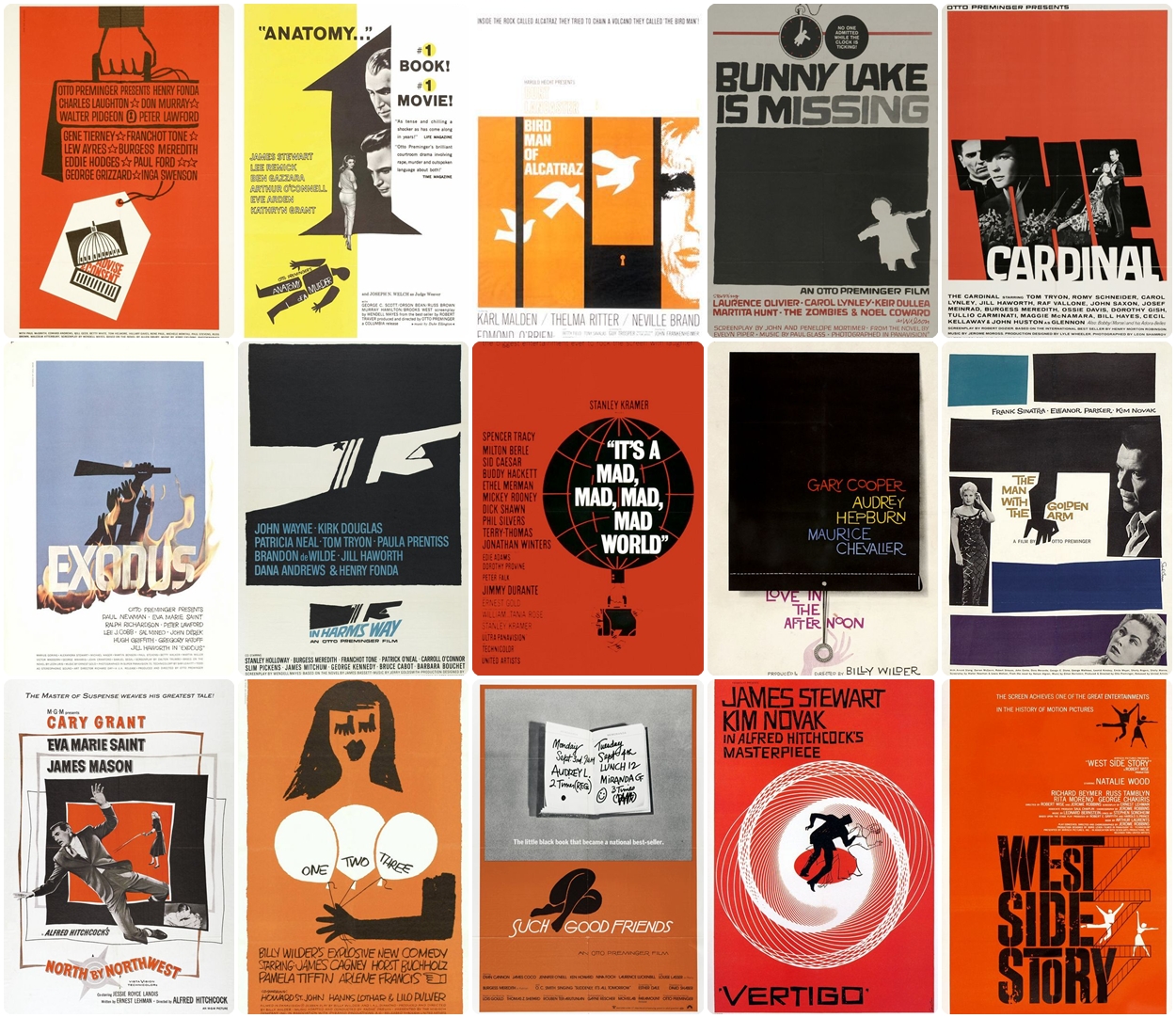
COMMENTS: Saul Bass is the strangest kind of movie legend. While everyone else was trying to earn fame as an actor or an auteur, or the more adventurous hoped to become a household name as a writer or a composer, Bass carved out a lasting legacy as a master of marketing and design. His graphic skills are still revered as some of the finest and most memorable film posters and title sequences (the latter in partnership with his wife, Elaine) ever devised for the medium. He built a second career for himself as the creator of some uncommonly memorable corporate logos, and his distinctive style even earned him his own Google Doodle. His skill at capturing a movie’s mood soon carried over into the filmic storytelling itself: what could have been a simple end credit sequence to Around the World in Eighty Days became a six-minute animated epic retelling of the tale audiences had just sat through; some accounts (including that of Bass himself) give him credit for crafting Psycho’s iconic shower sequence; and his own dabblings in short filmmaking earned him three Oscar nominations, claiming the short documentary prize for “Why Man Creates.”

All this is to say, when you sit down to watch the sole feature film that Bass ever helmed, you should know not to expect anything traditional or commonplace. Yet audiences and executives alike seem to have been completely unprepared for the kind of movie that Bass intended to make. The subject matter suggests a B-movie with cheap thrills, a la Empire of the Ants or Kingdom of the Spiders. To think that Saul Bass would get control of a film and make something  uninspired is to fail to read the man at all.

For one thing, it’s probably the most delicately paced nature-on-a-rampage movie ever made. Like a metaphysical take on The Andromeda Strain, the film pits methodical scientists against a mysterious phenomenon they are just beginning to understand, and we see their step-by-step process as they test out pesticides and make halting first steps at communication. It feels real, if not suspenseful; the closest thing we have to a ticking clock is the ever-present threat of the government withdrawing a funding. It’s a thriller for tenured university professors.

Bass and screenwriter Mayo Simon are far less interested in the human side of the tale. With the scientists played by the classically arrogant Davenport and the determinedly milquetoast Murphy, and Frederick’s ingenue mainly present to facilitate the ending and to provide the geography for an entertainingly creepy ant’s-eye tour, there’s not much to latch onto. It’s not as though you’re rooting for them to die, but you’re definitely not invested in whether or not the scientists live. Especially when you’ve got the convincingly creepy world of the ants to reckon with. From their 2001-style monolithic creations on the Arizona plains (Arizona being played, oddly enough, by Kenya) to their elaborate funeral ceremonies, the bugs are where it’s at. The close-up photography of Ken Middleham (who cut his teeth capturing similar up-close insect footage for The Hellstrom Chronicle) is absorbing and brings character and nuance to the ant populace, in a way that no present-day CGI take on the material could ever manage.

Adding Phase IV to our list might have been a no-brainer, had the producers not chosen to cut a four-minute chunk out of the movie’s finale. The released cut leaves you with an enticing uncertainty, as the surviving humans are left to contemplate their unknown future. But that’s nothing compared to the original vision (recently rediscovered and offered on a French Blu-Ray release and as an iTunes extra), in which the transcendental implications of the coming conjunction of life on Earth are explored and the true meaning of the film’s title is revealed. With Dalí-esque landscapes, an unsettling soundscape created by Stomu Yamashta, and a cacophonous mix of solarization, overlaid imagery, and off-kilter angles, it almost manages to capture the unseeable vision of a biosphere transformed. In some respects, it’s the greatest Saul Bass opening sequence ever: a prelude to the evolution of the human race.

WHAT THE CRITICS SAY:

“Think of it as the 2001: A Space Odyssey of treacherous ant movies… it’s a gorgeous and strange film to look at, accentuated by Brian Gascoigne’s sparse and eerie electronic score.” – Jim Knipfel, Den of Geek

(This movie was nominated for review by Morgan. Suggest a weird movie of your own here.)