Tag Archives: Mystery

175. L’IMMORTELLE (1963)

Recommended

“-Do you know the poems of Sultan Selim?

‘They are full of flowers and perfumes,

greenery, cool fountains, and slim jets of water.’

-Which Sultan Selim?

-I don’t know. Whichever. They were all named Selim and they all wrote the same poems with the same cliched imagery that recurs like fetishes. Or passwords you utter to pass through the garden gate and enter the palace of your sleepless nights.”- L’Immortelle

DIRECTED BY:

FEATURING: , Jacques Doniol-Valcroze,

PLOT: A professor vacationing in Istanbul comes across a mysterious, vivacious woman who weaves in and out of his life during a fateful summer. The impenetrability of the woman ignites an obsession in the professor, one that leads him into the shadowy, knotted heart of the city and the underbelly of his own desire.

Stil from L'Immortelle (1963)

BACKGROUND:

  • Already a staple in French New Wave as a successful screenwriter (Last Year in Marienbad), Alain Robbe-Grillet was trying to break into motion pictures as a director, but was unable to find the funding. A Belgian producer agreed to fund his first feature on the condition that he use funds legally tied up in Turkey (due to an inability to convert the Turkish pound, which had left a wool-trading friend of the producer’s unable to use his profit anywhere else in the world). Robbe-Grillet shot the film there and used the location as a central narrative device, in the vein of a cinematic arabesque.
  • Robbe-Grillet’s own wife Catherine plays the oft-mentioned Catherine Sarayon (or Carayon). Robbe-Grillet met her in Turkey, which is similar to the way the protagonist meets the woman he falls for in L’Immortelle. Catherine wrote several novels of sadomasochistic erotica, sometimes under the pseudonym “Jean de Berg.”
  • During filming, Turkey erupted into a violent revolution in which the heads of government were all hanged. Robbe-Grillet, whose production company had made deals with the ousted government, had to get out hastily and wait in France for the volatile situation to die down before returning to complete the film.
  • Although it was reasonably well-regarded at the time of its release, screening at the Berlin Film Festival, L’Immortelle since fell between the cracks and was not released on home video in any form until 2014.

INDELIBLE IMAGE: This film is rife with iconic, spellbinding imagery, but chief among them is the mystical and sacred moment in the mosque as the professor, already deeply entranced by the woman of his waking dreams, searches for her in the darkness. He shambles around a corner with desperation in his gait (slowly, though, as if no wait was long enough), and spies the woman kneeling on the ground kneeling in prayer, perfect and impregnable. She rises to meet him like a goddess of torturous pleasure; her grace and beauty combined with his love-struck agony in the shadows is a moment of understated, haunting beauty.

WHAT MAKES IT WEIRD: L’Immortelle operates less like a film and more like a state of mind, using baffling, at times purposely repetitive shots to create something that transcends the world of the nominal. It is a movie based in philosophy, emotion, and spirituality, not plot and structure. It does not want to entertain or make sense, it wants to touch below the surface, and it does through the tried-and-true tactic of not explaining a single thing, compounding each image placed on screen into an enigma that never diminishes as time rolls on.


Original French language trailer for L’Immortelle

COMMENTS: The narrative tradition is a lie. From our earliest fables to the towering epics of our own time, we tell stories in the way that is the most Continue reading 175. L’IMMORTELLE (1963)

174. VERTIGO (1958)

“If Vertigo remains, unchallengeably, Hitchcock’s masterpiece, this is surely because there the attitude to the unknown and mysterious is not simply one of terror but retains, implicitly, a profound and disturbing ambivalence.”–Robin Wood, “Hitchcock’s Films

“Only one film had been capable of portraying insane memory, impossible memory: Alfred Hitchcock’s Vertigo.”—Sans Soleil

Must See

DIRECTED BY:

FEATURING: James Stewart, , Barbara Bel Geddes

PLOT: During a rooftop pursuit of a fleeing suspect, John “Scottie” Ferguson finds himself hanging from a drainpipe; the uniformed cop who tries to save him slips and falls to his death. Suffering from debilitating acrophobia and vertigo, as well as survivor’s guilt, Scottie quits the police force. An old college acquaintance offers him a job tailing his wife, and Scottie becomes obsessed with the beautiful and mysterious woman who believes she is possessed by the spirit of a suicidal ancestor.

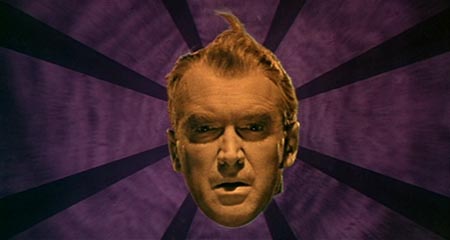
Still from Vertigo (1958)
BACKGROUND:

  • The source of Vertigo was the novel “D’Entre Les Morts” (translated in English as “The Living and the Dead”), by the French writing team of Pierre Boileau and Thomas Narcejac. Hitchcock had wanted to adapt the pair’s first novel, “Celle qui n’était plus,” but the rights were sold to a French company and it was made as Les Diaboliques by Henri-Georges Clouzot. Boileau-Narcejac would later write the screenplay for Les Yeux Sans Visage [Eyes Without a Face] (1960).
  • Hitchcock bought the rights to Vertigo back from Paramount (along with four other 1950s-era films), then willed them to his daughter. The film went out of circulation for many years. The rights eventually ended up with rival studio Universal, who restored and re-released the film theatrically (in 1983 and again, after a major restoration, in 1996) to great acclaim.
  • The dizzying “vertigo” effect (sometimes known as the “dolly zoom” or “trombone shot”) is the film’s most famous technical innovation: the camera tracks backwards on a dolly while simultaneously zooming the lens, resulting in  a disorienting visual experience of moving backwards and forwards simultaneously.
  • Abstract Expressionist painter John Ferren designed the dream sequence.
  • A controversial flashback scene reveals the “twist ending” about two-thirds of the way through the movie. Before the film’s release Hitchcock decided to remove this sequence, over the strenuous objections of his producer, Herbert Coleman. After preview audiences were unimpressed by the flashback-free cut, the studio ordered Hitchcock to return the film to the way it was originally shot.
  • Vertigo, which was exceedingly dark compared to the average Jimmy Stewart vehicle, was not as successful as Hitchcock’s previous hits such as 1954’s Rear Window, and barely broke even at the box office. The scale of its initial failure is often exaggerated, however, for the sake of a good story: it qualified more as a minor disappointment than a flop. The contemporaneous reviews were also mixed (leaning towards positive with reservations about plausibility and pacing), rather than universally negative, as is sometimes implied.
  • In the 2012 Sight & Sound critics poll, Vertigo replaced Citizen Kane, the top vote getter every year since the poll’s inception in 1962, as the greatest movie of all time. (It ranked #7 on the director’s poll, where Tokyo Story took the top spot).

INDELIBLE IMAGE: It has to come from the dream sequence. Although we chose Jimmy Stewart’s head floating against a shifting kaleidoscope background to illustrate this review, the most thematically significant image is the male shadow falling, first onto a terracotta rooftop and then through a white void (this figure is incorporated into the original Saul Bass-designed poster, where it combines with the movie’s other significant motif, the spiral).

WHAT MAKES IT WEIRD: Vertigo may be one of the most subtly strange movies out there. It’s entirely possible to watch it and see it as no more than a conventionally (if implausibly) plotted mystery. But peer into its vortex closer and you’ll see why this brightly lit but oddly dreamlike tragedy has fascinated generations of moviegoers: in its depths hides madness, illusion, necrophilia, sexual domination, a perverse longing for death, guilt, and the grinding gears of merciless fate. There’s a reason Vertigo is a cult movie. It doesn’t give up its secrets easily. Watch it again, with your weird eyes.


Re-release trailer for Vertigo

COMMENTS: Did any movie produced under the Hollywood studio system ever torture its protagonist as mercilessly as Vertigo torments Scottie Continue reading 174. VERTIGO (1958)

CAPSULE: IRON DOORS (2010)

DIRECTED BY: Stephen Manuel

FEATURING: Axel Wedekind, Rungano Nyoni

PLOT: A man wakes up to find himself locked in a concrete vault sealed with iron doors; he hopes the key to his escape lies inside the padlocked locker that, besides a dead rat, is the room’s only furnishing.

Still from Iron Doors (2010)

WHY IT WON’T MAKE THE LIST: It’s a well-made independent film heavily influenced by fantastical survival movies like Cube and Saw; while it is interesting, it languishes in the shadow of its superior predecessors.

COMMENTS: Iron Doors asks the gross, but mesmerizing, question: if you were locked inside of a concrete room for days with no hope of escape, how long would it take before you started drinking your own urine and eating maggots to survive? This is the situation a nameless man finds himself in when he wakes up with a hangover in a concrete vault, assuming he’s the victim of a prank. But as the hours pass and no one answers his calls from help—and the iron doors locking him in refuse to budge—he will be forced to draw on all of his ingenuity and will to survive. Part of a mini-genre of “people abducted and held in mysterious bondage” movies that includes Cube, Saw, the first act of Oldboy, Iron Doors is ably acted by Axel Wedekind, who rants and raves at his fate before settling down to the business of devising a seemingly impossible escape. The early reels are surprisingly involving. The purgatorial gray stone and steel of the bunker, flickering in fluorescent lights, provides an oppressive and claustrophobic atmosphere, but director Manuel finds ways to add splashes of color for excitement, and the film doesn’t look dour or cold at all. Just as the script seems to have run out of survivalist tropes to mine for life-and-death drama, a surprise development in the second act gives it fresh new dynamics to explore. So far, so good; Iron Doors manages to involve us in its high stakes and mystery through the first hour of its brisk eighty minutes. The big problem is, not surprisingly, the ending. Having built up such a sense of baffling mystery, its almost certain that the resolution will be a letdown. Without giving away the secret, we can safely say that most viewers have found the ending disappointing. The filmmakers intend an allegorical reading, which is fine, but mildly ambiguous denouement doesn’t satisfy. It neither magnifies the mystery, nor provides a plot-hole free logical solution; it instead splits the difference between a mystical and a rational explanation, satisfying no one. Furthermore, the end comes on too abruptly, without a properly tense buildup, and the final shot snaps off quickly before we can process it. Despite the lack of a final killing blow, however, Iron Doors is still a fine and worthy independent effort that deserves neither its current obscurity nor its unconscionably low IMDB rating of 4.5. The principals involved here all show talent and I look forward to seeing them in future projects.

Iron Doors was made in Germany by an Irish-born director, but the main character speaks perfect English and appears to be American. The film was originally shot and presented in 3-D. This gimmick didn’t go over well with those who saw it at film festivals, who frequently complained that the stereoscopic effects were pointless given Iron Doors‘ minimalist setting. The DVD version looks just fine on a flat screen.

WHAT THE CRITICS SAY:

“…appears to have a lot to say but is very ambiguous about its message and intent. The twist conclusion only baffles the film further and, perhaps, for the better.”—Doc Rotten, Horror News (contemporaneous)

LIST CANDIDATE: YELLOWBRICKROAD (2010)

366 Weird Movies may earn commissions from purchases made through product links.

DIRECTED BY:  Jesse Holland, Andy Mitton

FEATURING:  Cassidy Freeman, Anessa Ramsey, Laura Heisler, Lee Wilkof, Clark Freeman, Michael Laurino, Alex Draper, Tara Giordano, Sam Elmore

PLOT:  A small entourage of pseudo-anthropologists encounters disorientation, bedlam and horror on the trail of a historic mass disappearance.

WHY IT MIGHT MAKE THE LIST:  Yellowbrickroad’s set-up is not so odd—a bunch of 20-somethings lost in the woods. We’ve seen this a thousand times, although some very strange things occur in the woods in Yellowbrickroad. What pushes it over the precipice of weird is the ending, and what it means. The gruesome, ethereal ending changes the entire story into a bizarre horror odyssey, and this, combined with surreal settings and occasional use of blue monochrome cinematography, deliver a viewing experience that morphs from garden variety unusual to full-blown weird.

COMMENTS:  A fortnight ago I discussed the independent puzzler, Resolution (2012).  It’s plodding and pensive, but delivers on its clever high concept with a disturbing climax. The glibly-titled Yellowbrickroad follows a like formula and offers a similar experience. It’s enigmatic, and saves all of its open-ended answers for its lurid finale. While Yellowbrickroad has fewer puzzler paradoxes than Resolution, first time feature film writer/directors Jesse Holland and Andy Mitton do a pretty good job considering their half mil micro-budget, incorporating intriguing and colorful elements of mystery, and a couple of mesmerizing characters, into the script.

In Yellowbrickroad, several young academics set out to re-chart a rural New England zone inexplicably reopened and declassified after an unsolved mass exodus emptied a nearby town 70 years ago. And, you guessed, it, everyone disappeared into them thar hills. Except for their intestines, that is.

OK, not just their intestines. Other parts were found too, but not nearly enough to account for everyone. Some of the emigrants, intestines and all, just…well they just vanished. We get the general idea.

Or do we?

Because, except for several token nods to the 1939 classic The Wizard Of Oz, Yellowbrickroad’s enigma is so perplexing that we mostly forget to question several pretty far-fetched plot holes. Such as why people in the town where everyone disappeared a generation ago are so tight-lipped. If everyone left, presumably today’s residents aren’t the descendents, and so have no stake in the matter.

But that’s OK, because something so unspeakable pervades the locale that just maybe it has a hold on everyone who is afraid to talk about it. One thing’s for sure: when a group of 20-somethings venture into the spooky, spooky hills in search of a macabre mystery, we can predict that…well, let’s just say, “we knew there’d be death!” A lot of it.

To its credit however, Yellowbrickroad avoids typical deep woods “boo!” and splatter clichés, instead building on the atmosphere inherent in being disoriented in a labyrinthine forest. As the team’s equipment fails, so do their minds, and the fact-seeking sleuths succumb to bedlam and violence. Time and space mean something different here, and all the while, period music from the era of the disappearance inexplicably wafts across the landscape. The trekkers can’t determine it’s source—or the way back. The path, nicknamed the “Yellow Brick Road” since its original followers departed from a local theater playing The Wizard Of Oz, held then, as today, some kind of symbolic “way out.”

Or not.

For the woods have swallowed our crew of intrepid explorers, their navigational aids won’t work, and there seems to be no way off the trail. Reminiscent of an old fable about suicide, in which those who killed themselves were presumed to be dissatisfied with reality, and wound up sentenced to increasingly topsy-turvy, contrary worlds each time they attempted escape, the Yellow Brick Road in Yellowbrickroad obviously leads to some much weirder reality, with the grim caveat of “be careful what you wish for.”

Like the aforementioned Resolution, or the engrossing but talky, independent sci-fi thriller Primer (2004), Yellowbrickroad is a niche film. It takes its dialogue-saturated time delivering us to the sensational payoff. All three vehicles would be more effective as half-hour shorts.

Yellowbrickroad offers some gruesome, blackly comedic skullduggery along the way, however, and there’s one forceful, enigmatic early hint of what is to come: an unsettling sound effect that everyone will instantly recognize, but absolutely not be able to place. Until the ending, that is, which slaps you with a sickening epitome of recognition. Understanding the sound only adds to the shock value and will have you repeating the tagline from the 1972  The Last House On The Left: “it’s only a movie.”

Yellowbrickroad (2010) 450 2

WHAT THE CRITICS SAY:

“…by about the one-hour mark, nothing has really happened, and instead of continuing to slow simmer the tension, they turn the carnage up to 11 and we arrive at something resembling a mid-’90s Marilyn Manson music video. Just bizarre.”–Michael C. Walsh, The Boston Phoenix (contemporaneous)

Yellowbrickroad movie trailer

LIST CANDIDATE: DARK CITY (1998)

Recommended

DIRECTED BY: Alex Proyas

FEATURING: Rufus Sewell, , , , Ian Richardson, , Bruce Spence

PLOT: J. Murdoch (Sewell) wakes up in a dingy hotel bathroom. In the adjoining bedroom lies a dead prostitute, and Murdoch is soon suspected of murdering five women, although he has no memory of these events. Inspector Frank Bumstead (Hurt) interrogates Murdoch’s wife, Emma (Connelly), who hasn’t seen her husband in days.

Still from Dark City (1998)

WHY IT SHOULDN’T MAKE THE LIST: What seems like a typically Hitchcockian “wrong man” scenario gradually turns into something far more complicated and weirder… but not weird enough (in my mind) to be considered one of the 366 weirdest films of all time. I suspect Dark City seems “weird” mainly to people who consider all science fiction weird (and revealing that the film is science fiction may already be giving too much away). Still, it is a truly fascinating and visually stunning production that continually asks the question, “what is reality?,” and does so in a far more sophisticated manner than the similar and much more popular The Matrix.

COMMENTS: At first Dark City seems to be film noir, and the look of the movie is vaguely 1940’s, with almost every scene taking place at night; all of this is somewhat similar to director Alex Proyas’ previous The Crow. The film’s highly impressive art direction (by Battlefield Earth’s Patrick Tatapolous) is reminiscent of Metropolis, Blade Runner and Brazil, although on his director’s commentary, Proyas denies any such influence. Kiefer Sutherland plays creepy Dr. Schreber, Murdoch’s therapist, in a manner that subtly recalls 1940’s character actor Peter Lorre. But the 1990’s-style special effects, produced some 15 years ago, are still flawless. The sight of skyscrapers sprouting out of the ground predates Inception by more than a decade. And the musical score by Trevor Jones (The Dark Crystal), part of which was used to advertise the first X-Men film, is electrifying. Dark City is a true gem, and, unlike The Matrix and its sequels, it raises the questioning of reality, and then actually grapples with the idea, instead of forgetting all about it and simply indulging in showy displays of special effects. Dark City presents plenty of visual spectacle, but that spectacle is actually germane to the storyline. It’s well worth seeing.

This Director’s Cut DVD is about 11 minutes longer than the theatrical version. The changes seem relatively minor, although Sutherland’s opening narration, which gave away too much of the plot, has been removed for this new cut. Also, Connelly plays a nightclub singer, but her singing isn’t very good in this extended version; in the theatrical cut, a woman with a better voice dubbed her. Somehow, the fact that her singing is now rather flat and… sleepy… only adds to the film’s dreamlike, creepy atmosphere. The DVD extras are quite extensive. There are three audio commentaries, one from Proyas, a rather dull one from screenwriters Lem Dobbs and David (The Dark Knight) Goyer, and another from Roger Ebert, who admires this film a great deal. He has only done two other audio commentaries: for Citizen Kane and Casablanca! There is also an on-screen introduction from Proyas, who explains why he assembled this new cut in the first place, the theatrical trailer, a couple of “Making Of” documentaries, and a Production Gallery of photographs taken by Sewell, who was apparently a real shutterbug on the set.

WHAT THE CRITICS SAY:

“…relentlessly trippy in a fun-house sort of way… Proyas… is a walking encyclopedia of weird science-fiction and horror imagery.”–Stephen Holden, The New York Times (contemporaneous)