Tag Archives: Horror

LIST CANDIDATE: MOTHER (2017)

mother! has been promoted to the List of the 366 Weirdest Movies ever made. Please read the official Certified Weird entry. Comments are closed on this post.

DIRECTED BY:

FEATURING: Jennifer Lawrence, Javier Bardem, , Ed Harris, Brian Gleeson, , Kristen Wiig

PLOT: A poet with writer’s block and his younger wife live alone in a remote house until their domestic tranquility is interrupted by an ever-increasing number of guests.

Still from mother! (2017)

WHY IT MIGHT MAKE THE LIST: Writer/director Aronofsky lets the movie all go to hell—mother! is his most irrational and difficult film, and also his most provocative, with one scene that’s likely to send anyone with maternal instincts packing to the exits. It’s a Hollywood movie with an outsider’s boldness, and it’s going to be punished harshly at the box office for transgressing society’s norms—mostly by blaspheming against coherent realist narrative, the biggest taboo of all. Fans of this site will want to check it out in theaters if at all possible; whether you love it or find it a letdown, it’s a rare “event movie” in the weird genre.

COMMENTS: In its first week of release, the highly anticipated mother! has already been buried at the box office; and even though I have my reservations about the movie’s overall artistic success, let’s pause for a moment out of respect for a fallen brother (er, mother!) who dared to brave the multiplexes with a message of glorious excess, confused metaphor, baby abuse, and general cinematic dementia. Its birth was improbable, its life brief, and we may not see its like for many years.

The scenario is something like a ian joke mixed with paranoia, although the film develops its own crazy identity as it goes on. Wifey Jennifer Lawrence is dealing with a flood of unwanted guests who treat the home she’s trying to refurbish as a bed and breakfast; her husband, grateful for the distraction from his writer’s block, encourages them. It doesn’t help her shaky mental outlook that she’s chugging some sort of urine-colored alka selzer and hallucinating hearts clogging the toilet. Early on, mother! plays like a black comedy, with the audience laughing each time the doorbell rings and a new guest arrives. This black humor contrasts with ongoing gynecological horror imagery: a vaginal bloodstain on her hardwood floor, with the blood trickles tracing a Fallopian diagram on the walls of Jennifer’s womblike basement. The dreamlike flow of the first hour that quickly escalates into the nightmarish once a pregnancy arrives at the same time her poet husband publishes a poetry sensation that brings a horde of cultlike fans to their remote homestead. Over-the-top apocalyptic chaos follows, with a religious wrap-up that left some audience members scoffing out loud. Subtle and focused mother! ain’t; weird, it is.

mother! is susceptible to multiple interpretations, which may be a problem in a movie that appears to aspire to allegory rather than mystification. Apparently, Aronofsky intends the audience to read the film as an environmental parable about Mother Earth. But it can also be seen as a metaphor for fear of procreation (the strangers who sew chaos in the house act just like unruly children), and at the end it becomes a (heavy-handed) Christian allegory (with Lawrence as Mother Mary, paying an even heavier price for humanity’s sins than her son does). And all along, with its poet/God hero, it’s simultaneously playing as an allegory for the artist, and for the way the audience appropriates His work and gives it their own interpretation—yeah, there’s some heavy meta there.

mother! is already infamous for its divisiveness. It was booed by audiences at the Venice Film Festival and CinemaScore audiences gave it a rare “F” rating, while critics have graced it with generally favorable reviews (68% on Rotten Tomatoes at this time, through the usual dissenters are particularly hyperbolic). 2009’s Antichrist (which also refused to give its parent protagonists proper names) may have been the last movie to create a big a chasm between those championing a film as an audacious triumph and those dismissing it as pretentious twaddle. One thing is for sure: simply dropping a superstar like Lawrence into your surrealist movie won’t make mainstream audiences embrace its uncomfortable weirdness. But J-Law should earn a lot of artistic credibility and respect from a role that was quite a bit riskier than ‘s relatively sane and reserved turn in Black Swan.

WHAT THE CRITICS SAY:
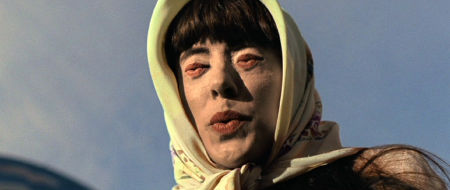
“Its dread has no resonance; it’s a hermetically sealed creep-out that turns into a fake-trippy experience. By all means, go to ‘mother!’ and enjoy its roller-coaster-of-weird exhibitionism. But be afraid, very afraid, only if you’re hoping to see a movie that’s as honestly disquieting as it is showy.”–Owen Gleiberman, Variety (contemporaneous)

CAPSULE: THE EVIL WITHIN (2017)

DIRECTED BY: Andrew Getty

FEATURING: Frederick Koehler, , ,

PLOT: A demon who appears in a mirror tries to turn a mentally handicapped man into a serial killer by threatening him with nightmares.

Still from The Evil Within (2017)

WHY IT WON’T MAKE THE LIST: The Evil Within is an interesting curiosity, with parts that are authentically creepy bumping up against parts that are genuinely scatterbrained. It doesn’t go quite far enough into dementia to earn a spot on the List of the Weirdest Movies Ever—maybe it would have if its director had lived to fiddle with it for another fifteen years—but fans of fruitcake horror films won’t be disappointed.

COMMENTS: “I could never know for sure what was a dream and what wasn’t,” says our protagonist at one point. The Evil Within is as disjointed as a bad dream, but there are also dreams within dreams, including a remarkable and long-extended opening sequence that lectures us on the differences between dreams and stories while showing us surreal visions of a burning key in a light switch, a woman with lips for eyeballs, and Michael Berryman unzipping a boy’s body.

It gets weirder from there, in ways that are sometimes intentional, sometimes unintentional. It turns out that in the waking world our protagonist, Dennis, is mentally handicapped, despite the fact that in the opening narration he described a haunted house ride as “the snow-capped summit in the topography of juvenile taste.” Frederick Koehler’s performance as Dennis isn’t terrible, although at times it does uncomfortably approach Donald Trump playing a disabled reporter. The plot is set into motion when Dennis’ reflection begins talking back to him, and gradually talks him into becoming a serial killer. The steps by which the alter ego accomplishes this—by convincing poor, slow Dennis that people will respect his newfound intelligence if he follows his increasingly horrifying instructions—are legitimately chilling. Meanwhile, Dennis suffers more Michael Berryman boogeyman nightmares, which are what the film does best, until a final “reveal” that explains (to some degree) his condition. The conclusion is also fairly bonkers, with animatronic monsters deployed as study aids to help decode the plot.

In many ways The Evil Within is a standard horror film, with serial killer tropes and hallucinatory monsters. But at times it seems like the work of an genuine outsider, one who doesn’t always grasp normal human motivations (why is the social worker so hell-bound on rescuing Dennis from his loving family? Why does the outrageously hot ice cream girl say “Of course it’s nice to see me, I’m outrageously hot?”) Overall, it’s an interesting and brutal, if raw, trip through the mirror: a unique blend of Nightmare on Elm Street, Henry Portrait of a Serial Killer, and Rainman. It shows a promise that suggests that, had he lived, Andrew Getty might have developed into a distinctive horror voice; if he’d been able to tame his own demons and channel his weird impulses, he might have become a genre maverick like .

The story behind The Evil Within is actually odder than the movie itself. The writer/director, who was a grandson of J. Paul Getty and heir to his oil fortune, self-financed the project, spending an estimated $5 million of his inheritance and endlessly tinkering with it in post-production for 13 years, all while battling a methamphetamine addiction. He died in 2015 at 47 years of age, before completing his work. His editor finally compiled the version we now see before us.

WHAT THE CRITICS SAY:

“…it’s already garnering a reputation as one of most singularly strange films to come along in a good while. And rightly so.”–Travis Johnson, Film Ink (contemporaneous)

(This movie was nominated for review by “Russ,” who called it “A flawed film, to be sure, but even moreso: an absolutely fascinating film, a grand example of uncomfortable, outsider art.” Suggest a weird movie of your own here.)

CAPSULE: MALADY (2015)

DIRECTED BY: Jack James

FEATURING: Roxy Bugler, Kemal Yildirim, Jill Connick

PLOT: A grieving daughter buries her sorrow in a new relationship, but when her boyfriend’s mother summons him home, she confronts a malevolent force.

Still from Malady (2015)

WHY IT WON’T MAKE THE LIST: Malady is a brutal, unforgiving look at both the rawness of grief and the depth of cruelty. The film explores these topics with shocking bluntness. However, the weirdness lies mostly in the telling, which deliberately challenges the audience in order to evoke the characters’ feelings.

COMMENTS: If Malady were a typical horror film, the moment when Holly (Bulger) takes her first step toward calamity would be a scene of heightened drama, possibly with foreboding music or a shock jump. But here, it’s the grating buzz of a vibrating cell phone. Banal as it seems, her new boyfriend greets the signal with dread. However, like the warning of a crotchety old man about the old cabin up the trail, Holly pushes the red flag aside, and there the trouble truly begins.

In that respect, Malady is a typical horror film, hitting all the beats of the tale of a girl who wanders into the woods only to find a monster lurking within. But writer-director James grafts these tropes onto an atypical examination of the debilitating impact of grief, so what would normally be attributable to inexplicable bubbleheadedness can here be ascribed to the devastating power of loss.

Malady is an uncompromisingly grim motion picture; it starts with the death of Holly’s mother, ensuring that our protagonist begins the tale wounded and psychically frayed. “Find love” is her mum’s final missive, but too devastated to engage with the world, she jumps into a relationship with Matthew (Yildirim), an emotional compatriot. Together, they hide away from the world, having joyless, desperate sex, managing the barest of conversation, and dreading the moment when they will have to re-connect to society. But the more time they spend together, the more Holly begins to feel like this could be the love she seeks. She starts  fumbling about looking for a trace of normal, which leads inexorably to that fateful phone call.

So sparse is the dialogue in Malady that it could barely fill out a long poem. (It’s roughly ten minutes before our heroine utters a word). In the film’s second half, the bulk of that dialogue is delivered by Matthew’s dying mother (Connick), a monstrous figure who speaks only if she can hurt someone in the process and who is self-evidently the cause of her son’s wrecked ego. Her unerring knack for targeting her hate, combined with purposely claustrophobic camerawork, off-kilter editing, and a buzzing soundtrack, leaves the viewer feeling much like Holly: uncomfortable and unmoored.

James has absolute control over the vision presented here, and he has created something impressionistic, channeling raw feeling through cinematic technique. (In addition to writing and directing, he also serves as cinematographer, editor, sound designer and editor, colorist, and producer). The film is a rush of images, sometimes unfocused, frequently confusing in their order and context. Malady is about deeply damaged people, and James has crafted a piece that reflects their troubled, fraught mindset, even if it doesn’t offer them much hope.

Malady is expertly made, superbly acted (especially by Bulger, who deserves a film where she can smile), and so emotionally raw that it’s nigh impossible to contemplate a repeat viewing. There’s cleverness in the application of horror-film logic to the overpowering effects of grief, depression, and abuse, and it extends to the movie’s climax: having endured a hell that would be absurd by conventional standards, Holly is moved to act in a manner that would earn her cheers if she was vanquishing a supernatural monster or a relentless serial killer. However, in this setting, the victory is hollow, and the movie’s final message seems to be that the real Big Bad here—painful and devastating loss—can never be defeated. Malady is a horror movie where nothing is metaphor, and the Final Girl is destined to lose.

WHAT THE CRITICS SAY:

“This aesthetic package’s psychological dimensions are at once vivid and mysterious — an impact that may not fully compensate for those viewers ultimately frustrated by the pic’s stubborn resistance to greater character development/backgrounding, let alone the odd moments when seemingly key dialogue is almost unintelligible. For others, though, the unique clammy force of Malady’s claustrophobic bad vibes will outweigh the nagging questions its narrative leaves behind.” – Dennis Harvey, Variety

1966 DRIVE-IN DOUBLE FEATURE: NIGHTMARE CASTLE AND THE DIABOLICAL DR. Z

Coming soon…

“Thunderbird International Pictures Presents The Death Curse of Tartu, a legend black with evil and red with the blood of innocent youth!!! Photographed in the forbidding depths of the Florida Everglades, this is the incredible story of an archeological excursion, planned as an educational attraction and ending as a blood-spattered nightmare!!! Cold and slimy creatures without mercy hunt and kill, controlled by the soul of a rotting corpse. They danced over the grave of Tartu who was restless in his coffin and made passionate love on his burial ground until … they faced the terrible reality of The Death Curse of Tartu! Was it really a killer shark in the swamp waters? Or  was it… Tartu, who had sworn vengeance on all who disturbed his grave?  See the bloody massacre of terrified youngsters as Tartu, the witch doctor, returns to wreak vengeance. See The Death Curse of Tartu, coming soon to this theater.”

And…

“Famous characters of the fairy tale world together for the first time. It’s all new when K. Gordon Murray presents Little Red Riding Hood and the Monsters. See the Wicked Witch and all her bad guys. Bad guys? Mr. Hurricane! The Robot! Carrot Head and the Siamese Twins: two-in one. Frankensteen. A giant spectacle in color with a story that children and grownups will never forget.  Little Red Riding Hood and the Monsters! 

Our Feature Presentation!

Nightmare Castle (directed by Mario Caiano) rarely makes best-of films lists, with even the star herself seemingly holding it in low esteem. Although a pastiche of Steele’s earlier work, Nightmare Castle is entertainingly tailored to the actress’ idiosyncratic screen persona and remains one of the better-filmed opuses in her oeuvre. As in ‘s Black Sunday (1960), Steele is cast in dual roles, one of which is a revenge-seeking disfigured ghost (hence its alternative title, The Faceless Monster).

Still from Nightmare Castle (1966)Its virtues are hardly found in the narrative about a sadistic husband (Paul Muller) who tortures and kills his unfaithful wife (Steele) along with her lover (Rik Battaglia), then marries her mentally unstable sister to get the inheritance. Exquisite cinematography (Enzo Borboni), a top-rate dissonant score (Ennio Morricone), Steele at her her most beguiling, and Caiano’s attention to detail renders the plot secondary. Almost surrealistic in parts (one scene clearly was a major influence on 1998’s Ringu), Nightmare Castle is shockingly sadistic and misogynistic (Battaglia loses an eye in an unsettling torture scene, and Steele gets acid to the face, followed by an  S &M electrocution). It’s also visually and musically memorable, and yet another director with a Steele fetish allows the star to sear. Unfortunately, the dubbing is poor, but the valuable Blu-ray from Severin Films is a considerable improvement over previous releases. Among its extra features are complete versions of the Steele-starring films Castle of Blood (1964) and Terror Creatures from the Grave (1965).

Good evening. It’s intermission time.

“Flavos: the delicious, oriental treat that’s out of this world for taste-tempting goodness. Light and delicious, full of tender, juicy fresh shrimp meat. America’s favorite shrimp roll. You’ll say they’re shrimply delicious.”

“Free for our patrons… Men, women, boys, girls…through the cooperation of Leading Business Places …You may now have free admission to this theater. Ask for DividenTickets  when you shop at Nelson’s Liquor Mart. Hywy 51 North of Bridge. Tomahawk’s Largest & Finest.”

“See you in CHURCH Sunday! When you attend church, it’s not an ordinary act. It is something worthwhile. When you attend church, you come to GOD’S house to adore, worship and praise. See you in CHURCH Sunday!”

“It’s Showtime.”

1966 may very well be among the most shocking years in the entirety of cinema. It’s the year that actually made a relatively good film with The Diabolical Dr. Z (so maybe there’s hope for yet). Perhaps Alejandro Ulloa’s lensing inspired Franco to move beyond his typical laziness. The titlur mad doctor (Antonio Jimenez) actually gets bumped off early in the film, leaving his daughter (Mabel Karr) to take up a doctoral course in revenge. She gets a bit of help from Miss Death (Estella Blain) at the local jazz club, which naturally means a typical Franco jazz score (by Daniel White, who makes a cameo, along with Franco himself). There is one theory that Franco merely made films to show off his love of jazz, and in many cases that may be factual, but here it’s icing on a cake with macabre set pieces (including an arachnid stage show), kinky mannequins, a doomed sexpot hitchhiker, a hillside strangler, and an off-the-charts fisticuffs finale in a decadent castle. What more could you ask of the prolific hack? He deserves a break today with The Diabolical Dr. Z.

“Please remember to replace the speaker and heater when you leave the theater.”

This review, including the drive-in bumpers, refers to the (currently out-of-print) double-feature DVD from Sinister Cinema.

1963 DRIVE-IN DOUBLE FEATURE: THE GHOST AND DEAD EYES OF LONDON

Coming Soon…

“From caves and sewers come The Slime People! They kill, kill, kill! There’s no escape from The Slime People! Nothing can stop the horror of The Slime People! For a new adventure in terror, live through the wild blood bath of The Slime People!”

And Now, Our Feature Presentation!

The Ghost (directed by Riccardo Frida) stars in another homicidal adulteress role. Hyped (misleadingly) as a sequel to Frida and Steele’s successful The Terror of Dr. Hichcock (1962), The Ghost, is woefully predictable and is not this director’s best work. However,  Steele is nearly at her best, and puts to rest any questions regarding her status as a genre cult icon.

Terminally ill invalid doc John Hichcock (Elio Jotta) is obsessed with seances, while his wife Margaret (Steele) carryies on a torrid affair with her husband’s physician Charles Livingstone (Peter Baldwin). John has a loyal governess in Catherine (reliable character actress Harriet Medin; a regular and memorable as the POTUS in Death Race 2000) who suspects that her mistress is up to no good. Impatient for John’s natural demise, Margaret plots with Charles to whip up a batch of poison. The dirty deed carried out, the philandering couple don’t count on a hitch in the will and an avenging ghost before their inevitable comeuppance.

Poster for The Ghost (1963)Frida’s ho-hum scripting plods, but The Ghost is salvaged by Steele’s malevolent magnetism (Raffaele Masciocchi’s camera swoons over her). Flavorfully-filmed, unnerving vignettes include an animated wheelchair descending the stairs (prefiguring The Changeling), a nightie-clad Steele wielding a razor, a scheming feline Medin ascending the stairs, flaming annihilation, and a magical finale with betrayals galore. The Ghost is probably the only film in history that has you rooting for a murderess in a fur coat.

Intermission…

“Take a break. Add to your enjoyment of the show with the taste-tempting array of special treats available to you at the refreshment stand. Everything to temp your palate… And everything is fresh… and of finest quality. Pep Up! Fresh Up!  at our refreshment stand!”

“Let the light of faith shine upon you and your love ones. This week and every week … worship together in the church of your choice. ”

“If you should accidentally tear speakers off… turn it in at refreshment building, box office or to any attendant. ”

“Is everybody happy? Then let’s go… it’s showtime!”

It’s Showtime!

Dead Eyes of London (directed by Alfred Vohrer ) is a smartly paced gem in the German “Krimi” genre. Based on the Edgar Wallace novel, it’s a notably superior remake of 1939’s The Dark Eyes of London (directed by Wallace Summers, which in itself is a slightly underrated opus in the canon, although hindered by ill-fitting comedy relief). This Vohrer remake improves on the simplified original with an aptly complex script by Egon Eis. Vohrer, who practically made a career of cinematic Wallace adaptations, has an affection for the material which is contagious.

Still from The Dead Eyes of London (1963)Hairy, blind, -like brute (Ady Berber) dispatches victims galore, frequently in the London fog, choreographed effectively to the famous first movement of Beethoven’s Fifth Symphony. Inspector Holt (krimi favorite Joachim Fuchsberger) finds the victims in the Thames. They all have braille writing on their persons and, it turns out, sizable insurance policies.

Heinz Funk’s idiosyncratic score aptly echoes a cast of equally idiosyncratic characters, including Eddi Arent as a knitting Scotland Yard sergeant, and so-slimy-he-leaves-a-trail (and also wears-his-sunglasses-at-night) . It’s outlandishly violent and spiked with queer humor (a mouthy water-pick view, a killer boob tube, a voyeuristic crucifix, a blowtorch-wielding priest, and a skull with smokey treat treasures). Vohrer makes memorable use of stylish sets and costume design, enhanced by Karl Lob’s crepuscular lensing. It’s probably a notch shy of being a contender for the List, but it’s highly recommended for the locals.

“Please remember to place the speaker on the post when you leave the theater.”

This review, including the drive-in bumpers, refers to the double-feature DVD available from Sinister Cinema.