Tag Archives: British

253. IF…. (1968)

“What child has ever been silly enough to ask, when Cinderella’s pumpkin turns into a golden coach, where reality ends and fantasy begins?”–Lindsay Anderson

Recommended

DIRECTED BY:

FEATURING: , David Wood, Richard Warwick, Robert Swann, Hugh Thomas, Peter Jeffrey, Christine Noonan

PLOT: Mick Travis is a rebellious teenage boy at a British boarding school. Because of “general attitude,” he and two friends are persecuted and beaten by the “whips,” older students given privileges to enforce discipline. During military exercises, Mick and his friends discover a cache of automatic weapons and make plans to disrupt the school’s Founders’s Day celebration.

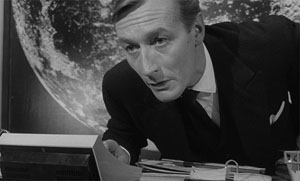
Still from If.... (1968)

BACKGROUND:

  • In England if…. was controversial due to its unflattering portrayal of English boarding schools (particularly, one suspects, of the depiction of pervasive homosexuality) and, by extension, of English traditions in general. When David Sherwin and John Howlett brought their original screenplay to one producer, he called it “the most evil and perverted script he’s ever read.”
  • The film was inspired by ‘s 1933 Certified Weird anarchist screed Zéro de conduite, relocated from 1930s France to then-contemporary Britain.
  • if… was filmed mostly on location at Cheltenham College, director Lindsay Anderson’s alma mater. Many of the boys who appear in smaller roles were students there at the time. A doctored script, missing the final scenes, was given to the college, since the school never would have granted permission to shoot if they had known if…’s climax beforehand.
  • This was Malcolm McDowell’s film debut.
  • Look for portraits of famous revolutionaries and icons of rebellion like Che Guevara, Geronimo, Vladimir Lenin, James Dean and others hanging on the boys’s walls.
  • There is a legend that the film shifted from black and white to color because the producers ran out of money for color stock. Lindsay Anderson contradicted these rumors, saying that they decided to shoot the first chapel scene in black and white due to lighting considerations. He liked the effect so much that he inserted black and white scenes at random to disorient the viewer and to hint at the fantasy elements to come later.  Anderson insists there is no symbolic “code” or reasoning for why some scenes are monochrome and some in color.
  • Distributor Paramount was horrified by the film and certain it would bomb in Britain. They wanted to bury it, but at the last minute they needed a movie to screen in London to replace their current flop: Barbarella. if… went on to be a hit.
  • if…. won the Palme d’Or at Cannes, although in the commentary Malcolm McDowell recalls that he was told that the film actually came in third in the voting, but was chosen as a compromise because the jury could not break a deadlock between supporters of Costa-Gavras’s Z and Bo Widerberg’s Adalen 31.
  • Lindsay Anderson and Malcolm McDowell made three films together, in three different decades. In each of them McDowell plays a character named “Mick Travis,” although based on their varying personalities it’s unlikely that they are intended to be the same person. The other two “Mick Travis” films are 1973’s O Lucky Man! and 1982’s Britannia Hospital.
  • Anderson actually wrote a proper sequel for if…, which was to take place at a class reunion, which was unfilmed at the time of his death in 1993.

INDELIBLE IMAGE: The final shootout, as a whole; it’s both a troubling massacre and an immensely satisfying revenge. Early posters of if… favored shots of star McDowell or the photogenic Girl; we prefer the brief image of a dowager who grabs a machine gun and pitches in for the defense of the school.

THREE WEIRD THINGS: Tiger mating ritual; chaplain in a drawer; granny with a machine gun

WHAT MAKES IT WEIRD: Throughout most of its run time if… is a viciously realistic boarding school drama. But when the Headmaster sternly tells the boys “I take this seriously… very seriously indeed” after Mick shoots a chaplain and bayonets a teacher during the school’s campus war games, we suddenly realize the line between realism and fantasy has been thinner than we thought.


Original U.S. release trailer for if….

COMMENTS: if…‘s theme is the conflict between tradition and rebellion, age and youth, especially resonant concerns in the tumultuous year of 1968, when the firebrand film was fortuitously released a few months after the student riots in Paris. Structurally, ifContinue reading 253. IF…. (1968)

CAPSULE: DROWNING BY NUMBERS (1988)

DIRECTED BY:

FEATURING: Joan Plowright, Juliet Stevenson, Joely Richardson, Bernard Hill

PLOT: Three women bearing the same name resolve their issues with their spouses by drowning them, enlisting the local coroner to aid in covering up their murderous spree. All the while, the film itself counts inexorably from 1 to 100, which marks the movie’s end.

Still from Drowning by Numbers (1988)

WHY IT WON’T MAKE THE LIST: When you put Peter Greenaway behind the camera, there’s going to be some weirdness as a matter of course. But while the movie has striking tableaus composed with his painterly eye, most of the oddity comes from the numerical gambit, with a touch of cavalier attitude toward the macabre.

COMMENTS: There’s no rule that says cinematic murder must be violent, or even serious. Consider the corpse lying in the bucolic countryside of The Trouble with Harry or the repeated deaths of Alec Guinness in Kind Hearts and Coronets. So Drowning by Numbers is following in a grand comedic tradition, right down to the titular crime occurring, like the best of jokes, in threes. However, if the murders themselves are relatively light on shock value, they are also surprisingly light on motive. The first husband is ostensibly murdered for unfaithfulness, although there’s little anger in the crime. The second is dispatched merely for being grossly inattentive. By the time we get to the third, there seems to be no real reason for it at all, other than the fact that, hey, we’ve got another husband to kill. The plot is as inured to the horrors of homicide as its murderers.

Drowning by Numbers is that rare film where it’s a tossup as to whether the tone is misogynist or misandrist. True, the men are largely unsympathetic, and that extends to coroner Madgett, who ultimately proves too aggressive in pursuit of romantic recompense for his role as accomplice. But it’s not as though women come off especially well, either. Even with three female leads, the movie doesn’t really pass the Bechdel test, since their conversations are largely about the men they love/kill. The three Cissies (who might be three generations, and who, curiously, share a name with a B-movie actress) are shockingly cold; they are not righteous, defensive, or even defiant about their acts. Murder seems to be a decision on par with re-arranging the furniture. Maybe this detachment is not entirely their fault, though, as the entire community seems to be largely apathetic about a sudden spike in the mortality rate. In addition to all this drowning, the film features a self-mutilation that is repeatedly dismissed as trifling, an irresponsible vehicular manslaughter that seemingly affects only one character, and a suicide that goes almost completely unobserved. Perhaps the film’s tone is really just nihilist.

Why so carefree about human life? Probably because of all the games. Characters are constantly playing complex games for which Madgett’s son/apprentice (blood relationships are poorly defined in this movie) must describe their arcane rules. They’re something to do in between all the murders. So it stands to reason that Greenaway himself needs a game to distract himself (and us) from the proceedings…which brings us to the numbers. An alternative way to watch the movie is to spend your time looking for the numbers as they advance, like a kind of scavenger hunt. Sometimes they are subtle, hidden on a far wall or tossed off in dialogue; other times they are absurdly obvious, like on a sign awkwardly nailed to a tree or, most amusingly, as identification for a pair of foot racers who stumble upon one of the drownings and proceed to stalk the merry murderesses for the remainder of the film, still attired in their running gear. But the numbers don’t really tie in to the story in any way, aside from a prologue that promises an ending at 100. It’s just a gimmick. A bold one editorially, showing how meticulously Greenaway has laid out his shooting story, but a gimmick nonetheless. It’s essential in the same way a book is on a sea cruise: just another way to pass the time.

Drowning by Numbers is a movie about games, motivated by games, and comprised of games. So your tolerance for the film probably depends on how eager you are to play.

WHAT THE CRITICS SAY:

“You either love [Greenaway]… or you hate him. In either case, you do not understand him. The characters in ‘Drowning by Numbers’ are all completely credible people, who speak in ordinary English and inhabit a real landscape (except for the numbers), and behave in ways that would not shock the reader of a mystery novel. It is just the arbitrary pattern that seems strange, as one husband after another goes to his watery doom.”–Roger Ebert, Chicago Sun-Times (contemporaneous)

UNEARTHLY STRANGER (1963) AND CHAMBER OF HORRORS (1966)

Unearthly Stranger (1963, directed by John Krish) often showed up on late night television from the late 60s through the 70s. Surprisingly, it hasn’t been asked about on What Was That Weird Movie?, ((Now I Remember This Movie–ed.)) because it’s a film occasionally discussed in cult film forums.  Naturally, there is always a risk in revisiting a movie first seen during adolescence. Chances are that it may not hold up—and more often than not, that is the case. Or, one my find value in it, but for very different reasons.

Subdued, with a distinctly British flavor, The Unearthly Stranger has qualities similar to The Quatermass Experiment (1955), Invasion of the Body Snatchers (1956), I Married a Monster from Outer Space (1958), “The Twilight Zone,” and the “Outer Limits.” Shot on a low budget, this Independent Artists production does not rely on special effects, which would have inevitably dated by now anyway. Although short on action and surprises, its virtues are atmosphere, dialogue, and solid performances.

Unearthly Stranger opens with Dr. Mark Davidson (, best known for The Adventures of Baron Munchausen) running through an empty city at night before reaching his apartment. Finding a tape recorder, he leaves a message: “In a little while I expect to be killed by something you and I know is here,” which segues into an extended flashback.

Still from Unearthly Stranger (1963)Shortly after the mysterious murder of fellow researcher Dr. Munro (Warren Mitchell), Davidson and Professor Lancaster (Phillip Stone) resume work on their government funded project, one which enables people to telepathically travel to other planets and potentially contact alien life. In addition to investigating Munro’s death, project supervisor Major Clark (Patrick Newell) has taken an abnormal interest in Davidson’s new Swiss wife, Julie (Gabriella Licudi). Lancaster, a close friend of Davidson’s, is also curious and surprised that he has not been introduced to the new bride.

Rather than putting any potential mysteries to rest, a dinner invitation from Mr. and Mrs. Davidson leads to a startling discovery when Lancaster catches sight of his friend’s wife removing a roast from a 250 degree oven without gloves on. Nothing in the film’s remaining time is as subtly chilling. One very curious theme is the finale’s revelation that all the women in the film are aliens and all the victims male. It is, perhaps, a misogynist’s nightmare that ends suddenly, without further exploration or explanation. While not a classic like Invasion of the Body Snatchers, Unearthly Stranger is an obscure sleeper well worth seeking out.

Unfortunately, it is only available on a U.K. Pal Blu-ray. However, the Continue reading UNEARTHLY STRANGER (1963) AND CHAMBER OF HORRORS (1966)

THE PRISONER (1967-1968), PART THREE

This is Part 3 of a 3 part survey of “The Prisoner.” Part 1 can be found here, Part 2 is here.

“A Change Of Mind,” (directed by Patrick McGoohan) opens with the Prisoner confronted by thugs from the gymnasium (which is fairly typical for workout fundies). Seeing that No. 6 would rather exercise in the woods, they accuse him of being “unmutual” (not status quo) and ferociously pick a fight with him. The Prisoner reacts by beating the hell out of them. Then, like all bullies who get whupped, they go and tattle. Of course, No. 2 (played by John Sharp this week) and his gang threaten a spanking,  in the form of a lobotomy for No. 6—a literal change of mind. Unfortunately, they haven’t found out yet what they need from No. 6: why the Prisoner resigned as an agent. The solution? Make the Prisoner believe he has been lobotomized. The episode uses Rod Serling circularity, with another confrontation in the woods and a table-turning that leads to the charge of “unumutuality” going much higher.

“Do Not Forsake Me, Oh My Darling,” (directed by Pat Jackson) is a genuine oddity in a genuinely odd series. Its contrasting textures are off-colored, with the presence of “star” McGoohan kept to a minimum. He’s hardly even in it, as he was busy filming Ice Station Zebra (1968). Of course, the production team could have simply waited for McGoohan’s return. Instead they found an opportunity for a change of pace. Whether they succeeded or not is intensely debated.

On paper, the plot sounds fatigued. Yet another mind-swapping thriller, the type that “one idea” Universal hack Curt Siodmack wrote repeatedly.  When the Colonel (Nigel Stock) arrives in the Village, he is informed by No. 2 (Clifford Evans) that a professor Seltzman (Hugo Schuster) has invented a mind-swapping machine. Unfortunately, Seltzman is missing and, apparently, once done, the process cannot be reversed, which is hardly going to stop No. 2, if it means obtaining information from the Prisoner.

Yet again, the Prisoner is abducted and drugged, only to awaken in the body of the Colonel. It doesn’t take him to long to do the math and go looking for Seltzman. Along the way, No. 6 has his only love scene in the entire series, played by Stock (because the hyper-Catholic McGoohan refused to ever do a love scene). Stock plays the Prisoner throughout most of the episode without resorting to impersonation. His performance is an effective one, matched by Evans’s charismatic No. 2.

Apparently, the script was loathed by almost everyone, and many “Prisoner” fans rank it as the low ebb of the series. There’s no denying that it doesn’t quite come together, but it is a compelling effort.

The Prisoner, "Living in Harmony"“Living in Harmony” (directed by David Tomblin) is another episode which sounds wretched and could be dubbed “the Prisoner goes west.” However, as when the original “Star Trek” crew relived the gunfight at the OK Corral (in “Spectre of the Gun,” also from 1968), the end result is among the most refreshingly ludicrous in the show’s run.

The Prisoner finds himself in the guise of a recently resigned sheriff Continue reading THE PRISONER (1967-1968), PART THREE

THE PRISONER (1967-1968), PART TWO

This is Part 2 of a 3 part survey of “The Prisoner.” Part 1 can be found here.

Does 6 plus 6 really equal 12? So asks the aptly titled “The Schizoid Man” (directed by Pat Jackson). After a seemingly innocuous trifle about bonding with a psychic villager and a bruised thumb, the Prisoner lies down for a good night’s sleep, but it appears that the room night light has a faulty bulb.

Drugged once more, the Prisoner is taken by men in white coats who wheel him into the hospital, turn him into a southpaw (via electroshock, in a moment of karma for all us lefties who were at the mercy of brainwashing status quo teachers with rulers back in first grade), throw away his razors, and give him a new do.  After an indeterminate amount of time on the gurney, the Prisoner awakens with a new look in a new surrounding, as pawn of an elaborate scheme composed by the new No. 2 (Anton Rodgers), a surprisingly young administrator.

“You are Number 12,” the Prisoner is told at the Green Dome, “and you are to break Number 6.” “But I am Number 6.” And so he is, or at least his double is. And if you think that in addition to being an attempt at uncovering the reason for the Prisoner’s resignation, this is also a ploy to get him to own his number, you would be right.  See Number 12 fence with Number 6. See them box. See them duel with pistols.

Now actually, Number 6 is Number 12 , Number 12 is Number 6, and Number 12 is in cahoots with Number 2. Of course, No. 6 (12) knows this is a feeble scheme hatched by No. 2. Of course, No. 2 knows that No. 12 (6) knows that No. 6 (12) knows. But, what if No. 12 pretends to be No. 6? Perhaps then he could escape. And the helicopter circles back, as it always does. And the psychic is remorseful over having cooperated with No. 2, but neither she nor No. 2 counted on a bruised thumb. Ah!

The script for “The Schizoid Man” so impressed McGoohan  that he hired its writer, Terence Freely, to join the production company’s board of directors. In contrast, for years director Pat Jackson claimed to have been utterly confused by the script, but simply directed it as written. His confusion was an honest one and shows in one of the series most legendary episodes. McGoohan responds with a tour de force performance.

Director Peter Graham Scott was reported to have been equally confused by the script for “The General.” Again, that turns out to be a plus (and undoubtedly an astute choice by McGoohan and company).

The Prisoner cannot even enjoy his coffee without Village trauma drama when he hears an announcement ordering history students to immediately return to their dwellings, which is followed by his witnessing the Professor being caught and manhandled (by his students) while attempting to escape.

The Village is obsessed with a new fad, Speed Learning: “Learn a three-year course in three minutes.” “It’s not impossible,” says No. 12. The Prisoner finds the Professor’s tape recorder, which has “information” that may prove damaging to the General and No. 2 (Colin Continue reading THE PRISONER (1967-1968), PART TWO