
Four friends have a Cronenberg-esque experience watching TV in a crammed room.
WEIRD HORIZON FOR THE WEEK OF 8/27/2021
366 Weird Movies may earn commissions from purchases made through product links.
Our weekly look at what’s weird in theaters, on hot-off-the-presses DVDs and Blu-rays (and hot off the server VODs), and on more distant horizons…
Trailers of new release movies are generally available at the official site links.
STREAMING PREMIERES (SHUDDER):
Mosquito State (2020): A nerdy and psychologically unstable Wall Street analyst breeds mosquitos in his Manhattan penthouse. The quotes in the trailer (“Cronenberg Meets Kafka“; “Bold and Weird”) are promising. Debuts exclusively on Shudder (subscription required).
IN DEVELOPMENT (pre-production):
“The Man Who Fell to Earth” (2022?): Showtime presses forward with its attempt to reimagine the 1976 David Bowie classic as a (limited?) series. The latest news is that “Star Trek: Voyager”‘s Kate Mulgrew will join the cast as a CIA operative. More at Gizmodo.
IN DEVELOPMENT (rumored):
Nosferatu (202?): There’s been a rumor—or maybe, just an expression of mutual interest—that Robert Eggers will team up again with The Witch‘s Anya Taylor-Joy for a remake of Nosferatu. Normally, we’d be against a such a senseless remake, but we’re down for anything Eggers wants to try (and Taylor-Joy is a sweet bonus). Of course, red-hot Taylor-Joy is booked solid for quite a while, and Eggers has to finish his “Viking revenge movie,” The Northman, first. Thanks to Bloody Disgusting for rekindling the speculation based on a single line in an L.A. Times interview.
NEW ON HOME VIDEO:
Blind Beast (1969): Read our review. Arrow Video gives the deluxe Blu-ray treatment to this perverted tale of a blind sculptor and his captive model. Buy Blind Beast.
Two Evil Eyes (1990): Legendary horror directors adapt Edgar Allan Poe: George Romero takes on “The Facts in the Case of Mr. Valdemar” while Dario Argento goes for “The Black Cat.” Harvey Keitel has an over-the-top dream sequence in Argento’s half of the film. Buyer beware: this Blue Underground release is on 4K UHD Blu-ray only (the second standard Blu-ray houses extra features only). Buy Two Evil Eyes [4K UHD].
Viva (2007): A 70s housewife gets sucked into the wild side of the sexual revolution. Anna Biller‘s first full-length feature isn’t quite as strange as her breakout The Love Witch—it’s more of a straightforward parody of period sexploitation films—but it has a similar retro aesthetic. After being somewhat hard-to-find for a few years, it’s now on Blu-ray with behind the scenes footage and commentary by Biller. Buy Viva.
CANONICALLY WEIRD (AND OTHER) REPERTORY SCREENINGS:
This section will no longer be updated regularly. Instead, we direct you to our new “Repertory Cinemas Near You” page. This week we added Brooklyn’s Nitehawk Cinema, which used to host regular midnight movies back in the pre-pandemic times and is tentatively getting back into the game with a Wednesday night screening of Mulholland Drive; Santa Rosa, California’s Roxy 14, whose biweekly cult film series will be a double feature of One Dark Night (1982) and Phantasm; and a brand new venue, Arkadin Cinema and Bar in St. Louis, who have a great slate this week with Son of the White Mare on Friday night and Dune (1984) on Wednesday. We will continue to mention exceptional events in this space from time to time.
WHAT’S IN THE PIPELINE:
Tune in tomorrow night as we’ll be joining in a virtual mob to watch Tom Hardy mumble his way through Capone (2020) on Amazon Prime. As always, the link to join will drop around 10 PM ET here, on Facebook, and on Twitter.
Next week, we’ll review a selection of new releases, the biggest of which will be Giles Edwards‘ report on Leos Carax‘ weirdo Sparks musical, Annette (2021). Venturing further into obscurity, Shane Wilson takes a trip to Mondo Hollywoodland, a low budget indie stoner satire currently available on video-on-demand. Finally, goes deep underground and comes up with a review of The Best of Doris Wishman, a Something Weird soundtrack/DVD collection that dropped in 2021 with little fanfare. Onward and weirdward!
What are you looking forward to? If you have any weird movie leads that we have overlooked, feel free to leave them in the COMMENTS section.
CAPSULE: RETURN TO OZ (1985)
366 Weird Movies may earn commissions from purchases made through product links.
DIRECTED BY: Walter Murch
FEATURING: Fairuza Balk, Nicol Williamson, Jean Marsh
PLOT: After being sent for experimental shock therapy, Dorothy Gale returns to Oz, where she meets new magical friends and enemies as she tries to save the Scarecrow from the clutches of the Nome King.

COMMENTS: Few people today realize that, after the smash success of “The Wonderful Wizard of Oz” in 1900, L. Frank Baum wrote thirteen sequels (and other writers continued the official Oz legacy for a couple dozen additional volumes). With so much material available, it’s a surprise that it took Hollywood almost fifty years to create a live-action[efn_note]An animated sequel, Journey Back to Oz, was released in 1974.[/efn_note] sequel to 1939’s Oz blockbuster; had the original been made in today’s entertainment climate, we would be seeing a new Oz movie every year—at least.
The reasons for the delay had partly to do with rights to the originals being divided up between rival studios (MGM optioned the first book, Disney all the rest). By the 1980s, Disney’s rights to Baum’s works were about to lapse, so in 1985 they handed respected sound-editor-turned-first-time director Walter Murch the opportunity to create a sequel, based mainly on Baum’s third book, “Ozma of Oz,” but also incorporating parts of the immediate sequel “The Marvelous Land of Oz” and original ideas. The resulting movie was a box office flop, often criticized for being too “dark.” But children who saw it in theaters remembered it more fondly than their parents or contemporary critics did, turning Return into a minor cult film on video.
Encouraged by Murch’s own characterization of his work, the accepted wisdom that Return is “dark” is repeated like a mantra every time the film is brought up: often as a criticism or warning, but sometimes as a compliment or lure, depending on who is doing the reviewing. But, while Return is indisputably scary, “dark” implies some kind of inappropriate moral perversity found nowhere in Oz. In the original Wizard of Oz, Dorothy faced a green-faced hag bent on revenge-killing both her and her lapdog, a magical best friend who’s nearly incinerated, and pursuit from nightmarish flying monkeys dressed as bellhops. These vintage horrors compare quite favorably to those found in Return—but just because no one periodically breaks out in lighthearted songs about missing vital organs, the later movie is forever branded as “dark,” while the earlier one is a beloved childhood classic. Return to Oz‘s half-rock Nome king is eerily brought to life through uncanny claymation, but he’s no darker than Margaret Hamilton’s cackling harridan. Return features bizarre creatures called the Wheelers, who dress like New Wave punks who would have been at home as extras in Liquid Sky but for the wheels grafted onto their hands and feet, who a slink about the ruins of a post-apocalyptic Emerald City. Scary, but then again, they’re not freaking flying monkeys.
The darkest element in Return is purely subtextual, and will go right over young ones’ heads: the primitive turn-of-the-century electroshock therapy to which Dorothy’s aunt and uncle subject the girl hoping to cure her of her yearnings for Oz (a procedure that ironically sparks her return to the fantasyland). The reference to barbaric mental health practices of olden times is indeed dark, but few kids would get why in 1985 (and even fewer in 2021). There is an even darker undercurrent, though. This plot device could be read as implying that Dorothy Gale isn’t just an innocent dreamer; in fact, she’s deeply mentally ill, and the land of Oz is her schizoid hallucination. But again, this twist just disturbs the older folks: kids accept Dorothy’s adventures at face value, and remain blissfully ignorant of the suggestion of juvenile insanity.
Return to Oz could never live up to the original movie; wisely, it doesn’t try to. It ditches the musical numbers, which would have inevitably disappointed. 9-year-old Fairuza Balk seems chosen as lead based solely on her jewel-like eyes; she’s no Judy Garland (and she’s confusingly younger than the Dorothy of Wizard), but she’ll do. When we finally see the updated Scarecrow, beloved Ray Bolger has been transformed into an animated puppet, and he’s… a little off. But Dorothy’s new cast of allies are mostly delightful: a talking chicken, roly-poly mechanical soldier Tik-Tok, childlike Jack Pumpkinhead, a moose head attached to a flying couch. So are the villains: evil Queen Mombi with her detachable heads, the severe and mostly-animated grey Nome King. After a slow start, in a full color Kansas, the movie morphs into a well-paced 80s children’s adventure tale, with thrilling escapes and despicable (if not quite “dark”) acts of villainy. It has that magical “Oz” spirit—minus the songs, which obviously wasn’t part of Baum’s original work—and it’s easy to see why those who first saw it as kids fell in love with it. A good fantasy for first time viewers, and great nostalgia for grown-ups.
Also, be sure to read Jesse Miksic‘s detailed analysis for this site, “The Three Fetishes: Transformation and Ethical Engagement in Walter Murch’s Return to Oz.”
WHAT THE CRITICS SAY:
(This movie was first nominated for review by “ubik,” who said that it “was probably the movie that first gave me a taste for weird movies way back in the day.” Suggest a weird movie of your own here.)
FANTASIA FILM FESTIVAL 2021: THE OTHER FEATURES
366 Weird Movies may earn commissions from purchases made through product links.
Here’s a roundup of four notable genre films screening at this year’s Fantasia Film Festival that, for one reason or another, did not receive full-length reviews. If the descriptions intrigue you, look out for these in the coming months.
 We’re All Going to the World’s Fair: As an indie melodrama wrapped in the guise of a horror story, World’s Fair maintains an uneasy ambiguity up through its melancholy epilogue. Casey (portrayed by the age-ambiguous Anna Cobb) is a young high schooler who joins the “World’s Fair” horror cult during a ritual that begins the movie. The eight-minute opening shot cements Casey’s mien and milieu: shy awkwardness housed in an attic bedroom with a glow-in-the-dark-star-covered ceiling. She seeks the unsettling changes promised by a community of horror thrill-seekers, whom we meet through posted videos of “the change.”
On the cusp of adulthood, Casey has yet found no place for herself. Dysphoric, she flirts with suicide. World’s Fair manages to be neither heavy-handed with moralizing, nor tedious with its insistent lack of clarity. That is a narrow path to walk, and transgender “writer, editor, and director” Jane Schoenbrun guides us through this journey with a sure hand. I bring up Schoenbrun’s circumstances because even before reading the director’s statement, I could sense that she unpacks her past confusions and sufferings through storytelling in the intimate depths of this film. The film was a novel experience for me, being the only example of “ominously quirky” cinema I’ve ever seen.
 Sweetie, You Won’t Believe It: I love coming across movies that make for deadly drinking games. Take a shot every time Ernar Nurgaliev’s Brother Kooka shares an old Kazakhstani saying; you’ll pass out in the first twenty minutes. But the story? Oh yeah, the story. Das and his two buddies go on a weekend fishing trip. Das is dying to escape harassing calls from his creditors, constant arguments with his pregnant wife about a baby name, and the general crush of day-to-day existence. When this happy-go-lucky crew accidentally toss a bottle of urine at the car windshield of a four criminal brothers (all perfectly understandable in the frantic context), things begin to go awry. The thugs hit a dog in the confusion, and so enters the Psycho Rural Archetype. This is all very silly, and thank goodness. It is also superbly shot, with balanced frames, clever angles, and also a stylistic touch that particularly tickled my love for tidiness: the opening credits were nicely aligned on various horizontal surfaces. All said and done, a highly recommended romp.
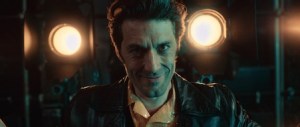 Paul Dood’s Deadly Lunch Break: “This lunch break, I’m going to right all the wrongs that have happened to me and my mum,” threatens the titular reality-star-wannabe. And he does, in a way. This movie is an unabashedly droll mash-up of Falling Down and Airheads, hitting all the expected notes of vengeance and comedy, mightily holding its sequined head high. You’ve seen this story before: aging loser hits back against the system, this time in the form of a dictatorially officious train platform attendant, a racially ignorant tea-shop owner, corrupt church officials, and that scummiest of scumbags, the reality talent show host. I found it impossible not to enjoy, though, as Nick Gillespie is a master of comedy craft, cramming together chuckle-time vignettes and sprinkling David Bowie lyric-references throughout. Like a classic tune you can’t help bopping your head to, Paul Dood’s Deadly Lunch Break is a breezy number that forces a smile to your face.
 Hayop Ka! The Nimfa Dimaano Story: One cat, two dogs, an exotic city—Avid Liongoren’s animated send-up of telenovelas has it all. Nimfa is a perfume counter cat (of course) dating a burly janitor canine, but has a meet-cute with a very wealthy property mogul (also canine) and her life is up-ended. Liongoren delivers playful pokes to Filipino society, particularly the serialized soap operas so prevalent on television. Animation is the perfect medium for the surreal silly touches (cue rubber-ducky drop exposing the hunky male lead after he declares, “let us give in to our burning desires!”) as well as the video-game inspired battles that erupt whenever Nimfa is pushed too far. Clocking in at a swift seventy-four minutes, Hayop Ka! (translation: “You Animal!”) lands in that difficult sweet spot: nothing skated over, no loose ends, and you’re left with that pleasing sensation of wanting a little more.
FANTASIA FILM FESTIVAL 2021: CREEPY SHORTS DOUBLE FEATURE
366 Weird Movies may earn commissions from purchases made through product links.
This post covers two programs of nine shorts each, Things That Go Bump in the East and Small Gauge Trauma, so technically it’s an octodecuple feature—a word so fine that our spell-checker does not even recognize it. Without further ado, here are nine pairs of shorts for you to try on.
“Things That Go Bump in the East” program
 Chewing Gum (dir. by Mihir Fadnavis; 18 min.)—Getting in the spirit of this horror short, my cat Goose appeared at the door to my left. After some minutes of creepy video, I looked left again, and Goose had materialized in the same position, six feet closer. That’s the kind of unsettling occurrence you’ll find here. Classic black and white visuals, killer foley, and minimal dialogue. Of the eighteen-minute run-time, seventeen are perfect. Dark subway, dark roads, and an eldritch entity in black demanding chewing gum from the adulterous protagonist had me riveted. But when the monster took her (?) dues, it was more “uhh…” than “AGGH!!!”
Carnivorous Bean Sprout (dir. by Seo Sae-rom; 5 min.)—An animated PSA-by-way-of-advertisement, Carnivous‘ greatest strength is the no-nonsense newsy narrator discussing the thrilling, new, titular phenomenon. Looking rather similar to sperm with chompy heads, these aquatic sprouts are a hit tourist attraction: people gather in boats, are rowed over to nest, and then handlers rustle the beans, which jump up and bite you. This craze extends to a new variety of monkeys (which rise from the water and scratch you) and elephants (which extend their noses to throttle the happy spectator). Strange things, people are.
 Juan-Diablo-Pablo (dir. by Ralph Pineda, Dyan Sagenes; 15 min.)—I nearly dismissed this out of hand when I realized it wasn’t done with puppets. (How this notion got in my head, I am uncertain.) However, J-D-P does something very impressive by traveling seamlessly from confusing, to mundane, to humorous, to wrenching. All available clues suggest that “Juan Diablo” is Death, and he happens happens to be living in a ratty, newspaper strewn apartment, receiving corpses from a pair of disfigured opera archetypes. His young neighbor Pablo introduces himself with a note hucked through a hole in Juan’s wall, and their wordless encounters at Death’s door have an amusing and wholesome tonality, incongruously achieving Hallmark Card levels of “adorable.” The tone shift at the end is sudden, but not misplaced, poetically bringing attention to the tragedy befalling the Philippines from rampant crime and extra-judicial murders on the part of the police.
 Huh (dir. by Kim Tae-woo; 12 min.)—Huh was a Korean mask-maker of legend, and this is a cartoon tribute to his art. Kim Tae-woo mixes curvy animation of chalk-looking drawings with the occasional hip-hop number to bring the ancient carver to life. A mountain spirit drops some beats as he instructs Huh on how to overcome the tide of spiritual possession plaguing the villagers. I expected this to be cute, and it was; but I was not expecting to heave a sigh of relief when the errant spirits barely made it back into the moon.
Koreatown Ghost Story (dir. by Minsun Park, Teddy Tenenbaum; 15 min.)—I wondered what Margaret Cho was up to. It was quite a pleasant surprise to see her show up in this little horror comedy. Hannah, a young painter who works by day at a hardware store, visits the venerable Mrs. Moon to inquire about the contents of a puzzle box and is quickly whisked to a massage table and poked with needles. After some remarks about Hannah marrying Moon’s dead son, the matriarch mystic disappears and a spirit corpse boy pursues the girl around the house. Another cute Korean story, also with a focus on masks and the Autumn festival (gotta do me some research now). I laughed, I jumped, and I reconsidered the possibilities of acupuncture.
 Night Bus (dir. by Joe Hsieh; 20 min.)—Great art design, but unfortunately the amateur animation style does this little tale of wronged spouses, wronged passengers, and wrong monkeys no favors. The jarring sequences all unfolded with squicky violence undone by the “Happy Tree Friends” excess and awkwardly arranged narrative reveals.
Seen It (dir. by Adithi Krishnadas; 12 min.)—Gather ’round the fire and learn of the horrible eenampechi, the hovering and easily confused arukola, the mystical thendan, and others in this animated cryptocatalogue of wonders. This wry little black and white squiggle ‘toon is based on some of the innumerable supernatural anecdotes of P. N. K. Panicker, a tall-tale teller of some renown. Its easy-going style makes this the only “kid friendly” pick from Things That Go Bump. The raconteur’s advisements come to life before your eyes, Continue reading FANTASIA FILM FESTIVAL 2021: CREEPY SHORTS DOUBLE FEATURE