CAPSULE: A HOLE IN MY HEART (2004)

Ett hål i mitt hjärta

366 Weird Movies may earn commissions from purchases made through product links.

DIRECTED BY:

FEATURING: Björn Almroth, Thorsten Flinck, Goran Marjanovic, Sanna Bråding,

PLOT: A son watches as his father and a pair of actors shoot an increasingly violent and depraved amateur porn movie in their small apartment.
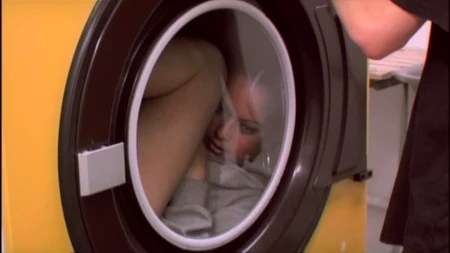
Still from A Hole in My Heart (2004)

COMMENTS: Lukas Moodysson has had a strange career. He began as a poet and novelist before moving into cinema with his debut, Fucking Åmål [AKA Show Me Love], a realistic lesbian romance. After another crowd-pleasing drama, the commune-set Together, he went into darker (but still realistic) territory with Lilya 4-ever, a bleak drama about a Russian girl sold into sex slavery. After this well-received trio, Moodysson was a critical darling with a large home-grown fan base. Seemingly, he decided to blow it all up with the deliberately off-putting experiment A Hole in My Heart.

There’s not much story to Hole. A young man lives with his dad. He rarely leaves his room, partly because the father is using the rest of the apartment as a set to produce a series of amateur porn films with his two live-in actors (one male, one female). In between shoots, the three principals dance and party as the son hangs out alone in his room, tending his earthworms and listening to industrial music on his headphones. The porn scenarios begin as normal sex acts but escalate into pseudo-rapes, force-feeding, and vomit play (the latter somewhat reminiscent of the commune orgies from Sweet Movie.) At one point, the female actor angrily abandons the group, but soon returns to pick up where they left off, acting as if nothing had ever happened. Some character development occurs: the son and father discuss the boy’s dead mother, the actor and male director bond when the latter reveals he has a serious illness (a hole in his heart?) that causes him to occasionally pass out, and the actress flirts with the son, falling short of a seduction but nevertheless producing a bond. Everyone seems to be seeking love, but not finding it. The film ends inconclusively.

The material here is disconcerting enough—the three porn producers block out upcoming scenes using barbie dolls, who sometime lose limbs in the process—but Moodysson deploys infuriating formal tricks to discombobulate the audience. The soundtrack barfs up a lot of grating, staticky noises at random moments. Though the story is ultimately told mostly in chronological order, the editing is often non-linear, crosscutting quiet conversations with sex scenes. There’s a dream sequence featuring crop circles. Moodysson interrupts the flow with snippets of real surgery footage, of both the labiaplasty and the open-heart variety. The entire things is shot faux-documentary style, with indifferent framing, unflattering lighting, and with both product labels and faces of extras fogged out. (At one point, the main cast’s faces are digitally obscured, too, suggesting the characters’ shame and lack of consent to be filmed under these degrading circumstances).

The overall feel of Hole in the Heart is of one of those nihilistic experiments of or . At its best, it approaches a provocation like The Idiots (1998). But Hole fails to generate empathy for the characters inhabiting its squalid setting, leaving little impact other than a dyspeptic stomach. The one thing that saves Moodysson’s experiment from total failure (and a rating) is that the screed does have a particular target, the adult entertainment industry, and it does suggest, through pornographic poetry, how that commercial concern sucks in the vulnerable and distracts humanity from making healthy connections. That’s an intellectually thin message, however, and one that’s largely drowned out by the rivers of blood and vomit on screen.

Moodysson followed up this effort with the even weirder (but less disgusting) Container, an abstract avant-garde movie that nearly cost him all his remaining supporters. Her returned to realism with 2009’s Mammoth, then won fans and critics back with the heartwarming nostalgic coming-of-age story We Are the Best! in 2013. All seven of his features are collected in Arrow’s “The Lukas Moodysson Collection.”

WHAT THE CRITICS SAY:

“…not so much about story as moods, atmosphere and symbolism. At times, its use of sound and flickering images recalls films like ‘Eraserhead’ and the symbolism of early Bunuel. From the beginning, there is a sense of dread and uneasiness, and this feeling only gets stronger by the minute until it feels like the film itself will explode.”–Gunnar Rehlin, Variety (contemporaneous)

CAPSULE: ALCHEMY OF THE SPIRIT (2022)

366 Weird Movies may earn commissions from purchases made through product links.

Alchemy of the Spirit is currently available for VOD rental or purchase.

DIRECTED BY: Steve Balderson

FEATURING: Xander Berkeley, Sarah Clarke, Mink Stole

PLOT: Despite his wife having just passed away, Oliver agrees to create an art installation piece.

COMMENTS: There is a moment of raw delight near the end of Alchemy of the Spirit, when Oliver is explaining his artistic ambitions and process to his latest buyer, Mrs. Sonnenberg. Alex, his agent, stands behind the wealthy patron, fearing the worst. Oliver has been rambling for some time as he attempts to delay showing the new piece—and Alex seems to have been unable to breathe. Finally shown the work, Sonnenberg quietly remarks, “Oliver, it’s perfect.” And Alex’s gasp of relief punctures the scene.

As a general rule, it is poor form to reveal the ending. But the ending in Alchemy of the Spirit is incidental. And, as is so often the way in real life, the events leading up to Alex’s stertorous outburst, are what make Steve Balderson’s film the quiet, but satisfying, narrative artwork that it is. In fact, the film’s beginning is as much a punch as anything else in the film.

Oliver (Xander Berkely) wakes one morning to find that his wife, Heather (Sarah Clarke), has passed away. He cannot believe it; he cries at the tragedy; he refuses to accept it. And then he does something unlikely before laying his deceased wife in an ice-filled tub: he crafts a death mask for her. Over the coming days while she unhurriedly decomposes, Oliver works on a new project his agent agreed to for him. While working, he has long conversations with his wife.

The gauzy lens work, the orchestral score—brought right up in the sound mix—and the occasionally aphoristic lines all manage to gel beautifully, as if their clunky nature becomes softened, and functional. This is a sweet movie; a bittersweet chronicling of one man’s grieving process through art. It is always compelling, and spiked with enough odd mundanity (the plumbers’ visit becomes hilarious in its thriller-like execution, and Mink Stole’s performance as Oliver’s agent is a delight) to make what could have been a saccharine, melodramatic bit of blech into something endearing. Alchemy of the Spirit, like life, comes and goes in a flash; and like life, it’s worth taking a closer look at.

WHAT THE CRITICS SAY:

“…there’s nothing traditional about Balderson’s Alchemy of the Spirit. From Xander Berkeley’s beautiful performance to the magical realism that floods every frame and the script itself. It’s a very weird and atypical depiction of grief. But it doesn’t mean it isn’t understandable.”–Federico Furzan, Movie-Blogger.com (contemporaneous)

32*. LA ANTENA [THE AERIAL] (2006)

Recommended

DIRECTED BY: Estaban Sapir

FEATURING: Valeria Bertuccelli, Alejandro Urdapilleta, Rafael Ferro, Sol Moreno, Florencia Raggi, Jonathan Sandor

PLOT: In a town where the only person with a voice, The Voice, doesn’t have a face, Mr. TV has nefarious plans. When he kidnaps The Voice, her eyeless son and their neighbors must find her and stop Mr. TV before he can take what little they have left. Things come to a head during a boxing broadcast where Mr. TV attempts to suck all language out of the citizens.

Still from La Antena (2007)

BACKGROUND:

  • La Antena premiered at Rotterdam Festival (2007) and was the first ever film chosen to both open and compete in the festival.
  • The movie was a runner-up for the Fantasia Film Festival Ground-Breaker Award, losing the first spot to Repo! The Genetic Opera.
  • Made for a reported 1.5 million, the script was only 60 pages but the storyboard consisted of over 3,000 shots. Shooting took 11 weeks and post-production took more than a year.
  • This was Estaban Sapir’s second feature film, and is his last completed work to date.

INDELIBLE IMAGE: An angry pixie girl inside an ever-snowing snow globe, with typewriter keys jutting from her helmet, a pacifier in her mouth, and arrows at her feet on which she plays a twisted version of Dance Dance Revolution as she turns the people’s voices into commodities.

TWO WEIRD THINGS: Eyeless boy strapped to Star of David; family climbs crumpled paper mountain

WHAT MAKES IT WEIRD: La Antena melds with by way of and , paying homage without feeling derivative. It’s a black and white, (mostly) silent film with subtitles that interact with the scenes. With inventive writing, bizarre characters, and whimsical sets, La Antena surprises throughout.

English-language festival trailer for La Antena

COMMENTS: Helmed by Argentinian writer/director Estaban Sapir, Continue reading 32*. LA ANTENA [THE AERIAL] (2006) →

IT CAME FROM THE READER-SUGGESTED QUEUE: PRAYER OF THE ROLLERBOYS (1990)

DIRECTED BY: Rick King

FEATURING: Corey Haim, Patricia Arquette, Christopher Collet, J. C. Quinn, Julius Harris, Devin Clark

PLOT: In a dystopian near-future where greed and widespread drug addiction have reduced the United States to third-world status, a cult of white-supremacist rollerbladers seeks to consolidate power; a lone skater, Griffin, infiltrates the gang to scuttle their operations and save his little brother.

Still from Prayer of the Rollerboys (1990)

COMMENTS: The brave new world of Prayer of the Rollerboys would seem to be a breeding ground for satire. The schools of the Ivy League have been carted off to Japan brick-by-brick. Mexican troops are repelling American immigrants at the border. Germany has conquered Poland once more, this time with its checkbook. Oh, and there’s rollerblading. Lots of rollerblading. But don’t laugh: screenwriter W. Peter Iliff (from whose pen Point Break and Varsity Blues will soon spring) wants you to be alarmed about even the most outlandish projections for America’s doomed future. There’s darkness coming, and only one thing can save us: Corey Haim.

Poor Corey. The prospective viewer of today might see the presence of the more tragic half of the Coreys in rollerblades as a guarantee of solid so-bad-it’s good entertainment. But it doesn’t turn out that way. It’s no secret masterpiece, but Prayer of the Rollerboys turns out to be a passable action flick, bringing low-budget grittiness and late-80s ethos to a familiar tale, with just a hint of eye-rolling over the near-future mise-en-scene.

After establishing his rollerblading bonafides in the opening credits, we properly meet Haim wearing a barbershop quartet’s striped jacket and boater and slinging an AK-47 for his job as a pizza delivery boy. (His boss: “If anybody messes with the van, [singing] kill ‘em.”) He’s trying to stay out of trouble and take care of his younger brother Miltie. Griffin’s just a good man in a bad world, you see; this world’s version of Marshal Will Kane.

There’s a lot out there to make him wary, like the vast amount of homelessness, the preponderance of populace-pleasing entertainments like nude women wrestling, and of course the narcotic du jour, an phosphorescent inhalant called “Mist.” But the biggest threat comes from the Rollerboys, an organized gang of skating thugs who deal Mist on the downlow while publicly sponsoring food drives and handing out their fascist literature to indoctrinate the masses. They occupy the Venn diagram intersection between Nazi Youth, the Proud Boys, New Kids on the Block, and the cast of Starlight Express. The film luxuriates in the sight of them cruising down the sidewalks of Venice Beach on their inlines, and the image of a dozen pretty rollerbladers decked out in flowing ecru trenchcoats and skating in a uniform flying-V is… well, not cool, exactly, but certainly memorable.

The film works best when it fully commits to the outlandishness of its premise. Griffin’s old grade school buddy Gary has grown up to lead the Rollerboys, and Christopher Collet gives it his all as a low-rent, roller-skating James Spader, a grinning crocodile who is fairly fit to burst into violence. (He even has a pet Komodo dragon to stroke malevolently.) No subtlety here; Gary’s plan to sterilize the population is literally called “the final solution.” His henchmen also bring the barely contained insanity, including Mark Pellegrino as a Jake Busey-wannabe strongman and the perpetually simmering Morgan Weisser, who even bites into an apple with repressed rage.

Against this, Haim does a creditable job, keeping an even keel as a guy who just wants to rollerblade in peace and now finds himself embroiled in chaos. He and Collet have genuine chemistry, engage in a rather effective fight scene, and bring authentic gravity to their final showdown. No, in our topsy-turvy world, the worst performance probably belongs to future Oscar-winner Patricia Arquette, zipping through the film in an admittedly weak role as an undercover cop in a series of joyfully ridiculous outfits (special consideration for her Dale Evans getup) and very little indication of the terrific acting career that lay ahead.

Once you get past the nightmare future of rampaging young white supremacists (all too believable) and full combat on skates (somewhat less so), there isn’t really anything wrong with Prayer of the Rollerboys. It’s derivative and a little silly, but the biggest problem is that the film is punching well above its weight. There are some intriguing ideas lurking in the movie: the allure of fascism, the impotence of our protectors, the weaponization of youth… but it’s all still riding on the shoulders of a Corey Haim rollerblading movie. It has to rehabilitate a teen heartthrob, create a credible future, call out the foibles of society, and do it all while embodying a youth culture that always seems to be just a step out of Hollywood’s reach. It would be a stretch for any movie to pull this all off. This is not the movie to do it.

Prayer of the Rollerboys isn’t bad enough to satisfy the snark-watchers, but not good enough to step out of the bin of forgotten B-movies. It does hint at an alternate universe where Corey Haim was able to realize his potential as an actor, and where we as a society anticipated the dangers of ceding power to pretty people who would co-opt it for nefarious purposes. Alas, in both cases, that stretches credulity just a shred too far.

WHAT THE CRITICS SAY:

“The impact of screenwriter W Peter Iliff’s distinctly weird and intriguing premise is gradually eroded by the eventually unsurprising developments in its interestingly outlandish storyline and also by the over-familiarity of the usual, regulation futuristic setting of a chaotic, dystopian  tomorrow’s world.” – Derek Winnert, derekwinnert.com

(This movie was nominated for review by Lovecraft in Brooklyn, who says the film “features characters that somehow predict the modern alt-right.” Suggest a weird movie of your own here.)

Celebrating the cinematically surreal, bizarre, cult, oddball, fantastique, strange, psychedelic, and the just plain WEIRD!