Category Archives: Capsules

IT CAME FROM THE READER-SUGGESTED QUEUE: MR. MAGORIUM’S WONDER EMPORIUM (2007)

DIRECTED BY: Zach Helm

FEATURING: Dustin Hoffman, Natalie Portman, Jason Bateman, Zach Mills

PLOT: Mr. Magorium, who has run his magical toy store for nearly three centuries, prepares for his imminent departure from the earthly realm, but his plans to hand the reins over to store clerk and aspiring composer Mahoney are endangered by her ambivalence, the suggestions of a straight-laced accountant, and the protests of the store itself.

Still from Mr. Magorium's Wonder Emporium (1993)

COMMENTS: From Dictionary.com:

whim·​sy [ˈ(h)wim-zee] n. 1: capricious humor or disposition; extravagant, fanciful, or excessively playful expression: “a play with lots of whimsy.” 2: an odd or fanciful notion. 3: anything odd or fanciful; a product of playful or capricious fancy: “a whimsy from an otherwise thoughtful writer.”

Zach Helm has an undisguised interest in finding joy amidst the frustrations of life. His screenplay for Stranger Than Fiction focused on a person who has spent his whole life in the grey and comes late to discovering the beauty of leading a more colorful existence. Here, making his directorial debut, he presents a world drenched in color and offers us a character who revels in it, until she doesn’t, and has to find her way back. The former film looked wistfully at the joyful world that was lost. This time around, we need to be right in the heart of that joy, and Helm’s weapon of choice is whimsy. Truckloads of it.

Our setting, identified in the title, is a sort of mad mashup of Willy Wonka’s chocolate factory and Weasley’s Wizard Wheezes. It’s a hyperactive place, perpetually bustling with children who have somehow pried themselves away from their PlayStations so that they can indulge in the unexpected surprises of the toyshop. The toys come to life. Any plaything you desire can be found in a great big book. Bouncy balls are always on the lookout for an escape opportunity. There is always something going on, so much so that the movie is its own Easter egg generator. It’s the kind of a place where dinosaur skeletons peek out the window, Playmobil figures do actual construction, and Kermit the Frog does his weekly shopping. (That’s Kermit himself, looking strangely embarrassed to be stared at, or maybe just to be in the movie.) It’s fun, and then it’s fun, and ultimately it’s FUN, DAMMIT. 

All this is overseen by an enormously affected Hoffman. With eyebrows to rival Thufir Hawat and an Ed Wynn-style lisp that would be mincing under any other circumstances, he’s carefully constructed to be eccentric. Sometimes that’s refreshing, best exemplified by his equanimous attitude toward the impending end of his life. He’s not at all cynical, but eager to indulge in pleasures large and small right to the very end. On the other hand, he’s liberally draped with quirks: wearing loud patterns, bantering with his zebra roommate, and obsessed with hot dog buns. This can have mixed results: I groaned Continue reading IT CAME FROM THE READER-SUGGESTED QUEUE: MR. MAGORIUM’S WONDER EMPORIUM (2007)

CAPSULE: LEONOR WILL NEVER DIE (2022)

366 Weird Movies may earn commissions from purchases made through product links.

Recommended

DIRECTED BY: Martika Ramirez Escobar

FEATURING: Sheila Francisco, Bong Cabrera, Rocky Salumbides, Anthony Falcon

PLOT: After a conk on the noggin, an aging filmmaker finds herself inside her unfinished action movie script.

Still from Leonor Will Never Die (2022)

COMMENTS: Leonor Will Never Die is two movies for the price of one: a gritty revenge-based actioner (Ang Pagbabalik ng Kwago, “The Return of the Owl”) wrapped inside a charming dramedy about an eccentric grandmother. Actually, it may be even more than two movies, because there’s also a ghost running around, a pregnant man, another amateur version of the action movie, and some meta-movie noodling and behind-the-scenes footage of this movie as it’s being made. And a couple random musical numbers thrown in, too. The movie is as overpopulated and ramshackle as the cramped shantytowns where much of Kwago takes place.

With all of that going on, Leonor might be forgiven for confusing audiences accustomed to straightforward fare. The film flirts with a number of reality-collides-with-fiction conceits—including a hint of Author as God, when kindly Leonor apologizes to one of her own creations for the troubled life she gave her and confesses, “I also lost my son.” Leonor sometimes rewrites the movie-within-the-movie as it’s happening, by clacking her fingers on an imaginary typewriter: Renwaldo’s final showdown with the vicious criminal Mayor goes through multiple iterations before reaching its climax. And Leonor has particular trouble figuring out how to end itself; Escobar says that she went through twenty-five edits before finally settling on the version we see today. You could argue that Leonor has too many ideas and strays from narrative and thematic rigor, but the ragged impulses and loose ends are a large part of what makes it a weird, and wonderful, experience.

I shouldn’t overstress how supposedly confusing Leonor is, however; it’s more joyously jumbled. At its core, the movie tells the story of how Leonor’s experiences shape the script that she writes as a way to redeem her own personal history. The movie’s surrealistic intrusions are gentle and don’t undermine its crowd-pleasing aspects. Shelia Francisco, frumping around in a floral muumuu with a kindly smile, holds it all together as the title character. In reality, she’s a pathetic, fading has-been on her way out; in the world of her screenplay, on the other hand, she’s an omniscient (but still troubled) entity. The movie-within-the-movie is the real wonder here: it’s an affectionate tribute and parody of the action films that dominated the Philippines’ domestic cinema during the Marcos regime. You’ve probably never seen one of these (though if you’re lucky you’ve caught a Weng Weng movie), but you’ll immediately recognize the tropes from revenge-minded B-movies everywhere: melodramatic acting, intense closeups, overdramatic lighting, eye-candy leading ladies, men’s shirts unbuttoned to their navels, energetic but incoherent editing, and sadistic violence (it’s good thing for Leonor’s script that Filipinos traditionally have hammers and nails hanging on their living room walls). The fight scenes are brutal, but fun: the kind where every thug knows a little kung fu, and you can’t fling a combatant five feet without them shattering the breakaway furniture. Leonor’s troubled relations with her own family highlight the appeal of this morally uncomplicated fantasy world where good guys protect the weak from predators and inevitably triumph over evil, and deaths are never in vain. In this way, Leonor settles into its main themes: the way stories inform our understanding of the world; the genuine value of escapism, both personal and communal; and, finally, how we all are like film editors, cutting and pasting and recasting our memories to fit the story we want to tell about ourselves.

Spoiler: Leonor will actually die. But Leonor Will Never Die will exist as long as Blu-rays are sold or movies are streamed. It has already joined the immortals in the eternal world of cinema.

The packed Blu-ray contains trailers for this and other Music Box releases, an Escobar commentary, a “making of” interview with the filmmaker, a video diary about the film’s festival run, three stills galleries, and the director’s 2014 short “Pusong Bato,” which references a lot of the same strands of Filipino cinema nostalgia that will appear in Leonor, but adds a woman falling in love with a rock.

WHAT THE CRITICS SAY:

“Packed with self-reflexive humor and a deep reverence for the art of filmmaking, ‘Leonor Will Never Die’ establishes writer/director Martika Ramirez Escobar as an artist with a singular voice and bright future in halls of weird cinema.”–Marya E. Gates, RogerEbert.com, (festival screening)

CAPSULE: FP 4EVZ (2023)

366 Weird Movies may earn commissions from purchases made through product links.

FP 4EVZ is currently available for VOD rental or purchase.

Recommended*

*Frrlz

DIRECTED BY: Jason Trost

FEATURING: Jason Trost, , , Leigh Myles, Mike O’Gorman

PLOT: The wet shit threatens to 187 the FP, and so JTRO and CHAI-T must B.E.A.T. into the futuredoo with their daughter to save the nowsies.

COMMENTS: Let me be abundantly clear: there is no reason for this movie to be this good. No, we are not talking love-child of and Harron—that’d be a real masterpiece. FP 4EVZ, a passion-continuation of Jason Trost’s lifelong FP passion-project, is not high cinema, or even middle cinema. But it’s a refreshing blast to the face, made in the difficult style of haute stupidité. The premise is idiotic—as it has been, it seems, for over a decade now; for those of you not in the knowsies, Trost has been exploring the intersectionality of dystopian living and DDR (re-named in this universe “BEAT”, probably for legal reasons, but also because “Balance/Expeditiousness/Aggression/Tempo” is a delightfully silly sum-up of that whole arrow-stomp-dance nonsense) for his entire professional career.

I have not seen the first three parts of the FP franchise, but that’s okay: this chapter begins with a thorough recap of the machinations so far. Space Ducks once lorded over humanity, which was saved by a visitation from a cosmic entity who brought with it a comet-ful of booze. Civilizations have risen, and fallen. Humanity—or at least, sober humanity—is hanging on by its finger-nails. JTRO, the scion of a BEAT bloodline, is married to the warrior queen CHAI-T, and their daughter CHAI-LATTAY is the chosen one. Chosen to what? Dance. Dance at the direction of flying neon arrows.

There are many flying neon arrows. And countless examples of dum-dum “modern” speak rips and dialogues. No other framework could allow a destiny child be praised as having “the body of a mortal—but the blood and soul of a duck.” Or for a long-dormant thinking machine to not only insist on being referred to by name (“Monsieur Computer”), but sport a stupid beret on its Frenchie AI head graphic.

I eventually gave up on scribbling down the saga-style exposition, the pun-soaked quips, and the genuinely heartfelt speeches, all of which were crafted in an hilarious pastiche of idiotic slang from the past decade. It was all delivered ably—and delivered in all seriousness. And that is the main reason why FP 4EVZ works as well as it does: it never winks at the audience. All the DDR combat, the plot-twists, the CGI desolation: never once did I disbelieve. So take my recommendation with a few grains of salt, perhaps, but Trost’s latest outing is something to revel in—preferably, as they themselves advise before the feature, with at least a few drinks in you.

WHAT THE CRITICS SAY:

“…Z grade in the best of ways. Damn near every shot takes place in front of a green screen, with some cheap After Effects to populate the space. But it’s clear they’re going for a certain aesthetic. It’s all cheese, all the time. There are never any weird elements fading in and out; the effects are well-executed, just a little strange and cheap.”–Tyler Nichols, JoBlo (contemporaneous)

IT CAME FROM THE READER-SUGGESTED QUEUE: THE CEMENT GARDEN (1993)

DIRECTED BY: Andrew Birkin

FEATURING: Andrew Robertson, Charlotte Gainsbourg, Alice Coulthard, Ned Birkin, Sinéad Cusack, Jochen Horst

PLOT: Four siblings experience the sudden death of their parents and bury the mother in the basement to hide her death from the authorities; the oldest siblings, Julie and Jack, take on the role of parents, while developing an inappropriate romantic attraction.

Still from The Cement Garden (1993)

COMMENTS: One of the many borderline taboo jokes throughout the run of the TV show “Arrested Development” was the forbidden attraction of young George Michael Bluth to his cousin Maeby. Circumstances were constantly pushing him to pursue his urges, even while they were reinforcing how wrong it was. One of the more sinister temptations was a notorious French film called Les Cousins Dangereux, which George Michael admired for its European sensibilities. If the writers of “Arrested Development” drew direct inspiration from a screening of The Cement Garden, it would absolutely track. It would highlight the uncertainty and discomfort of his incestuous longings in precisely the same way, and central figure Jack is virtually a role model for his sitcom successor.

The art-house incest flick is common enough to be its own trope, so much so that Eugene Vasiliev compiled his own list of leading examples of the genre for this site; a list which includes The Cement Garden in particular. But even in this august company, he notes that there’s a certain paint-by-numbers element to The Cement Garden’s approach to the subject, saying that the film is so stereotypical that it “can be stored in an iron safe in the International Bureau of Weights and Measures in the suburbs of Paris.” This particular tale’s literary origins (adapted from one of Ian McEwan’s provocative early Gothic novels) lift it out of the rut, and the utter isolation of the family makes this more of a take on Lord of the Flies by way of Don’t Tell Mom the Babysitter’s Dead. But the artfully prolonged tug-of-war between agony and ecstasy, that’s straight out of the playbook.

Our focus is on Jack, a painfully immature young man who resents the responsibilities forced upon him. (He is arguably, in a literary sense, responsible for his father’s death through his deliberate inattention.) Given the chance to control his own fate, he gives up. He stops bathing, preferring to cavort in the rain in the nude. He plays with insects. He reads a fantasy adventure called “Voyage to Oblivion.” And he finds himself increasingly in thrall to his older sister. If we’re to believe Jack’s POV, Julie is constantly putting the quandary directly in his face: performing a skirt-dropping headstand on his birthday, asking him to apply suntan lotion to her naked back, and flaunting her maturity by dating an older man. It’s a depressingly limiting view, making Julie into a kind of intentional vixen rather than pointing out the entire family’s damaged emotional state. The younger siblings aren’t doing much better, after all, with Sue composing angry diary entries addressed to her mother while youngest brother Tom takes to sleeping in a crib, drinking from a baby bottle, and dressing in girl’s clothes with a blonde wig. (Julie’s speech justifying the choice is the source of the lengthy sample that begins the Madonna single “What It Feels Like For a Girl.”)

A cement garden, of course, is a place where nothing can grow but weeds, and this family has been stopped in its tracks. Given their surroundings – their crumbling house is surrounded by the rubble of other homes torn down for new development – it’s arguable that the kids were doomed long before their parents were lost. But the note of quiet triumph that ends the film is starkly at odds with the circumstances we’ve seen. The Cement Garden is the tale of young people going nowhere, and not wise or worldly enough to see the road ahead.

WHAT THE CRITICS SAY:

“A very odd film… The Cement Garden is hardly for everyone (the heavy twin themes of sibling incest and death are right up front), but it’s a gorgeous mood piece, rife with tension and promise in a surreal manner you rarely get to see.” – Marc Savlov, Austin Chronicle (contemporaneous)

(This movie was nominated for review by feraltorte, who recalled “It was my first weird movie. It has weird movie mainstay Charlottle Gainsbourg.” Suggest a weird movie of your own here.)

CAPSULE: A HOLE IN MY HEART (2004)

Ett hål i mitt hjärta

366 Weird Movies may earn commissions from purchases made through product links.

DIRECTED BY:

FEATURING: Björn Almroth, Thorsten Flinck, Goran Marjanovic, Sanna Bråding,

PLOT: A son watches as his father and a pair of actors shoot an increasingly violent and depraved amateur porn movie in their small apartment.

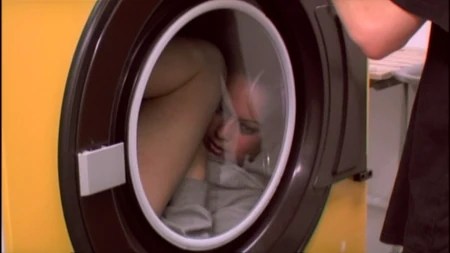
Still from A Hole in My Heart (2004)

COMMENTS: Lukas Moodysson has had a strange career. He began as a poet and novelist before moving into cinema with his debut, Fucking Åmål [AKA Show Me Love], a realistic lesbian romance. After another crowd-pleasing drama, the commune-set Together, he went into darker (but still realistic) territory with Lilya 4-ever, a bleak drama about a Russian girl sold into sex slavery. After this well-received trio, Moodysson was a critical darling with a large home-grown fan base. Seemingly, he decided to blow it all up with the deliberately off-putting experiment A Hole in My Heart.

There’s not much story to Hole. A young man lives with his dad. He rarely leaves his room, partly because the father is using the rest of the apartment as a set to produce a series of amateur porn films with his two live-in actors (one male, one female). In between shoots, the three principals dance and party as the son hangs out alone in his room, tending his earthworms and listening to industrial music on his headphones. The porn scenarios begin as normal sex acts but escalate into pseudo-rapes, force-feeding, and vomit play (the latter somewhat reminiscent of the commune orgies from Sweet Movie.) At one point, the female actor angrily abandons the group, but soon returns to pick up where they left off, acting as if nothing had ever happened. Some character development occurs: the son and father discuss the boy’s dead mother, the actor and male director bond when the latter reveals he has a serious illness (a hole in his heart?) that causes him to occasionally pass out, and the actress flirts with the son, falling short of a seduction but nevertheless producing a bond. Everyone seems to be seeking love, but not finding it. The film ends inconclusively.

The material here is disconcerting enough—the three porn producers block out upcoming scenes using barbie dolls, who sometime lose limbs in the process—but Moodysson deploys infuriating formal tricks to discombobulate the audience. The soundtrack barfs up a lot of grating, staticky noises at random moments. Though the story is ultimately told mostly in chronological order, the editing is often non-linear, crosscutting quiet conversations with sex scenes. There’s a dream sequence featuring crop circles. Moodysson interrupts the flow with snippets of real surgery footage, of both the labiaplasty and the open-heart variety. The entire things is shot faux-documentary style, with indifferent framing, unflattering lighting, and with both product labels and faces of extras fogged out. (At one point, the main cast’s faces are digitally obscured, too, suggesting the characters’ shame and lack of consent to be filmed under these degrading circumstances).

The overall feel of Hole in the Heart is of one of those nihilistic experiments of or . At its best, it approaches a provocation like The Idiots (1998). But Hole fails to generate empathy for the characters inhabiting its squalid setting, leaving little impact other than a dyspeptic stomach. The one thing that saves Moodysson’s experiment from total failure (and a rating) is that the screed does have a particular target, the adult entertainment industry, and it does suggest, through pornographic poetry, how that commercial concern sucks in the vulnerable and distracts humanity from making healthy connections. That’s an intellectually thin message, however, and one that’s largely drowned out by the rivers of blood and vomit on screen.

Moodysson followed up this effort with the even weirder (but less disgusting) Container, an abstract avant-garde movie that nearly cost him all his remaining supporters. Her returned to realism with 2009’s Mammoth, then won fans and critics back with the heartwarming nostalgic coming-of-age story We Are the Best! in 2013. All seven of his features are collected in Arrow’s “The Lukas Moodysson Collection.”

WHAT THE CRITICS SAY:

“…not so much about story as moods, atmosphere and symbolism. At times, its use of sound and flickering images recalls films like ‘Eraserhead’ and the symbolism of early Bunuel. From the beginning, there is a sense of dread and uneasiness, and this feeling only gets stronger by the minute until it feels like the film itself will explode.”–Gunnar Rehlin, Variety (contemporaneous)