All posts by Gregory J. Smalley (366weirdmovies)

Gregory J. Smalley founded 366 Weird Movies in 2008 and has served as editor-in-chief since that time. He is a member of the Online Film Critics Society, and his film writing has appeared online in Pop Matters and The Spool.

294. TITUS (1999)

“Why makest thou it so strange?”–Demetrius, “Titus Andronicus,” II, 1.

Recommended

DIRECTED BY:

FEATURING: , , , Alan Cumming, Laura Fraser, Jonathan Rhys Meyers, Matthew Rhys, Angus Macfadyen, Osheen Jones

PLOT: Titus Andronicus, a Roman general, returns from conquering the Goths; he imprisons the queen Tamora and her three sons, killing the eldest boy as a sacrifice to the gods. Back in Rome, the emperor is dead and the popular Titus averts a civil war by supporting Saturninus for emperor against the rival claim of his brother; once on the throne, Saturninus surprises Titus by taking Tamora as his queen. Tamora and her secret lover, the Moor Aaron, then set about plotting revenge against Titus and his entire family.
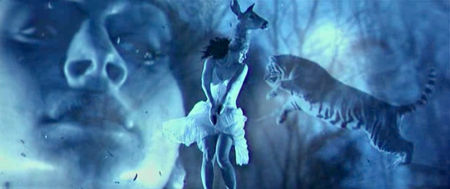
Still from Titus (1999)

BACKGROUND:

  • Written in the style of the Jacobean revenge tragedy, “Titus Andronicus” is one of Shakespeare’s earliest plays, and perhaps his most disliked by critics; some even went so far as to speculate that the play must be misattributed to him, as Shakespeare could not have written such trash. Harold Bloom scathingly called it “a howler” and “an exploitative parody” and suggested Mel Brooks would be the director most suited to the material.
  • Julie Taymor adapted this film version from her off-Broadway stage production. Titus was her debut film, although she had achieved fame, and won a Tony award, for her 1994 Broadway stage production of “The Lion King.”
  • Taymor chose production designer Dante Ferretti because he had worked on one of her inspirations for Titus‘ look: Fellini Satyricon.
  • An orgy scene had to be edited (reportedly, to excise male genitalia) to earn the film an “R” rating.
  • Reputed auto-fellator Steve Bannon served as one of the executive producers.

INDELIBLE IMAGE: For this adaptation, Taymor fashioned four short, digitized dream sequences that she calls “penny arcade nightmares.” We selected the one where Lavinia remembers her own rape, imagining herself as a doe (with a deer’s head and hooves) menaced by ravishing tigers. Trip Shakespeare, for sure.

THREE WEIRD THINGS: Paper bag brat; those are twigs that were her hands; Shakespearean video games

WHAT MAKES IT WEIRD: Julie Taymor gives Shakespeare’s least-respected, bloodiest play an anachronistic avant-garde treatment, with fascist emperors riding in convertibles, Roman orgies, “penny arcade nightmares,” and all of the rape, dismemberment, and people-eating that we associate with the Bard’s work.


Original trailer for Titus

COMMENTS: “Shakespeare was a drive-in kind of guy.” I don’t think Continue reading 294. TITUS (1999) →

CAPSULE: A GHOST STORY (2017)

DIRECTED BY:

FEATURING: ,

PLOT: A young musician dies and comes back as a ghost, moving back to his house and silently observing his wife’s grief.

Still from A Ghost Story (2017)

WHY IT WON’T MAKE THE LIST: A melancholy meditation on man’s ephermerality, A Ghost Story‘s weirdness goes beyond its guy-in-a-sheet gimmick, but not far enough beyond to reach the realms of one of the all-time weirdest.

COMMENTS: Though modest in countenance, A Ghost Story is filled with formal audacity underneath its blank exterior. It’s got an Academy-Award winning actor who’s silent and hidden under a sheet for 90% of his performance; a constricted 4:3 aspect ratio with rounded corners, to evoke the feeling of a picture frame; and shots that go on for so long that would be tapping his finger on his armrest impatiently. (Not really, but you get the idea). And yet, what easily might have become a purgatorial ordeal emerges as a moving and thought-provoking experiment.

The plot is so simple it’s almost a wisp. The unnamed main character dies, wakes up in the morgue in a sheet, returns to the house where he and his wife lived, and watches her as she silently grieves (and grief-eats a pie). This sounds dull, and if the movie stayed in this rut, it would be. But, although Affleck doesn’t speak and barely moves, doing little more than turning his head or shrugging his shoulders, A Ghost Story finds ways to create narrative dynamism. There is a flashback or two, and a seemingly minor incident from the pre-mortem opening is fleshed out over the length of the movie. Affleck’s ghost engages in a bit of minor poltergeistism when distressed. In one of the film’s most poignant bits, which would almost be considered a running gag if it weren’t so sad, Affleck’s ghost spies another bedsheeted figure in the house next door, and they communicate in the terse language of the dead (translated to us in subtitles). The ghost experiences time differently than we do, and we gradually become accustomed to the rhythm of his eternal observation as time moves on without him. A new tenant in his house (musician ) gives a speech about the vanity of human existence. And the ghost persists, chained to the plot of land where his house stands and inevitably once stood, waiting for a release from his sentence. The movie plays with the idea of eternity in a philosophical sense that may be new to audiences, but which makes it ripe for post-viewing discussion.

A Ghost Story is definitely not a horror movie (unless you consider it an extremely subtle existential horror). It definitely is a philosophical/poetic drama about the psychology of grief and the nature of time, and it carries an implicit message about appreciating the now. It is, dare I say, haunting—at least, if you’re the type of attuned spiritualist who can see the ghosts around us.

WHAT THE CRITICS SAY:

“Interrupted by death, a couple’s love finds a weird way forward in this slice of supernatural risk-taking… Lowery is spending the capital he’s earned on big gigs like Pete’s Dragon to make something bizarre and experimental, and as his film starts flitting through the weeks in unannounced leaps, you’ll come to appreciate his gamble.”–Joshua Rothkopf, Time Out New York (contemporaneous)

293. SWEET SWEETBACK’S BAADASSSSS SONG (1971)

“From the very beginning, back in 1957, people were always commenting on my films being a little weird in subject matter, and the angles I used, and the superimpositions and things like that.  Me, I figured that it came from the fact that I was self-taught and missed the technological colonization of the white aesthetic. Anyhow, back then everybody just thought I was crazy.”–Melvin Van Peebles, “The Real Deal: What It Was... Is”

DIRECTED BY: Melvin Van Peebles

FEATURING: Melvin Van Peebles, Simon Chuckster, John Gallaghan

PLOT: An African American boy grows to manhood in a brothel, where he is nicknamed “Sweetback” for his sexual prowess and taught to perform in live sex shows when he reaches adulthood. One night two detectives perform a fake arrest on Sweetback as part of a political scheme; but when they beat a black activist while Sweetback watches, he beats the two policemen into a coma in a fit a righteous rage. The bulk of the film follows the fugitive as he makes his way toward the Mexican border on foot, staying one step ahead of the cops as his legend grows within the black community.

Stillfrom Sweet Sweetback's Baadasssss Song (1971)

BACKGROUND:

  • Melvin Van Peebles’ personal history is colorful, to say the least. He began his career making short films, and one feature, in France. On the strength of these Columbia Pictures invited him to direct a feature film. His first Hollywood feature, the racial satire Watermelon Man, was a small hit. Columbia offered him a three picture deal, but he chose to make Sweet Sweetback’s Baadassss Song instead.
  • Van Peebles says that he played the role himself because he couldn’t find an established black actor willing to take it due to the fact that they pay was so low and Sweetback only has six lines of dialogue in the film.
  • Van Peebles says he actually had sex with the actresses while shooting film’s sex scenes, and contracted gonorrhea from one. He says he applied to the director’s guild for compensation and that they were so surprised by the claim that they paid him. He then used the money to buy more film.
  • The soundtrack was written by Van Peebles and performed by a pre-fame Earth, Wind and Fire, the same year their debut album. The check bounced.
  • Van Peebles ran out of money while filming Sweetback and begged investors to help him finish the movie. Finally, Bill Cosby loaned him $50,000, interest-free, to finish the movie. The film went on to gross $4.1 million at the box office and eventually earning more than $10 million. Van Peebles was able to keep all the profits himself.
  • Sweetback was rated X by the MPAA and prints were often screened with up to 9 minutes of sex removed, inspiring Van Peebles to promote the movie with the sensational (but technically accurate) tagline, “Rated X by an all-white jury!”
  • The remarkable story behind the making of Sweetback is told in the fictionalized 2003 film Baadasssss!, written, directed by and starring Van Peebles’ son Mario. Mario had also played Sweetback as a boy in Baadassss Song, where he was pressured into performing a sex scene with an adult actress.

INDELIBLE IMAGE: Sweetback running. Runner-up: Sweetback sprinting. We also considered Sweetback loping, Sweetback jogging, and Sweetback trotting.

THREE WEIRD THINGS: Sex will make you a man; the Good Dyke Fairy Godmother; lizard lunch

WHAT MAKES IT WEIRD Take a radical experimental filmmaker with narcissistic tendencies, give him $150,000 dollars (in 1971 money) and an amateur cast and crew, give him carte blanche to make a Black Power film with lots of sex scenes, and Sweet Sweetback’s Baadasssss Song is the result. You’d think it was a deconstructionist version of a blaxploitation film, except that it was made before the blaxploitation formula existed.

Original trailer for Sweet Sweetback’s Baadassss Song

COMMENTS: In 1971 the Civil Rights movement was almost two Continue reading 293. SWEET SWEETBACK’S BAADASSSSS SONG (1971) →

CAPSULE: BLACK DEVIL DOLL (2007)

DIRECTED BY: Jonathan Lewis

FEATURING: ” Mubia Abul-Jama,” Heather Murphy, Martin Boone

PLOT: A Black Panther, executed for the “rape and brutal murders of fifteen Caucasian women,” finds his soul transported into a ventriloquist’s dummy; he then resumes his evil ways.

Still from Black Devil Doll (2007)

WHY IT WON’T MAKE THE LIST: Not need to get into a deep discussion here: Black Devil Doll is simply too silly, spoofy and self-aware to count as weird.

COMMENTS: First things first: Black Devil Doll isn’t an homage to the charmingly naive Black Devil Doll from Hell so much as it is an afro-remake of Child’s Play, with added interracial rape. Basically what we have here is a trashy soft porn feature starring zaftig strippers acting opposite a racial stereotype puppet: cheap, offensive trash, and proud of it. Anyone who’s not tolerant of gleeful overuse of the n-word, boundary-pushing racial humor or blatant misogyny will want to steer clear of this movie—it’s trying to trigger you. Among its bad taste stunts are X-rated cartoons, puppet sex scenes, copious puppet semen, lesbian Twister, an emasculated wigger, Bill Cosby seduction techniques, rape and killing (not necessarily in the order), vomiting, caustic diarrhea… you know, “can’t we all just get along?” kind of stuff. It ends with the strippers-cum-actresses giving the puppet a lap dance over the credits, and a post-credits sequence (by another director) and with the devil doll killing a delivery guy from “Oakland Fried Chicken,” the only fast food outlet with a genuine Sambo on the label. The actresses have names like “Natasha Talonz” and “Precious Cox,” and it was naturally “rated X by an all white jury.” It’s real woke.

Black Devil Doll comes awfully close to earning a “” rating, but has enough virtues to just barely skate by. The James Bond-esque opening credits, with voluptuous silhouetted ladies undulating across a landscape of fire and blood, are actually rather amazing, looking far more expensive than the rest of the movie. They are credited to cinematographer/editor John Osteen, who also inserts a couple of hip-hop montages during the doll’s, er, climaxes, which feature blazing fires, morphing effects and flashes of scenes from the civil rights movement (!) Osteen is more talented than anyone else on the cast and crew, although like the rest he was never heard from again. The funky vintage waka-waka instrumentals aren’t bad, either, although the sexy car wash rap is atrocious (deliberately so). Finally, there are just enough guilty-pleasure politically incorrect chuckles to counteract the painfully insulting ones: “Of course I love you, you dumb-ass ho!,” references to a “half-puppet mulatto baby,” and the classic feminist one-liner, “I’ll buy a dildo.” The final point in the movie’s favor is its brevity and brisk pacing: it has the good sense to keep its provocations to just over an hour, although probably for budgetary reasons rather than out of an abundance of good sense.

Black Devil Doll was made by a black director, because no white director could get away with it. The rest of the cast is all-white (although there may be some mixed blood in there), and the entire thing seems to be a side project of the “Boone brothers,” a pair of Confederate crackers who ran their own straight-to-video mini-empire of catfighting comedy videos called “Brawlin’ Broads” (directed by Osteen). The fact that this comedy about a stereotypical black rapist preying on topless white women seems to have been made by white producers aiming at a white trash audience makes it all the more uncomfortable. At any rate, director Lewis won’t be winning any Image Awards anytime soon.

The DVD contains a surprising number of special features, including two commentaries (one in-character by the devil doll, the other by the cast, neither very amusing or enlightening) and an audience reaction track from the premiere. There are also trailers, behind-the-scenes videos from the premiere and a convention appearance, a videotaped interview, and three (in)decent animations from Rich Moyer.

WHAT THE CRITICS SAY:

“Part homage to the hilarious surrealism of Petey Wheatstraw and, to some, a respectful rip-off of Chester Novell Turner’s Black Devil Doll From Hell, this outrageous example of Joe Bob Briggs’ patented ‘three Bs – breasts, blood, and beasts’ is so insane, so silicon injected and silly that it’s almost impossible to take seriously.”–Bill Gibron, Pop Matters (DVD)

(This movie was nominated for review by “upgrayedd.” Suggest a weird movie of your own here.)

292. VIVA LA MUERTE [LONG LIVE DEATH] (1971)

“I have heard this insensible and necrophilous oath, ‘¡Viva la Muerte!’, and I, having spent my life writing paradoxes that have provoked the ire of those who do not understand what I have written, and being an expert in this matter, find this ridiculous paradox repellent.”–Miguel de Unamuno

DIRECTED BY:

FEATURING: Madhi Chaouch, Núria Espert, Ivan Henriques

PLOT: Fando is a boy growing up in Spain in the early days of the Franco regime, raised by his mother, about whom he has sexual fantasies. One day he discovers that his mother turned his father in to the authorities because of his “dangerous progressive” political views. In between fantasies, Fando decides to go searching for his father, but his quest is interrupted when he contracts tuberculosis.

Still from Viva la Muerte (1971)

BACKGROUND:

  • Like the father in Viva la Muerte, Arrabal’s own father was imprisoned by the Fascists during the Spanish Civil War (one report claims it was for an assassination attempt). After five years he escaped from custody and was never seen again.
  • The title refers to a quote from the Fascist General Millan Astray: “Down with intelligence! Long live death!,” a line barked during a political debate with philosopher Miguel de Unamuno.
  • The movie is an adaptation of Arrabal’s 1959 novel “Baal Babylone” (which does not appear to have been translated out of the original French).
  • The sadomasochistic torture sketches first seen in the opening credits are by Arrabal’s fellow Panic movement member (for more on the Panic movement, see the background information section of I Will Walk Like a Crazy Horse).

INDELIBLE IMAGE: Fando’s papa, buried in the sand with only his head showing, and a quartet of riders fast approaching.

THREE WEIRD THINGS: Incestuous S&M mourning; priest’s tasty balls; slaughterhouse frolic

WHAT MAKES IT WEIRD: A howl of protest at the horrors of the Franco regime, as well as an autobiographical attempt to exorcise some serious mommy issues, Viva la Muerte uses surreal vignettes as a savage expression of personal outrage.


Original trailer for Viva le Muerte

COMMENTS: Fernando Arrabal’s Viva la Muerte is the kind of movie Continue reading 292. VIVA LA MUERTE [LONG LIVE DEATH] (1971) →