DIRECTED BY: Luc Besson
FEATURING: Dane DeHaan, Cara Delevingne, Clive Owen, Rihanna
PLOT: A pair of hotshot space cops flirt with each other as they stumble upon a conspiracy surrounding a lost race that threatens the survival of the massive spaceport that serves as the hub of galactic peace and commerce.

WHY IT WON’T MAKE THE LIST: Valerian is an optical feast, presenting settings and creatures that push the edge of the imagination. However, that same imagination has hung these visual treats upon a story that is strictly by-the-numbers, with characters who are stock at their best and unfathomably shallow at their worst, rendering the film all frosting, no cake.
COMMENTS: The audience was quiet. Respectful. No laughing. No chitchat. Definitely no cheering. A candidate for blockbuster of the summer unspooled before us, and we could have easily been transplanted to a golf tournament without causing a disturbance. We sat in silence, staring at the screen like we were on a field trip to the art museum.
Actually, Valerian wouldn’t be out of place in a museum; it’s a lovely piece of pop art. Luc Besson has crafted a green-screen wonderland, ranging from the impressionist beauty of an alien beach world to a mind-bending cross-dimensional duty-free bazaar. Sometimes he is unable to restrain himself and piles the settings on top of each other; one chase scene barrels through a half-dozen environments in the space of a couple minutes. From start to finish, the film is a visual stunner.
Which is why the audience’s silence, while not necessarily reflecting quality, is so devastating. Valerian is a lot to look at, but is ultimately an uninvolving experience. The action set-pieces have no kick, the story feels boilerplate, and the leads are dangerously lacking in chemistry. People like spectacular visuals, but they’re not inclined to cheer for them alone.
At times, it feels like Besson has extracted the spine of the story from his earlier sci-fi venture, The Fifth Element, and grafted new visuals on top of it. Dane DeHaan’s hero’s journey from callow to committed is clearly intended to mirror that of Bruce Willis. The overstuffed metropoli, aliens both corpulent and sinewy, the overwhelming power of *love*…they’re all straight out of Element’s playbook. Valerian even stops, like its older cousin, for a musical number. This one features Rihanna dancing (but not singing) and acting (but not, um, acting). What he hasn’t carried over includes any sort of stakes, much of a sense of humor, or charismatic characters. We’re supposed to take all those on faith.
Not that he only borrows from himself. The trio of duck-billed creatures who fence information feel like escapees from Labyrinth. A benevolent blue-hued race seems to have stepped directly out of Avatar (and brought some of their environmental and cultural issues with them). And overall, the film is surprisingly reminiscent of The Adventures of Tintin, another adaptation of a beloved French comic book that sacrificed character and story in favor of wondrous CGI visuals and a breakneck pace. Of course, Tintin is entirely animated, so perhaps our expectations for rich character development there are diminished. But Valerian has real actors, and this is where the trouble truly begins.
Design, as noted, is impressive, and there’s enough logic to the plot to earn a pass (ignoring, of course, the scene where a computer explains that the massive space station has traveled 700 million miles from Earth over the decades, which would put it somewhere just shy of Saturn). However, character is the gaping void of the center of the film, and the two leads bring absolutely nothing to the table. DeHaan is a black hole, delivering lines that are intended to mark him as a hard-bitten mercenary, but doing so in a voice cribbed from Keanu Reeves and bearing a look that suggests “bored 8th grader.” Cara Delevingne is marginally better, having the advantages of (a) being very pretty and (b) having only one emotion to play: cold irritation. The two are laden with banter, written to demonstrate their wit and cool under pressure, as well as to place them in the pantheon of great wisecracking romantic couples of the cinema. But DeHaan and Delevingne are nowhere near pulling it off. Their dialogue feels utterly false in their mouths, and because Besson puts their will-they-won’t-they dynamic at the forefront from the moment we meet them, the thud of their relationship is more than the film can overcome.
Besson’s instincts bend toward the weird. (Why else would you cast jazz legend Herbie Hancock as a futuristic bureaucrat?) But while his vision is undeniably heterodox , here he seems utterly unable to apply it. Perhaps the best indication of his failure of imagination comes in the very opening sequence, a montage chronicling the origin and growth of the City of a Thousand Planets. To accompany the growing alliance of humans and a variety of unusual extraterrestrials, he summons the ultimate alien: David Bowie. But what song from the catalog does Besson choose? “Space Oddity.” Gifted with the limitless power of creation, he settles for the cliché; the most obvious, expected choice. And no one cheers.
WHAT THE CRITICS SAY:
“Little splashes of a weirder, kinkier, much better movie kept popping up throughout Valerian and the City of a Thousand Planets, and even though they tended to vanish as quickly as they appeared, I still found myself missing them. They’re like phantasms making quick cameos from the nether, a brief flicker of a more adventurous, less compromised movie that perhaps could have been…” – Will Leitch, Paste Magazine (contemporaneous)


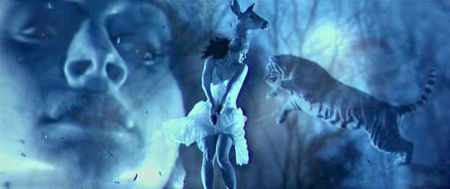
 Tucked far out of the way of anything else at the Fantasia Festival is the “Cinematheque Quebecoise” theater. After forty minutes of searching and using the secret knock to get through the door, I was finally able to get seated for Eternal Evil (AKA The Blue Man). Directed in the mid-’80s by George Mihalka, Eternal Evil tells a dark tale of murder and astral projection. Our hero Paul Sharpe spends a lot of time with his shirt unbuttoned, and wonders why those close to him keep ending up dead. The answer stems from an interview he did with an elderly couple who claimed to achieve immortality by shifting to new bodies when their current vessels had worn out. A cult hit in its native Canada, the ’80s cheesiness was fortunately outweighed by the interesting story and clever premise. Not really something to Certify, though.
 That honor might go to