Tag Archives: Recommended

235. A SCANNER DARKLY (2006)

366 Weird Movies may earn commissions from purchases made through product links.

“I think it was probably the strangest script I ever read.”–Robert Downey Jr.

“I was very confused by the script at first, it’s a bizarre kind of story…”–Woody Harrelson

Recommended

DIRECTED BY:

FEATURING: , , Rory Cochrane

PLOT: In the near future, an estimated twenty percent of the American population is addicted to a drug called “Substance D.” “Fred,” an undercover agent, is posing as Bob Arctor, hanging out with a small-time group of users, hoping to locate a high level supplier. Fred, who is becoming more and more addicted to substance D and is being watched closely by police psychologists concerned about possible brain damage, grows increasingly paranoid, especially when one of Arctor’s roommates goes to the police and accuses the plant of being a terrorist.

Still from A Scanner Darkly (2006)

BACKGROUND:

  • Philip K. Dick (1928-1982) was a fascinatingly weird figure, a counterculture science fiction author and the man responsible for the stories that were adapted into movies like Blade Runner, Total Recall, Minority Report, and others. He was also a heavy user of amphetamines (and, some say, LSD) in his youth; in his later years he became paranoid, and may in fact have been living with some form of mental illness. In 1974, after taking sodium pentothal for an impacted wisdom tooth, Dick began seeing visions involving pink beams of light, the sense of having lived a previous life as a persecuted Christian in the Roman era, and communication from a super-rational intelligence he dubbed “VALIS.” To Dick’s credit, he never surrendered to these delusions altogether; he remained rational enough to write coherent (if paranoid) novels.
  • Dick’s novel “A Scanner Darkly” was written in 1977 and set in 1992. It was based on the author’s own experiences as a drug addict, and was dedicated to casualties of drug abuse (the author’s roll call of those “punished entirely too much for what they did” is included before the movie’s end credits).
  • wrote an unproduced adaptation of “A Scanner Darkly,” and  was also reportedly interested in the property.
  • The animation technique used here is rotoscoping, where actual footage is filmed and then “painted” over by animators (in this case, with the aid of computer software, although in the earliest days of the technique a team of artists would hand-paint each individual frame of film).
  • Filmed in a brisk 23 days, but post-production (i.e. the rotoscope animation) took 18 painstaking months to complete.

INDELIBLE IMAGE: The “scramble suit,” the undercover cloaking device of the future which is “made up of a million and a half fractional representations of men, women and children.” These “fractional representations” flicker across the surface of the suit, masking the the wearer’s identity by changing him into a “vague blur” of constantly shifting identities. The effect is eerie and disorienting, but unforgettable.

THREE WEIRD THINGS: Aphids everywhere; scrambled identities; alien presiding at a suicide

WHAT MAKES IT WEIRD: A Scanner Darkly is a paranoid, dystopian meditation on self-destruction—both personal and social—told as a sci-fi parable about an addictive, mind-rotting hallucinogen. For extra weirdness, the entire movie is rotoscoped to create a squirmy, synthetic reality.


Original trailer for A Scanner Darkly

COMMENTS: Hollywood has long been attracted to the works of Continue reading 235. A SCANNER DARKLY (2006)

234. THE FORBIDDEN ROOM (2015)

“When they were filled, he said unto his disciples, gather up the fragments that remain, that nothing be lost.”–John 6:12

RecommendedWeirdest!

DIRECTED BY:  Guy Maddin,

FEATURING: , Clara Furey, Victor Andres Turgeon-Trelles, Caroline Dhavernas, Paul Ahmarani, Noel Burton, , , ,

PLOT: A lumberjack inexplicably appears inside a doomed submarine. While searching for their captain one of the crew shares the wayward lumberjack’s story and several more strange tales. Before and after the main narrative (such as it is), a man lectures on how to take a bath.

the_forbidden_room_1

BACKGROUND:

  • While researching Hollywood’s lost films, Guy Maddin learned that approximately 80% of silent films made have been lost; many are preserved in title only. Maddin became obsessed with the idea that there were all these films he would never be able to see. This obsession turned into an ongoing four year long project producing re-imagined versions of these forgotten treasures. It began as an installation where Maddin and Johnson shot a movie a day in public. Some of what was shot became The Forbidden Room; the rest will become an interactive project that the NFB (National Film Board) will host called “Seances.”
  • The title The Forbidden Room is itself taken from a lost film from 1914.
  • Co-director Evan Johnson was a former student of Maddin’s who was originally hired simply to do research, but his contributions to the project became so significant that Maddin felt he deserved a co-director credit.
  • The opening and closing segments are based on the title of a lost film called “How to Take a Bath,” made by none other than Maniac‘s .
  • The Forbidden Room won 366 Weird Movies’ readers poll for Weirdest Movie and Weirdest Scene of 2015.

INDELIBLE IMAGE: An indelible image in The Forbidden Room? The entire film is a collage of indelible images. Candidates include lumberjack suddenly appearing in a submarine, a sauntering lobotomized Udo Kier ogling ladies’ derrieres, insurance-defrauding female skeletons in poisonous leotards.

THREE WEIRD THINGS: Offal piling contest; talking blackened bananas; squid thief

WHAT MAKES IT WEIRD: The Forbidden Room is a collection of strange stories about bizarre characters weaved through a central plot involving a lumberjack attempting to rescue a kidnapped woman. The catalyst for this storytelling begins when the lumberjack suddenly appears on a submarine. Add a healthy dose of surreal, humorous imagery and some creative editing and shake well for a truly one-of-a-kind cocktail of weirdness.


Original trailer for The Forbidden Room

COMMENTS: The Forbidden Room opens with Louis Negin in a satin Continue reading 234. THE FORBIDDEN ROOM (2015)

CAPSULE: EMBRACE OF THE SERPENT (2015)

El Abrazo de la Serpiente

Recommended

DIRECTED BY: Ciro Guerra

FEATURING: Antonio Bolivar, Nilbio Torres, , Brionne Davis

PLOT: In two journeys separated by decades, an Amazonian hermit and shaman reluctantly guides two European scientists on trips to find a legendary medicinal plant.

Still from Embrace of the Serpent (2015)

WHY IT WON’T MAKE THE LIST: It’s too weird to win an Academy Award, but not weird enough for us. Still, fans of s Amazonian epics and Apocalypse Now will find a lot to connect with here, while Embrace retains its own feverish flavor.

COMMENTS: As cinema’s first black and white arthouse ethnobotany trip movie, Embrace of the Serpent is a singular event. More based on setting than plot, the languid, reflective trip upriver may grow wearisome for some, but will reward the patient. The emerald Amazon jungle is subsumed into a grayscale haze, making the trip seem both like a vintage period picture and a dream.

One of the Embrace‘s biggest strengths is that it generally steers away from the lectern, instead delivering an eye-level view of a historic culture clash. We see that the Amazonian tribes aren’t inherently virtuous, but can be just as petty, selfish and inhospitable as their white brethren. The examination of the effect of European ideas (aside from the obvious evils like slavery) on the Amazonian natives is nuanced. European Theo argues the tribes should not have a compass because he believes that access to such easy technology will cause their indigenous methods of orientation using astronomy and knowledge of the winds to fade away. His guide Karamakate, who otherwise hates white culture precisely for its capacity to displace his own, unexpectedly makes the cosmopolitan argument that “knowledge belongs to all men.” The compass debate reveals a more complicated analysis than the simple “brown man good, white man bad” anti-colonial dogmatism you might have feared. Karamakate, too, is far from a simplistic noble savage; he can be peevish, manipulative, and bigoted in his own way. Karamakate is far more noble for the flaws that make him into more than a mere symbol or stereotype.

The tone is quiet, melancholy, and mystical. The older Karamakate complains of having become a “chullachaqui,” a sort of shell or wraith, a doppelganger stripped of vitality, memory and purpose. Those looking for surreal thrills will want to pay attention to the two stops at a mission along the way. The earlier expedition is reluctantly hosted at a remote Christian outpost where a single surviving priest oversees a colony of Amazonian orphans. When they return decades later, the mission has devolved into a strange and anarchic cult blending native beliefs with Christian ones. This imaginary sociological experiment is so intoxicating that you may wish the entire movie had been built around this location. The film finishes with a somewhat superfluous color hallucination sequence full of geometric fractals and jaguars that plays either like a more sedate version of Altered States‘s mushroom trips, or like 2001‘s climax with an ecological spin.

The plant the European scientists seek, yakruna, is known by the Latin name “Macguffinus plotdevicis.” It becomes whatever the story needs it to be at the time: a mind-expanding psychedelic, a panacea for ills of both the body and soul, a symbol of Karamakate’s tribal identity. It’s “the stuff that dreams are made of,” and by the end it goes up in smoke, becoming not much of anything at all. Embrace is a leisurely trip downriver towards a muddy allegory, but there are moments when you feel like Col. Kurtz is waiting just around the next bend.

WHAT THE CRITICS SAY:

“Filled with dream imagery, never-quite-explained symbolism, and a collection of weird (and inhospitable) characters that might have emerged from Evelyn Waugh’s A Handful of Dust or the more feverish fever dreams of Werner Herzog — with more than a little of Mr. Coppola’s Apocalypse Now around the edges.”–Ken Hanke, Mountain XPress (contemporaneous)

233. DEATH BY HANGING (1968)

Koshikei

“You mustn’t think our film is just labored theorizing. The officials’ attempts to convince R that he is R are amusing and bizarre. I think it’s a spot-on depiction of all us Japanese in all our amusing bizarreness.”–Nagisa Ôshima

Recommended

DIRECTED BY:

FEATURING: Yung-Do Yun, Fumio Watanabe, , Akiko Koyama

PLOT: After the failed execution of a Japanese-Korean double murderer, various state functionaries are at a loss as how to proceed when the criminal’s body refuses to die. Going to increasingly outlandish lengths to remind the convict of why he is there and condemned, the prison’s officials inadvertently explore the nature of crime, nationality, and culpability. Eventually a young woman is introduced to the group, and the captors decide to get drunk.

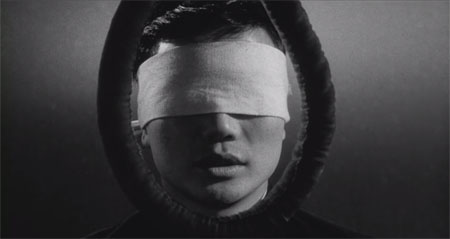
Still from Death by Hanging (1968)

BACKGROUND:

  • The criminal in Death By Hanging is based on Ri Chin’u, who also murdered two Japanese school girls. In addition to his crimes, Ri Chin’u gained a degree of fame for his extensive writings while in prison.
  • Much of the dialogue between R and his “sister” is taken from actual correspondences between Ri Chin’u and a Korean journalist.
  • Death by Hanging came during Ôshima‘s most experimental period, made back-to-back with the Certified Weird satire Japanese Summer: Double Suicide. Like most of Ôshima‘s mid-to-late 1960s work, Hanging was initially ignored in America, not even screening for the first time until 1974 and not officially reaching home video until 2016.

INDELIBLE IMAGE: The movie is stuffed to the gills with claustrophobic shots of slapstick fused with philosophy, none more so than the penultimate scene: an unlikely combination of prison officials getting hammered around a “table” while the convict “R” and his (probably imaginary) sister consider the nature of guilt. The drinkers take turns discussing how they came to this kind of work while R, reclining with the young woman beneath a Japanese flag, comes to the conclusion that though he committed his crimes, he is not responsible for them.

THREE WEIRD THINGS: Stubborn corpse; rape re-enactment; hallucination participation

WHAT MAKES IT WEIRD: Death By Hanging starts with a very traditional documentary approach, including narration reeling off statistics and some expository shots of a nondescript execution facility in a prison compound. Quickly, however, the aura of formality disintegrates as the hapless officials endeavor in vain to make sense of the film’s central conceit: a young convict refusing to die. Their efforts to restore his memory and edge him toward accountability grow desperate and extreme until a point is reached where everyone involved in the process begins to believe in the unreal.


Original trailer for Death by Hanging

COMMENTS: While most leftist directors merely point a shotgun at Continue reading 233. DEATH BY HANGING (1968)

232. HOUR OF THE WOLF [VARGTIMMEN] (1968)

“Directors always say—and I think they mean it—that they’re telling a story. They tell a story and they don’t want to have an interpretation of what it ‘means,’ symbols… I think, for example, Hour of the Wolf, it can look like it was a lot of symbols. I don’t think it is. It’s a scary story, narrated very simply, even if the persons are very surreal.”–actor Erland Josephson (Baron von Merkins)

Recommendeds

DIRECTED BY:

FEATURING: ,

PLOT: The prologue explains that the artist Johan Borg disappeared from his home on the Frisian islands, and that this film is a recreation of events from his diary and the recollections of his wife. Borg has disturbing dreams, and the characters from the dream, along with an old flame, appear before him in real life. As the days wear on, the hallucinations become so intense that his wife seems to share in them, and the ghostly party invites the couple to visit them at the local castle.

Still from Hour of the Wolf (1968)

BACKGROUND:

  • According to the film, “the hour of the wolf” is the time between midnight and dawn when most people die and most babies are born.
  • The film began life as a screenplay entitled “The Cannibals.” After Bergman was hospitalized with pneumonia, he stopped working on the script and instead produced Persona.
  • Ingmar Bergman and Liv Ullmann had an affair during the making of Persona, and Ullmann became pregnant with Bergman’s child. The actress did not want to relocate to Fårö to live with Bergman (who was still married to concert pianist Käbi Laretei at the time), and stayed in Oslo until Bergman sent her the script for Vargtimmen and convinced her to come to Fårö to make the film. She gave birth to the child before the movie was completed.

INDELIBLE IMAGE: When describing the figures that appear to him in his nightmares, Johan Borg mentions “the old lady, the one always threatening to take off her hat. Do you know what happens if she does? Her face comes off along with it, you see.” That’s not just a tease; although we never see Borg’s sketch of the character,  Bergman later comes through with the literal vision of the old woman removing her face along with her hat.

THREE WEIRD THINGS: Boy at the beach; walking on the ceiling; face-off hag

WHAT MAKES IT WEIRD: Themes of creative frustration, infidelity, humiliation, forbidden sexual impulses, and existential angst manifest as a court of demonic aristocrats who lure the artist and his love into a web of madness and self-destruction in Hour of the Wolf. Gothic imagery fits Ingmar Bergman like a comfortable shadow, and his only outright horror movie is every bit as philosophical, eerie and inscrutable as you could hope.


Clip from Hour of the Wolf

COMMENTS: According to Liv Ullmann, when, pregnant, she fled Ingmar Bergman’s arms after completing Persona, he convinced her to Continue reading 232. HOUR OF THE WOLF [VARGTIMMEN] (1968)