Tag Archives: Criterion collection

219. THE PORNOGRAPHERS (1966)

“Erogotoshitachi” yori Jinruigaku nyūmon

“What kind of fish is that? What is it doing there?

“Very strange…”–dialogue spoken over the opening credits of The Pornographers

Recommended

DIRECTED BY: Shôhei Imamura

FEATURING: Shôichi Ozawa, Sumiko Sakamoto, Keiko Sagawa, Masaomi Kondô

PLOT: Ogata makes illicit pornographic films to support his widowed landlady, who is also his lover, and her two teenage children. The widow believes her ex-husband was reincarnated as a carp she keeps in a fishbowl next to the bed and that he disapproves of the arrangement, but she cannot control herself. When she dies, she insists Ogata marry her daughter, but the pornographer has become impotent and obsessed with building a mechanical woman to be the perfect mate.

Still from The Pornographers (1966)

BACKGROUND:

  • Shôhei Imamura apprenticed as an assistant director under Yasujirô Ozu, and although he was considered a major figure in the Japanese New Wave, his movies are little known outside his native land. In the West, The Pornographers is his best-known work.
  • The scenario was based on a 1963 novel by Akiyuki Nosaka (who also wrote the story on which Grave of the Fireflies was based).
  • The Pornographers was made by Nikkatsu studios, who ironically turned from producing art films to making pornography (“pink films”) soon after the scandal over ‘s “incomprehensible” Branded to Kill in 1967.

INDELIBLE IMAGE: Shôhei Imamura frames many of the shots in The Pornographers oddly, including a couple of bedroom scenes viewed through a fish tank; the idea is that we are watching the jealous carp as he spies on his human wife making love to Ogata. The weirdest of these shots, however, has to be a Haru’s deathbed scene, also shot through the carp cam—improbably, this time, from above, as if the fish is looking down from heaven on the spouse who is soon to join him.

THREE WEIRD THINGS: Carp ex-hubby; slow schoolgirl porn star; Ogata floats away

WHAT MAKES IT WEIRD: A cavalcade of perversions flecked with short dream sequences and unannounced flashbacks, almost every scene in The Pornographers is eccentric, if not flatly surreal. The main character delivers a philosophical monologue as he walks though an orgy, the matron freaks out to the surf-rock soundtrack in her head, and a new wife strips to garter and stockings as she walks down the corridor to meet her mother-in-law for the first time. Although the story is based in realism, the film’s tone is melodramatic and dreamily erotic—but, ironically, hardly pornographic at all.


Original trailer for The Pornographers

COMMENTS: The key to understanding The Pornographers may be Continue reading 219. THE PORNOGRAPHERS (1966)

218. HEAD (1968)

“Quite frankly, there was a bit of acid involved.”–Bob Rafelson on the genesis of Head

DIRECTED BY:

FEATURING: Micky Dolenz, Davy Jones, Michael Nesmith, Peter Tork, Victor Mature

PLOT: An official is cutting a ribbon on a bridge when the ceremony is interrupted by four young men (the Monkees) who leap off the bridge and into the water. We then see a number of sketches that find the Monkees in the trenches fighting a war, performing live concerts, enjoying hookahs in a harem, fighting boxer Sonny Liston in the ring, trapped in a giant metal box, and acting out other absurd vignettes that blend into each other. Throughout the film they find themselves pursued by a giant man played by Victor Mature, and the movie ends where it began as the entire cast is seen chasing the Monkees onto the same bridge, off which they once again leap.

Still from Head (1968)

BACKGROUND:

  • The Monkees were formed in 1965 for a TV sitcom about a band “that wanted to be the Beatles.” Although Micky Dolenz, Davy Jones, Michael Nesmith and Peter Tork were cast for their acting abilities and presumed appeal to teenage girls rather than their musical chops, they developed into a tight band and had several hits. Their self-titled debut album reached #1 on the Billboard charts.
  • Despite the band’s financial success, the actors were dissatisfied with the goofy television scripts, which featured stories like the band spending a night in a haunted house. “The Monkees” TV series lasted for only two seasons before cancellation.
  • Head was the feature directing debut of Bob Rafelson, who had originally pitched the concept for the TV show and directed several episodes.
  • The script was co-written by , in his “acid” period. (One source says Nicholson directed at least one scene, uncredited). Nicholson also produced the soundtrack album, including assembling the sound collages.
  • The Monkees themselves contributed to the original brainstorming sessions, but were denied screen writing credits; they staged a mini-protest, but were placated when the producers offered more money.
  • With its surreal imagery and drug references, Head seems to be intended to destroy the Monkees wholesome image. The ad campaigns avoided mentioning the Monkees altogether.
  • Head‘s notable cameos and bit parts include Rafelson, Nicholson, , Victor Mature, , Annette Funicello, (in his final role), Timothy Carey, Green Bay Packers linebacker Ray Nitschke, boxer Sonny Liston, and celebrity stripper Carol Doda. A pre-fame Terri Garr and Toni Basil can also be seen in the film. Furthermore, is featured prominently in clips from The Black Cat.
  • Rafelson’s next project as director was Five Easy Pieces (1970), starring Nicholson as an underachieving piano prodigy. It was nominated for four Oscars.
  • Tork left the band soon after Head was released, and Nesmith resigned soon thereafter. The Monkees broke up by 1970, although Dolenz and Jones later recorded under the name with substitute musicians.

INDELIBLE IMAGE: The Monkees posing as dandruff in “the Big Victor”‘s hair. (In fact, a surprising number of Head‘s most memorable images involve the giant version of Victor Mature, especially if we assume that oversized eyeball Davy Jones finds staring at him from out of the medicine cabinet also belongs to Vic).

THREE WEIRD THINGS: Psychedelic mermaids; eye in a cabinet; “the Big Victor”

WHAT MAKES IT WEIRD: It is tempting to describe Head as what might happen if a young Jack Nicholson were hired to write a treatment for a bubblegum boy band, then dropped acid and wrote a script that reimagined the boys as psychedelic tricksters wandering through a surreal series of cynical, self-aware scenarios set everywhere from the old West to a dandruff commercial, sprinkling in the most bizarrely eclectic assortment of pop-culture cameos imaginable. Actually, that’s pretty much the true story of how Head came to be, meaning reality scoops metaphor once again.


Theatrical trailer for Head

COMMENTS: In 1964, A Hard Days Night turned a little band from Continue reading 218. HEAD (1968)

217. ZAZIE DANS LE METRO (1960)

“The fact that the film is a failure means nothing. Didn’t God create a failure, too?”–Jonas Mekas on Zazie dans le Metro

Recommended

DIRECTED BY:

FEATURING: Catherine Demongeot, , , Carla Marlier, Annie Fratellini, Yvonne Clech, Antoine Roblot, Jacques Dufilho, Hubert Deschamps

PLOT: When 10-year-old Zazie’s mother leaves her in the care of her exotic dancer uncle for the weekend , the only thing the sassy little girl wants to see is the Metro, but it’s closed due to a strike.  So she sneaks out of her uncle’s apartment and encounters a dirty old man, who is also a policeman, among her many adventures. Her weekend ends when the many friends and adversaries she’s accumulated—including a cobbler, an amorous widow, and a polar bear—find themselves involved in a drunken food fight while the worn-out tyke nods off into dreamland.

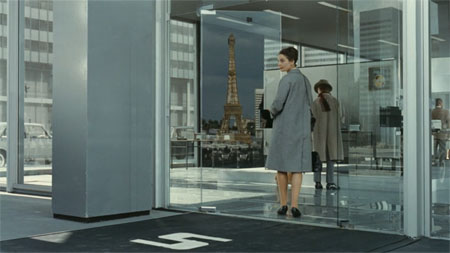
Still from Zazie dans le Metro (1970)

BACKGROUND:

  • Zazie dans le Metro is based on the hit 1959 comic novel of the same title by Raymond Queneau (a repentant former member of the Surrealist circle). The book relied heavily on wordplay and was widely thought to be unadaptable to film.
  • Although the film generated a small cult in France, Zazie was Louis Malle’s first flop after beginning his career with two hits (Elevator to the Gallows and The Lovers).
  • Some parents were angry at Malle’s film, believing that the sexuality made it inappropriate for children. Zazie originally received an “X” rating (16 and over) from the British Board of Film Classification.

INDELIBLE IMAGE: Surely, it must be Zazie’s impish, gap-toothed smile, which she breaks into whenever she imagines growing up to be a schoolteacher who torments her students by making them eat chalk.

THREE WEIRD THINGS: Eiffel Tower polar bear; wet dog in a parrot cage; high-heeled six shoe-ter

WHAT MAKES IT WEIRD: As Zazie’s transvestite uncle says, “Paris is a dream, Zazie is a reverie, and all this is a reverie within a dream!” If a mad scientist found a way to cross-breed and , Zazie dans le Metro is the movie the mutant hybrid would direct.


The Criterion Collection’s “3 Reasons” video for Zazie dans le Metro

COMMENTS: There’s nothing in Louis Malle’s oeuvre that’s remotely like Zazie dans le Metro. There’s nothing else in the rest of the Continue reading 217. ZAZIE DANS LE METRO (1960)

216. SCHIZOPOLIS (1996)

“PERSONS attempting to find a motive in this narrative will be prosecuted; persons attempting to find a moral in it will be banished; persons attempting to find a plot in it will be shot.”–Mark Twain, “The Adventures of Huckleberry Finn”

Recommended

DIRECTED BY:

FEATURING: Steven Soderbergh, Betsy Brantley, David Jensen

PLOT: Fletcher Munson, a corporate functionary, is tapped to write a speech for T. Azimuth Schwitters, the founder of a pseudo-religious self-help movement called Eventualism. One day, still struggling to come up with a draft, he notices his exact physical double in a parking lot—a dentist who, it turns out, just happens to be having an affair with Munson’s wife. Meanwhile, we occasionally peek at the life of nonsense-speaking exterminator and Lothario Elmo Oxygen, whose connection to Munson’s storyline will not become entirely clear until the final act.

Still from Schizopolis (1996)

BACKGROUND:

  • Steven Soderberg served as writer, director, and lead actor. This was his first appearance on film and to date is his only leading role.
  • Soderberg made Schizopolis for about $250,000, shooting in Louisiana with his old LSU film school buddies, in between shooting the big-budget Hollywood movies The Underneath (1995) and Out of Sight (1998).
  • Soderberg did not have a shooting script but wrote new parts each day, and incorporated improvisations from the cast.
  • Actress Betsy Brantley, who plays Steven Sorderberg’s wife in the film, was Soderberg’s real-life ex-wife.
  • Soderberg’s opening narration was added after Schizopolis‘ negative reception at Cannes.

INDELIBLE IMAGE: Shot with handheld video cameras in a bland suburbia, often in a vérité style, Schizopolis is very much a work of words and ideas, not images. Therefore, the most representative image is actually a picture of a word: a sign reading “idea missing.” The meta-joke is that Schizopolis is aware it is built out of ideas, and is confident enough to joke about its own dependence on concepts.

THREE WEIRD THINGS: Pantsless titles; nose army; dentist doppelgänger

WHAT MAKES IT WEIRD: Schizopolis translates as “divided city” or, informally but more appropriately in this case, “city of schizos.” When the film opens with the director standing on an empty stage, backed by carnival music with periodic changes of focal length as if you were watching the intro through an optometrical device, warning that the upcoming movie may confuse you and you should prepare yourself to see it multiple times,  you should be fairly warned that your mind is about to be toyed with, and toyed hard.


Original trailer for Schizopolis

COMMENTS:  After Schizopolis bombed at Cannes, writer/director/star Steven Soderbergh appended a prologue where he stood on Continue reading 216. SCHIZOPOLIS (1996)

215. HOW TO GET AHEAD IN ADVERTISING (1989)

366 Weird Movies may earn commissions from purchases made through product links.

BAGLEY: Everything I do is rational.

JULIA: Why have you put chickens down the lavatory?

BAGLEY: To thaw them before dismemberment.

Recommended

DIRECTED BY:

FEATURING: , Rachel Ward, Richard Wilson, Bruce Robinson (voice)

PLOT: Dennis Dimbleby Bagley is an unscrupulous advertising executive, but he finds himself blocked while trying to come up with a campaign to sell pimple cream. The stress leads him to combination epiphany and mental breakdown, and he decides to renounce hypocrisy and manipulation and retire from marketing. The internal strife, however, has caused a boil to form on his neck; and that pustule then forms a face, and a voice, and a personality that’s even nastier than the old Bagley…

Still from How to Get Ahead in Advertising (1989)

BACKGROUND:

  • Director Bruce Robinson began his career as a struggling actor, but found greater success when he turned to screenwriting and directing. His first script, The Killing Fields, was nominated for an Oscar in 1984. His first film as director, 1987’s Withnail & I, was a semi-autobiographical story of two poor, hard-drinking actors, also starring Richard E. Grant; it became a cult hit. How to Get Ahead in Advertising was his second feature film, but did not replicate the success of Withnail.
  • Robinson (uncredited) provides the voice of the boil.
  • Advertising was produced by George Harrison’s Handmade Films, who also produced Monty Python films and the Certified Weird Time Bandits.
  • The London Sunday-Times gave away free copies of the DVD as a promotion in 2006.

INDELIBLE IMAGE: Obviously, the fetuslike boil-with-a-face peering out from Bagley’s executive neck.

THREE WEIRD THINGS: Disney birds; chatty chancre; notice his cardboard box?

WHAT MAKES IT WEIRD: How to Get Ahead in Advertising grows organically from that greatest fertilizer of weird films: obsession. Writer/director Bruce Robinson has Something to Say, and he is not going to let taste, subtlety, or realism get in the way of him saying it. The movie is completely committed to its bizarre two-headed premise, and star Grant gladly goes over the top for his director, literally baring his buttocks while wearing an apron and stuffing frozen chickens in his toilet.


Original trailer for How to Get Ahead in Advertising

COMMENTS: Ad exec Dennis Bagley develops the mother of all zits Continue reading 215. HOW TO GET AHEAD IN ADVERTISING (1989)