366 Weird Movies may earn commissions from purchases made through product links.
DIRECTED BY: Joseph McGrath
FEATURING: Spike Milligan, Peter Sellers, Julia Foster, John Bluthal, Victor Spinetti, Valentine Dyall, Julian Chagrin, Clifton Jones
PLOT: William Topaz McGonagall, renowned by history as one of the worst-ever practitioners of the art of poetry, recounts his eventful life and demonstrates his inability to distinguish fact from both faulty perception and flights of imagination.

COMMENTS: Scotsman William McGonagall, poet and self-declared “Knight of the White Elephant of Burmah,” has a sterling reputation as a butcher of words without peer. Works such as his bathetic salute to “The Tay Bridge Disaster” have survived over the decades because of their fierce dedication to repetitiveness, disdain for meter, and tendency toward rambling distraction. He is an avatar for the so-bad-it’s-wonderful crowd, on the shelf alongside Florence Foster Jenkins and Plan 9 From Outer Space.
Spike Milligan is also a British hero, although more intentionally, known as a destroyer of comedic conventions. (His spontaneous takedown of an intended tribute from Prince Charles brought down the house in a room full of Britain’s leading comic lights.) His work on “The Goon Show” is deeply influential, with professed fans ranging from the members of Monty Python to Eddie Izzard to all four Beatles. Despite this, Milligan was never a bona fide star on the level of his old pal Peter Sellers, and his ingrained outsider status (born in India to an Irish father) ensured that he could never attain his country’s highest honors. So perhaps it’s not surprising that this serial puncturer of British pomposity would find some affinity with an artist who made the very upper echelons he hoped to enter look foolish .
And that right there is me putting approximately the same amount of effort into researching this review as Spike Milligan did into prepping for the film. It’s not as though anyone would think Milligan was attempting to perpetrate a proper biography on the public; the goal is obviously jokes and nothing but. Nevertheless, The Great McGonagall is a notably slapdash affair, feeling more like someone gave the improv suggestion “William McGonagall” to a troupe at the Edinburgh Fringe, rather than any real attempt to mine the man’s life for material. Most of the acting company takes on multiple roles throughout the film, and Milligan frequently literalizes the staginess of the production like scenes from a music hall revue, complete with an easel advertising the next act. One has to marvel at the laziness of the enterprise, given that this is an actual motion picture featuring two authentic British comedy legends. They could, you know, try a little.
Milligan offers two modes of joke-telling: non sequiturs, and extensive riffs on the trope of the penny-pinching Scotsman. The former gives the film some of its air of oddness; whenever logic dares to show up, it is quickly stomped out. For example, Prince Albert is notably German, but in Milligan’s hands, he becomes a flat-out pastiche of Adolf Hitler, and so naturally a dance scene is accompanied by an orchestra made up entirely of Hitlers. Or consider the curious case of Alfred, Lord Tennyson, who first appears after McGonagall haughtily compares himself to the acclaimed poet; Tennyson pops in to say that he really can’t be bothered right now, as he’s in the middle of a vigorous session of lovemaking. He’ll show up later (initially alongside five Tennyson impostors) to extol the virtues of McGonagall’s poetry while simultaneously stripping down and climbing into the dying Scotsman’s bed alongside a Zulu chieftain. It is unequivocally strange. It’s not especially funny.
Milligan and McGrath’s wandering tale goes furthest off the reservation when appealing to the softcore porn producer who pumped some conditional cash into the film’s budget. Why else would a totally nude dancing woman pop up in McGonagall’s cell in debtors prison? Why intercut McGonagall’s imagined courting of Victoria as a benefactor with a naughty threesome? Of course it doesn’t make sense. The disconnect is the joke. By that standard, it’s a great success, but not an especially edifying viewing experience.
The film has a laudable and unwavering dedication to deadpan performances. Sellers plays it completely straight as Queen Victoria, quietly assuring all who don’t recognize her that “I’m very big in England.” As McGonagall’s long-suffering wife Foster hits all the notes for a sweet, silent, and supportive spouse, even while her husband’s deathbed doctor keeps propositioning her. Perhaps the surest sign of the cast’s commitment is the uproarious mocking laughter that greets McGonagall’s poetry recitals. The sheer cruelty of the response produces the last thing one would expect, and the most dangerous to this kind of comedy: pity for Milligan and his otherwise blissfully ignorant hero.
That points to what gets horribly lost in this ersatz biopic of William McGonagall: McGonagall himself. Milligan uses some of the man’s actual poetry, but it’s so scattered and mixed in with all his other pretensions that you never get a sense of why anyone, McGonagall included, thought he could write, other than blinkered delusion. The most interesting joke–the poetry—was handed to the filmmakers on a silver platter, and they divest themselves of it whenever possible, depriving Milligan of a guaranteed platform for extended silliness. Instead, he’s just a master of ceremonies overseeing a parade of weirdos who are weird for weirdness’ sake. It’s a real waste. No McGonagall. No Milligan. Just a mess.
WHAT THE CRITICS SAY:
“Obviously low budget, it’s like a bizarre vanity project for Milligan, and includes many of the obsessions that would appear on his Q television series, such as Scotsmen in kilts, Adolf Hitler, custard pies in the face and false noses. Is it funny? It’s certainly strange.” – Graeme Clark, The Spinning Image
ADDITIONAL LINK OF INTEREST:
Socioeconomics journalist Tim Harford examines the life and career of the real William McGonagall on his Cautionary Tales podcast, floating the theory that the poet was in on the bit, and that the terrible poetry was actually an elaborate ruse to keep his career afloat.
(This movie was nominated for review by Mike B. Suggest a weird movie of your own here.)


 “Don’t Hug Me” began as a web series, and it establishes its theme—the world is fundamentally cruel—right away. In the very first short, a singing sketchpad shows up to share the wonders of thinking with boundless imagination, and after engaging the trio, she immediately proceeds to shut down their creative efforts with helpful corrections like “Green is not a creative color.” And there’s always room for things to get worse. A collection of creatures trying to describe love pile on more and more parameters and qualifiers, culminating in the revelation that they worship a giant idol and feed it gravel. An interest in food spurs on a storm of questionable nutrition advice, recommending aspic and referring to vegetables as “soil food.” These Continue reading CHANNEL 366: DON’T HUG ME I’M SCARED (2011-2016, 2022)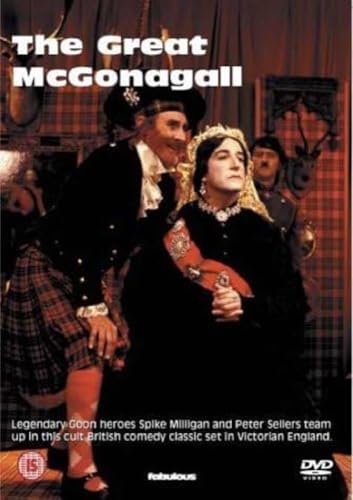


![Up the Catalogue [DVD]](https://m.media-amazon.com/images/I/41REk870nuL._SL500_.jpg)