366 UNDERGROUND: FAITH OF OUR FATHERS (1997)

DIRECTED BY: Hamilton Sterling

FEATURING: Jeff Hawk, George Gerlernter, James Geralden, Cassandra Joy, Noel Webb, Clement Blake

PLOT: A satiric parable wherein naive innocent chimney-sweeper Charles is schooled in the ways of the world and business by a cynical benefactor, Nick, who encourages him to bring back the tradition of ‘climbing boys’ when a rich client expresses a wish for ‘the old days’. Charles complies with the exploitation of a child, but at a cost to himself and those around him.

IS IT WEIRD?:  Not really. Pretentious, certainly; but there’s nothing new brought to the table in terms of weirdness.

COMMENTS:  At first glance, Faith of Our Fathers appears to be very timely and prescient, considering that the film was completed in 1996, went out on the festival circuit where it did get some very good critical notice but no release until 2013, when it could be seen as an “I-told-you-so” roadmap to the current economic/political/cultural climate (much like how Richard Brooks’ reviled Wrong is Right from 1982 turned out to be a not-that-exaggerated look at what the Millennium-Ought decade held in store for everyone). It’s really hard to fault the filmmakers’ intentions, as there is a concerted effort on everyone’s part to make this a meaningful project.

Faith of Our FathersUnfortunately, for me those intentions fall short in the experience of watching this play out. I suspect those who would enjoy watching this film would also be rabid fans of hardcore symbolic European art-house films, which are usually very slowly paced, populated with metaphors instead of characters and with degrees of inscrutability. My failure to connect here is probably a failing of this viewer. It’s a film that I really wanted to like, especially since items like composition, nuanced acting and craftsmanship are usually in short supply in the majority of work that gets the “Underground” label. But honestly, I just couldn’t enjoy it, despite the impressive craft on display (the cinematography, score, and a performance by Gerlernter as fallen priest/satanic provocateur Nicholas Nickelby).

It also doesn’t help when you have this as your logline:

” …this surreal and politically prescient film deconstructs the language of religious and economic America, finding artistic alternatives within the ethos of art.”

If this sentence gets you pumped to see what might follow, instead of rolling your eyes from the stench of pretension, then you’ll enjoy the journey. Much as I wanted to, I couldn’t get past it—so fair warning.

Faith of Our Fathers was self-released by writer/director Hamilton Sterling on DVD and Blu-ray, and the presentation is of very high-quality. One thing missing is a director’s commentary, which I think really would’ve helped—not that Sterling would’ve needed to spoonfeed us every single symbol in the film, but some context certainly would’ve been appreciated, especially explanations for the jumping back and forth between color and black and white, and sequences such as the one where one of the main characters has a dialogue with Napoleon Bonaparte in the park.

Helikon Sound – Hamilton Sterling’s site. Sterling has worked as a sound tech on films like Magnolia, The Tree of Life, Gangs of New York, and The Dark Knight, amongst others.

Faith of Our Fathers Facebook page

WEIRD HORIZON FOR THE WEEK OF 2/14/2014

Our weekly look at what’s weird in theaters, on hot-off-the-presses DVDs, and on more distant horizons…

Trailers of new release movies are generally available on the official site links.

SCREENINGS – (Cinefamily, Los Angeles, CA, Feb. 19):

A Report on the Party and Guests (1966): Read the certified weird review. If you’re in L.A. you should make it a point to check out this rare screening of ‘s anti-totalitarian classic about a group of carefree picnickers who are gradually absorbed into a frightening new social structure. Here’s the Cinefamily’s report on Report, and be sure to check the Jan Nemec Retrospective Tour page for upcoming dates in other U.S. cities.

NEW ON DVD:

“The Cinema of Jean Rollin: The Vampire Films”: Here are Rollin’s four major vampire pics together in one bundle: Rape of the Vampire, The Nude Vampire, Shiver of the Vampire and Requiem for a Vampire. One of these (or more?) is almost certain to make the List, but which? Buy the whole set and decide for yourself. Buy “The Cinema of Jean Rollin: The Vampire Films”

Successive Slidings of Pleasure [Glissements Progressifs du Plaisir] (1974): The police investigate a woman suspected of being a witch, whose roommate has turned up naked and dead. After writing Last Year at Marienbad, novelist Alain Robbe-Grillet went on to become a director of surreal sadomasochistic soft-porn; we’re excited that Redemption is re-releasing his hard-to-find features. Buy Successive Slidings of Pleasure.

Trans-Europ-Express (1967): The story concerns to sets of travelers on a train: one set is a drug dealer and his sexual captive, the other a writer and film producer who are making up the story during the trip. More Robbe-Grillet from Redemption; this was hot enough to get banned in Britain back in the day, although it’s (somewhat) tame by today’s standards. Buy Trans-Europ-Express.

NEW ON BLU-RAY:

“The Cinema of Jean Rollin: The Vampire Films”: See description in DVD above. Buy “The Cinema of Jean Rollin: The Vampire Films” [Blu-ray].

Successive Slidings of Pleasure [Glissements Progressifs du Plaisir] (1974): See description in DVD above. Buy Successive Slidings of Pleasure [Blu-ray].

Trans-Europ-Express (1967): See description in DVD above. Buy Trans-Europ-Express [Blu-ray].

What are you looking forward to? If you have any weird movie leads that I have overlooked, feel free to leave them in the COMMENTS section.

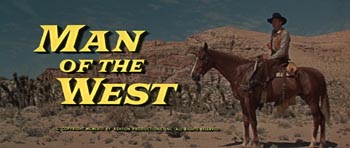
ANTHONY MANN’S MAN OF THE WEST (1958)

When the subject of Anthony Mann’s contribution to the western genre is explored, it is his cycle with James Stewart that is inevitably brought up. Indeed, the Stewart collaboration Naked Spur (1953) remains Mann’s highest praised achievement in the great American genre. However, it is his nearly forgotten, last true western, Man of the West (1958), starring , that is his most strikingly modern achievement. A telling sign of this film’s greatness lies in the fact that its status is still debated decades later.

Mann’s casting of Cooper is nothing less than inspired, although it probably cost the film box office revenue. Mann and Stewart had fallen out during the making of the previous year’s Night Passage, but by then audiences had come to accept Mann’s reinvention of Stewart’s on-screen persona. Starting in 1950, under Mann’s direction, Stewart had been portrayed as violent, selfish, cynical and remarkably complex.

In 1958, Gary Cooper was nearing the end of his career, and no director had manipulated Cooper’s screen personality in the way Mann had done with Stewart. , a competent journeyman director who, nevertheless, lacked a real consistent vision, had come closest in Springfield Rifle (1952), where he portrayed Cooper’s character as an accused coward in the first half of the film. That turned out to be an undercover ploy to smoke out the real traitors, however, so Cooper retained his pure-as-the-driven-snow nobility after all. Still, even then, neither audiences nor critics bought it. Laconic simplicity and nobility were Cooper’s well-established trademarks. Mann took advantage of what was already established, and manipulated it with a darkly hued underbelly. Under Mann’s direction, the “yup” mannerisms of Cooper’s Link Jones convey evasiveness in an attempt to hide a less than noble past.

Title from Man of the West (1955)Link Jones is about to catch a train headed for Texas. He is on a mission to find a school teacher for his small town’s new school, and is carrying the funds to pay for her. A Marshall at the local train station thinks he recognizes Link, asks Link his name, inquires into Link’s past, and asks him if he knows the fugitive Doc Tobin (Lee J. Cobb). Link cautiously shakes his head, lies, squints, and evades the Marshall’s penetrating looks. Mann’s expert manipulation of Cooper’s personality traits is so subtle as to be believable and, thus, unnerving. It was unsettling enough for 1958 audiences to reject it, and even contemporary critics have often lamented the casting of Cooper, as opposed to Stewart, in this film. Stewart would not have worked nearly as well, simply because his casting would have been acceptable, even expected.

Cooper’s Link Jones consistently plays dumb throughout the film, first to evade discovery, then out of sheer necessity, for survival. We believe that he hides a sordid past. Link’s trip is cut short when bandits rob the train. Link, saloon singer Billie (Julie London) and con man Sam (Arthur O’ Connell) are left stranded. Link recognizes the nearby area as his one-time home. Knowing the nearest town is 100 miles away, Link leads his fellow Continue reading ANTHONY MANN’S MAN OF THE WEST (1958) →

162. THE LEGEND OF SURAM FORTRESS (1984)

Ambavi Suramis Tsikhitsa; Legend of the Surami Fortress (alternate translation)

366 Weird Movies may earn commissions from purchases made through product links.

“In Ron Holloway’s reverent documentary Paradjanov: A Requiem… an unbowed Paradjanov speaks nonchalantly of being accused of ‘surrealism,’ never pointing out the surreality of a government that views surrealism as a crime.”–Keith Phipps

Recommended

DIRECTED BY: Sergei Parajanov, Dodo Abashidze

FEATURING: Leila Alibegashvilli, Sofiko Chiaureli, Zura Kipshidze, Dodo Abashidze, Veriko Andjaparidze

PLOT: On the desolate steppes of Central Asia, a Georgian prince has given slave Durmishkhan his freedom; although he promises to make his fortune and buy her freedom, his lover, Vardo, senses that he will never return. Indeed, in his travels Durmishkhan meets another woman and fathers a child with her, while a bereaved Vardo becomes a celibate fortune teller. Years later, with a Muslim invasion imminent, the czar seeks guidance from Vardo on how to stop the fortress of Suram from collapsing every time his men rebuild it.

The Legend of Suram Fortress (1984)

BACKGROUND:

  • The Legend of Suram Fortress was Sergei Parajanov’s first film after spending 15 years in and out of Soviet prisons on charges ranging from homosexuality, rape, and pornography to bribery and trafficking in religious icons. Many view his persecution as politically motivated. Along with intellectuals and celebrities like , fellow filmmakers , François Truffaut, , , , and all agitated for his release.
  • Parajanov was born in Georgia to Armenian parents, and began his filmmaking career in Ukraine. Each of Parajanov’s major films is built around the folklore of a specific Soviet satellite state: Shadows of Forgotten Ancestors (1964) revolved around Ukrainian legends, The Color of Pomegranates (1969) dealt with an Armenian poet, and The Legend of Suram Fortress covered the mythology of his native Georgia. Ashik Kerib (1988) shows an Azerbaijani influence.
  • Although the movie bears all of Parajanov’s stylistic trademarks, Dodo Abashidze (who also plays the role of Osman-Agha in the film) is credited as co-director, as he is also in Parajanov’s final completed film, Ashik Kerib. Abashidze has no solo directing credits but was a popular actor, and his influence is viewed as a major factor in getting Parajanov released from jail and allowed to return to filmmaking.
  • The Legend of Suram Fortress was based on Georgian folktales which had been turned into a novel by the writer Daniel Chonkadze in the 19th century. The story had been made into a silent film in 1922.
  • The Suram (or Surami) fortress still stands in Georgia.

INDELIBLE IMAGE: This is a hard choice indeed: The Legend of Suram Fortress is a work of visual poetry, and picking out a single frame is like picking out the single best line from “The Iliad” or “The Odyssey.” Each scene in Suram is a meticulous exercise in staging, pageantry, and costuming. For our representative moment, we’ll chose the ceremony where the peasants pray to St. George to protect them from the (metaphorical Muslim) dragon: costumed worshipers parade by in a line, led by a prancing white horse decorated with silvery tinsel, before a smoky field, while the Saint’s icon appears as a glittering ball of light. The scene is low-tech but beautiful, literally realized with smoke and mirrors. In a movie with such a rigorously realized formalism, almost any other choice of image would be equally indelible.

WHAT MAKES IT WEIRD: Fans of will likely to groove to the vibe of Sergei Parajanov, recognizing the obsessively arranged compositions and the mysticism that hangs like thick clouds of incense over the film. Rather than taking a wide-angle, pan-theistic view like Jodorowsky, however, Parajanov focuses each of his films narrowly and intently on the legends of a single culture. In Suram Fortress he digs deep to uncover fragmentary narrative relics from ancient Georgia, telling of the legendary foundation of a nation in a confused era when Christianity, Islam and paganism all fought for the hearts of her people. Soaking in a bath of exotic medieval sounds and images, you emerge from the movie feeling Georgia in your bones, while at the same time realizing you know next to nothing about the culture Parajanov simultaneously illuminates and obscures. The visions crumble before your eyes as he builds them.


Soviet trailer for The Legend of Suram Fortress

COMMENTS: Although there is a (digressive and fractured) story, the essence of The Legend of Suram Fortress is in its astounding visual tableaux: Continue reading 162. THE LEGEND OF SURAM FORTRESS (1984) →

Celebrating the cinematically surreal, bizarre, cult, oddball, fantastique, strange, psychedelic, and the just plain WEIRD!