Tag Archives: Thriller

CAPSULE: THE BANSHEE CHAPTER (2013)

DIRECTED BY: Blair Erickson

FEATURING: , Ted Levine, Michael McMillian

PLOT: An investigative journalist searches for a friend who disappeared after taking an experimental hallucinogenic drug.

Still from The Banshee Chapter (2013)

WHY IT WON’T MAKE THE LIST: It has the a solid collection of paranoid/paranormal/psychedelic elements, but it doesn’t push them far enough, ending up as little more than Jacob’s Ladder lite.

COMMENTS: With a plot hinging on the CIA’s MKUltra mind control experiments and bits of fringe lore about the endogenous hallucinogen DMT, “numbers stations,” and references thrown in for seasoning, The Banshee Chapter might have been scripted by paranoid paranormal AM radio host Art Bell. The movie’s style is as all-over-the-place as the conspiratorial plot; journalist Anne Roland (Winter) begins narrating the story as a documentary, and the movie incorporates (sometimes out-of-context) actual newsreels together with scripted “found footage” scenes of James Hirsch (McMilian) experimenting with the rare drug at the center of the story. As the tale progresses the documentary conceit is ditched in favor of a typical third-person omniscient view of proceedings (although the shaky handheld camera continues to remind us of the movie’s supposed vérité origins). This lack of consistency isn’t a huge issue; if you like the movie, you might think that it contributes to its ragtag, homemade charm. The bigger problem is that, despite having so much going on, Banshee Chapter frequently lapses in talkiness and confusion. Without much of a budget for effects or locations, plot points are often given through speculative dialogue. And even when things happen, it’s not always made clear why Anne is following up certain clues: I couldn’t figure out exactly what led her to follow up on the shortwave radio broadcasts, for example, or what her plan was once she finally tracked down a source of the drug. Further, the horror of the story comes more from sudden screams and pale faces popping into frame than creeping dread and paranoia: the main effect of the experimental drug seems to be to induce jump scares, and the movie’s climax is a sprint through a spookhouse. The one really good idea that the screenplay implements is the inclusion of -inspired novelist Thomas Blackburn (Levine) as a key character. Levine plays Thompson/Blackburn with laid-back, boozy seediness, as opposed to the amped-up comic caricatures and adopted in portraying the cult novelist. It’s a lot of fun to see this character out of his comfort zone, tromping through the dark desert in an “X-Files” scenario. If you have a passion either for paranormal culture or for anything Thompson-related, Banshee Chapter may be worthwhile; for those without a particular interest in these subject, however, it’s not a wild enough ride to justify buying a ticket.

Banshee Chapter is the first feature from director/co-writer Blair Erickson. Alt-Spock Zachary Quinto counts among the film’s numerous producers. After a small but critically successful festival run, the film was released on VOD in December of 2013, and will see a limited theatrical release in January 2014.

WHAT THE CRITICS SAY:

“It certainly works as a gonzo exposé of some of the twentieth century’s madder moments – but perhaps more importantly, this psychotropic remapping of history never forgets to be proper jump-out-of-your-seat scary.”–Anton Bitel, Grolsch Film Works

CAPSULE: ALYCE KILLS (2011)

DIRECTED BY: Jay Lee

FEATURING: Jade Dornfeld, Tamara Feldman, , Eddie Rouse, Larry Cedar

PLOT: A young woman unintentionally destroys her best friend while on drugs, then spirals into anti-social behavior, dragging her acquaintances into the dark morass of her twisted psyche.

ALYCE (2) 450

WHY IT WON’T MAKE THE LIST: Like a high-speed bullet train to Hell, Alyce is novel and exciting, but it doesn’t take us somewhere we want to go.

COMMENTS: With a cursory acknowledgment of the Lewis Carrol tale, Alyce Kills is as much an entry-level clerical answer to the Fortune 500’s American Psycho (2000) as it is a morbid odyssey of self discov—uh, make that self-destruction. Young, pert Alyce (Jade Dornfeld) toils away in a depressing corporate cubicle for a shrewish boss at a thankless job. After work she trudges home to her cramped apartment to freshen up before some much-needed steam-venting at dingy nightclubs. It’s not much of a life, but Alyce has her friend Danielle (Rena Owen), an alpha-female whose guidance Alyce relies upon.

When the women take the Generation-X drug “ecstasy,” Danielle leads on Alyce. It comes out that Alyce has a crush on Danielle, but Danielle rejects her.

Is it an accident then when Alyce “accidentally” pushes her friend off the roof a short while later? It’s not clear whether Alyce is vindictive and a little crazy, or merely reckless and irresponsible. Danielle stands on the ledge, tempting fate, and Alyce mock-pushes her. Alyce is playing a game and behaves as if she doesn’t intend the result—Danielle’s dive to the pavement. But Alyce definitely intends to make contact, and under the circumstances it’s no surprise when Danielle plunges to her doom.

Despite the fact that the drug led to tragedy,  Alyce decides she likes ecstasy and trades sex for X from a repulsive dealer. Under the influence of the psychedelic, Alyce locks herself in her apartment for marathon-length trips during which she perpetually masturbates to violent videos. Conniving to obfuscate her complicity in Danielle’s misfortune leads Alyce to take increasing risks, until she pulls out all the stops. Traipsing across an urban landscape of bizarre characters, settings and situations, Alyce taunts the family of her victim, and eventually conspires murder against those who annoy and inconvenience her.

Having now lost Danielle’s boundary-defining structure, Alyce’s fragile veneer of sanity falls away like an uncoupled caboose from a speeding express. Her locomotive throttle is wide open and there’s no engineer in the cab. Alyce resolves to take charge of her own life, but her brand of self-assertive, feminist “empowerment” is to embark upon a self-indulgent journey of risky behavior. Yet it’s more like a spree, and it degenerates into a maelstrom of self destruction, dragging those closest to her along for a hell-ride on her crazy train.

The theme of women scheming against men has been around at least since ancient Greece. From Aristophanes’ “Lysistrata” to the Biblical Eve convincing Adam to bite the proverbial apple, we’ve seen versions of the femme fatale in various literary incarnations through the ages. A few examples are Shakespeare’s Lady Macbeth and Cleopatra; Daniel Defoe’s opportunistic Moll Flanders; Oliver Goldsmith’s lighthearted, scheming Katie Hardcastle from 1773’s “She Stoops To Conquer”; the conniving Matilda in Matthew Gregory’s 1796 supernatural Gothic novel “The Monk: A Romance”; and the malevolent man-hater Miss Havisham from Charles Dickens’ “Great Expectations.”

Whereas these feminine plotters employed cunning and sexual manipulation to achieve their aims, their modern counterparts resort to brute force. The concept of the fairer sex outwitting men has evolved into the myth of women’s domination over men, and convoluted orchestrations have given way to the karate kicks and machine guns used by characters such as secret agent Emma Peel (Diana Rigg, or Uma Thurman in the 1998 film version) in “The Avengers,” to Max Guevera (Jessica Alba) in TV’s “Dark Angel,” and La Femme Nikita (Anne Parillaud; Bridget Fonda in the US remake). The latest trend has dark-psyched vixens engaging in just plain psychopathic killing sprees.

Alyce‘s quirky but undeveloped character may be inspired by the leads in May (2002) and Neighbor (2009), two similar stories about loner hellcats who indulge their necrophilic and cannibalistic urges through acts of violence. May () commits her violence via a misguided search for an similarly misfit mate; in Neighbor, “The Girl,” (America Olivo) thrill-kills for the sheer sadistic pleasure of it, making a living by robbing her victims and using their homes like motels. Alyce, however, lacks any sensible or even cognizant motivation at all. Her deeds defy logic, her methods are unsound, and Alyce’s lack of planning is sure to bring her only more trouble. We’re not sure if even she understands her actions. This makes her singularly one-dimensional.

The characterization is a profound disappointment, too. What’s engrossing about Alyce’s sexy character is not what she does, but the wry way she does it with her distinctively iconoclastic demeanor. It’s not the revulsion inherent to her wanton acts of sex and violence that catches our attention, but the manner in which her smug, witty bearing holds out the promise of a satisfying payoff. We keep waiting to tumble into an epiphany of insight into her disturbed psyche, or at least some commentary about human nature or revenge. It never happens, and we’re left feeling like the lone passenger on a runaway train with no destination in sight, and no emergency pull-cord to stop the projector.

WHAT THE CRITICS SAY:

“…might’ve been an invigoratingly gaudy cult classic if Lee’s imagery was more original. Alas, quite a bit of the first hour resorts to standard horror clichés involving dark alleys, strobe lights, and hallucinations of girl corpses with milky white eyes. But the third act is a small triumph, as the requisite violence is a peculiar blend of the cartoonish and the legitimately grisly.”–Chuck Bowen, Slant (contemporaneous)

ALYCE KILLS (1) 450


Alyce Kills movie trailer

CAPSULE: SECONDS (1966)

DIRECTED BY: John Frankenheimer

FEATURING: Rock Hudson, John Randolph, Will Geer, Jeff Corey, Murray Hamilton, Frank Campanella, Salome Jens

PLOT:  A middle-aged businessman in midlife crisis gets a second chance at life—but it comes at a steep price, and there’s a morbid catch.

SECONDS-2


WHY IT WON’T MAKE THE LIST: Seconds offers us a unique, unusual plot, one that will really stick in your memory. You’ll carry the story and its lesson for the rest of your life because it directly treats concepts that nearly everybody can, or knows they eventually will relate to:  growing old, midlife crisis, looking back and wondering if we made the right choices, and ruefully contemplating the what-might-have-beens. What can we be doing now to make sure we don’t have regrets? Despite the dramatic, hard-hitting effect the writers and director bring to these concepts, however, Seconds is a straightforward, conventional film. The story is offbeat as hell, but the movie isn’t weird.

COMMENTS:  Dramatic and disturbing, Seconds is a dark, brooding predecessor to middle-class America mid-life crisis films such as the blackly-comic Middle Age Crazy (1980) or the light-hearted and less substantial This Is 40 (2012). Yet, while those films allow us to laugh off the grim prospects of getting older, Seconds grinds on us and strikes a nerve.

Wealthy banker Arthur Hamilton (John Randolph) has it all. He went to the right Ivy League school, joined all the right fraternal organizations, and married the right woman. Yet, at middle-age, something’s missing.

In Sinclair Lewis’s classic novel “Babbitt,” the book’s namesake awakens each morning from a blissful dream of being a carefree youth cozying up to an enigmatic and beautiful girl to greet the dread of reality: a frumpy wife, his own greying countenance, and the unsatisfying banality of another tedious workday. Like Babbitt, Arthur Hamilton feels frustrated and empty. Maybe it’s because Arthur looks like an aging John Randolph. Or could it be because at middle age, Arthur isn’t so sure that the life he toiled away for is the one he really wants?

It’s hard to imagine that it is. Arthur is clearly bored and bothered. Even more telling, Arthur and his wife don’t sleep together anymore. The Hayes code hold-over separate beds don’t help the romance.

And Hamilton is beyond staunch; he’s gosh-darned uptight. Racked with tension, beaded with sweat, coiled up, we want to hand him a Hawaiian shirt, a Mai-Tai, and tell him to loosen up.

We’re not alone. Someone from Arthur’s past also has him sized up as a walking time-bomb of seething non-fulfillment.

A mysterious phone call from a dead school chum (Murray Hamilton) breaks the routine. After the phone call Hamilton receives a mysterious address, at which he arrives after following a chain of clues. Arthur Hamilton’s life is about to change.

In return for his life insurance payout and a hefty chunk of his sizable estate, Hamilton joins a secret society—one which, after months of super-nutrition, exercise, hair restoration, testosterone therapy, and state of the art plastic surgery, transforms him into—wait for it … wait for it …  young, virile, ROCK HUDSON!

And that’s not all. Under hypnosis, Arthur learns that what he really wanted to do in life was to be an artist. The organization he’s joined has that Continue reading CAPSULE: SECONDS (1966) →

RECOMMENDED AS WEIRD: THE DOUBLE HOUR (2009)

DIRECTED BY: Giuseppe Capotondi

FEATURING: Ksenia Rappoport, Filippo Timi, Antonia Truppo, Gaetano Bruno, Fausto Russo Alesi

PLOT: After surviving a gunshot wound to the head, a woman is haunted by apparitions of the dead and visions from what seem to be an alternate, but parallel version of her life.


WHY IT SHOULD MAKE THE LIST: The Double Hour keeps us guessing as to whether we are watching a supernatural chiller or a psychological thriller as it shifts from reality to fantasy and back again. The technique is disorienting, but effective for presenting the story in a creative, unconventional way, and produces a viewing experience that is at times slightly surreal, and definitely perplexing and weird.

COMMENTS: Wow! Guiseppe Capotondi’s stylish, haunting mystery, wrought with paradoxes and disturbing plot twists, really kept me guessing and thinking. The heroine’s perplexing afflictions are in some way personally relevant to her, but instead of clarifying what has happened, they further darken the murky conundrum into which she inexorably spirals in this smoldering, claustrophobic thriller. Capotondi cleverly wields suspense and uncertainty so as to merge the lead character’s unfolding impressions with our viewing experience so that I found myself drawn into her to nightmare as if it were my own.

Strong performances glue The Double Hour‘s convoluted, anomalous elements together into a cohesive, atmospheric mystery. Stars Filippo Timi and Ksenia Rappoport won 2009 Venice Film Festival awards for their roles. Armchair sleuths will find themselves put to the test to try to untangle a twisty path of clues in The Double Hour. With a finale similar to The Butterfly Effect II, everything comes together in the end with no red herrings, but even the most intrepid brainteaser trailblazer will have to lift the double bill of his deerstalker cap to scratch his brow in consternation after the 20 minute mark.

The Double Hour takes it’s name from those times during the day when the numerals designating hour and minutes match. Such as 10:10, or on a 24 hour clock, 22:22. In The Double Hour, these instances hold a special significance: it’s rumored one can wish on them and the wish will come true. They seem to figure prominently in Sonia’s (Rappoport) life, coinciding with strategic events.

Sonia is a chambermaid working in an upscale hotel. She is hounded by bizarre occurrences. After a hotel guest in a room assigned to Sonia leaps off her balcony, the maid takes up a romance with Guido (Timi), a guard at a wealthy absentee land owner’s estate. While visiting her boyfriend, professional criminals raid the manor, holding Guido and Sonia hostage while they loot the mansion of art treasures. Events run awry when Guido tries to protect Sonia. A shot is fired, and everything goes black. It’s unclear what happened.

This is where The Double Hour, already a romance and now a crime caper, completely departs from what the viewer is expecting and plunges into the realm of the eerie and bizarre. The film takes up with Sonia back at work at the hotel as if nothing has happened, but clearly her world is sliding off its axis. Sonia’s life shifts back and forth between light and dark, with a maddeningly indiscernible, sickeningly deliberate design. Phantasmal apparitions and unnerving coincidences begin to gaslight the moments of her day, appearing at those times marked by double digits on the clock.

Disquieted again and again by contact from the other side, Sonia questions her interpretation of reality. How far can we trust our senses to tell us what is real? At what point does subjective experience part from objective truth? Like a Gordian tangle of thread unraveling from some bedeviled funeral shroud, Sonia’s effort to decipher her burgeoning enigma is predicated by a series of uncanny twists and turns, each successive development hurtling all that has preceded it into uncertainty.

As Sonia drifts through a limbo, The Double Hour deftly, seamlessly crosses multiple genre boundaries, from mystery, to horror, to thriller, keeping us off balance and agitated. Just as we begin to draw conclusions, the storyline bends and splits yet again down another unexpected course.

Do our lives co-exist on parallel planes, where mere chance causes outcomes to diverge into differing pathways? If we could wish to reverse tragedies, could things ever really be the way they were knowing what we know now? Be careful what you wish for. We can only watch powerlessly as Sonia discovers whether or not destiny compels those alternate pathways to converge with an eerily vexing prearrangement upon the manifestation of The Double Hour.

WHAT THE CRITICS SAY:

“A love story wrapped in a way-twisty thriller, this Italian film was made to mess with our heads.”–Kenneth Turan, The Los Angeles Times (contemporaneous)


CAPSULE: KILL LIST (2011)

Recommended

DIRECTED BY: Ben Wheatley

FEATURING: Neil Maskell, MyAnna Buring, , Harry Simpson, Emma Fryer

PLOT: Jay the hitman, out of the game and down on his luck, takes up a new contract with his partner Gal to help support his wife and young son. As they start knocking people off a “Kill List,” Jay finds the targets challenging his principles, his relationships, and eventually, his grip on reality.

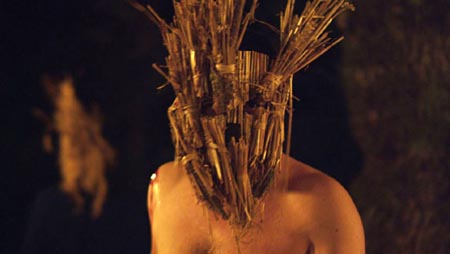
Still from Kill List (2011)


WHY IT WON’T MAKE THE LIST: Though it will be of great interest to art-house audiences and fans of weird movies, the film doesn’t take as many risks as it would like to claim. It’s full of symbolic echoes and studied ambiguity, but there are no outright challenges to our expectations or sensibilities.

COMMENTS: Kill List is an excellent genre-hopping horror thriller, full of smart directorial choices and technical chops. The atmosphere is both sanitized and gritty, in that special way you find in cinema verite, and the sense of dread and instability is overpowering. Jay is sometimes sympathetic and sometimes terrifying, and Neil Maskell nails the role in all its variation. When the violence comes, it’s brutal and unflinching, with no glorification, and in this violence, you get the most striking indication that Neil is dangerously damaged.

The film shows its technical merit early, with a succession of domestic scenes that allow us a rich sense of the main characters and their relationships. Jay is stuck in the inertia of unemployment after a bad experience in the army and a job that apparently went south in Kiev. His relationship with his wife is rocky, but not doomed, and if you were coming into Kill List with no expectations whatsoever, you could be forgiven for expecting Jay to go through a dramedy-style self-discovery that ends with the renewal of his marriage. During these opening scenes, you get moments of genuine tenderness, especially between Jay and his son. Jay becomes a great father when he spends time with Sam; furthermore, his friendship with Gal Continue reading CAPSULE: KILL LIST (2011) →