Category Archives: Capsules

CAPSULE: THE DUKE OF BURGUNDY (2014)

DIRECTED BY: Peter Strickland

FEATURING: Sidse Babett Knudsen, Chiara D’Anna, , Eugenia Caruso

PLOT: An entomology professor and her student are very much in love, but their romance is threatened by the latter’s preference for BDSM practices in the bedroom.
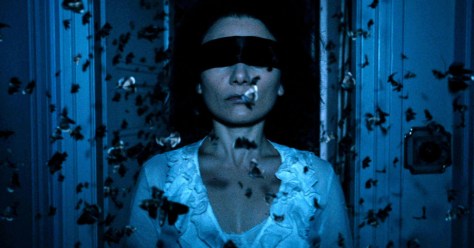
18BURGUNDY2-facebookJumbo

WHY IT WON’T MAKE THE LIST: Though the subject matter might seem strange or unusual to some viewers, the film itself is simply an examination of two women who are going through a trial in their relationship. There is some bizarre dream imagery and a choppy narrative style, but nothing truly Weird.

COMMENTS: The Duke of Burgundy opens with a drawn-out sexual role play as the wide-eyed Evelyn (Chiara D’Anna) enters the house of domineering mistress Cynthia (Sidse Babett Knudsen) to act as housekeeper. Evelyn scrubs and shines and soaks as Cynthia thinks of more demeaning tasks for her to do, ending the day with punishment for unsatisfactory work in the form of urination into Evelyn’s mouth. This scene returns in multiple forms later, as we see different perspectives and points in time, serving as an anchor for our understanding of their relationship. The film unfolds over a semester at the isolated women’s school where Cynthia lectures and Evelyn studies, but most of the focus is on their private moments at home. As the persistent Evelyn comes up with new ways to be dominated, she believes she’s found the perfect partner in Cynthia, who is willing to act the dominatrix if it makes her lover happy. However, it soon becomes clear that the older woman is uncomfortable with the parts Evelyn creates for her, struggling to emotionally and physically abuse her lover even in the context of role playing, and then growing to resent her for her increasing demands.

Strickland made waves two years ago with his stunning, unnerving ode to giallo, Berberian Sound Studio, in which a British sound technician sinks into a paranoid fever dream while shooting a gory horror in Italy. Here, the director again treats the eyes to a sultry palette, ornate settings, and thoughtful camerawork, matched by an effective soundtrack that pairs fuzzy synths with the hum of insects. The opening credits use freeze-frame and oversaturation to reference vintage softcore film, but thanks to the soundtrack and visceral color choices, other moments are more reminiscent of a slasher. The retro vibe is heightened by the somewhat ambiguous setting and time period. Fashions and hairstyles suggest the 1950s or 60s, the aesthetic is more 70s, the landscape and architecture is classical, evoking rural Italy (though filmed in Hungary), and everyone speaks English with different European accents. He clearly devotes much of his time to mixing and matching different film references, from art house to grindhouse, but ultimately the focus is on the characters. Even the weirder touches, including frequent close-ups of insects and stark shots of architecture, are meant to communicate the sense of dread that is hanging over Cynthia and Evelyn’s relationship as they move into darker sexual territory. There is a palpable feeling of intimacy in Strickland’s approach, utilizing close-ups and lingering shots to effect a kind of quietude over most of the proceedings. It is easily to believe in this relationship, though the world around them is often hazy.

On paper The Duke of Burgundy sounds like it should be a sleazy straight male fantasy about lesbian kink, and yet Strickland forgoes all sensationalism—there isn’t that much (explicit) sex or even nudity shown. Evelyn’s mental stimulation is highlighted, as she derives pleasure from being locked in a chest, verbally berated, and sat on by Cynthia. The BDSM scenes are often treated with humor, not to make fun of those practices but to reveal the kind of goofy accidents or strange conversations that might come with it, and to break the tension for an unfamiliar audience. At other times they are presented in a cold, almost sterile manner, with Cynthia eventually injecting a form of revenge into their role play. What is both wonderful and striking about this film is its undertone of normalcy, its relatable and honestly touching portrayal of a romantic struggle, despite its apparently sexploitative premise. The basic story could easily be rewritten with different conflicts, with different genders, with different settings; the BDSM elements are both central to the narrative and secondary to the overarching theme. The film asks if sexual preferences can damage an otherwise strong relationship, and if personal contentment can exist without complete sexual fulfillment. It allows us to peek into something extremely personal, but universal, intermingling with our own insights and experiences, with a dreamlike style so lush and distinctive we still walk away feeling like we’ve left behind a world of fantasy. It might not be List-worthy, but it is certainly worth seeing.

WHAT THE CRITICS SAY:

“…the question of who’s really in charge of these scenarios is complicated. Exactly the same deceptive quality can be found in the dreamlike artifice of Strickland’s film itself, set in a lush and aristocratic European fantasyland that’s entirely nonspecific as to geography and chronology… But while Strickland’s films already aren’t like anyone else’s, his real secret is that even in this strange constructed world, his characters feel like real people struggling with issues that aren’t exotic at all.”–Andrew O’Hehir, “Salon” (contemporaneous)

CAPSULE: WINTER IN THE BLOOD (2013)

DIRECTED BY: Alex Smith, Andrew J. Smith

FEATURING: Chaske Spenser, , Saginaw Grant, , Casey Camp-Horinek, Julia Jones

PLOT: Virgil First Raise, an alcoholic half-breed Blackfoot, wakes up from a blackout and is told that his wife has left him, taking his rifle and electric razor with her and setting him off on a boozy, hallucinatory quest to recover the items.

Still from Winter in the Blood (2013)
WHY IT WON’T MAKE THE LIST: A vision quest seems like the perfect plot structure for a weird movie, but although there is a lot to enjoy in this slightly surreal, unusual Indian-themed movie, it isn’t strange enough to overcome its narrative shortcomings.

COMMENTS: Waking up from a bender in a ditch, seeing visions of his dead father, Virgil First Raise complains he is “caught in an in-between place… vulnerable to the spirits.” Though not entirely successful as cinematic psychoanalysis, Winter in the Blood does capture Virgil’s physical and psychological tipsiness and vulnerability to the spirit world, which bleeds into reality. Flashbacks frequently interrupt the present-day action, often introduced in interesting ways; for example, Virgil fishes in a river and sees his childhood self and his (now absent) brother frolicking on the opposite bank. The movie also incorporates the rhythms of hard drinking; we see Virgil tippling in a bar, following up on a lead, and suddenly he wakes up in a strange bed, leaving us with a suspicion that crucial plot information may have been irretrievably lost to a blackout. That structure of memories and ellipses would be confusing enough for the average viewer, but then there are also entire subplots that are probably imagined, such as Virgil’s dalliance with a Canadian “airplane man” who is being tailed by mysterious men in suits and who wants to enlist the Indian in an obscure smuggling plot, the details of which keep shifting. The quirky and sinister airplane man scenes, particularly one where Virgil finds a fellow diner at a lunch counter inexplicably falls face-first into his soup, give the film an exciting Twin Peaks-on-the-reservation sensibility that it could have used more of.

Virgil suffers from a horde of demons—too many for a single movie—from alcoholism to survivor guilt to incompetent parents to the manhood ritual he never completed to fretting over the Caucasian impurities in his blood. His troubles materialize in an equally numerous series of symbols: the rifle, a mysterious blonde barmaid who sometimes has a tattoo and sometimes doesn’t, the airplane man, a stuffed teddy bear, a rabbit in a haystack. As a work of Native American cinema, a field that’s not overly crowded, Winter in the Blood ranks as a minor standout. The performances are mixed but generally good, the soundtrack is alt-melancholy, and the excellent widescreen cinematography captures the agrarian grandeur of Big Sky country. But all of the floating symbolism, subplots and narrative loose ends, together with the impressionistic style and some fumbling at the finale (the emotional climax feels misplaced, with Virgil’s despair unexpectedly peaking after the scene that should have brought him insight and redemption) result in a film that ends with an unfortunate lack of closure.

WHAT THE CRITICS SAY:

“Real and surreal weave together, and an impeccably chosen soundtrack — by, among others, the Heartless Bastards and Robert Plant — reinforces a mood that veers from dreamy to violent with shocking suddenness.”–Jeanette Catsoulis, The New York Times (contemporaneous)

CAPSULE: BIRD PEOPLE (2014)

DIRECTED BY: Pascale Ferran

FEATURING: Josh Charles,

PLOT: Set at a hotel by Paris’ Orly Airport, the story follows an American businessman who suddenly decides to quit his job and a French maid who has an odd experience one night on her rounds.

Still from Bird People (2014)
WHY IT WON’T MAKE THE LIST: It’s only half-weird (and only about half-good, too).

COMMENTS: Bird People has some strange concepts, an eccentric tone, and an unusual structure; just barely enough to keep it watchable through its long and slow 2+ hour runtime. It begins with a prologue in which we flit among various characters on a Paris commuter train, sometimes listening to their cell phone conversations, sometimes hearing their thoughts. They talk about their jobs or parties they’re going to; no one really has much of interest to say, or, if they might, we don’t get the opportunity to get to know them. Which, of course, is the point. What we have here is another of those Continental “cinema d’ennui” films about how modern life and technology destroy our interconnectedness (crucial life events are conveyed remotely, by an e-mail) and drain away our sense of wonder. As usual in this subgenre, the director wallows in the mundane in order to make her point, requiring enormous patience from the viewer as we watch characters smoke endless cigarettes (this is a French film, after all) or long takes of birds flying around. Whether you find your patience rewarded is up in the air; if you’re an arthouse patron, I’d guess the movie has about a fifty-fifty chance of success.

The film is divided into two halves. The first is straight dramatic realism, following Gary, a software engineer working for a small start-up firm. He’s mildly successful and upwardly mobile; he owns a major block of stock in the company but still needs to do hands-on work, meaning that he must stop-over for a night in Paris to take a meeting while on his way to Dubai to work on a power plant project. While sleeping in his hotel room he has an anxiety attack and abruptly decides that he wants to quit it all; his job, his family, the stress, and simply start his life over in his Paris hotel room with no plan. It’s a rare leading role for accomplished character actor Josh Charles, whom we both envy (because what slave to the dollar [or Euro] hasn’t daydreamed about chucking it all and starting fresh?) and disapprove of (because the script doesn’t gloss over the way he leaves his coworkers and wife in a bind—one of the movie’s most alive sequences is the painful conversation where he breaks up with his wife over Skype). The second half of the film dwells on maid Audrey (an appealing Anaïs Demoustier) as she makes her dismal rounds, and here is where the magical part of the movie’s magical realism happens. We won’t spoil the surprise as to what happens in her storyline. Neither will we guarantee that you’ll be blown away by its poetry. The contrast between airplanes and birds makes for an interesting metaphor, but while the film boasts good performances, cinematography, and other scattered points of interest, Bird People never really takes off.

WHAT THE CRITICS SAY:

“The surrealism stands in stark contrast with the stripped-down naturalism that has come before, and it is in this stretch that the film finally leaves terra firma and takes flight.”–Peter Debruge, Variety (contemporaneous)

CAPSULE: CHARLESTON PARADE (1927)

Sur un Air de Charleston

Recommended

DIRECTED BY: Jean Renoir

FEATURING: Catherine Hessling, Johnny Hudgins

PLOT: In 2028, an explorer from Africa in a futuristic flying sphere visits a devastated Paris, where a scantily-clad flapper with a pet gorilla teaches him how to do the native dance—the Charleston.

Still from Charleston Parade (1927)
WHY IT WON’T MAKE THE LIST: It’s a cute time-capsule oddity, but it’s also throwaway fluff—it lacks weird heft.

COMMENTS: Jean Renoir was an early cinema pioneer, and the son of famous impressionist painter Pierre-Auguste Renoir. Catherine Hessling was Renoir pere‘s last muse and model, and Renoir fils‘ first wife and leading lady. Jean’s cinema career would eventually result in conventional, realist stalwarts like The Grand Illusion (1935) and Rules of the Game (1937), but the short “Charleston Parade” shows him at a playful, experimental early stage. (Renoir did not make much money from his silent films, and actually sold his father’s paintings to finance them). “Charleston Parade” was made in three days on a lark. It was condemned in Puritanical America because of the amount of skin Hessling displays, along with her salacious dancing, and probably because of its racial and anti-colonial subtexts as well. Many of the director’s fans seem to think of this slice of Gallic zaniness as an embarrassment that Renoir would probably wish he could take back. I, on the other hand, wish more of the director’s movies were this unhinged. Every great director owes it to his fans, and himself, to make at least one weird movie.

The African explorer’s flying sphere (a nice effect for the time) lifts off from civilized Africa heading for the wilds of Europe. Cut to a ruined street in Paris where a flapper in short-shorts and a camisole tugs on a rope connected to an ape. Her legs are splayed lasciviously. The explorer lands on a pole. He is played by a black man dressed in a minstrel getup and made up to look as if he was wearing blackface.  After some slapstick mugging and bumping and grinding the flapper ties the explorer to a pole and begins a savage dance, shown in both fast and slow-motion. The explorer requests to use a telephone, which the flapper creates by drawing an outline on a wall in chalk. She dials up some angels (disembodied heads with wings attached, played by the crew, including Renoir himself). The rest of the film consists of the flapper teaching the explorer to dance, until she finally climbs into his sphere and flies back to civilized Africa (causing her pet ape to weep).

Though “Charleston Parade” is thoroughly wacky, the racial satire of the film gives it an added level of strangeness. The idea of a future where Africa is civilized and Europe is savage is at the same time progressive and condescending. A black actor in blackface was a first, for sure, although a more daring idea would have been to cast a black actress (e.g., Josephine Baker) in whiteface—but then Renoir couldn’t have used his wife as the star.

Despite being the work of a famous auteur, “Charleston Parade” is obscure and has rarely been anthologized. On DVD, it is only available on the eclectic 3-disc set “Jean Renoir Collector’s Edition,” where it is the shortest film alongside Whirlpool of Fate (1925), Nana (1926), The Little Match Girl (1933), La Marseillaise (1938), The Doctor’s Horrible Experiment (1959), and The Elusive Corporal (1962). There is no sound on the short embedded below (there isn’t on the DVD either; where’s the  when you need them?) I suggest playing something peppy in the background.

WHAT THE CRITICS SAY:

“These images reveal a spirit of play and weird humor in Renoir that would later manifest itself in his kindred spirit antiheroes like Boudu. Charleston Parade is an oddity from Renoir, but it’s a compelling and enjoyable oddity.”–Ed Howard, Only the Cinema (DVD)

(This movie was nominated for review by a reader whose suggestion was unfortunately lost. Suggest a weird movie of your own here.)

CAPSULE: 88 (2015)

DIRECTED BY:  April Mullen

FEATURING: Katharine Isabelle, , Tim Doiron,

PLOT: A woman wakes up in a diner with a gun in her handbag and no memory of how she got there; she accidentally shoots a waitress and goes on the run while experiencing a series of flashbacks that explain her personality change.

Still from 88

WHY IT WON’T MAKE THE LIST: 88 is confusing and has some hallucinations, but it never gets really weird (or truly interesting).

COMMENTS: 88 shifts back and forth between two timelines, in each of which Katherine Isabelle has a separate personality—for easy reference, she’s generally a hot-blooded sociopath when she’s in red and a confused innocent in blue. There are also fractured flashback montages to even earlier times within each separate storyline, and a few hallucinations thrown in too (although these are obvious and generally don’t affect the plot). It’s tangled, but you never get the sense the knots are worth working out, a suspicion confirmed in the final reveal. Isabelle is formidably sexy and distinct in her dual roles as Gwen and Flamingo, but neither character is well-written or believable, and as nice as she is to look at we don’t care much what happens to either of her personalities. Christopher Lloyd makes for a surprisingly good heavy and seems to legitimately enjoy playing nasty, but there is only so much he can do as a cardboard villain. The script is pure B-movie contrivances, full of shootouts with magic bullets that mow down extras at will but swerve around principals, only wounding them at plot-specific moments when they’ll have a chance to wheeze out some final exposition with their dying breaths. If you told this story front to back, it wouldn’t be very good; chopping it up hides the narrative deficiencies for a while, but they catch up eventually.

Although the action scenes are ridiculous, director Mullen stages generally competent scenes, especially when doing music video-type stuff like filming montages of Isabelle dousing herself in milk and smoking a cigarette in the shower. Milk is a recurring image—Flamingo is obsessed with drinking a particular brand with a sexy spokesmodel whom she resembles—and the beverage is used to humorous effect at times. Mullen takes a turn in front of the camera in the movie’s worst scene, a side trip to visit a quirky gun runner that looks like it was ripped off from a bad ripoff. This digression feels out of place when the rest of the movie is like a bad ripoff: Memento with a hot chick. Together, Isabelle’s sex appeal and Lloyd’s professionalism—and the general trashy ambiance—keep it just watchable; it would make decent late night pay-cable filler.

WHAT THE CRITICS SAY:

“…the movie works best in theory rather than execution; it lacks the budget and wherewithal to push things to the envelope, settling instead for something that feels edgy and looks it from a distance but that’s actually rather pedestrian upon closer examination.”–Martin Liebman, Blu-ray.com (Blu-ray)