Category Archives: List Candidates

APOCRYPHA CANDIDATE: YOUTH WITHOUT YOUTH (2007)

366 Weird Movies may earn commissions from purchases made through product links.

DIRECTED BY: Francis Ford Coppola

FEATURING: Tim Roth, Alexandra Maria Lara, Bruno Ganz, André M. Hennicke, Alexandra Pirici

PLOT: In 1938 Bucharest, 70-year-old Dominic Matei is struck by lightning, becomes decades younger and develops psychic powers.

Still from Youth without Youth (2007)

WHY IT MIGHT MAKE THE LIST: Every now and then, Francis Ford Coppola gets to make a movie his way, unconstrained by the demands of capitalism or the limitations of collaboration. Think of the studio-destroying One From the Heart, the self-indulgently autobiographical Tucker: The Man and His Dream, or the demented epic Apocalypse Now. With big ideas, gloriously pretentious dialogue, radical shifts in tone, and a determination to Speak His Truth, Youth Without Youth is cut from a similar cloth: pure Coppola, raw and unfiltered.

COMMENTS: Francis Ford Coppola is currently in post-production on what he says will be the capstone to his career, a final epic called Megalopolis. He has cashed in his winemaking fortune to produce the film with a nine-figure budget and own it outright. He enlisted an all-star cast to bring his script, which has been camera-ready for years, to life. Beyond the vaguest of plot descriptions, little is yet known about the work that could be the great filmmaker’s final cinematic statement. But I have some suspicions about what to expect from Megalopolis. Because, you see, I’ve watched Youth Without Youth.

After the old-style credits with sweeping theme, we meet Dominic, who is old, hopeless, and suicidal. His book about the origin of human language will never be finished, his dreams are plagued by memories of Laura, the woman who pushed him away because he gave more attention to his intellectual passions than to her, and the world is rushing towards cataclysm. It’s pure happenstance that a final trip back to Bucharest leads to his fateful encounter with a bolt of lightning. (Some wild dialogue suggests divine intervention, but Coppola’s not down for anything as mundane as that.)

Once he’s hospitalized, it takes a while to get back to Dominic, because the movie is intensely interested in the accident itself: the strange process of re-growth, complete with new teeth. The snarky hospital attendants. The tedium of confirming his true identity and crafting a new one. That’s part of Youth Without Youth’s methodology. It’s not metaphorical, symbolic, or satirical. Coppola really is interested in the fundamentals of what would happen to this guy who was hit by lightning and made 30 years younger.

Roughly halfway through the film, Youth Without Youth begins to resemble nothing so much as a superhero origin story, with Dominic using his powers to escape the Nazis’ designs on the ability to extend life. It’s almost comically literal; we suspect a woman staying at the clinic might have ulterior motives once we see that she has a Continue reading APOCRYPHA CANDIDATE: YOUTH WITHOUT YOUTH (2007) →

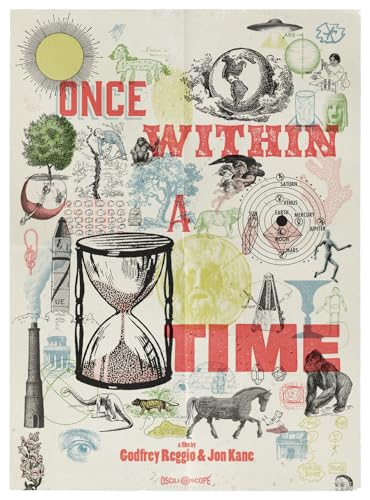
APOCRYPHA CANDIDATE: ONCE WITHIN A TIME (2023)

366 Weird Movies may earn commissions from purchases made through product links.

RecommendedWeirdest!

DIRECTED BY: , Jon Kane

FEATURING: Sussan Deyhim, Tara Khozein, John Flax, Apollo Garcia Orellana, Brian Bellot, mystery celebrity guest

PLOT: Curtains open on a glowing, chanting golden tree woman, then children watch a couple with wicker cages around their heads wander through incidents of apocalypse, technology, and wonder.

Still from Once Within a Time (2023)

WHY IT MIGHT JOIN THE APOCRYPHA: Simultaneously ancient and hyper-modern, Once Within a Time is as an apocalyptic dispatch from the far reaches of reality. A bold and foolish (in the complimentary sense) work of cinematic art, dense with imagery and symbolism, this is octogenarian Godfrey Reggio‘s first narritivesque film—his vision of what it means to be a human being in the 21st century, teetering on the brink of cataclysm, but balanced by wonder and creative possibility.

COMMENTS: Godfrey Reggio announces Once Within a Time as a “bardic fairy tale”; an imposing description, but one that the film lives up to. Set to a new score by Philip Glass—with snatches of other music floating through the mix—it’s a carnival of free-flowing imagery and ideas, a techno-gnostic hymn about cataclysms and the birth of new worlds. After the red curtains pull back, we are launched into scenes of an Earth goddess singing from her glowing heart, and innocent children spinning on a merry-go-round. Then, Adam and Eve appear, only to have their equanimity quickly destroyed by a digitized Apple. Cell phones recur as dire artifacts: as cages, as monoliths, as bricks on a road that leads to an audience of faceless puppets. We watch a dance of harlequin emojis. Entertainers and demagogues speak gibberish. UFOs zoom into dreamspaces and blast giant robots with their ray guns. Monkeys experiment with virtual reality goggles. There’s a reference to 2001 that will probably draw laughs, and maybe cheers, from savvy live audiences. There is even a special celebrity guest whose appearance I don’t want to spoil, who speaks in John Coltrane solos and acts as a pied piper. And throughout it all, reaction shots of children, bemused, delighted, taking in the helter-skelter as best they can, their little minds gathering fuel… hope for the future.

The visual aesthetic is faded yet bright, digital but evocative of finely aged film stock. The style and imagery brings to mind experimental films of the 1950s-1970s, specifically : the wicker baskets around the lead adult’s heads like the birdcages of the Pleasure Dome, the UFOs possibly on loan from Lucifer Rising, the whole thing seasoned with occult premonitions of a New Age Dawning. There are fleeting scenes of destruction, decay, despotism, mushroom clouds: but the imagery returns, unfailingly, to dwell on innocent children at play, and themes of creation and re-creation. It ends on a Botticelli tableau, with children as angels and Venus yet to emerge from her throbbing egg sac.

A new Philip Glass score is, of course, something to celebrate. The soundtrack here is more of a suite of short pieces than a large scale composition, moving through numerous flavors to illustrate the Reggio’s many different settings. Glass’ hypnotic minimalism may not get the chance to do its accumulation-by-repetition thing here, but he makes up for with a wider palette of colors: unfamiliar elements like chanting, accordions, and even African percussion offer the composer new settings for his ideas. The contributions of Iranian singer Susan Deyhim (who also plays the tree) are most welcome.

The runtime is listed as 51 minutes, but the credits take up the final 8, so the film itself is a manageable 45-minute experience. Watching this on a big screen with an appreciative audience would be magnificent; it makes perfect sense that it debuted at NYC’s Museum of Modern Art. It is uncommercial, personal, specialized, and fated to be underseen, but Once Within a Time is a major cinema event in 2023. Make it a point to track it down when you can.

Once Within a Time official site for trailer and screening calendar.

WHAT THE CRITICS SAY:

“…this strange new experiment — less scripted than staged — revisits early cinema with the same doom-laden playfulness that [Reggio’s] previous work used to push the medium forward. “–David Ehrlich, IndieWire (contemporaneous)

APOCRYPHA CANDIDATE: THE DRAUGHTSMAN’S CONTRACT (1982)

366 Weird Movies may earn commissions from purchases made through product links.

Recommended

DIRECTED BY: Peter Greenaway

FEATURING: Anthony Higgins, Janet Suzman, Anne-Louise Lambert, Hugh Fraser

PLOT: At the finale of the 17th-century, the wife of a boorish aristocrat contracts with a draughtsman to contrive a series of drawings; unexpected pictographic clues appearing in the artist’s renderings suggest a deadly conspiracy.

WHY IT MIGHT JOIN THE APOCRYPHA: Greenaway tackles his first feature-length narrative with such structure, symmetry, and formalism that it might conceivably collapse into its own pretentious confinement. However, regular spikes of ornate bawdiness and cryptic banter, alongside Nyman’s jaunty film score, render the whole affair so baroquely flippant that the inclusion of a living garden statue is merely the ultimate, strange garnish on this eccentric appetizer to Greenaway’s impending career.

COMMENTS: “It has been fancifully imputed that Mr. Neville saw you as a deceived husband.” If that withering—and scandalous—insult vexes you, I strongly recommend against attempting to endure Peter Greenaway’s high-falutin’ whodunnit. On the other hand, if you wish to pry, peep, poke, and peek at the behind-closed-doors (and at times, on-the-lawn-somewhat-obscured-by-a-parasol) doings of the sickeningly wealthy and witty, the droll and devastating—veritably, the very cream of late-17th-century excess—Greenaway’s soufflé of mannerisms, ostentation, lines, lists, longitudes, and lasciviousness baked into this country-house mystery will not only fit the bill, but fit it perfectly with a stretch of laced linen that will leave you petrified to touch it with your coarse peasant hands.

Mr. Neville (Anthony Higgins), whose observations Mr. Noyes infers from prior insinuations and sketch-work, is a draughtsman by trade, and a haughty rake by inclination. On the eve of Mr. Herbert’s departure, Neville attends a soirée hosted by Mrs. Herbert, who wishes, she claims, to furnish her husband with a set of exterior drawings of their estate as a gift upon his return, in hopes of salvaging, at least, some civility in their marriage. Initially disinclined, Neville agrees only after much pursuit by Mrs. Herbert (and her daughter, Mrs. Talmann), and the inking of a curious contract which delineates recompense both financial and sexual. Mr. Herbert leaves for business, and Mr. Neville ensconces himself as he begins his work—and play.

I beg your indulgence for what is, even for me, an excess in flowery language; but such is the overwhelming effect of this strange matrix of conflicting impulses and shifting conspiracies. Greenaway kicks the door down for this one (doubtless because its vertical line displeased him) and comes swinging in full force with his painterly mise-en-scène and artful dialogue thronging the screen and speakers. Frames within frames, within frames; candlesticks joining and isolating conversers, sometimes positioned as an extension of a phallus-above-the-table (Neville’s, naturally); ordered chaos—there is nothing, it appears, left to ill-rendered whim nor faith in dreamscapes.

The “conflicting impulses” mentioned play out primarily between the pristine structure of the film (pacing, staging, scoring, framing, &c.) and the often-hilarious, invariably biting dialogue, which itself is masked with powder-splotched cosmetics and finery that could pass for a migraine. And Greenaway looooves sex on shameless display. As if imitating the outward prudish mien of its characters, The Draughtsman’s Contract conveys all manner of carnality, some of it extreme, while only ever exposing a single breast on screen. Anthony Higgins—witness to this breast, among other parts and places—is perfectly cast as the cocksure draughtsman, believing he is outwitting the conspiratorial axis of Mrs. Herbert and her daughter. Though doomed from the start, he careens toward his fate on a cloud of magniloquent artistry, wit, and lasciviousness.

As far as I could determine, the extras on Kino Lorber’s 40th anniversary, 4K release of The Draughtsman’s Contract were lifted straight from the preceding UK-only disc. Though they are scant, the included introduction from Peter Greenaway is a delightful and informative ten-minute essential, outlining the director’s intentions and providing a brief history of the film. The even briefer interview with Michael Nyman succinctly and charmingly relates how these two lovers of lists began their collaboration. Last, and by no means least, the video and sound are perfection in itself—and as Greenaway would observe, it is the deft combination of those elements that filmmaking is all about.

WHAT THE CRITICS SAY:

“Agatha Christie this ain’t, but it is weirdly wonderful… the film shows a unique talent getting to grips with narrative cinema to create something which is as engaging and alluring as it is baffling and perplexing.”–Mark Kermode, BFI

APOCRYPHA CANDIDATE: TAOISM DRUNKARD [GUI MA TIAN SHI] (1984)

aka Drunken Wu Tang, Miracle Fighters 3

DIRECTED BY: Yuen Cheung-Yan 

FEATURING: Yuen Cheung-Yan, Yuen Yat-Chor, Yuen Shun-Yi

PLOT: A bucktoothed alcoholic beggar is ordered by his brother, a temple priest, to round up a group of virginal young men to defend against a powerful villain with supernatural abilities.

Still from Taoism Drunkard (1984)

WHY IT MIGHT MAKE THE APOCRYPHA: The Chinese martial arts genre is rife with insanity, but even by those lofty standards, Taoism Drunkard is pretty zany. No character behaves with any respect to reality as we might know it, factors such as physics are disregarded at will, and the whole film is laced with an undercurrent of naughtiness. It’s consistently unexpected. 

COMMENTS: Taoism Drunkard follows multiple traditions at once. It is, of course, a martial arts film. It also joins the ranks of films utilizing the techniques of drunken boxing, the fighting style that mimics the movements of an intoxicated person to make every contact seem surprising and impactful. In particular, it carries on the tradition of Yuen Clan, the filmed output of actor Yuen Siu-Tien (who played Jackie Chan’s sensei in Drunken Master) and six of his children, including the legendary martial arts choreographer Yuen Woo-Ping. And significantly, it’s the third and final entry in the Miracle Fighters series, which gave the Yuen brothers a chance to perfect their blend of fighting, magical elements, and twisted comedy. It’s a lot to live up to, which maybe is why Drunken Taoism is so strenuous in its wildness; it’s almost desperate to stand out amongst so much product, so much tradition. 

Taoism Drunkard has only three of the brothers, but each play their appointed roles, like Chinese Marx Brothers (they even do the famous mirror routine). Cheung-Yan (wearing an absurd pair of buckteeth and pedaling around in his own rat car) is the perpetually inebriated screwup whose drinking fuels his fighting skill. Yat-Chor is practically the straight man as the immature but serious-minded love interest constantly struggling to impress his grandmother. (In drag, Cheung-Yan conveys considerably more dignity in that role.) And then there’s Shun-Yi, gloriously over-the-top as the malevolent Old Devil who exists only to fight and cackle maniacally. If you’ve seen any of their other films (particularly this one’s predecessor, Shaolin Drunkard), then you’ll feel right at home with these cartoonish characters. 

It’s where they put them that makes the difference. On the one hand, the brothers engage in fight scenes with extraordinary combinations of action and imagination. Characters fly, spin through the air like a corkscrewing missile, run up walls, and hurl objects that seem to have minds of their own. (One of the few women not treated as a joke is so skilled at combat that she can use the sleeves of her gown as weapons.) The fight scenes are like glorious dance numbers, casting realism aside, joyful in their inventiveness.

The counterpart to this breathtaking stuntwork is the dumbest of dumb comedy. Everyone behaves with an indignity that Benny Hill would find embarrassing. Fat jokes, shrewish women jokes, drunk jokes, jokes about butts and groins and boobs, a joke with very lengthy setup about drinking urine, and one joke of the literal “g-g-g-ghost” variety. Consider a funeral in which the reanimated corpse interrupts both a graverobber’s attempt to steal his golden upper plate and his widow’s intended assignation with another mourner. Or a confrontation on the street that is suddenly accompanied by a snippet of Howard Jones’ “New Song”, which is the only thing that plants the film in its time. (The 1984 production date is nothing short of astonishing; the ancient-looking film stock and even creakier misogynist mindset seem a decade older at least.)  As though made by 14-year-olds for 12-year-olds, it’s comedy of the most infantile strain, and staging it directly alongside the ridiculous-but-serious fight scenes creates a startling contrast.

Perhaps nothing captures the spirit of Taoism Drunkard better than the craziest thing in it. Yat-Chor’s wise grandmother has created a kind of automaton fighting machine to defend the plot’s MacGuffin, and seeing it in action is unforgettable. The original subtitled release calls it the Banana Monster (a reference to its preferred target, its opponent’s genitals), while the English dub refers to it as the Watermelon Monster (due to its appearance). Whatever you call it hardly matters in the face of what it does. This smooth-skinned, razor-toothed Q*bert speaks in a childish voice, jumps about the room like a rabid frog, deploys spring-loaded satellite dishes that can only be called breast detectors, and snaps hungrily until it finally rolls back into its box. It provokes laughter the moment you see it, and yet the Old Devil’s fear of it is entirely appropriate. It’s utterly absurd, yet believably dangerous. It’s the film in a nutshell — or possibly a watermelon rind.

There’s a reliable streak of weirdness in the martial arts genre, but Taoism Drunkard stands out through its willingness to go bigger, to be sillier and more gross, and to push the boundaries of what makes for a compelling showdown. It has done its legacy proud, and possibly done it one better.

WHAT THE CRITICS SAY:

“Taoism Drunkard is, dare we suggest it, their weirdest movie ever. A weird, wiggy explosion of talent and surreal brio….” – Subway Cinema

OTHER LINK OF INTEREST:

WriteUps – Banana monster aka Watermelon monster – This character page for the Banana Monster is useful for all your RPG needs.

(This movie was nominated for review by TheMooCow, who got sick of waiting for us to review it and reviewed it themselves in 2022. Suggest a weird movie of your own here.)

APOCRYPHA CANDIDATE: ASTEROID CITY (2023)

366 Weird Movies may earn commissions from purchases made through product links.

Recommended

DIRECTED BY:

FEATURING: , Jake Ryan, , , Grace Edwards, Tom Hanks, , Brian Cranston

PLOT: Playwright Conrad Earp writes “Asteroid City,” about a photojournalist visiting the titular location with his gifted son for a Junior Stargazers convention; everyone is stranded there when an extraterrestrial event causes the town to be quarantined.

Still from Asteroid City (2023)

WHY IT MIGHT JOIN THE APOCRYPHA: We’ve been waiting and waiting for Wes to go full weird; he takes his swat with Asteroid City. It’s also the weirdest movie Tom Hanks has ever appeared in—a low bar, for sure, but that has to count for something.

COMMENTS: Skipping over the prologue for the moment, Asteroid City is everything you expect from a Wes Anderson movie: symmetrical, meticulous, stylized, deadpan, with a large cast of familiar faces portraying well-defined quirky characters snapping out witty dialogue. The locale is a mid-century America desert village—a one-road stop with no more than a gas station, diner, motel, observatory, train tracks, and an unfinished on-ramp to nowhere—with atomic tests periodically sprouting mushroom clouds in the background. The color palette is turquoise skies and beige sand, with the occasional burst of radioactive orange, bathed in (as the stage directions instruct) clean, unforgiving light. Anderson manages to make shot-on-location look like shot-on-a-sound-stage; you’re amazed when a car drives off into the distance and doesn’t crash into a matte painting backdrop, but somehow just keeps going. The film locates itself in a gee-whiz Cold War fantasy, a mythical time where bright middle-schoolers design their own jet packs and particle beams and everyone has complete faith in the US military—and why shouldn’t they? They haven’t lost a war yet.

All of this makes for a perfect sandbox for Anderson to drop what may be the most impressive cast he’s yet worked with into. Wes stalwart Schwartzman takes the lead as a stoic pipe-smoking war photographer, with a “brainiac” son and a trio of elementary school triplets (who think they’re witches) in tow. Scarlett Johansson plays a movie star attracted to battered woman roles. Tom Hanks shows up as a grumpy grandpa (in a role that was probably originally written with in mind.) Steve Carrell is the solicitous local motel owner (beginning almost every sentence with “I understand.”) is an astronomer. is a mechanic. There are various-sized cameos by , , and, um, . Furthermore, a gaggle of students, parents, teachers, military personnel, singing cowboys, and others inhabit the hamlet, making up a real, if temporary, community. And yet, the stage never feels too crowded; everyone gets their moment to shine in this mosaic of comedy.

It plays like a quite usual, sophisticated, twee Anderson outing, except that it isn’t. In the first place, the artifice is doubled (or tripled), since the main story is, in fact, a play written by a Tennessee Williamsesque playwright (Edward Norton) and directed by an East Coast workaholic (Adrian Brody), whom we see at work developing the production. And we’re further introduced to these characters through a television documentary hosted by Brian Cranston (who occasionally, and amusingly, drifts into the theatrical production). The action occasionally shifts from the main story (in widescreen color) to the fictional background material (in black and white, Academy ratio). At about the film’s midpoint, Anderson inserts what may be the most audacious—and hilarious—scene he’s ever shot. (You might guess what the event is, but never in a million years would you guess the manner in which it happens.) And the third act goes especially bonkers, as the playwright explains that he wants the finale to be a case of the entire cast dreaming due to their shared cosmic experience, and enlists an actor’s studio to help stimulate his creativity. More fourth wall breaking follows, there’s a hoedown featuring a song that starts with the lyric “Dear alien, who art in Heaven,” and a repetitive chant at the climax flirts with the surreal. The film doesn’t always hang together, but the dialogue is razor sharp, the cast is magnetic, and the laughs are abundant. I don’t know if it’s Wes’ best movie, but it is his boldest and most consistently surprising.

Asteroid City doesn’t seem to know what it wants to say, and that is, it seems, what it wants to say. “I don’t understand the play,” Schwartzman complains, breaking character. The answer is that he doesn’t have to understand it. The author doesn’t. He just needs to act it.

The Asteroid City DVD/Blu-ray comes with a short making of featurette. We would not be surprised to see a more elaborate release down the line (the likes to publish every Anderson feature they can get their mitts on.)

WHAT THE CRITICS SAY:

“The purest distillation of what this director brings to cinema, it’s beautiful to look at, surreal, nostalgic and funny in a weird, distanced way.”–Mick LaSalle, San Francisco Chronicle (contemporaneous)