Tag Archives: Beware

APOCRYPHA CANDIDATE: VASE DE NOCES (1974)

AKA Wedding Trough; The Pig F*cking Movie

366 Weird Movies may earn commissions from purchases made through product links.

Beware

DIRECTED BY:Thierry Zéno

FEATURING: Dominique Garny

PLOT: A young farmer embraces his animalistic side as he romances a sow.

Still from Vase de Noces (1974)

WHY IT MIGHT JOIN THE APOCRYPHA: Vase de Noces is an under-appreciated classic of surrealist cinema. Not only it is full of extremities but it remains enigmatic, inviting us to ponder on  possible interpretations.

COMMENTS: The opening shot, somewhere in between the lyrical and the grotesque, the poetic and the nonsensical, sets the tone accordingly. Our protagonist attempts to dress two pigeons with doll heads, in the first of a series of segments where animals fall prey to his whims. The monstrosity he strives to create recalls a pair of malformed angels, and his perverted, personal view of the angelic. And this layered and disturbing—if purely symbolic—act is just the beginning of our tale.

The film is simple from a narrative standpoint. We follow our protagonist, a young peasant, in a series of extreme and illogical acts. He seems at times a pure, innocent, childlike soul, flying his kite without a care in the world and praying before lunch like a proper Christian. He is also capable of the grossest barbarities, like the infamous act of bestiality mentioned whenever this movie is discussed.

What exactly his nature? Is he a real yet disturbed person, a simpleton, and  the film a realistic character study? Or is he purely symbolic, an allegorical personification of the wildest impulses of the human psyche: the id, the beast lurking inside each and every one of us? Probably the latter. Our protagonist is a being of pure emotion, full of contradicting desires, yet always eager to embrace his bestial side.

He seems to find some sort of happiness through bestiality—at first. The female pig gets pregnant and gives birth to three beautiful piglets. It’s almost wholesome. Yet the young man is still unable to find comfort. Unable to help himself, he wreaks havoc through a series of repugnant acts, culminating in a tragic finale. Fully embracing your wild impulses can only bring destruction and self-annihilation, our tale seems to say.

Vase De Noces was Zéno’s feature debut, his second movie after a short documentary portraying schizophrenic artist Georges Moinet. His main interests here are not dissimilar. Zéno once again studies humanity apart from its logical “civilized” aspects, depicting people as amalgamations of impulses, emotions, depravity, and nothing more.

That’s why words—a product of reason—are completely absent from our tale. Instead, we have a rich soundscape full of playful tunes imitating animals’ voices or natural sounds, with classical melodies adding a hint of lyricism. There are also piercing and alarming noises at the most intense moments. The soundscape perfectly aligns with the film’s hypnotic black and white photography.

WHAT THE CRITICS SAY:

“…this Belgian-lensed art-dirge is one of the most foul and pretentious pics ever made. It’s so damned bizarre that simply detailing the plot can’t even come close to conveying the unique combination of utter disgust and absolute boredom you register while viewing it.” – Steven Puchalski, Shock Cinema

CAPSULE: ELDORADO (2012)

366 Weird Movies may earn commissions from purchases made through product links.

Beware

DIRECTED BY: Richard Driscoll

FEATURING: Richard Driscoll, Darren Morgan, , Jeff Fahey, , , , Brigitte Nielsen, , Rik Mayall, Sylvester McCoy, , David Carradine (archival footage)

PLOT: Oliver and Stanley Rosenblum, a Blues Brothers tribute act, accidentally find themselves in Eldorado, where the Sawyer-style family ruling the roost has big plans for the town’s 200th anniversary.

Still from Eldorado (2012)

COMMENTS: I can be very forgiving if a movie has competent sound design: balanced dialogue audio, fleshed-out aural background, and adequate-to-good music. Eldorado failed me here, and in many other ways. This makes sense when you know a bit of history behind the movie: writer / director / producer / &c. Richard Driscoll apparently hoped to succeed in a Producers-style gambit, claiming a big movie whilst making it on the cheap. Sound design, surely, suffers from this underinvestment—but what are Eldorado‘s merits?

These include, and are probably limited to, the following:

  • Darryl Hannah as “The Stranger”, and her delivery of the titular poem by
  • A surprisingly touching reunion of Vietnam veterans, from Jeff Fahey and Bill Moseley
  • An homage to a famous Laurel & Hardy bit
  • Michael Madsen’s face, ever over-reacting in that roguish Madsenian manner
  • Peter O’Toole proving that even in his don’t-give-a-damn super-annuation, his floor of quality is higher than many actors’ ceilings

The rest is, alas, little more than a tedious curio with occasional blasts of badly mixed sound, music, and FX. There’s plenty that’s gross (though well within the average 366er’s tolerance), plenty that’s derivative (the fine line here being that much of said spoofing is by design), and plenty of questions—the most looming of which is, “Why, oh why?”—and the answer comes back: for tax fraud.

It would be remiss of me to recommend this to anyone—ever—except for the most die-hard of Rik Mayall fans. A curious actor, to say the least, and woefully underused. His performance as Mario the Chef transcends the surrounding doofery; and that’s even bearing in mind it consists mostly of lip-synching to a couple of pop-opera tunes. Had Eldorado been put completely under his creative direction, we may have had one of the grandest monstrosities of the new century.

Instead we don’t.

We have Eldorado.

_________________________________________________

Reviewer’s Addendum: Apparently I watched the 90-minute “Director’s Cut”, which I feel is more than sufficient despite being half-an-hour shorter than an earlier release.

WHAT THE CRITICS SAY:

“To say that Eldorado’s cast is eclectic is more than somewhat of an understatement. Quite how Mr Driscoll coerced such a parade of (one-time) A-listers to appear in his ‘Mamma Mia for horror fans’ (the filmmaker’s description – not mine) is beyond me. Surely they didn’t all need the money?  But you certainly get more than you bargain for with this ‘B’ movie: Daryl Hannah, Michael Madsen and David Carradine (in his last albeit brief role) reuniting from ‘Kill Bill’. Jeff Fahey, Patrick Bergin and Brigitte Nielsen – who deserves a special mention for miming Ottis Redding’s ‘Respect’ in a hair salon whilst kitted out in stockings and suspenders. Throw a cameo by Caroline Munro into the melting pot and you sure have one big steaming pot of erm, surrealism.”–Paul Worts, Fleapits and Picture Palaces

(This movie was nominated for review by nc, who described it as “an incomprehensible mess, a hypnotically bad fever dream, a film so bad it’s hard to believe it even exists.” Suggest a weird movie of your own here.)

366 UNDERGROUND FROM THE READER-SUGGESTED QUEUE: I NEVER LEFT THE WHITE ROOM (2000)

AKA My Crepitus

Beware

366 Weird Movies may earn commissions from purchases made through product links.

DIRECTED BY: Michael Todd Schneider

FEATURING: Michael Todd Schneider, Eric Boring, Tom Colbert, Amy Beth Deford

PLOT: Hospital patient Jeffrey has violent, bloody dreams revolving around his life as a sex criminal and murderer.

Still from I Never Left the White Room (2000)

COMMENTS: The general tenor of I Never Left the White Room is established not in the first act, not even in the first minutes, but in the vanity card of the production company. The Maggot Films banner boasts stabs, screams, and gore to assure the viewer can expect only the most unpleasant, blood-curdling material. By that standard, I Never Left the White Room is an honest production indeed.

Schneider expands on a short film, and while one is inclined to salute him for deftly hiding the seams between old and new, the patchwork nature of the movie makes that faint praise. While there’s the suggestion of a narrative spine, I Never Left the White Room is really just a collection of disparate images, scenes whose common thread is their origin inside Jeffrey’s mixed-up brain. The title turns out to be a description of our mise en scene. 

Those visions are largely troubled, and Schneider distinguishes them with varying degrees of stylization. The most compelling is a dialogue set on a railroad trestle that warps the video image with posterization and color correction to suggest the demons inside our protagonist’s mind. Sometimes the beasts are literal, like a monster whose features can be smeared away like shaving cream. Other times, the horror has only the barest pretension to metaphor, like an absurdly lengthy scene in which a man spies on a woman taking a shower, each pleasuring themselves until the woman begins to bleed profusely. If the same central character weren’t involved, you would never know one thing had anything to do with the other. 

What Schneider is going for, other than checking items off a list, is not clear. There’s murder of women, already an infuriating trope but even more so when shorn of any motivation. There’s gore but, aside from the occasional jump scare, nothing that’s truly inventive. The acting and bare minimum of scripted dialogue don’t help, and there’s neither a hint of disgust nor irony. I think it’s supposed to be chilling, not funny, when the psychiatrist (who might also be a cop?) tells his patient, “I should be straight with you: my wife and daughters were raped and murdered last night.” As delivered, though, it’s not momentous; it’s ridiculous. 

I Never Left the White Room is trash. There’s a market for trash, of course, as evidenced by Schneider’s later association with Fred Vogel and the August Underground series. But this isn’t even good trash. Schneider has an hour of video to reveal the depths of his imagination; it proves to be shallow and aimless. Leave the white room. 

WHAT THE CRITICS SAY:

“…the main aspect of this 70-minute piece of headache-inducing insanity is the endless stream of spliced together nightmarish visuals, surreal dreamy encounters, gory visions, bizarre symbolic imagery, lustful masturbatory fantasies sometimes including violence, grating sound effects, eye-slicing color filters, grainy post-editing effects, and so on…. mostly tedious…”–Zev Toledano, The Worldwide Celluloid Massacre

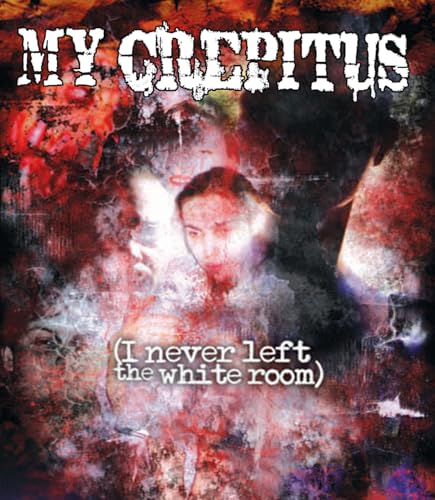
My Crepitus (I Never Left the White Room) [Blu-ray]

  • Region Free Blu-Ray

List Price : 36.97

Offer: 22.99

Go to Amazon


(This movie was nominated for review by Kenshin, who described it as “very insane, very trippy, very surreal and extremely creepy.” Suggest a weird movie of your own here.)

IT CAME FROM THE READER-SUGGESTED QUEUE: THE POLAR EXPRESS (2004)

366 Weird Movies may earn commissions from purchases made through product links.

Beware

DIRECTED BY: Robert Zemeckis

FEATURING: , Nona Gaye, , Michael Jeter, Peter Scolari, Daryl Sabara

PLOT: A boy on the verge of abandoning his belief in Santa Claus is visited by a magical train that whisks him away to the North Pole, but the journey is filled with perilous diversions.

Still from "The Polar Express" (2024)

COMMENTS: There are two characteristics define Robert Zemeckis’ career: an eagerness to push the boundaries of visual effects technology, and an affection for frenetic, breakneck action. Sometimes the pendulum swings more in one direction than the other, but every now and then a Who Framed Roger Rabbit comes along to provide a healthy dose of both. So on the one hand, it is utterly unsurprising that Zemeckis would be captivated by the boundless potential of motion-capture CGI animation to deliver the kind of non-stop, eye-popping visuals that have always been impossible to realize in live action. On the other hand, it’s completely baffling that the property with which he would christen this new era would be the Caldecott award-winning children’s classic “The Polar Express.”

In fairness, it’s not a mystery that someone would come along to take a stab at turning this small book into a big motion picture. After all, Chris Van Allsburg draws cinematically. His page-wide illustrations capture action and emotion in an artistic splurge, summing up minutes of action and dialogue in single images, like oil pastel versions of Cindy Sherman photos. Building out from those lush Van Allsburg drawings probably felt instinctive, far more than other children’s book adaptations that expanded waaaaay beyond their source material, often to their detriment. There’s something very sweaty about the way absolutely nothing goes right for our Hero children, ladling on complications to make everything so much more EXCITING; but that’s not even the film’s greatest drawback. Rather, the problems arise when Zemeckis deploys his fantastic tech, which he has so often done in service of his story: shoehorning Forrest Gump into history, for example, or placing viewers in an impossible perch above Philippe Petit in The Walk. Here, though, the story is buried in spectacle, and repeated efforts to pad out the characters and give them more heft only make the spectacle push back harder. In The Polar Express, CGI beats Van Allsburg’s book into submission.

The movie wants to bedazzle you into a state of exhaustion. A raucous dance number in which flat-faced acrobats ricochet off the ceiling while singing the virtues of hot chocolate is aimed more at demonstrating the physics-defying capabilities of the technology than actually enchanting the children on the train. It’s immediately followed by the extended journey of a wayward train ticket, which takes a rollicking tour outside of the locomotive, floating through a pack of snarling wolves, flitting through a snowy forest, nearly becoming dinner for a flock of newly hatched eagles, before finally returning to the train compartment, all in an elaborate one-take that is Continue reading IT CAME FROM THE READER-SUGGESTED QUEUE: THE POLAR EXPRESS (2004) →

APOCRYPHA CANDIDATE: MELANCHOLIE DER ENGEL (2009)

Beware

DIRECTED BY: Marian Dora

FEATURING: Zenza Raggi, Carsten Frank, Janette Weller

PLOT: Two middle-aged men, an old artist, and some women embark on a series of depravities.

Still from "Melancholie der engel" (2009)

WHY IT MIGHT JOIN THE APOCRYPHA: It is not only one of the most disturbing movies ever, but an incoherent mess that most of the time does not make any sense.

COMMENTS: German extremism has a rich cinematic tradition stretching from ’s infamous Nekromantik in 1988 until today. In the 21st century, where extreme cinema has developed as a distinct genre worldwide, even more disturbing works of dubious artistic quality appear. And in the extreme horror landscape of our day, Buttgereit is no longer at the forefront. A new voice has emerged, as out of our worst nightmares. The name of that voice is Marian Dora.

Melancholie der engel (The Angel’s Melancholy) remains Dora’s most widely known movie, considered by many to be the most disturbing film to ever exist. We follow two men, seemingly with no purpose in life, who seduce three women and take them to an isolated building deep inside a creepy forest, full of dead animals, worms, and slugs. An old friend of theirs introduces himself as an artist early on, bringing another, handicapped, woman with him. And the depravity begins.

Many scenes of violent torture, mostly of a sexual nature, take place both towards the women, and towards living (or even dead) animals. The violence persists from the first moment of the movie, even when its narrative function is not always clear. Rapid editing and many close-ups create a sense of disorientation, while grotesque imagery attacks the viewer from every direction. No coherent story emerges. In the tradition of contemporary extreme cinema, as we read in “Extreme Cinema: Affective Strategies in Transnational Media” by Aaron Michael Kerner and Jonathan L. Knapp, we have something more akin to an episodic structure, with the disturbing events being the episodes.

What kind of extreme imagery are we talking about? Images of decay, mostly, in its many forms. Worms, corpses, and decomposition are always in the background. However, the cinematography maintains a painterly quality, especially in its blurry landscapes. The dreadful forest that engulfs our characters reminds us of the forest in ’s Antichrist (2009), if it was even more extreme and perverted. But the real evil remains inside our protagonists, the three men, and their disgusting acts.

The women are not always the typical female victims of a slasher flick or torture porn. Sometimes they seem to enjoy the depravity around them, which makes the movie even more disturbing and difficult to watch. The exhausting duration,  around two and a half hours, does not help either. It is surely a weird movie, but it is recommended only for hardcore fans of extreme horror. Everyone else, stay away from this.

WHAT THE CRITICS SAY:

“…once we reach the house, that’s when everything starts getting progressively weirder. And filthier… If you like art films as well as scatological torture of young women (you have to like both), and you can handle pretentious dialogue and depictions of real animal death, AND you’re a fan of Marian Dora’s work (a lot of criteria to fill here), you might want to try and hunt down Melancholie der Engel.”–Sean Leonard, Horror New Network (Blu-ray)

(This movie was nominated for review by “Dee Coles.” Suggest a weird movie of your own here.)