Category Archives: Capsules

CAPSULE: RETURN TO OZ (1985)

366 Weird Movies may earn commissions from purchases made through product links.

DIRECTED BY:

FEATURING: , Nicol Williamson, Jean Marsh

PLOT: After being sent for experimental shock therapy, Dorothy Gale returns to Oz, where she meets new magical friends and enemies as she tries to save the Scarecrow from the clutches of the Nome King.

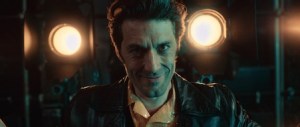
Still from Return to Oz (1985)

COMMENTS: Few people today realize that, after the smash success of “The Wonderful Wizard of Oz” in 1900, L. Frank Baum wrote thirteen sequels (and other writers continued the official Oz legacy for a couple dozen additional volumes). With so much material available, it’s a surprise that it took Hollywood almost fifty years to create a live-action[efn_note]An animated sequel, Journey Back to Oz, was released in 1974.[/efn_note] sequel to 1939’s Oz blockbuster; had the original been made in today’s entertainment climate, we would be seeing a new Oz movie every year—at least.

The reasons for the delay had partly to do with rights to the originals being divided up between rival studios (MGM optioned the first book, Disney all the rest). By the 1980s, Disney’s rights to Baum’s works were about to lapse, so in 1985 they handed respected sound-editor-turned-first-time director Walter Murch the opportunity to create a sequel, based mainly on Baum’s third book, “Ozma of Oz,” but also incorporating parts of the immediate sequel “The Marvelous Land of Oz” and original ideas. The resulting movie was a box office flop, often criticized for being too “dark.” But children who saw it in theaters remembered it more fondly than their parents or contemporary critics did, turning Return into a minor cult film on video.

Encouraged by Murch’s own characterization of his work, the accepted wisdom that Return is “dark” is repeated like a mantra every time the film is brought up: often as a criticism or warning, but sometimes as a compliment or lure, depending on who is doing the reviewing. But, while Return is indisputably scary, “dark” implies some kind of inappropriate moral perversity found nowhere in Oz. In the original Wizard of Oz, Dorothy faced a green-faced hag bent on revenge-killing both her and her lapdog, a magical best friend who’s nearly incinerated, and pursuit from nightmarish flying monkeys dressed as bellhops. These vintage horrors compare quite favorably to those found in Return—but just because no one periodically breaks out in lighthearted songs about missing vital organs, the later movie is forever branded as “dark,” while the earlier one is a beloved childhood classic. Return to Oz‘s half-rock Nome king is eerily brought to life through uncanny claymation, but he’s no darker than Margaret Hamilton’s cackling harridan. Return features bizarre creatures called the Wheelers, who dress like New Wave punks who would have been at home as extras in Liquid Sky but for the wheels grafted onto their hands and feet, who a slink about the ruins of a post-apocalyptic Emerald City. Scary, but then again, they’re not freaking flying monkeys.

The darkest element in Return is purely subtextual, and will go right over young ones’ heads: the primitive turn-of-the-century electroshock therapy to which Dorothy’s aunt and uncle subject the girl hoping to cure her of her yearnings for Oz (a procedure that ironically sparks her return to the fantasyland). The reference to barbaric mental health practices of olden times is indeed dark, but few kids would get why in 1985 (and even fewer in 2021). There is an even darker undercurrent, though. This plot device could be read as implying that Dorothy Gale isn’t just an innocent dreamer; in fact, she’s deeply mentally ill, and the land of Oz is her schizoid hallucination. But again, this twist just disturbs the older folks: kids accept Dorothy’s adventures at face value, and remain blissfully ignorant of the suggestion of juvenile insanity.

Return to Oz could never live up to the original movie; wisely, it doesn’t try to. It ditches the musical numbers, which would have inevitably disappointed. 9-year-old Fairuza Balk seems chosen as lead based solely on her jewel-like eyes; she’s no Judy Garland (and she’s confusingly younger than the Dorothy of Wizard), but she’ll do. When we finally see the updated Scarecrow, beloved Ray Bolger has been transformed into an animated puppet, and he’s… a little off. But Dorothy’s new cast of allies are mostly delightful: a talking chicken, roly-poly mechanical soldier Tik-Tok, childlike Jack Pumpkinhead, a moose head attached to a flying couch. So are the villains: evil Queen Mombi with her detachable heads, the severe and mostly-animated grey Nome King. After a slow start, in a full color Kansas, the movie morphs into a well-paced 80s children’s adventure tale, with thrilling escapes and despicable (if not quite “dark”) acts of villainy. It has that magical “Oz” spirit—minus the songs, which obviously wasn’t part of Baum’s original work—and it’s easy to see why those who first saw it as kids fell in love with it. A good fantasy for first time viewers, and great nostalgia for grown-ups.

Also, be sure to read Jesse Miksic‘s detailed analysis for this site, “The Three Fetishes: Transformation and Ethical Engagement in Walter Murch’s Return to Oz.”

WHAT THE CRITICS SAY:

“Dorothy’s friends are as weird as her enemies, which is faithful to the original Oz books but turns out not to be a virtue on film, where the eerie has a tendency to remain eerie no matter how often we’re told it’s not.”–Jay Scott, The Globe and Mail (contemporaneous)

(This movie was first nominated for review by “ubik,” who said that it “was probably the movie that first gave me a taste for weird movies way back in the day.” Suggest a weird movie of your own here.)

FANTASIA FILM FESTIVAL 2021: THE OTHER FEATURES

366 Weird Movies may earn commissions from purchases made through product links.

Here’s a roundup of four notable genre films screening at this year’s Fantasia Film Festival that, for one reason or another, did not receive full-length reviews. If the descriptions intrigue you, look out for these in the coming months.

We’re All Going to the World’s Fair: As an indie melodrama wrapped in the guise of a horror story, World’s Fair maintains an uneasy ambiguity up through its melancholy epilogue. Casey (portrayed by the age-ambiguous Anna Cobb) is a young high schooler who joins the “World’s Fair” horror cult during a ritual that begins the movie. The eight-minute opening shot cements Casey’s mien and milieu: shy awkwardness housed in an attic bedroom with a glow-in-the-dark-star-covered ceiling. She seeks the unsettling changes promised by a community of horror thrill-seekers, whom we meet through posted videos of “the change.”

On the cusp of adulthood, Casey has yet found no place for herself. Dysphoric, she flirts with suicide. World’s Fair manages to be neither heavy-handed with moralizing, nor tedious with its insistent lack of clarity. That is a narrow path to walk, and transgender “writer, editor, and director” Jane Schoenbrun guides us through this journey with a sure hand. I bring up Schoenbrun’s circumstances because even before reading the director’s statement, I could sense that she unpacks her past confusions and sufferings through storytelling in the intimate depths of this film. The film was a novel experience for me, being the only example of “ominously quirky” cinema I’ve ever seen.

Sweetie, You Won’t Believe It: I love coming across movies that make for deadly drinking games. Take a shot every time Ernar Nurgaliev’s Brother Kooka shares an old Kazakhstani saying; you’ll pass out in the first twenty minutes. But the story? Oh yeah, the story. Das and his two buddies go on a weekend fishing trip. Das is dying to escape harassing calls from his creditors, constant arguments with his pregnant wife about a baby name, and the general crush of day-to-day existence. When this happy-go-lucky crew accidentally toss a bottle of urine at the car windshield of a four criminal brothers (all perfectly understandable in the frantic context), things begin to go awry. The thugs hit a dog in the confusion, and so enters the Psycho Rural Archetype. This is all very silly, and thank goodness. It is also superbly shot, with balanced frames, clever angles, and also a stylistic touch that particularly tickled my love for tidiness: the opening credits were nicely aligned on various horizontal surfaces. All said and done, a highly recommended romp.

Paul Dood’s Deadly Lunch Break: “This lunch break, I’m going to right all the wrongs that have happened to me and my mum,” threatens the titular reality-star-wannabe. And he does, in a way. This movie is an unabashedly droll mash-up of Falling Down and Airheads, hitting all the expected notes of vengeance and comedy, mightily holding its sequined head high. You’ve seen this story before: aging loser hits back against the system, this time in the form of a dictatorially officious train platform attendant, a racially ignorant tea-shop owner, corrupt church officials, and that scummiest of scumbags, the reality talent show host. I found it impossible not to enjoy, though, as Nick Gillespie is a master of comedy craft, cramming together chuckle-time vignettes and sprinkling lyric-references throughout. Like a classic tune you can’t help bopping your head to, Paul Dood’s Deadly Lunch Break is a breezy number that forces a smile to your face.

Hayop Ka! The Nimfa Dimaano Story: One cat, two dogs, an exotic city—Avid Liongoren’s animated send-up of telenovelas has it all. Nimfa is a perfume counter cat (of course) dating a burly janitor canine, but has a meet-cute with a very wealthy property mogul (also canine) and her life is up-ended. Liongoren delivers playful pokes to Filipino society, particularly the serialized soap operas so prevalent on television. Animation is the perfect medium for the surreal silly touches (cue rubber-ducky drop exposing the hunky male lead after he declares, “let us give in to our burning desires!”) as well as the video-game inspired battles that erupt whenever Nimfa is pushed too far. Clocking in at a swift seventy-four minutes, Hayop Ka! (translation: “You Animal!”) lands in that difficult sweet spot: nothing skated over, no loose ends, and you’re left with that pleasing sensation of wanting a little more.

FANTASIA FILM FESTIVAL 2021: CREEPY SHORTS DOUBLE FEATURE

366 Weird Movies may earn commissions from purchases made through product links.

This post covers two programs of nine shorts each, Things That Go Bump in the East  and Small Gauge Trauma, so technically it’s an octodecuple feature—a word so fine that our spell-checker does not even recognize it. Without further ado, here are nine pairs of shorts for you to try on.

“Things That Go Bump in the East” program

Chewing Gum (dir. by Mihir Fadnavis; 18 min.)—Getting in the spirit of this horror short, my cat Goose  appeared at the door to my left. After some minutes of creepy video, I looked left again, and Goose had materialized in the same position, six feet closer. That’s the kind of unsettling occurrence you’ll find here. Classic black and white visuals, killer foley, and minimal dialogue. Of the eighteen-minute run-time, seventeen are perfect. Dark subway, dark roads, and an eldritch entity in black demanding chewing gum from the adulterous protagonist had me riveted. But when the monster took her (?) dues, it was more “uhh…” than “AGGH!!!”

Carnivorous Bean Sprout (dir. by Seo Sae-rom; 5 min.)—An animated PSA-by-way-of-advertisement, Carnivous‘ greatest strength is the no-nonsense newsy narrator discussing the thrilling, new, titular phenomenon. Looking rather similar to sperm with chompy heads, these aquatic sprouts are a hit tourist attraction: people gather in boats, are rowed over to nest, and then handlers rustle the beans, which jump up and bite you. This craze extends to a new variety of monkeys (which rise from the water and scratch you) and elephants (which extend their noses to throttle the happy spectator). Strange things, people are.

Juan-Diablo-Pablo (dir. by Ralph Pineda, Dyan Sagenes; 15 min.)—I nearly dismissed this out of hand when I realized it wasn’t done with puppets. (How this notion got in my head, I am uncertain.) However, J-D-P does something very impressive by traveling seamlessly from confusing, to mundane, to humorous, to wrenching. All available clues suggest that “Juan Diablo” is Death, and he happens happens to be living in a ratty, newspaper strewn apartment, receiving corpses from a pair of disfigured opera archetypes. His young neighbor Pablo introduces himself with a note hucked through a hole in Juan’s wall, and their wordless encounters at Death’s door have an amusing and wholesome tonality, incongruously achieving Hallmark Card levels of “adorable.” The tone shift at the end is sudden, but not misplaced, poetically bringing attention to the tragedy befalling the Philippines from rampant crime and extra-judicial murders on the part of the police.

Huh (dir. by Kim Tae-woo; 12 min.)—Huh was a Korean mask-maker of legend, and this is a cartoon tribute to his art. Kim Tae-woo mixes curvy animation of chalk-looking drawings with the occasional hip-hop number to bring the ancient carver to life. A mountain spirit drops some beats as he instructs Huh on how to overcome the tide of spiritual possession plaguing the villagers. I expected this to be cute, and it was; but I was not expecting to heave a sigh of relief when the errant spirits barely made it back into the moon.

Koreatown Ghost Story (dir. by Minsun Park, Teddy Tenenbaum; 15 min.)—I wondered what Margaret Cho was up to. It was quite a pleasant surprise to see her show up in this little horror comedy. Hannah, a young painter who works by day at a hardware store, visits the venerable Mrs. Moon to inquire about the contents of a puzzle box and is quickly whisked to a massage table and poked with needles. After some remarks about Hannah marrying Moon’s dead son, the matriarch mystic disappears and a spirit corpse boy pursues the girl around the house. Another cute Korean story, also with a focus on masks and the Autumn festival (gotta do me some research now). I laughed, I jumped, and I reconsidered the possibilities of acupuncture.

Night Bus (dir. by Joe Hsieh; 20 min.)—Great art design, but unfortunately the amateur animation style does this little tale of wronged spouses, wronged passengers, and wrong monkeys no favors. The jarring sequences all unfolded with squicky violence undone by the “Happy Tree Friends” excess and awkwardly arranged narrative reveals.

Seen It (dir. by Adithi Krishnadas; 12 min.)—Gather ’round the fire and learn of the horrible eenampechi, the hovering and easily confused arukola, the mystical thendan, and others in this animated cryptocatalogue of wonders. This wry little black and white squiggle ‘toon is based on some of the innumerable supernatural anecdotes of P. N. K. Panicker, a tall-tale teller of some renown. Its easy-going style makes this the only “kid friendly” pick from Things That Go Bump. The raconteur’s advisements come to life before your eyes, Continue reading FANTASIA FILM FESTIVAL 2021: CREEPY SHORTS DOUBLE FEATURE →

CAPSULE: SHRUNKEN HEADS (1994)

DIRECTED BY: 

FEATURING:  Aeryk Egan, Bo Sharon, Darris Love, Meg Foster, Julius Harris, Rebecca Herbst, A.J. Damato

PLOT:  In New York, three boys are murdered by gangsters and then resurrected as shrunken heads by a local Haitian voodoo practitioner.

COMMENTS:  In most suburbs during the 90’s, the video rental store was positioned precisely between a doughnut shop (laden with youths with hair parted down the middle playing “Area 51”) and a pizza place that sold greasy bags of bread sticks for $2.50.  Florescent lit and staffed by geeks who knew more about Windows 95 short cuts than personal hygiene, this type of independent video shop had a chemical smell from the profusion of plastics, but was air-conditioned and filled with R-rated flicks.  Hoping to poach a glimpse of babes in thongs on movie posters or barely-covered breasts on the covers of VHS tapes, the neighborhood boys, sweaty and short on quarters thanks to Tekken 2, stumbled upon tapes like Shrunken Heads.

Appealing to the preteen amygdala, Shrunken Heads initially frisks about like a typical teen drama, with young gents in stripes and khakis battling bullies, but it’s suddenly recast into a skittish horror film with hokey voodoo components. Watching it is like compulsive carbohydrate bingeing; one stops asking questions and simply indulges. It was most likely intended for the 10-12 year olds, Netscape hackers, AOL chatters and comic book store patrons of its time, but in 2021 it holds appeal to VHS collectors and horror enthusiasts alike.

The plot is uninteresting and filled with daffy material.  Meg Foster plays androgynous gangster Big Moe with a cigar, hat and trench coat. Sporting an exaggerated NYC accent, she hangs with crimped groupies and a warehouse full of cigarette smoking goons who play pool, and ends up crossing paths with some humdrum kids. One has asthma, one’s got red hair, and one is soft for neighborhood Sally (Rebecca Herbst, the only girl not in spandex), who looks great and truly holds it down, even though the script gives her no reason to. The boys slip up and get capped by big Moe’s thugs over a petty gripe, but luckily Mr. Sumatra (a Haitian voodoo priest played by Julius Harris) summons them from the dead in the form of shrunken heads so they can exact their revenge.

shrunken heads (1995) rebecca herbst
Pictured: Rebecca Herbst demonstrating proper use of denim over stripes.

The volatile story is made more chaotic by the tacky musical score which sounds more appropriate to 90’s cable television programming or afternoon soaps like “All My Children” than a horror film. The vivacious opening theme by Danny Elfman might be the film’s sensory highlight, but the remedying sounds of Casio tones that follow provide a soundtrack that’s exquisitely outré, a pariah to pair with the outlandish gag culture. These treasures don’t come free; there’s ample boredom to be endured, script-wise.

Even though half-baked bits of dialogue like “Bear witness as my life was so cruelly torn from me in the prime of my youth” remain forgettable, the movie’s cast retains its charm. Harris provides focus to glide through some of the preposterous scenes, such as when he drops a dead cat into a melting pot and the boys’ gasping heads are floating in glop. Beaming with demoniac glee, he looks to be relishing his own performance. Meg Foster is spunky as a lesbian gangster, especially when she pinches the face of a male henchmen or waves a lit cigar around. Rebecca Herbst seems to be the most grounded, hardly freaking out over dead friends coming back to life.

Benefiting from its kooky cast, Shrunken Heads grows even odder with aleatory makeup and dexterous effects. The kinetic scenes where the heads fly around New York City help enrich the boring script, and there’s also some mangy voodoo sets with dead goats and chickens. Further perked by snappy vocal effects from the re-animated heads, everything leads to a suitable climax featuring a punctual highway pursuit and frosty lightning effects. These ingredients make Shrunken Heads a passable success—although the experience can get knotted by juvenile regressions such as flatulent zombies, which makes other Full Moon releases like Arcade and Meridian look earnest in comparison. Heads still holds up, perhaps even coming in low-budget specialist Full Moon’s top ten.

Quality voodoo-themed films are scarce lately (excepting Bertrand Bonello’s outstanding Zombi Child), but in the realm of VHS tapes, every Weekend at Bernie’s 2 begets a charming dud like Shrunken Heads. The voodoo genre is adept at both intriguing viewers and snagging them in its foibles. Shrunken Heads is unique and a somewhat weird experience; there probably won’t be anything like it produced again. With its balmy voodoo plot, it flaunts a rare sense of laxity absent in the present day obsession with algorithmic, safe media. To thoroughly imbibe its fluky complexion, see it on grainy VHS while under the influence of a mild sedative.

WHAT THE CRITICS SAY:

“…a strange god awful movie, but one that affords itself some nostalgic value so while it is a waste of talent and resources, it’s not totally a waste of time.”–Felix J. Vasquez, Cinema Crazed

FANTASIA FESTIVAL 2021: TIN CAN (2020)

366 Weird Movies may earn commissions from purchases made through product links.

DIRECTED BY: Seth A. Smith

FEATURING: Anna Hopkins, Simon Mutabazi, Michael Ironside

PLOT: A parasitologist is abducted after discovering a treatment for a spore-fueled pandemic and awakens inside a life-support canister.

COMMENTS: It was disorienting for me to endure so many of my personal phobias on parade while still remaining committed to finding out how this shuddersome chain of events concluded. Tin Can has plenty of its titular containers: a third of the action takes place inside an icky-liquid-filled cylinder inhabited by Fret, the film’s slime-expert heroine. As she could barely move, practically fused with her surroundings, a sympathetic jab of claustrophobia struck me . And then there’s the disease-y plot device, which on more than one occasion had me glancing away.

There’s a lot of terrible going on in the world now, what with some fungus-based communicable horrificness passing from person to person with greater ease than I would have thought likely just a year ago. So Tin Can feels topical, while still maintaining a futuristic edge. A suffused lighting scheme heightens the clinical spaces, working equally well with the sinister basements of some unnamed facility. Smith opts for a narrow aspect ratio, heightening the sense of constriction, trapping the viewer in its column just as the visuals push you to the edges.

The sound design is also impressive, with plenty of muffled conversations between occupants of the “tin cans”, and all manner of sinister clanks and squoodges as unknown unpleasantness happens beyond the scope of their air vents. Only one character seems remotely pleased at every juncture, a wiry old man named Wayne (Michael Ironside) who seems to have embraced the prospect of being a harbinger some decades prior. The other characters, well, they love, they lie, they… They have a lot of flashback encounters beneath (what I swear) is the same underpass over and over. Come to think of it, Smith not only overcame my personal discomforts with the themes, he also overcame the fact that he only had one interesting character…

Marred though it is by disorienting plot jumps and flat performances (except, of course, Ironside’s giddy eccentric), Tin Can works when viewed as a philosophical essay. Its sounds and visuals—the gold-toned future drones, the dungeon cylinder repository, and the squiggling gyrations of a fungal chrysalis just before it’s crushed—are strong enough to carry us past the ho-hum human element. And Tin Can‘s themes of transformation, deception, and hope are tried and true. The Waynes of the world, with their manic optimism in the face of doom, are as necessary as the hard-nosed, hard-science heroine Fret. Without Fret, we cannot achieve, and without Wayne, we cannot believe.

WHAT THE CRITICS SAY:

“Smith goes big on the visuals, both inside and outside the can… there is work that evokes Andrey Tarkovsky and Marek Piestrak. It’s splendidly realised and atmospheric, which is important because in later, slower scenes, Smith relies on it to maintain a sense of awe when the actors are compromised in their ability to hold our attention.” -Jennie Kermode, Eye for Film (festival screening)