All posts by Alfred Eaker

Alfred Eaker is the director of Jesus and Her Gospel of Yes!, voted Best Experimental Film in the 2004 New York International Film and Video Festival (which can be downloaded from DownloadHorror.com here), and the feature W the Movie. He writes the column "Alfred Eaker's Fringe Cinema" for this site, covering the world of underground film, as well as regularly contributing essays on other subjects.

CARL THEODOR DREYER’S VAMPYR (1932)

Most agree that ‘s Nosferatu (1922) is the greatest and most unique screen incarnation of Bram Stoker’s iconic character (although, as blasphemous as it sounds, I would place ‘s 1979 remake on an equal plane. Yes, I said that, but that is a subject for another week). However, the greatest cinematic treatment of  vampire folklore is a world removed from the titular Transylvanian count: ‘s Vampyr (1932). But it is not for attention span-challenged vampire fans.

Vampyr is a film of relentless, static beauty, almost demanding chimerical concentration and phantasmagorical imagination of the viewer. After the predictable box office failure of the greatest film ever made—Dreyer’s Passion of Joan of Arc (1928)—the director deluded himself into thinking he could produce something commercial. He had what seemed to be the right source of inspiration (slight as it is): Sheridan Le Fanu’s 1872 pulp hit “Carmilla,” taken from the collection “In a Glass Darkly.” “Carmilla,” with its theme of a lesbian vampire would, of course, be enticing fodder for the dull masses. But it turned out Dreyer was too original and too much in possession of an authentic, artistic spiritual substance for titillation. Fortunately, Dreyer, who wrote the screenplay, jettisoned the lesbianism and, with it, any anticipation of appeasing puerile genre fans. Vampyr was a financial flop, resulting in Dreyer’s nervous breakdown and the dissolution of his production company. He would  not make another film until Day of Wrath (1943). If period aficionados found Vampyr‘s deliberate pacing and intense, ethereal milieu too challenging, then many contemporary viewers, saddled with grand guignol expectations, often find the film provocative. Despite this, Vampyr proved to be a profound influence on both the German Expressionists and the Surrealists.

Although Vampyr was Dreyer’s first sound film, he was uncomfortable with the medium, and the movie is imbued with pronounced silent film aesthetics. The great Rudolph Mate served as director of photography, interpreting Dreyer’s crepuscular world through incandescent, gossamer grays, giving the film an enchanted but foreboding sheen. Dreyer likened the experience of watching the film to a person standing in a room, then being told that another has just died in an adjacent room. The perception of the room you are in suddenly alters, even though the room itself remains the same.

Still from Vampyr (1922)As in a dream, the imagery is often disjointed, but deeply ingrained: a ferryman with scythe, a shrouded river, a shadow departing its one-legged owner,  the antagonist dispatched by suffocating from falling white flour in a dilapidated windmill, and the film’s nexus, the disquieting vignette in which the protagonist, Allan Grey (Julian West, who financed the film) lies, trapped, in a sealed coffin, perforated with a glass window. We take on the role of voyeur to Grey’s nightmare, his helpless, vacant stare masking his terror. His eyes take in the landscape as he is carried away to burial.

The cast is primarily made up of non-professionals (with the notable exception of Sybille Schmitz as the dying sister, Leon). Chief among the amateurs is Henriette Gerard as Marguerite Chopin, the old woman whose spectral presence is matched by her ominous Doctor (Jan Hieronimko). Together, the two weave a spell over the film, as does Dreyer, who imbues Vampyr with a resplendent sense of hermetic purpose permeating its sickly skin. As with all of Dreyer’s work, Vampyr is replete with spiritual preoccupations and fears.

Vampyr may be one of the films most benefited by the Criterion Collection treatment. For years, it was only available in washed out transfers. Even the Image Entertainment release was disappointing. Criterion has done a remarkable restoration, using both French and German versions. Jorgen Ross’ documentary of Dreyer, Casper Tyberjerg’s essay, commentaries, a 1958 Dreyer radio broadcast, and the original script are part of an extensive package of goodies.
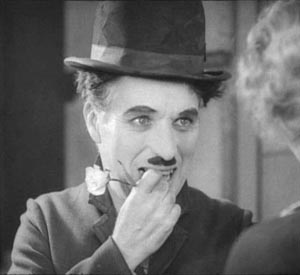
CHAPLIN’S CITY LIGHTS (1931) (CRITERION COLLECTION)

The most recent  feature to see a Criterion treatment is City Lights (1931).

Released three years after the advent of talkies, City Lights remains, for many, quintessential Chaplin. It was possibly inspired, in part, by ‘s The Strong Man (1926), starring . 

Chaplin labored on City Lights for three years, in part due to difficulties with leading actress Virginia Cherrill, in the role of the Blind Flower Girl (which is how she is billed. Like everyone else in the film she has no name, just a simple description). Chaplin spotted her at a prize fight. She was acutely near-sighted and had the look and personality he was seeking. She was not however, a professional actress. Cherril, being an adult of twenty, was far too old for Chaplin to be interested in romantically. Thus, their relationship off-screen was purely platonic, which, probably added to Chaplin’s dismay of not being able to manipulate her. Cherrill was far from starstruck. She was often tardy and frequently challenged Chaplin. At one point the director fired his leading lady, only to bring her back after realizing that starting anew would be disastrous. A clip (from the Criterion edition) reveals the director once put Cherrill through 342 takes. Yet, despite all this friction, Chaplin extracted a remarkable performance from her.

All of Chaplin’s films are primarily actor’s films, rather than being the work of an accomplished director. Montgomery Clift was among those who intensely studied Chaplin’s performance in City Lights. Indeed, Chaplin’s performance here is quite possibly his best.

However, to say City Lights approaches perfection, or is Chaplin’s best film, proves an exaggeration. It is as maudlin as The Kid (1921) and nearly as episodic as Modern Times (1936), but it’s beauty lies in simplicity; and, as far too many hack artists have proven, simplicity, done well, requires consummate craftsmanship and intelligence. Chaplin still serves as the blueprint for simplicity done right.  This “comedy romance in pantomime” opens with The Tramp discovered sleeping on a city statue, after it is unveiled. Making minimal use of sound, Chaplin’s politico spews garbled gibberish.  Naturally, chaos follows, and it ends, not so subtly, with the Tramp thumbing his posterior at American capitalism before embarking on his city promenade.

The Tramp is menaced by a couple of Newsies, and stops to admire a beautiful statue of a nude woman (a frequently used bit in Chaplin’s film), which everyone else ignores. Shades of things to come. The Tramp is immediately and noticeably more genteel here; far more so than he was when stealing food from babies in his last feature, The Circus (1928).

Still from City Lights (1931)Behind the scenes Chaplin was a case study in manic depression and an obsessive perfectionist. For weeks on end, he agonized to come up with a way the Blind Girl could mistake the Tramp for a millionaire. Then, as he was apt to do, he found his source of inspiration from one of his own earlier shorts. The Tramp, avoiding the Kops, zigzags his way through open doors of unoccupied  limos. The Blind Girl  hears a limousine door open and the Tramp emerging. Thus, he becomes her imagined millionaire. When the Tramp discovers the Girl is blind, he lays on the sentiment in a way only he could pull off. It is the Tramp alone, in an apathetic society, who sees the ethereal beauty and spirit in her Dickensesque poverty.

With Her possessing his thoughts, the Tramp comes upon a self-pitying alcoholic millionaire who is attempting to commit suicide by throwing himself into the river. Predictably, slapstick follows. Some of it is awkward, but serves the narrative and conceptual purpose of mocking the super rich.

The millionaire gives the Tramp money to buy more flowers from the Blind Girl and even loans his limo out, but it is only when he’s drunk that he’s so generous. Sober, the millionaire is true to his elitist, miserly ways, does not recognize his new friend, and kicks the Tramp out. In order to obtain money for an operation which cures blindness (remember, it is a fairy tale), our protagonist rummages through a series of jobs, including a gig as a prize fighter. Chaplin had used the employment plot device in his Keystone, Essanay, and Mutual shorts. In City Lights, it serves as a distraction. (He would be more innovative with it in Modern Times). Still, it is not a critical detour, and Chaplin regains his footing for the final act.

The millionaire, having returned from an extended European tour, is drunk again, and runs into the Tramp. After the tramp explains he needs a thousand dollars for the Blind Girl’s operation, his inebriated friend donates to the charity, only to have a fumbled burglary and sudden sobriety transform him into an Indian-giver. Desperate, the Tramp flees, money in hand. Pressing the wad of cash into Her hands, the Tramp secures her operation and prevents Her impending eviction.

With a warrant out for his arrest, the Tramp has an inevitable date with the penitentiary. Time served, he shuffles the streets, an object of ridicule and failure until he happens upon a flower shop, run by the now sighted Flower Girl. She, too, joins in ridiculing the transient. But empathy overcomes her and she gifts the Tramp a single flower, which requires touching him. Recognition means pathos and tragedy and per Chaplin’s creed, cue closeup (Chaplin used closeups for tragedy and reserved long shots for comedy. Naturally, he sometimes broke his own rules, but he generally kept to them). This is the divine mother of all cinematic endings. Despite Chaplin’s (increasing) tendency towards schmaltz, he still does it in a far less dated way than other films of the period. Indeed, his silent features have enough identifiable human drama and strengths to outweigh their shmaltzy weakness in far better than virtually any of the saccharine Hollywood productions of the forties and fifties. His own Limelight (1952) is far more passé, perhaps because Chaplin was really only suited to the art of silent cinema (despite claims that his transition to sound was successful).

As expected, the Criterion Collection is extensive. In its HD treatment, City Lights has never looked better, making it even more timeless. Audio commentary from a Chaplin biographer, a (rare) deleted scene, the documentaries Chaplin Today and Chaplin Studios, beautiful cover art, and Gary Gidden’s massive booklet are priceless.

PLAN 9 FROM OUTER SPACE (1959)

It was inevitable that we would have to find an individual space for Edward D. Wood, Jr.‘s Plan 9 from Outer Space (1959). Everyone knows the story of how the 1959 sci-fi flop was rediscovered: two smarmy fundamentalist brothers, who managed to become full time film critics and fancied themselves patron saints of the bourgeoisie, crowned Eddie’s opus as “the worst film of all time.” Only it backfired on the Medveds, and their “Golden Turkey” award gifted the recently departed director with something he could not achieve in this mortal coil: infamy. The Medveds will be rightfully forgotten, cast into their suburban purgatory of banality—and if there is justice amongst the lesser gods, then little Mikey and Harry will be personally tended to by Mr. Heat Miser and Mr. Snow Miser in a tailor-made torture pit. In the moral cosmos, Yukon “even among misfits you’re a misfit” Cornelius has knighted the societal outcasts to dole out celestial justice. Rounding out the bacchanal of a Medved hell, little Eddie Wood, Jr., reunites with Bela, Vampira, Criswell, Tor, and Valda Hansen, administering an eternal enema to such constipated dolts.

The Medveds evolved into Mystery Science Theater 3000. Rather than giving Hollywood, with its plethora of big budget, generic excrement, what it deserved, the MST3K production team, erroneously imagining themselves hip, picked easy targets in low budget indie films. Naturally, Ed Wood was a frequent focus. The do-nothing couch potato geeks made the show a hit. It was their sole shot at superiority.

Wood stands out, even among his peers, because he imbued his films with his own personality. Even in his later films, when his energy had been zapped by one personal defeat after another, there is still no mistaking Wood’s hand in the recipe. Near the end of his life, Wood waxed nostalgic about his failed career and admitted that Glen or Glenda (1953) was his self-portrait, but that Plan 9 From Outer Space was his pride and joy. Both films stand out, even amongst likeminded 50s indie genre films. Intensely and inherently weird, they are defiantly individualistic and, in that sense, they stand apart as authentic art, of far more intrinsic value than most of the drek manufactured by big studios.

Attesting to its originality, Plan 9 From Outer Space has as many classic lines as films like Dracula (1931) and Casablanca (1942), but do not take our word for it. Just read them:

Still from Plan 9 from Outer Space (1959)Narrator [Criswell]: “Greetings, my friend. We are all interested in the future, for that is where you and I are going to spend the rest of our lives. And remember my friend, future events such as these will affect you in the future. You are interested in the unknown… the mysterious. The unexplainable. That is why you are here. And now, for the first time, we are bringing to you, the full story of what happened on that fateful day. We are bringing you all the evidence, based only on the secret testimony, of the miserable souls, who survived this terrifying ordeal. The incidents, the places. My friend, we cannot keep this a secret any longer. Let us punish the guilty. Let us reward the innocent. My friend, can your heart stand the shocking facts of grave robbers from outer space?”

—-

Narrator: “All of us on this earth know that there is a time to live, and that there is a time to die.”

—- Continue reading PLAN 9 FROM OUTER SPACE (1959) →

NIGHTMARE ALLEY (1947)

Tyrone Power was 20th Century Fox’s answer to Warner Brothers’ . However, as dated as Flynn’s style of acting is, he does generate a kind of cartoon excitement. Watching the bulk of Power’s swashbucklers is more of a burden. Power is typically bland. He died at 44 from a heart attack during an on-screen duel with actor George Sanders in the filming of Solomon and Sheeba (1959). Flynn died less than a year later. Both are known for iconic roles: Flynn in The Adventures of Robin Hood (1938) and Power in The Mark of Zorro (1940). They acted together only once: in Henry King’s version of The Sun Also Rises (1957), which (as per most cinematic Hemingway adaptations) is best avoided. Rumors in Hollywood have long claimed that Flynn and Power engaged in a brief affair. If so, then, yes, there was more to Zorro and Robin Hood than tights and mask. Of course, the seedier aspects of Flynn’s “wicked, wicked ways” are well known. Yet, behind that boyish persona, Power too had a darker personality. This began to surface later in his career with chosen roles, such as Witness for the Prosecution (1957) and in the earlier Nightmare Alley (1947).

Power came from a long line of actors, and although he desired meatier roles, he settled on the stability of his studio contract, rarely venturing outside of assignments. Nightmare Alley was a notable exception. After reading William Greshen’s novel Power purchased the rights and begged Darryl Zanuck to allow him to play the part of the seedy Stanton Carlisle. Reluctantly, Zanuck agreed, although he did little to promote the film.

Edmund Goulding was given the directorial reigns after he and Power had worked together in the drama The Razor’s Edge (1946). Although that film received mixed reviews, it was a commercially successful departure for the actor and commercial success was, of course, Zanuck’s primary concern. Goulding’s reputation had been cemented with the high class soaper Grand Hotel (1932) starring John Barrymore, Greta Garbo, and . A string of glossy, star-powered melodramas followed: Riptide (1934) with Norma Shearer and Dark Victory (1939), The Old Maid (1939), and The Great Lie (1941), all with Bette Davis. Zanuck’s choice of Goulding was strange but purposeful (for Zanuck). Nightmare Alley lacks the visceral quality of the novel (whose author, not surprisingly, committed suicide). With such a potent literary source, the film  might have emerged as something deliriously akin to ‘s Freaks (1932), but it lacks an obsessive director at the helm. Where Nightmare Alley does succeed is in Goulding’s direction of the superb as the affable clairvoyant Zeena, Colleen Grey as the dainty circus girl Molly, and Helen Walker as the icy Dr. Lilith. (Goulding, a woman’s director, had gifted Academy Award winning performances to Gloria Swanson, Bette Davis, Mary Astor, Joan Fontaine, and Anne Baxter).

Still from Nightmare Alley (1947)Nightmare Alley is further helped by the bleakly prismatic cinematography of Lee Garmes, who had previously photographed such masterpieces as Josef von Sternberg’s Shanghai Express (1932) and Howard Hawks’ Scarface (1932). Screenwriter Jules Furthman crafts a mostly compelling, pessimistic screenplay (weakened by a Zanuck-mandated semi-happy ending) that falls somewhat short of being the yardstick to measure noir by. Furthman would go one to co-write (with Willam Faulkner) two more noir “classics” ( the classics label being debatable): Howard Hawks’ To Have and Have Not (1944) and Hawks’ cinematic treatment of Raymond Chandler’s The Big Sleep (1946). Art directors J. Russell Spencer and Lyle Wheeler provide exemplary mise-en-scène in their impeccably disheveled carnival settings. Cyril Mockridge composes a taut, aptly grotesque score.

Character actors Ian Keith (as Zeena’s cuckold, Pete) and James Flavin (as the brawny barker Hoatley) leave the scene too soon, forcing star Power, as a slippery pseudo-mystic, to represent the carny world’s masculine populace. Power is only half up to the job. Although his performance was almost unanimously praised by critics of the era (including the great James Agee), Power projects a woodenness in the early scenes that does not altogether convince us of his charisma. Still, perhaps his artificiality, based solely on pulchritude, makes his downfall all the more shocking; and it is in his dissipated state that Power, surprisingly, lives up to the actor’s narcissistic potential. Power reminds the viewer of the horror that was once associated with the term “geek” in what turns out to be, perhaps, his finest performance.

Despite Zanuck’s attempt to give the film a commercial sheen, Nightmare Alley was a major flop with American audiences, who fervently resisted seeing one of their established stars try something original. The critics proved more insightful, and it was they who had the final say. Today Nightmare Alley is one of Power’s most celebrated films, while the majority of his commercial fodder has aged poorly and is primarily forgotten. Despite this, the movie rarely ran on television and its appearance in the home video market was considerably belated. Naturally, its unavailability only increased its cult status, until Fox finally responded, making it part of its film noir series on DVD (it never appeared on VHS).

THE VINCENT PRICE COLLECTION (2013 BLU-RAY)

A Vincent Price six pack has made its way to Blu-Ray. The set features some of the actor’s most iconic roles, along with at least one surprise inclusion. It is by no means a complete collection, as it concentrates primarily on the late actor’s work with  and AIP (since most of these movies were adapted from works by they are known as the “Poe cycle”). Even by that criteria, the collection is a mere introduction.

Price cemented his status as horror icon in Andre De Toth’s House of Wax (1953), despite the fact that that this 3D box office hit is a flat and unimaginative remake of Michael Curtiz’ vastly superior Mystery of the Wax Museum (1933). In a way, this parallels Price himself. Although he has been beatified by genre aficionados, and despite doing occasionally fine acting work, Price’ carefully crafted screen persona seems more derivative than innovative. That persona lacks the authenticity of a , , , or . The passage of time makes that even more apparent. Still, the veteran actor could often supply a luster to pedestrian productions, without necessarily redeeming them.

Fortunately, this Blu Ray collection, although somewhat haphazard in concept and packaging, is a marketable compilation in a “Vincent Price’s Greatest Hits Volume One” style. Like most such compilations, the choices deemed “greatest” are not without debate.

With The Fall of the House of Usher (1960) Roger Corman convinced AIP to give him an increased budget of $270,000 (which included color film) along with an extended shooting schedule ( a whole 15 days). Convincing the producers was no simple feat, as the film, with a literary source, lacked a identifiable “monster.” Somehow, Corman won Samuel Z. Arkoff and James H. Nicholson over when he pitched the house itself as the supernatural antagonist. While the film is not a masterpiece, Corman’s enthusiasm, matched by Price, the surreal cinematography by Floyd Crosby (High Noon), Lex Baxter’s score, and screenplay by cult genre favorite Richard Matheson (The Incredible Shrinking Man), makes it possibly the best of the Corman Poe cycle. This assessment is shared by most critics and by Price himself (although, reportedly, the actor’s personal favorite of his own films was MGM’s 1973 black comedy Theater of Blood).

Still from The Fall of the House of Usher (1960)Price’s aristocratic bearing and pronounced theatricality makes the effete, sensitive, and cowardly Roderick Usher utterly convincing. There is more than a hint of an incestuous relationship between Roderick and his sister, Madeline (Myrna Fahey), leading to masochistic decay and fiery finale. Almost singlehandedly, Price carries the film in the acting department, with his co-stars going the distance in convincing us that protagonist family is indeed a bland lot. Remarkably, the film was a box office success. This, along with critical accolades, paved the path for seven additional Poe-inspired films.

With  looking to become the “female Karloff” after Mario Bava’s hit Black Sunday (1960), the Price/Steele pairing in The Pit and Pendulum (1961) should have been a star teaming worthy of the Karloff/Lugosi collaborations of the 1930s. Unfortunately, Steele is wasted (and worse, dubbed) as the doomed (and believed dead) unfaithful wife-in-waiting. The team of Corman, Price, Matheson, Crosby, and Baxter return for this disappointing second entry. Pendulum is an eclectic low budget genre soaper, sloppily utilizing elements from numerous Poe stories. Steele isn’t the only wasted talent. Reliable character actors Luana Anders and John Kerr, poorly directed, come off as surprisingly stiff and mechanical. At the polar opposite is Continue reading THE VINCENT PRICE COLLECTION (2013 BLU-RAY) →