Tag Archives: Science Fiction

LIST CANDIDATE: ON THE SILVER GLOBE (1977/1988)

Na Srebrnym Globie

366 Weird Movies may earn commissions from purchases made through product links.

DIRECTED BY:

FEATURING: Jerzy Trela, , Iwona Bielska, Grazyna Dylaq, Jerzy Gralek, , Elizabeth Karkoszka, Maciej Goraj, Leszek Dlugosz, Jan Frycz

PLOT: An expedition crash lands on a planet, and the surviving astronauts establish a tribe and a religion explaining their origins. After a recording of the crash is found, another astronaut, Marek, is sent to investigate and is received as a messiah whose arrival has been prophesied. He becomes involved in a struggle against the planet’s original inhabitants, a birdlike race called the Sherms.

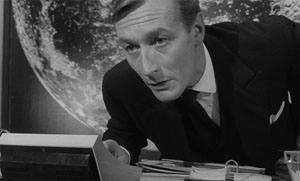
Still from On the Silver Globe

WHY IT MIGHT MAKE THE LIST: One of the few science-fiction adaptations that can earn the adjective of “epic,” and not only in terms of not dumbing down its ideas in favor of effects. The Polish government attempted to kill it, and end its director’s career. Despite it being only 80% of a finished film, there are images that will remain in the mind long after.

COMMENTS: In the best of all possible worlds, On the Silver Globe would be more widely known for the epic saga it is intended to be rather than as an unfinished curiosity, and it would’ve been the blueprint for science-fiction cinema to follow, rather than George Lucas’ Star Wars. Or possibly not. After all, its source material, “The Lunar Trilogy” written by Jerzy Zulawski (Andrzej’s great-uncle), which Stanislaw Lem acknowledged as an influence on his own writing, STILL has never gotten an English translation, making it unknown in the U.S. and other English speaking countries. This is one of the few films where its backstory is as fascinating as the actual film.

To wit: after the success of The Most Important Thing Is to Love, the exiled Zulawski was allowed to return to Poland to work. It was at this time that his marriage collapsed and his wife left (we’ll get to that later on…), and he chose to adapt his great uncle’s trilogy. Two years of work went into the enterprise, with most of the shooting done in 1976 and 1977, until the Deputy Minister of Culture and Art, Janusz Wilhelmi, saw some of the footage and in June 1977, ordered the production to shut down. Props, scenery and costumes were warehoused and/or destroyed; Zulawski was once again persona non grata in Poland, couldn’t get any work, and was again forced to leave home. (Out of this experience came the cult favorite Possession). Wilhelmi died in a plane crash the following year (1978), but despite several attempts to resurrect the project, authorities refused to release the existing material; some of the crew members managed to save what they could, but to no avail. By 1986, the regime in Poland had collapsed, but it was too late—too much material had been lost, several actors had died, and cinematic sci-fi was by then firmly caught in the throes of Star Wars‘s aftermath. However, what was left of the film could indeed be presented in some Continue reading LIST CANDIDATE: ON THE SILVER GLOBE (1977/1988) →
UNEARTHLY STRANGER (1963) AND CHAMBER OF HORRORS (1966)

Unearthly Stranger (1963, directed by John Krish) often showed up on late night television from the late 60s through the 70s. Surprisingly, it hasn’t been asked about on What Was That Weird Movie?, ((Now I Remember This Movie–ed.)) because it’s a film occasionally discussed in cult film forums.  Naturally, there is always a risk in revisiting a movie first seen during adolescence. Chances are that it may not hold up—and more often than not, that is the case. Or, one my find value in it, but for very different reasons.

Subdued, with a distinctly British flavor, The Unearthly Stranger has qualities similar to The Quatermass Experiment (1955), Invasion of the Body Snatchers (1956), I Married a Monster from Outer Space (1958), “The Twilight Zone,” and the “Outer Limits.” Shot on a low budget, this Independent Artists production does not rely on special effects, which would have inevitably dated by now anyway. Although short on action and surprises, its virtues are atmosphere, dialogue, and solid performances.

Unearthly Stranger opens with Dr. Mark Davidson (, best known for The Adventures of Baron Munchausen) running through an empty city at night before reaching his apartment. Finding a tape recorder, he leaves a message: “In a little while I expect to be killed by something you and I know is here,” which segues into an extended flashback.

Still from Unearthly Stranger (1963)Shortly after the mysterious murder of fellow researcher Dr. Munro (Warren Mitchell), Davidson and Professor Lancaster (Phillip Stone) resume work on their government funded project, one which enables people to telepathically travel to other planets and potentially contact alien life. In addition to investigating Munro’s death, project supervisor Major Clark (Patrick Newell) has taken an abnormal interest in Davidson’s new Swiss wife, Julie (Gabriella Licudi). Lancaster, a close friend of Davidson’s, is also curious and surprised that he has not been introduced to the new bride.

Rather than putting any potential mysteries to rest, a dinner invitation from Mr. and Mrs. Davidson leads to a startling discovery when Lancaster catches sight of his friend’s wife removing a roast from a 250 degree oven without gloves on. Nothing in the film’s remaining time is as subtly chilling. One very curious theme is the finale’s revelation that all the women in the film are aliens and all the victims male. It is, perhaps, a misogynist’s nightmare that ends suddenly, without further exploration or explanation. While not a classic like Invasion of the Body Snatchers, Unearthly Stranger is an obscure sleeper well worth seeking out.

Unfortunately, it is only available on a U.K. Pal Blu-ray. However, the Continue reading UNEARTHLY STRANGER (1963) AND CHAMBER OF HORRORS (1966) →

THE PRISONER (1967-1968), PART THREE

This is Part 3 of a 3 part survey of “The Prisoner.” Part 1 can be found here, Part 2 is here.

“A Change Of Mind,” (directed by Patrick McGoohan) opens with the Prisoner confronted by thugs from the gymnasium (which is fairly typical for workout fundies). Seeing that No. 6 would rather exercise in the woods, they accuse him of being “unmutual” (not status quo) and ferociously pick a fight with him. The Prisoner reacts by beating the hell out of them. Then, like all bullies who get whupped, they go and tattle. Of course, No. 2 (played by John Sharp this week) and his gang threaten a spanking,  in the form of a lobotomy for No. 6—a literal change of mind. Unfortunately, they haven’t found out yet what they need from No. 6: why the Prisoner resigned as an agent. The solution? Make the Prisoner believe he has been lobotomized. The episode uses Rod Serling circularity, with another confrontation in the woods and a table-turning that leads to the charge of “unumutuality” going much higher.

“Do Not Forsake Me, Oh My Darling,” (directed by Pat Jackson) is a genuine oddity in a genuinely odd series. Its contrasting textures are off-colored, with the presence of “star” McGoohan kept to a minimum. He’s hardly even in it, as he was busy filming Ice Station Zebra (1968). Of course, the production team could have simply waited for McGoohan’s return. Instead they found an opportunity for a change of pace. Whether they succeeded or not is intensely debated.

On paper, the plot sounds fatigued. Yet another mind-swapping thriller, the type that “one idea” Universal hack Curt Siodmack wrote repeatedly.  When the Colonel (Nigel Stock) arrives in the Village, he is informed by No. 2 (Clifford Evans) that a professor Seltzman (Hugo Schuster) has invented a mind-swapping machine. Unfortunately, Seltzman is missing and, apparently, once done, the process cannot be reversed, which is hardly going to stop No. 2, if it means obtaining information from the Prisoner.

Yet again, the Prisoner is abducted and drugged, only to awaken in the body of the Colonel. It doesn’t take him to long to do the math and go looking for Seltzman. Along the way, No. 6 has his only love scene in the entire series, played by Stock (because the hyper-Catholic McGoohan refused to ever do a love scene). Stock plays the Prisoner throughout most of the episode without resorting to impersonation. His performance is an effective one, matched by Evans’s charismatic No. 2.

Apparently, the script was loathed by almost everyone, and many “Prisoner” fans rank it as the low ebb of the series. There’s no denying that it doesn’t quite come together, but it is a compelling effort.

The Prisoner, "Living in Harmony"“Living in Harmony” (directed by David Tomblin) is another episode which sounds wretched and could be dubbed “the Prisoner goes west.” However, as when the original “Star Trek” crew relived the gunfight at the OK Corral (in “Spectre of the Gun,” also from 1968), the end result is among the most refreshingly ludicrous in the show’s run.

The Prisoner finds himself in the guise of a recently resigned sheriff Continue reading THE PRISONER (1967-1968), PART THREE →

THE PRISONER (1967-1968), PART TWO

This is Part 2 of a 3 part survey of “The Prisoner.” Part 1 can be found here.

Does 6 plus 6 really equal 12? So asks the aptly titled “The Schizoid Man” (directed by Pat Jackson). After a seemingly innocuous trifle about bonding with a psychic villager and a bruised thumb, the Prisoner lies down for a good night’s sleep, but it appears that the room night light has a faulty bulb.

Drugged once more, the Prisoner is taken by men in white coats who wheel him into the hospital, turn him into a southpaw (via electroshock, in a moment of karma for all us lefties who were at the mercy of brainwashing status quo teachers with rulers back in first grade), throw away his razors, and give him a new do.  After an indeterminate amount of time on the gurney, the Prisoner awakens with a new look in a new surrounding, as pawn of an elaborate scheme composed by the new No. 2 (Anton Rodgers), a surprisingly young administrator.

“You are Number 12,” the Prisoner is told at the Green Dome, “and you are to break Number 6.” “But I am Number 6.” And so he is, or at least his double is. And if you think that in addition to being an attempt at uncovering the reason for the Prisoner’s resignation, this is also a ploy to get him to own his number, you would be right.  See Number 12 fence with Number 6. See them box. See them duel with pistols.

Now actually, Number 6 is Number 12 , Number 12 is Number 6, and Number 12 is in cahoots with Number 2. Of course, No. 6 (12) knows this is a feeble scheme hatched by No. 2. Of course, No. 2 knows that No. 12 (6) knows that No. 6 (12) knows. But, what if No. 12 pretends to be No. 6? Perhaps then he could escape. And the helicopter circles back, as it always does. And the psychic is remorseful over having cooperated with No. 2, but neither she nor No. 2 counted on a bruised thumb. Ah!

The script for “The Schizoid Man” so impressed McGoohan  that he hired its writer, Terence Freely, to join the production company’s board of directors. In contrast, for years director Pat Jackson claimed to have been utterly confused by the script, but simply directed it as written. His confusion was an honest one and shows in one of the series most legendary episodes. McGoohan responds with a tour de force performance.

Director Peter Graham Scott was reported to have been equally confused by the script for “The General.” Again, that turns out to be a plus (and undoubtedly an astute choice by McGoohan and company).

The Prisoner cannot even enjoy his coffee without Village trauma drama when he hears an announcement ordering history students to immediately return to their dwellings, which is followed by his witnessing the Professor being caught and manhandled (by his students) while attempting to escape.

The Village is obsessed with a new fad, Speed Learning: “Learn a three-year course in three minutes.” “It’s not impossible,” says No. 12. The Prisoner finds the Professor’s tape recorder, which has “information” that may prove damaging to the General and No. 2 (Colin Continue reading THE PRISONER (1967-1968), PART TWO →