Tag Archives: Criterion collection

DIRECTOR RETROSPECTIVE: JEAN COCTEAU

The late critic Leslie Halliwell wrote of Jean Cocteau’s Orpheus (1949): “It is the closest cinema has gotten to pure poetry.” The same might be said of Cocteau himself. Poet, painter, filmmaker, librettist, historian, stage designer, and playwright, Cocteau refused to be confined to the parameters of a single artistic medium. His circle of friends and collaborators included Pablo Picasso, , Serge de Diaghilev, Les Six, Igor Stravinsky, Marcel Proust, and Erik Satie. He was a dominating figure in virtually every “ism”, including Dadaism and Surrealism. Cocteau only made six movies, and insisted that he was merely an amateur who “dabbled” in the medium. Despite his self-proclaimed amateur status, four of those films are frequently hailed as masterpieces of cinema. These four have been collectively given the Criterion treatment.

Blood of a Poet (1930) was Cocteau’s first film. It is often compared to ‘s Un Chien Andalou (1928) and L’Age d’Or (Blood was, in  fact, financed by the same patron as L’ Age d’or). Yet, Blood of a Poet is its own film, having a texture unlike any before or since. It is, possibly, the weakest of the four on the Criterion set. Despite it’s stage bound milieu, it remains bewitching, startling, and memorable even after the passage of 80 years. It features absurdist mythology and is semi-autobiographical, told in four life episodes. The artist, searching for his muse, is martyr to his art. Cocteau narrates, surrealist Lee Miller plays a statue and Les Six member Georges Auric composed the music. Mirrors are passageways into an inner world, a theme Cocteau would perfect in Orpheus (1950). Budgetary limitations led to improvisation, which worked to the film’s advantage. Upon release, the film was attacked from different corners. Andre Breton and his Surrealist circle were aggressively hostile, obviously fearing a coup d’etat ((Cocteau, who never claimed to be a Surrealist, was mostly amused by Breton’s histrionic objections. By this time, Breton was running the movement like an autocracy. Predictably, Cocteau outlived the movement that Breton himself managed to assist in killing.)). Coming on the heels of L’ Age d’or, the Catholic Church read an iconoclastic message into Blood, threatening the producer with excommunication, which resulted in a delayed release. In hindsight, this is surprising since the main thrust of the film, which comes through the multifariously interpreted imagery, mostly conveys the artist in the spiritual realm.

Cocteau was nearly sixty in 1946 when he made his first feature-length film, Beauty and the Beast (based on the children’s story by Madame Leprince de Beaumont). Inspired by Gustave Dore’s engravings and the naturalistic paintings of Johannes Vermeer, Beauty and the Beast is sensual, frighting and enchanting in the way only a childhood fantasy can be. It is more aesthetically assured than Blood of a Poet, greatly assisted by Henri Alekan’s exquisite black and white cinematography, Georges Auric’s enduring score, and Christian Berard’s production design, costume and makeup work. Disembodied hands light the way to the Beast’s elegant castle with candelabras. Animated statues convey amusement and dread. Mirrors, doors and jewelry are constant elements of Cocteau’s world. Cocteau and company play with the gifts of the medium, but it is more than a mere display of cinematic trickery. Everything serves the mythical narrative. Stark and magical compositions are the result of a highly collaborative work with unified purpose. According to Cocteau’s diaries, the collaboration was not as seamless as the film appears. Apparently there was much tension between the director and Alekan. Cocteau, knowing nothing about the camera, preferred flat, artistic compositions. Alekan resisted such an approach and pushed Cocteau to think in more classical cinematic language.

Jean Marais’ Beast acts almost entirely with his eyes (peering from behind lycanthrope-like makeup). He conveys pathos, wretchedness, latent savagery and erotic yearning in a tour-de-force performance. His Beast is threatening, and more compelling than the civilized Continue reading DIRECTOR RETROSPECTIVE: JEAN COCTEAU

148. SWEET MOVIE (1974)

“Not everything can be explained.”–Potemkin in Sweet Movie

Beware

DIRECTED BY:

FEATURING: Carole Laure, , ,

PLOT: A billionaire marries a virgin beauty contest winner. Meanwhile, a Socialist ship captain sails down an Amsterdam canal with a Marx masthead and hold full of sugar and candy. The virgin escapes her wedding night and goes on a sexual odyssey around the world, while the ship captain lures a proletariat man and four children onto the ship and kills them.

Still from Sweet Movie (1974)
BACKGROUND:

  • Yugoslavian Dusan Makavejev made some highly regarded movies in the beginning of his career, but he really came to international notice when his strange psychosexual documentary WR: Mysteries of the Organism (1971) was banned in his home country and he was exiled from the relatively liberal Communist state for making it. Makavejev landed in Canada where he made Sweet Movie. After the outraged reaction to this provocation, Makavejev did not direct a feature again for seven years.
  • Makavejev was a devotee of psychoanalyst William Reich (the “WR” of WR: Mysteries of the Organism). Reich began his career as a controversial but serious psychologist advocating total sexual freedom, but descended into madness and crankery in his later years when he claimed to have discovered a mysterious invisible energy named “orgone” that could cure cancer, among its other godlike properties. The film’s orgy performed by members of the Vienna Actionists’ commune under the leadership of performance artist Otto Mühl, who was also a follower of Reich’s teachings.
  • Makavejev turned down an invitation from Francis Ford Coppola to direct his script for Apocalypse Now to make Sweet Movie.
  • The black and white footage of corpses being disinterred is actual archival footage shot by the Nazis when they discovered the mass graves of the Katyn massacre, where the Soviets had murdered 22,000 Poles on Stalin’s orders in 1940.
  • The story was originally intended to follow the adventures of Miss World. Actress Carole Laure felt pressured on the set to perform sexual acts that made her uncomfortable, and she quit the production after shooting a scene in which she fondled a man’s flaccid penis. She later complained that the film was edited to make it appear that she engaged in more sexual activity than she actually had. To fill out the running time, Makavejev added the plot with Anna the ship captain.
  • The Polish government revoked actress and cabaret singer Anna Prucnal’s passport because of her involvement with Sweet Movie, and she was unable to return home for seven years.
  • Sweet Movie was banned in Britain (and in many other countries). In the United States it played with 4 minutes of scatology cut out.
  • Sweet Movie was one of two films selected as among the weirdest movies of all time in 366 Weird Movies 4th Reader’s Choice poll.

INDELIBLE IMAGE: After watching Sweet Movie, you’ll wish, in vain, that you could wash some of the images out of your mind—particularly the commune feast featuring food in all its forms, pre- and post-digestion. There are other moments that are strikingly beautiful, for example, Anna Planeta and Potemkin making love in a vat of sugar as a white mouse crawls over their bodies. For the most memorable image, however, we’ll go with the film’s first and funniest shock: the wedding night, when, after rubbing his new bride down with isopropyl alcohol while she clutches a crown of Christmas lights between her thighs, Mr. Dollars reveals his uniquely pimped-out phallus.

WHAT MAKES IT WEIRD: Mixing beauty with disgust like sugar mixed with blood, Sweet Movie is a confused concoction of politics, sex, excreta, and Reichian psychology. Exiled director Dusan Makavejev abandoned all reason to make this movie, a fact which ironically makes its stabs at political satire ring hollow. Still, as a strange cinematic thing, Sweet Movie has an undeniable freak show appeal for those with strong stomachs: just be prepared for a cavalcade of unsimulated urine, puke, feces, mother’s milk, and pedophilia.


Unofficial 2013 trailer for Sweet Movie (made by Chelsea Sweetin of Montreal’s “Garden Scene Evenings”)

COMMENTS: Dusan Makavejev must have been very confused when he was making Sweet Movie, but probably even more so when he was editing Continue reading 148. SWEET MOVIE (1974)

CAPSULE: WILD STRAWBERRIES (1957)

Smultronstället

Recommended

DIRECTED BY:

FEATURING: , ,

PLOT: An aging professor has dreams of death and flashbacks to his youth as he drives to a university to accept an honorary degree.

Still from Wild Strawberries (1957)

WHY IT WON’T MAKE THE LIST: It’s not weird enough. Only the presence of a couple of dream sequences, and the fact that the story emerges from the mind of semi-surrealist auteur Ingmar Bergman, make this character study worthy of a footnote in weird movie history.

COMMENTS: Incredibly, Ingmar Bergman released Wild Strawberries in the same year as The Seventh Seal, and although the overriding theme of both films is death, the approach taken in this quiet character study could hardly be different than the bombast of Seal‘s epic medieval fantasy. Wild Strawberries is an intimate, internalized movie about an ordinary man coping with regret at the end of his life, and, without a couple of dream sequences that Freud-obsessed Bergman couldn’t resist adding, it would belong to a tradition of quotidian dramatic cinema that stands directly opposed to the world of weird film. Many people deeply identify with Professor Isak’s pre-mortem ruminations, but I confess I’m not one of them. This is the kind of realism-based movie that conjures no magic for me, although I can appreciate the craftsmanship and understand why others with different predispositions rate it so highly. The dreams depicted here err towards psychological realism rather than mystery. The initial nightmare comes in quickly, taking pride of place directly after the credits. Featuring a withered man with a squashed face and a hearse accident, it’s obviously Isak’s death-anxiety dream, an easy slam dunk interpretation for any amateur psychotherapist. The second trip into Isak’s psyche takes place after we’ve been exposed to some flashbacks to his youth, and digs a bit deeper, although the symbolism is still fairly simple to grasp. It’s actually a series of dreams, beginning with another flashback to his youthful love. That turns into a common examination dream; Isak has shown up for a test, but he’s not prepared. He looks into a microscope and can’t see anything, he sees only nonsense words scrawled on the chalkboard. (At least he remembered to wear pants). After failing the exam, the experience morphs into a guilt dream; the test is revealed as a trial. The sequence ends on another memory, this time of his wife, and a tryst that may or may not have occurred as depicted but which nevertheless reveals his ambivalence about the woman who fathered his son. There is a conundrum in Wild Strawberries; Isak seeks forgiveness, but he seems rather a good egg than a terrible sinner. We are repeatedly told Isak is cold and unfeeling, but the warmth that emanates from behind Sjöström’s sad and crinkly eyes contradicts that narrative. When his daughter-in-law tells him he’s a selfish old man who only thinks of himself, we are immediately on his side; we know that he’s been misunderstood. Bergman surely could direct cold and unfeeling—see the performances of Jullan Kindahl as the buttoned-up housekeeper and Naima Wifstrand as Isak’s harridan mother—so perhaps the idea behind our instant fondness for Victor Sjöström’s grandfatherly professor is that we, the audience, see the doctor as he sees himself, not as others see him. The movie seeks to redeem a character with whom we begin in sympathy; a strange emotional arc, but one that works for many people. Ultimately, although Wild Strawberries is doubtlessly an excellent movie, I do find it a tiny bit overrated—but perhaps that’s only because it’s being compared to the author’s other masterpieces, like The Seventh Seal and Persona. This is a different species of film, a ruminative and elegiac movie that is focused narrowly on a perfectly realized individual rather than grand existential allegories. One of Bergman’s gifts is that he was comfortable working either on an epic stage or in a small chamber. He could bring a sense of warmth to the one and an echo of universality to the other. Wild Strawberries is clearly on the realistic chamber drama end of his range, and the “recommended” rating here is for general cinema enthusiasts, not lovers of the weird.

The Criterion Collection’s Wild Strawberries DVD includes a commentary by film scholar Peter Cowie and a ninety-minute Bergman documentary/interview, Ingmar Bergman on Life and Work. The 2013 Blu-ray upgrade (buy) adds a short introduction from the director and new behind-the-scenes footage.

WHAT THE CRITICS SAY:

“…so thoroughly mystifying that we wonder whether Mr. Bergman himself knew what he was trying to say. As nearly as we can make out… the purpose of Mr. Bergman in this virtually surrealist exercise is to get at a comprehension of the feelings and the psychology of an aging man.”–Bosley Crowther, The New York Times (contemporaneous)

MONSIEUR VERDOUX (1947) CRITERION COLLECTION

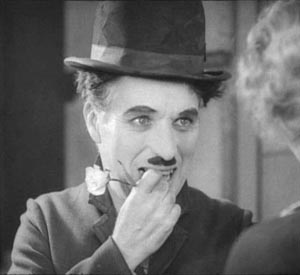
2013 sees the Criterion Collection release ‘s Monsieur Verodux (1947). With this film, Chaplin’s sentimental Tramp was unquestionably dead, and in its place was an elegant black satire about a mass murderer. Critics and the public alike vilified Chaplin for this shift, to the point of picketing theaters, booing him at the Broadway Theater premiere, and eventual forcing the film’s withdrawal from the American market. James Agee, , and Bosley Crowther were among scant few notables who went against the tide and sang the film’s praises, declaring it a masterpiece. Later revivals have seen contemporary critics belatedly joining the film’s original champions. Today, Dennis Schwartz writes, “Monsieur Verdoux remains an unusually provocative satirical black comedy that’s subversive and gives one a greater sense of Chaplin’s political breadth from his previous work.” This reappraisal is not surprising: Verdoux‘s dark, sardonic humor is attuned to the modern mindset.

While Monsieur Verdoux does not compare to Chaplin’s most assured silent work, it is his most successful sound film (although that may not be saying much). The idea of Chaplin playing a Bluebeard type came from . Predictably, Welles suggested himself as director and, even more predictably, nothing came of it. Chaplin decided to pursue the idea solo, embarking on a screenplay. He offered Welles a “story idea” credit, and much to Chaplin’s chagrin, Welles accepted.

In retrospect, Monsieur Verdoux might be seen as an antidote to Chaplin’s next feature, the excessively saccharine Limelight (1952). The initial critical and commercial failure of Verdoux was comparable to the situation with ‘s bleak Three’s A Crowd (1927), after which Langdon reportedly tried to rebound with the populist-minded Heart Trouble (1928) (since that film was not distributed and is now lost, it is impossible to assess whether or not Langdon’s effort for a comeback would have been successful). Chaplin attempted to rebound from the commercial failure Verdoux with Limelight. Although Limelight proved to be a commercial success, critical reception was mixed. In her infamous review the critic Pauline Kael referred to it as “Slimelight” and, according to a Chaplin biographer, Pablo Picasso walked out on the film, finding it to be nauseatingly sentimental. The two films which followed Limelight were critical and commercial failures. To its credit, Verdoux does not overdose from Chaplin’s heart-on-sleeve sentiment.

Monsieur Verdoux is based on the life of serial killer Henry Desire Landru, aka “The Bluebeard of Paris”, who was convicted and executed for the murder of eleven women in 1922.  The film opens with Verdoux’s voice-over narration from his tombstone, immediately indicating that what is about to unfold is far from the dance of the dinner rolls.

Still from Monsieur Verdoux (1947)Verdoux is a banker who has lost his job during an economic crisis. At home he has an  invalid wife and young son. In his late fifties, Verdoux knows his prospects for employment are slim and he resorts to marrying and murdering wealthy women to provide for his family. The Tramp faced the perils of Capitalism in Modern Times (1936), but here his response is an all-out blitz.

Chaplin’s Verdoux is an artful murderer. His is an aesthetic approach to killing, related to but opposite of The Great Dictator‘s Hynkel. He only really comes to life when he is engaged in the art of murder. Some of the physical comedy falls flat (Verdoux tumbling out of a window). Chaplin cannot resist mocking, then milking, the bourgeoisie heartstrings in the scenes of a paralyzed Mrs. and son at home in the lonely Spanish villa.

The best stroke here is Chaplin’s casting of Martha Raye as Annabella, the one wife he simply cannot kill. Chaplin always knew the value of a great female foil and he has one in the thankfully low-brow comedic antics of Rae, who contrasts beautifully with Chaplin’s self-praodying, effete elitism. Even in a film about a killer of women, Chaplin, commendably, does not succumb to a patriarchal ethos. Verdoux’s numerous attempts to kill Annabella prove unsuccessful and she proves as valuable to him as Jack Oakie’s Napaloni was to Chaplin’s Hynkel in The Great Dictator (1940). Verdoux’s final attempt on Raye’s life is an extended and somewhat clumsily executed spoof of  Theodore Dreiser’s novel “An American Tragedy.”

Chaplin provides a second strong female counterpart in Marilyn Nash’s “The Girl” who reads Schopenhauer and laments Verdoux’s loss of cynicism. Nash calls to mind elements found in Chaplin’s previous leading ladies (‘s Gamin from Modern Times, most specially) and she prefigures Claire Bloom’s Thereza in Limelight. 

Naturally, Chaplin will not forgo painting his societal misfit with a degree of sympathetic coloring and he does this, as typical in his late works, with an extended anti-war speech that also tackles the dog-eat-dog tenets of Capitalist America. On his way to the gallows, Verdoux gets in one last, brief anti-organized religion quip. Thankfully, the cold-blooded killer Verdoux is not as long-winded as The Great Dictator‘s Barber or Limelight’s Calvero. Chaplin, as expected, is best in his pantomime moments. 1947 Audiences expected laughter from Chaplin. They didn’t get much of it from this morality play. Still, despite its flaws, Monsieur Verdoux has withstood the test of time better than any of Chaplin’s sound work. However, and not surprisingly, his best silent work somehow seems more contemporary.

The Criterion Edition includes a making of the film documentary, an audio interview with co-star Nash, three theatrical trailers, and essays.

GIMME SHELTER (1970): AN INTERVIEW WITH JOHN SEMPER

Gimme Shelter (1970) is a documentary film about the last ten days of the 1969 Rolling Stones tour. The film was directed by brother documentarians Albert and David Maysles. It is best known today for having captured footage of the murder of a black man by a Hells Angels security guard at the Altamont Speedway near San Francisco. Gimme Shelter recently received the Criterion treatment on DVD. This is an interview with John Semper, Jr., who worked for Albert and David Maysles while they were editing that film.

John Semper Jr’s experience with Gimme Shelter, the Maysles brothers, documentary filmmaking, the film industry, and film as art and commerce.

“What happened was in high school I knew this guy named Gregor Shapiro. In fact, we’re still friends even though he lives in Sweden these days. Somehow Gregor had a connection to the Maysles: Albert and David. I already knew who they were because I was a budding young filmmaker back in the days when nobody under twenty saw any future in being a budding young filmmaker. It was a completely different time. We were not as drenched in media as we are today. For most of my peers being in the media was not a viable career option. That’s how long ago that was, but for me it was, and I was paying a lot of attention to the documentary filmmaking that was going on.

The Maysles were unique because they had created a custom-built,16mm hand-held camera. This was cutting edge technology. They had designed this camera. I think David had designed it. It was balanced so they could have it on their shoulder for a long period of time and it would not cause them a great deal of fatigue. The idea of something hand-held that would not cause you a great deal of physical discomfort was a huge breakthrough.

The other thing about their equipment was that the camera ran silently. 16 mm cameras in those days were extraordinarily noisy and blimps that you would put on them to make them quiet were huge. You couldn’t really do documentary filmmaking without being very visible and very loud. Not only could the Maysles carry their equipment unobtrusively, without causing them physical pain, but it was silent so after a while people forgot that they were there.

They did this one documentary that got a lot of attention called Salesman [also a Criterion release] where they followed around a bible salesman in New England, following him from door to door. The fact that they could get this candid footage was unheard of. Also, the fact that you could record sound on the fly. Remember sound had to be recorded separately from pictures. There were no cameras really that recorded sound while you were recording picture. That was all very new and exciting. The footage that they got, which today we would call “reality” footage, in those days it was very much “documentary” footage. The Maysles ability to capture people in their regular lives was unrivaled and amazing

Still from Gimme Shelter (1970)This was the late 1960s. I knew the Maysles’ work because I had seen Salesman and I was heavily into watching and studying documentaries. Gregor went and worked for the Maysles during one Christmas vacation. Gregor came back to school afterwards, and he had somehow got hold of a duplicate of the footage from Gimme Shelter where the guy gets killed: the one guy that the Hells Angel is knifing, a poor black guy who is wearing a lime green suit. Gregor had this footage and he showed it to us. We were all just mesmerized that this had happened and that Gregor had the footage.

As I recall, Gregor was not as interested in film as much as I was. He had just kind of stumbled onto this job. Gregor was more interested in still photography. He turned to me and said: “I know you are really interested in film. Why don’t you come to New York with me next summer, I will introduce you to the Maysles. Let’s see if we can work there again.”

That summer Gregor and I went to New York and stayed at the Chelsea Hotel. The first night we walked in who was in the lobby, drunk out of her mind, but Janis Joplin! We were checking in and Janis Joplin comes walking Continue reading GIMME SHELTER (1970): AN INTERVIEW WITH JOHN SEMPER