Category Archives: Capsules

IT CAME FROM THE READER-SUGGESTED QUEUE: CAN DIALECTICS BREAK BRICKS? (1973)

La dialectique peut-elle casser des briques?

366 Weird Movies may earn commissions from purchases made through product links.

Recommended

DIRECTED BY: René Viénet

FEATURING: Hung- Liu Chan, Ingrid Yin-Yin Hu, Jason Piao Pai

PLOT: Alienated proletarians, trained in kung fu, fight against their bureaucratic oppressors.

Poster for "Can Dialectics Break Bricks?" (1973)

COMMENTS: What if a typical kung fu flick was transformed through voiceover into a subversive and radical wanna-be manifesto? Such an anarchic romp could only come from France. But let’s take things from the beginning.

Some definitions should be clarified. Dialectics is a product of the Situationist movement, a group of anti-capitalist artists and thinkers, known cinematically mostly through Guy Debord’s documentaries. Like a lot of spoofs—What’s Up Tiger Lily? (1966) and In Search of the Ultra-Sex (2016) come to mind—this movie takes preexisting material and subverts its meaning through clever use of voiceovers.  The Situationists call the exact technique used here “détournement”, and it could be better defined as a reappropriation in a new and ideologically subversive setting. It is a recontextualization of images so that new meanings, radically different than previous, are produced: a practice commonly used in  postmodernist art of the later half of the twentieth century until our own time.

With the theoretical background of this movie specified, what is it really about? The plot revolves around a commune of proletarian martial artists defending themselves against alienation and their evil overlords. These overlords are not simply your typical evil Western capitalists, but we can trace references to the Soviet Union’s nomenklatura as well. They in fact represent of every possible state, even of those that hypocritically claim to defend the rights of the proletariat.

A main character emerges from the crowd, a typical hero who becomes the focus of the narrative, a man who sets his noble ideals against the bad guys. What is atypical of the genre , though, is that while the choreography of fighting plays out, our characters indulge in deep conversations about class struggle, the abolition of masters, and Wilhem Reich‘s writing, among other subjects. Through voice-over an “essential”  bibliography is mentioned, too, which one of the most unexpected and weirdest elements of the movie.

Don’t worry, though. This is not a heavy movie. Sexual jokes and self-aware irony prove its unwillingness to take itself too seriously. In fact, Dialectics isn’t much more than a funny gimmick. It surely has an appeal for fans of cult cinema, but it is not essential viewing for anyone interested in the Situationist movement. On the other hand, if you enjoy this kind of absurd humor—and the eccentric idea of a martial arts show about the class struggle—and would like to view something similar, albeit in a contemporary setting, try to find the French TV show “Machine” (2024) created by Thomas Bidegain and Fred Grivois.

WHAT THE CRITICS SAY:

“An obnoxious and hilarious stunt from 1973…”–Eve Tushnet, Patheos (streaming)

(This movie was suggested for review by Comrade Faustroll, who said “The filmmakers strike the right balance of meaning what they’re saying enough to be really weird, but joking enough to keep it interesting.” Suggest a weird movie of your own here.)

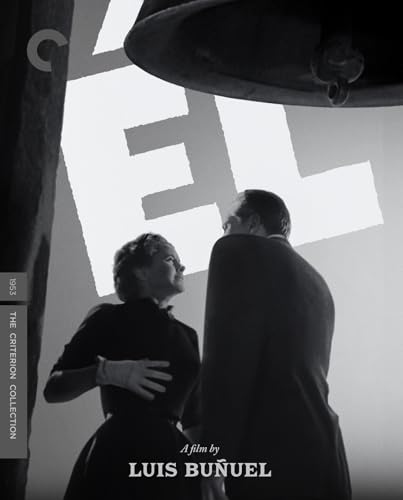
CAPSULE: ÉL (1953)

AKA This Strange Passion

366 Weird Movies may earn commissions from purchases made through product links.

Recommended

DIRECTED BY:

FEATURING: Arturo de Córdova, Delia Garcés

PLOT: A Mexican landowner seduces a woman into marrying him, but his paranoid jealousy quickly poisons the union.

Still from El (1953)

COMMENTS: The career of Luis Buñuel breaks cleanly into three periods: the avant-garde (or first French) period, the Mexican period, and the renaissance (or second French) period. He begins in Paris with the revolutionary experiments of Un Chien Andalou, L’Age d’Or, and Land Without Bread; moves to Mexico where he directs commercially-oriented films after an unsuccessful flirtation with Hollywood; and then, in the twilight of his career, returns to France to produce masterworks such as Belle de Jour (1967) and Discreet Charm of the Bourgousie (1972) with the assistance of new collaborators Serge Silberman (producer) and Jean-Claude Carrière (writer). Of these eras, the Mexican period, from 1947-1965, is the longest—and it can itself be split into early and late periods, as Buñuel again achieves international notoriety with Viridiana in 1961, and re-emerges into surrealism with 1962’s The Exterminating Angel.

The Mexican period is often overlooked, and it’s undeniable that Buñuel was far less experimental in this era, placing commercial realities above personal passions, and sneaking in surrealism and social commentary where he could. But Buñuel was honing his craft in Mexico, and these films are still fascinating to see the development of his aesthetic. Naturally, he also made some great movies in these years, among which the psychologically astute Él (which translates in this context as “he”) is a standout.

The film begins, without dialogue and somewhat mysteriously, with priests ritualistically washing the feet of young men on Maundy Thursday. The gaze of our protagonist, Francisco, scans a line of boys’ feet and priestly hands until it alights on a pair of high heeled shoes supporting shapely calves; his eyes then turn at a right angle to travel vertically up the body to briefly meet the eyes of a young woman, whom we will later learn is Gloria. What this opening means—with its nods to the director’s foot fetishism and his complicated relationship to Catholicism—is a point for academic debate. But no matter; the story immediately takes a turn for the melodramatic, following Francisco as he seduces the demure Gloria (stealing her from her fiancé, an associate of Francisco’s), while expressing his vain desire to recreate his ancestral real estate empire. Francisco’s irrational jealousy emerges as early as the honeymoon, where he gets into a fight with an old friend of his bride’s that the couple coincidentally encounters. Gloria quickly realizes she has made a terrible mistake. Things escalate through beatings, a dangerous scene in a bell tower (which anticipates Vertigo), and finally a disturbing and menacing bit where Francisco gathers up surgical equipment for purposes you can certainly guess. In the end, Francisco has a complete psychotic break, allowing Buñuel to deploy some light surrealism (via editing) to portray the triumph of paranoia over objective reality. (This climax occurs, naturally, inside a church.) An ironic epilogue shows Francisco, now convalescing in a monastery, his demons at least temporarily at bay, zig-zagging down a straight garden path.

Buñuel‘s own process during the Mexican period follows the same path: he follows the inevitable line of conventional narrative, but zigs and zags into his own obsessions. The director claimed that Él was one of his most personal works, and we know from his wife Jeanne’s autobiography that Buñuel himself suffered from irrational jealousy and sexual repression. Thus, he identifies with Francisco, but only in a masochistic and self-reflective way: he’s too perceptive to deceive himself, as his protagonist does, into thinking he’s always in the right. The source novel, by a woman speaking from personal experience, reportedly focuses on social critique of the Mexican patriarchy and its mistreatment of women; this subject interests Buñuel as well, but he leans into the character study aspect of the material. It is a way to exorcise his personal demons, and despite the conventionality of the approach, Él is at heart a typically vituperative strike by Buñuel at the hypocrisy of the human heart.

WHAT THE CRITICS SAY:

“…a dark, troubling, classily produced melodrama. It may not have the showy, surreal touches of Buñuel’s best known work but it still packs a punch.”–David Brook, Blueprint: Review (Criterion Blu-ray)

Él (The Criterion Collection) [Blu-ray]

  • Movie dvd

List Price : 39.95 $

Offer: 25.34 $

Go to Amazon

IT CAME FROM THE READER-SUGGESTED QUEUE: BAD LIEUTENANT (1992)

366 Weird Movies may earn commissions from purchases made through product links.

DIRECTED BY: Abel Ferrara

FEATURING: Harvey Keitel, Frankie Thorn, Zoe Lund, Paul Hipp

PLOT: A dirty cop indulges his many addictions as he pursues the culprits behind a horrible sexual assault on a nun.Still from Bad Lieutenant (1992)

COMMENTS: Central characters who are bad—flouting conventions, horrifying the prim and proper, indulging the id—are the stuff of Hollywood cliché. Between all the bad moms and bad teachers and bad Santas, these comical antiheroes can feel played out. But Abel Ferrara would never be lumped in with conventional showbiz trends, and his Bad Protagonist can in no way be misconstrued as a good-natured rebel thumbing his the nose at society. If anything, it’s the “Lieutenant” that’s superfluous in this title: our hero is a bad detective, a bad dad, a bad colleague, a bad gambler, a bad Catholic, a bad john. He drinks (sometimes upon waking up), he smokes crack, he shoots heroin, and he steals cocaine and sells it to drug dealers, keeping a little for himself to snort off any handy surface (including pictures of his daughter’s first communion). He robs criminals. He cajoles his colleagues into giving them their money and turns around and makes terrible bets with it. He cavorts with prostitutes, extorts teenagers for humiliating sexual favors… hell, when he shows up to a double homicide, he takes a lingering look at the victims’ breasts. And this is long before we witness him hurling vulgar invective at Jesus Christ. Ya get it, folks? The guy is just spectacularly bad.

Lost in the wonder of Nicolas Cage’s out-there turn in the quasi-sequel Bad Lieutenant: Port of Call New Orleans (and a third film supposedly in the works set in Tokyo and to be directed by Takashi Miike) is the fact that the original was a deliberate shocker in its own time. Ferrara pulls no punches, dramatizing every despicable moment in exacting detail as part of what my colleague Gregory J. Smalley called “an overwrought, magnificent Christian parable that sought to demonstrate God’s infinite capacity for forgiveness by presenting a character that audiences couldn’t forgive.” Bad Lieutenant is a Book of Job for its audience, dragging viewers through the muck and the mire and daring them to re-evaluate their notions of sacred and profane.

One should always be hesitant in using the word “brave” to describe an acting performance; it is just acting, after all. But Keitel’s work here is undeniably go-for-broke, and sometimes it borders on comedy to see just how horrible he’s willing to appear. He never stops talking, only yielding when a woman injects him with smack. He’s hostile to nearly everyone he encounters (including one of his kids portrayed by his real-life daughter). Contemporary critics made much of a full-frontal nude scene, a traditional line-in-the-sand for mainstream cinema, but Keitel is arguably even more naked in his fully clothed, emotionally raw confrontation with Christ, letting all his feigned confidence and gruff bravado drop in a desperate cri de coeur. The film’s Act 3 twist, in which he makes a series of questionable choices in an attempt to find redemption, only makes sense because Keitel has laid the groundwork for a character for whom no decision is unthinkable.

Bad Lieutenant is outrageous in the extraordinary awfulness of its title character, but not especially weird. Keitel’s troubles are entirely of his own making, and his desperate attempts to keep his head above water while insisting on tying more and more weights to his ankles have become more common in recent years, most notably in the frantic machinations of the Safdie brothers. Bad Lieutenant would make an excellent companion piece to the Apocryphally enshrined God Told Me To; both films force their central detectives to confront the nature of the Almighty and their unstable faith in the face of events in the living world, although their journeys are nearly polar opposites.

There’s an entertaining piece of subtext in the way Keitel’s fortunes mirror the championship baseball series that soundtracks the film. We learn from the outset that a comeback by the hapless New York Mets from a 3-0 deficit in a playoff showdown with the rival Los Angeles Dodgers would require nothing short of a miracle. (It’s a feat that would actually be pulled off for the first and only time 12 years later, by the 2004 Boston Red Sox.) Naturally, Keitel has stopped believing in miracles and so forsakes his hometown team, continuing to put his money and his life behind the ascendant Dodgers and slugger Darryl Strawberry, a prodigious talent who himself was infamously brought down by drugs. Of course, Keitel is in so deep to his bad bets that when things go south, he swivels on a dime from attaboy-cheering to racial epithets, punctuated by a gunshot to the car radio. Yes, he’s a bad, bad man, but it’s not his badness that brings him down. It’s his failure to heed the advice of another Met: “Ya gotta believe.”

WHAT THE CRITICS SAY:

“…an illuminating, excoriating descent into the cesspool of sin, self-loathing and defilement. This is not an easy film to watch… This bizarre ecclesiastical dimension is what makes “Bad Lieutenant” more than a shallow wallow in the muck. Ferrara does make his moral points, and though one feels dirtied in the process, there is an accompanying feeling of purification as well.” – Hal Hinson, Washington Post (contemporaneous)

(This movie was nominated for review by Flo. Suggest a weird movie of your own here.) 

Bad Lieutenant (Special Edition) [Blu-ray]

  • A degenerate cop who snorts coke, bets on playoffs and drinks himself into stupors starts to pull himself out of the abyss when he investi- gates the rape of a nun who refuses to press charges.

List Price : 14.99 $

Offer: 10.46 $

Go to Amazon

CAPSULE: PARVULOS (2024)

Párvulos: Hijos del Apocalipsis; AKA Párvulos: Children of the Apocalypse

366 Weird Movies may earn commissions from purchases made through product links.

Parvulos is currently available for purchase or rental on video-on-demand.

Recommended

DIRECTED BY: Isaac Ezban

FEATURING: Carla Adell, Mateo Ortega Carsillas, Leonardo Cervantes

PLOT: Three brothers struggle to survive in a post-apocalyptic world while caring for two zombies caged in their basement.

Still from Parvulos (2024)

COMMENTS: A tale about family in times of extreme change. Isaac Izban, the Mexican auteur of films like the mind-bending and space-bending Incident (2014) or the deeply-layered Similars (2015), known for its political undertones, returns with a slightly more conventional, yet still eccentric combination of family drama and zombie apocalypse. But let’s take things from the start.

We follow three brothers—two kids and their older teen brother—struggling to survive in a world where the rules have changed dramatically. Everything seems typical to post-apocalypse fans, at first. A pandemic has decimated the population, while a not-fully-tested vaccine had serious side effects, creating hordes of zombies. Parallels with the recent Covid pandemic haunt the story, but there is no explicit analogy, just a new take on common tropes of the genre.

The twist brings something new to the table. In their basement the boys are hiding two zombies, scavenging and collecting food for them. Who could they be? When the youngest brother Benjamin discovers they are his parents, the boys begin an effort to tame the dead and remind them who they are.

The film could develop as a parable on toxic family dynamics, with the parents being wild zombies, but it doesn’t want to go there. It remains, even at its grossest moments, a wholesome combination of family drama and post-apocalyptic themes, targeted at a teen audience of the main protagonist’s age. There’s nothing wrong with this approach, but it’s not as deeply layered or rich in allegory as Ezban’s earlier works.

Parvulos is formally inventive. The faded color palette, resembling black-and-white photography, gives an eerie and melancholic tone. Wide shots along with distorted audio underline some of the tensest moments. There soundtrack is rich: composers Edy Lan and Camilla Uboldi, close collaborators of director, creates a wide range of tones, from ominous orchestral music to uplifting beats with lyrics in English.

The story continues through a series of encounters of the boys with other survivors. A picture of the new state of the world gradually emerges, with deadly cults roaming around (another common trope of apocalyptic fiction). But the tale remains fresh by keeping the family dynamic between the kids and their zombie parents at its heart. It is an intriguing premise, and there are even some WTF moments here, as when the zombies have sex or, chained to their seats, attend a festive Christmas dinner.

WHAT THE CRITICS SAY:

“…an ambitious, eccentric, ultimately memorable tale of juvenile brothers’ survival after civilization’s death by plague.”–Dennis Harvey, Variety (festival screening)