All posts by Gregory J. Smalley (366weirdmovies)

Gregory J. Smalley founded 366 Weird Movies in 2008 and has served as editor-in-chief since that time. He is a member of the Online Film Critics Society, and his film writing has appeared online in Pop Matters and The Spool.

17. TIDELAND (2005)

“[Producer] Jeremy [Thomas] knew [raising money to make Tideland] would be difficult, particularly because the film is very, very weird.”–Terry Gilliam

Recommended

DIRECTED BY: Terry Gilliam

FEATURING: Jodelle Ferland, Brendan Fletcher,

PLOT: Jeliza-Rose is a nine year old girl with an active imagination who is being raised by a pair of junkies. When her father spirits her away to a lonely, dilapidated farmhouse, then takes an extended “vacation” on heroin, Jeliza-Rose is left to her own devices. She retreats into an intricate fantasy world where her four doll’s heads are her closest companions, but reality is scarcely less bizarre than her imagination: her neighbors are a witch-like one-eyed woman with an unhealthy interest in taxidermy and a childlike mentally retarded man who also lives in his own fantasy world.
tideland


BACKGROUND:

  • Tideland was adapted from a critically praised novel by Mitch Cullin; ironically, this faithful movie adaptation was critically panned.
  • Gilliam made Tideland while on a six month hiatus from directing the big-budget commercial fantasy, The Brothers Grimm (2005).
  • Tideland was a commercial disaster, earning less than $100,000 in its initial domestic run.
  • According to Gilliam, the French distributor did not want to screen this film at Cannes because there is a scene involving farting, which the French find objectionable.

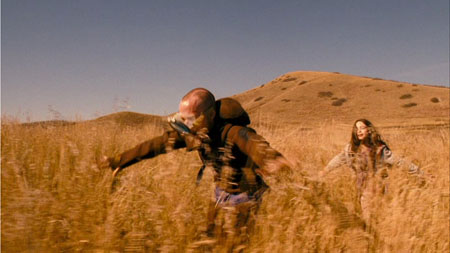
INDELIBLE IMAGE:  Many will remember Jeliza-Rose’s doll’s heads, who make memorably fantastic appearances in an underwater house and flying about inside a man’s ribcage.  But the more indelible image, because it’s repeated so many times, is the view of the broken down farmhouse in front of amber waves of grain.  The look was inspired by the Andrew Wyeth paining “Christina’s World,” and, though unacknowleged, also from the 1990 film The Reflecting Skin (which had an almost identical look as well as an eerily similarly child protagonist). Gilliam often emphasizes the tall gold grass towering over tiny Jeliza-Rose’s head, as if it were surf and she was living in an undersea world.  This ubiquitous aquatic imagery helps to explain the title “Tideland“.

WHAT MAKES IT WEIRD:  Gilliam has described the movie as a cross between “Alice in Wonderland” and Psycho, which sounds weird enough on its own terms. He pushes the envelope of weirdness even further with his trademark visual flair for phantasmagorical set pieces, for example, with a gloriously imaginative sequences of Jeliza-Rose falling down a rabbit hole full of tumbling syringes. But even if the audience wasn’t planted firmly inside the skull of the 9-year-old heroine, peering out onto this grotesque world through her child’s eyes, the scenario would have been weird, as the world of Tideland is peopled by grossly exaggerated lowlifes who live out their lives on the lonely fringes of plausibility.


Original trailer for Tideland

COMMENTS: Tideland is a misunderstood film, which is not automatically the same thing Continue reading 17. TIDELAND (2005)

SHORT: やった (2001)

fivestar

DIRECTED BY: Unknown

FEATURING:  Greenl

PLOT:  Six bouncy naked men (whose genitals are tasteful disguised by fig

leaves) experience love and loss in modern Japan, eventually achieving artistic and financial success through music. 

WHAT MAKES IT WEIRD: やった is a hallucinogenic barrage of bizarre imagery.  A peppy musical score contrasts ironically with the magical mystery tour taken by the six naked men, whose travels through impossible landscapes consisting of fields of ostriches and giant sushi platters are shown in brief, almost subliminal flashbacks.  The six scantily clad principals appear delusional, and its is possible that the director intended this short film to be an expressionist depiction of a state of paranoid schizophrenia and multiple personality disorder, with each member representing a separate Jungian archetype.

COMMENTS:

On the surface the やった seems to be nothing more than shock cinema, weirdness for weirdness’ sake.  Closer examination will reveal it to be one of the saddest stories ever told, an entire universe of bereavement and nihilism encased in a devilishly hummable 4 minute disco montage.  The scene where a fig leaf wearing man brushes past a beautiful woman on a busy Tokyo street, looks back wistfully as she passes, and is immediately consoled by his five naked brothers (who magically emerge from a nearby alley), is perhaps the most melancholy romantic scene put to film since Bernstein told his tale of the girl with the white parasol in Citizen Kane.

Some have claimed that this short film is actually a satirical skit by a comedy troupe meant to poke fun at Japan’s eternal optimism in the face of economic and political woes.  Such reductionist interpretations miss the larger point, however.  やった tells a tale of the existential struggle to survive, forge an identity, and promote a boy band made up of naked middle aged men in an uncaring, absurd universe.  In a shot that seems almost to be a throwaway sequence, but actually is the key to interpreting  やった’s deeper meaning, a fig life springs to life from the crotch of one of the singers and rises in the air, finally transforming into the word “hope.”  American directors would do well to take heed of their Japanese counterparts willingness to express such deep emotional truths without the fear of looking silly.

WHAT THE CRITICS SAY
“Irrational Exuberance gains its genius from the fact that it effectively translates the concepts in Yatta! to an American audience, who wouldn’t get the Snore! Snore! Pass! Pass! part, but can appreciate the way that commercialism dumbs down their society. Hey, as long as we’re happy, who cares if we’re dancing in our skivvies?”–Sekicho, Everything2.com

16. CARNIVAL OF SOULS (1962)

“We hoped for the look of a Bergman film and the feel of Cocteau.”–variously attributed to screenwriter John Clifford or director Herk Harvey

Must See

DIRECTED BY: Herk Harvey

FEATURING: Candace Hilligoss, Sidney Berger

PLOT:  Mary Henry, a church organist, is the lone survivor of an accident when the car she’s riding in plunges over the side of an old wooden bridge.  Looking to start over, she takes a job as an organist at a new church in a town where she knows no one.  She finds herself haunted by the sight of a pale grinning man who appears to her when she is alone, and fascinated by an old abandoned carnival pavilion visible from the window of her boarding house that she senses hold a mysterious significance.

carnival_of_souls
BACKGROUND:

  • Carnival of Souls was made in three weeks for less than $100,000 (figures on the budget vary, but some place it as low as $33,000).  The film was a flop on its initial release, but gained a cult following through late night television showings.  The film was restored and re-released in 1989 to overwhelmingly positive reviews.
  • Director Herk Harvey, screenwriter John Clifford and composer Gene Moore worked together at Centron Corporation, an industrial film company, creating short safety documentaries such as Shake Hands with Danger and high-school propaganda/hygiene films such as What About Juvenile Delinquency? None were ever involved with a feature film again.
  • Mesmerizing star Candace Hilligoss acted in only one other feature film, 1964’s The Curse of the Living Corpse, before retiring to raise a family.
  • The movie has been very influential on other films, particularly low-budget horror films.  Director George Romero has said that the ghostly figures in Carnival of Souls inspired the look and feel of the zombies in The Night of the Living Dead (1968).  Other writers see a Carnival of Souls influence on films such as Eraserhead (in regards to its ability to evoke the nightmarish quality of everyday objects), Repulsion (disintegration of the mind of a sexually repressed woman), and even Apocalypse Now (the shot of Martin Sheen rising from the water mimics a similar scene involving The Man–thanks to Matthew Dessem of “The Criterion Collection” for the catch).
  • Carnival of Souls was “remade” in 1998, although the plot (about a clown killer and rapist) shared nothing with the original except the name and the final twist.  Wes Craven produced.  The remake went direct to DVD and was savaged by critics and audiences alike.

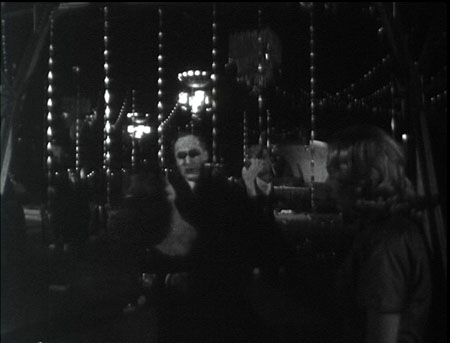
INDELIBLE IMAGE: What else, but the titular carnival? Ghostly figures waltz to an eerie, deranged organ score on what appears to be an old merry-go-round at the abandoned amusement park. The tableau recurs twice in the film: once clearly in a dream, and once near the end as a scene that may also be a dream, but may be another state of being entirely.

WHAT MAKES IT WEIRDCarnival of Souls is set in the ordinary, everyday world, but as seen through the eyes of an alienated, frightened woman. The world the film depicts is familiar, but made maddeningly strange, and its the subtle, grubby touches rather than ghostly apparitions that allow this creepy low-budget wonder to seep deep under your skin.


Trailer for Carnival of Souls

COMMENTS: Carnival of Souls is a minor film miracle. There was little reason to suspect Continue reading 16. CARNIVAL OF SOULS (1962)

CAPSULE: THE MOTHMAN PROPHECIES (2002)

DIRECTED BY: Mark Pellington

FEATURING: Richard Gere

PLOT:  A Washington Post reporter loses his wife in an automobile accident,

mothman_prophecies

then finds himself spirited away to a West Virgina town where the residents are spotting monsters and undergoing horrifying precognitive hallucinations.

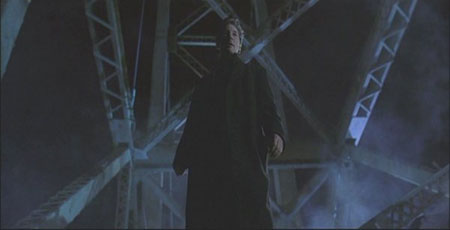
WHY IT WON’T MAKE THE LIST:  Not weird enough.  Taking its cues from parapsychology and cryptozoology, and positioning itself as a “true story,” The Mothman Prophecies paranoidly posits a world where omniscient Mothmen are simply a part of the natural order.  I wouldn’t want to dishonor the producer’s sincere “the truth is out there” vision by suggesting there’s something a little weird about it.  On a more serious note, The Mothman Prophecies is an effective chiller with a mildly unique spin on a conventional horror yarn that generates enough unease to make it worth checking out for fans of the eerie side of the weird, but it’s ultimately too lightweight and conventional to be more than a passing diversion.

COMMENTS: Director Mark Pellington, who previously explored themes of conspiracy and paranoia in the thriller Arlington Road, translates his talents to horror well and does a very fine job of pleasantly chilling the viewer’s blood through the early segments of the Mothman Prophecies.  Unexplained occurrences, from an impossible car detour that lands our protagonist on the Ohio border with West Virginia to a yokel who swears he’s been visited by Richard Gere before, pile on top of each other until the viewer is pleasantly on edge and disoriented.  When the antagonist is eventually revealed, his powers verge on the omnipotent and his motives lie firmly in the realm of the inscrutable.  The conclusion ties things up in a nice little bow–sort of, because all the pieces resolved belong to subplots.  The central mystery of  the Mothman is never even touched, which frustrated viewers who crave nothing more than narrative cohesion but shouldn’t bother weirdophiles a bit.  Despite its silly premise, Mothman is a highly effective unease-generating machine, which is (or at least, should have been) its only aspiration. 

The “based on a true story” angle is patently a scam.  Although it’s true that there were “Mothman” sightings in West Virginia in the 1960s and a bridge collapsed soon thereafter, anyone who doesn’t recognize the convenient presence of an attractive romantic foil for Richard Gere and the archetypal visit to the reclusive old wizard for a bit of exposition and dire warnings as the work of a screenwriter rather than a documentarian probably should be permanently ineligible for jury duty.

WHAT THE CRITICS SAY:

“…thriller that purports to be based on true events but operates in that bombastic plane of reality reserved for the apocalyptic horror movie.”–Jan Stuart, Los Angeles Times (contemporaneous)

15. STEPPENWOLF (1974)

“…it seems to me that of all my books Steppenwolf is the one that was more often and more violently misunderstood than any other, and frequently it is actually the affirmative and enthusiastic readers, rather than those who rejected the book, who have reacted to it oddly…”–Hermann Hesse in the 1961 prologue to Steppenwolf

DIRECTED BY:  Fred Haines

FEATURING: Max von Sydow, Dominique Sanda, Alfred Baillou

PLOT:  Harry Haller is a world-weary writer and intellectual in the Weimar Republic who is considering committing suicide soon.  One night he meets Hermine, a beautiful young woman, who shows unusual interest in him and makes him pledge obedience to her as she initiates him into the pleasures of the flesh, including jazz, drugs, and sex.  Eventually Hermine leads Harry to the Magic Theater, where a delirious dream about some aspect of his personality lurks behind every door—including, perhaps, his homicidal side.

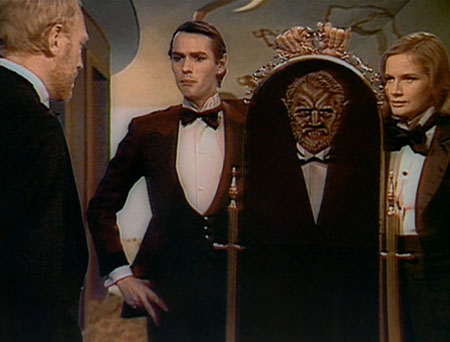
Still from Steppenwolf (1974)

BACKGROUND:

  • The movie was adapted from Nobel laureate Hermann Hesse’s classic 1927 novel Steppenwolf, which had been rediscovered and adopted by the 1960s counterculture because of its perceived revolutionary vision and apparent endorsement of free love and psychedelic drugs.
  • Michelangelo Antonioni (Blowup) was offered the chance to direct but turned it down because he thought the book was unfilmable.
  • This was the only film directed by Fred Haines.  He had previously been co-nominated for an Oscar for Best Adapted Screenplay for Ulysses (1967).
  • Co-producer and LSD-enthusiast Melvin Abner Fishman declared the Steppenwolf would be “the first Jungian film.”
  • The Czech artist Jaroslav Bradac created the wonderful animated sequence, “The Tractate on the Steppenwolf”; the artist Mati Klarwein (who was also responsible for classic album covers for Miles Davis and Santana) created the fascinating paintings that line the corridors of the Magic Theater.

INDELIBLE IMAGE:  For a movie that is so deliberately visionary, there’s not one single image that sticks out far above the others.  The most obvious choices are the images which show Harry simultaneously as a wolf and a man, a concept that is often chosen in numerous variations for covers of paperback editions of the novel.

WHAT MAKES IT WEIRD:  The heavy symbolism and feverish imagery of Hesse’s masterpiece, written while Freud and Jung’s theories of the unconscious mind were still novel and revolutionary, present some weird scenarios (such as Harry entering into dream debates with the ghosts of Goethe and Mozart). When this material is adapted through a 1974 lens, an era when cinematographers hadn’t yet come down from the LSD-inspired visual experimentalism of the late 1960s, it becomes even weirder. From the Magic Theater sequence on, Steppenwolf is truly trippy stuff.

Original trailer for Steppenwolf (1974)

COMMENTS: There’s a difficulty in reviewing movie adaptations of novels, in that the Continue reading 15. STEPPENWOLF (1974)