Tag Archives: Japanese

36*. THE NIGHT IS SHORT, WALK ON GIRL (2017)

Yoru wa mijikashi aruke yo otome

366 Weird Movies may earn commissions from purchases made through product links.

“I… wanted to portray the night as dream-like. This is the story of a girl who joyfully takes at face value what she observes seeing
people drinking and their relationships, so I wanted to create a feeling of the girl growing into adulthood, in other words, a fantasy for grown-ups.”–Masaaki Yuasa

Recommended

DIRECTED BY:

FEATURING: Voices of Kana Hanazawa,

PLOT: At a wedding reception, a Senpai reveals his indirect plan to win the affection of a black-haired Girl whom he loves from afar. The Girl barely notices him, however, instead following her urge to travel into the Kyoto night to experience the world as a young adult, including heroic bouts of drinking, a trip to an open-air used book festival, and an impromptu role in a traveling musical. In the end, everyone the Girl encounters over the night contracts a cold and she spends the early morning attending to them all—including the Senpai.

Still from "the night is short walk on girl" (2017)

BACKGROUND:

  • Based on the 2006 novel of the same name by Tomihiko Morimi (which has been translated into English). Yuasa had previously adapted Morimi’s “The Tatami Galaxy” for Japanese television.
  • Night won the 2017 Japanese Academy Film Prize Award for “Animation of the Year.”

INDELIBLE IMAGE: Whatever it is, it has to feature the indomitable titular “Girl.” The image of her astonished face as a crowd of onlookers, impressed by her unexpected boozing prowess, donate all of their cans of wine into her oversized goblet, is as good as any.

TWO WEIRD THINGS: Sophist dance, “The Codger of Monte Cristo”

WHAT MAKES IT WEIRD: Eschewing the youthful chaos of his Canonically Weird feature Mind Game, Masaaki Yuasa proves that he can inject strangeness into the least weird of fictional genres: the romantic comedy. Tightly focused both stylistically and thematically, even while the footloose plot wanders from drinking binges to inconvenient plagues, Night walks through a flowery, hallucinogenic city straight into your heart.


Short clip from The Night Is Short, Walk on Girl

COMMENTS: A cross-dresser, a man who has vowed not to change Continue reading 36*. THE NIGHT IS SHORT, WALK ON GIRL (2017) →

IT CAME FROM THE READER-SUGGESTED QUEUE: THE MYSTERIANS (1957)

Chikyû Bôeigun

366 Weird Movies may earn commissions from purchases made through product links.

DIRECTED BY: Ishirô Honda

FEATURING: Kenji Sahara, Yumi Shirakawa, Momoko Kôchi, Akihiko Shirata

PLOT: The Mysterians, a technologically superior force from another world, threaten the people of Earth with destruction unless they are granted access to a small plot of land and intermarriage with the planet’s women.

Still from The Mysterians (1957)

COMMENTS: The Japanese monster movie stands today mostly as a magnificent punchline, a peak in the field of cheesy filmmaking. With men in rubber suits wreaking havoc upon cardboard cities and sober-voiced scientists sagely predicting doom while hordes of citizens flee in terror, they can feel appealing nearly seven decades later specifically because of their amateurism. The home-movie caliber special effects, the hilarious destruction of major metropoli, and at least here in the West, the peculiarly emotive and awkwardly translated dialogue are all part of their charm. And as the sequels and copycats have piled on, that has largely become the raison d’etre for the whole genre. That was supremely silly, we say. Give us more.

But was it silly? An interesting side effect of their continued popularity is the rise of dedicated scholarship that examines the very serious origins of some of these stories. Consider the giant among giants: Ishirô Honda’s 1954 classic Gojira, which used a rampaging beast to tell a story of Japan’s psychic fallout from the atomic blasts of World War II, as well as to react to current events in which Japanese sailors were contaminated by exposure to a nuclear test. (Later kaiju, such as Mothra and Gamera, would have similar nuclear-inspired origins.) Yes, it’s a monster movie, but those in the know recognize it for much more.

Someone who absolutely knows the subtext is Ishirô Honda, and he practically triples down on it in The Mysterians, a movie about an occupying force that holds immense power over the occupied, who claims to want little but always seems to take more and more. If you imagine Honda and screenwriter Takeshi Kimura weren’t thinking about the United States, then you’ve been well-distracted by the aliens who look like baggy-suited Power Rangers and the monster who seems to be a blend of Big Bird and a steel-plated baseball umpire. Or you’re an American.

That’s far from the only theme The Mysterians wants to get across. There’s the matter of Ryōichi, the scientist who throws in with the invaders only to realize too late that the purity of science was no match for the corruption of power. He deflects accusations of treason only to regret his folly: “Even science has no value in itself!” he declares in his final message. “It all depends on how it’s used – for good or for evil!” And if science has a lesson to learn, so does the whole world, as a relieved functionary proclaims at the film’s conclusion. “The nations of the world must now stay united, and struggle against unknown forces instead of fighting each other.” Remind me to check on how that’s going.

The messages seem more prominent and more didactic than in Godzilla’s film debut, and that might be because the threat seems a lot less impressive. Even though the stakes have gone from the fate of Tokyo to the fate of the world, the battles themselves feel smaller. After the monster is deployed early in the film, the rest of the Mysterians’ danger is represented by being impervious to attacks, firing lasers, and enacting some of the lamest kidnappings ever filmed. They just don’t deliver shock and awe, no matter their demands or their dominance. That carries over into a painful lack of suspense. With Earth foiled at every turn, you need a really big payoff to buy the home team’s ultimate victory, and you don’t get one. Ultimately, the Earth Defense Force just has to keep working on better weapons until they find one that makes a dent, and that’s exactly what happens. It’s the equivalent of playground banter wherein one kid announces he has a forcefield to protect himself from harm, and the next kid declares that he has an anti-forcefield gun.

There are some genuinely great special effects, such as the dramatic flooding and the melting tanks caused by the Mysterians’ weapons, and the Akira Ifukube score is exciting and propulsive. But overall, The Mysterians just ends up not being that interesting. Honda and the team at Toho had a lot more to say, but this go-around wasn’t a particularly compelling way to say it all. Seems like another reason the monsters had more staying power than the messages.

WHAT THE CRITICS SAY:

“It’s solemn and silly, with too many earnest scientific-military discussions, but it pulls out all the stops when unleashing destructive weaponry, melting tanks, bizarre futurist décor, panicking hordes and kicking the baddies off the planet.” – Kim Newman, Empire

(This movie was nominated for review by Neil Lipes. Suggest a weird movie of your own here.)

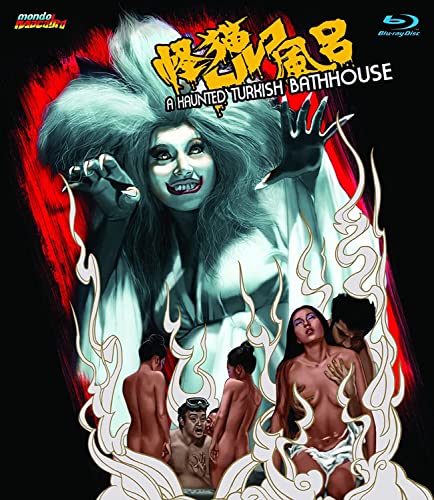
CAPSULE: A HAUNTED TURKISH BATHHOUSE (1975)

366 Weird Movies may earn commissions from purchases made through product links.

Bakeneko Toruko furo

DIRECTED BY: Kazuhiko Yamaguchi

FEATURING: Naomi Tani, , Tomoko Mayama, Misa Ohara,

PLOT: A prostitute reincarnates as a vengeful ghost cat to seek revenge on her abusive pimp husband.

Still from A Haunted Turkish Bathhouse (1975)

COMMENTS: A Haunted Turkish Bathhouse is the softcore/yakuza/melodrama/horror mashup obscurity you’ve been waiting for (if you’re the “you” in the above formulation, you’ll know it). This breathless nonsense hits its soapy plot points with ruthless economy as it rushes towards its demonic vengeance, with nothing to interrupt the flow except for gratuitous rape, torture, and sex scenes. The lavish sets and painted sunsets make it look as good as a mainstream film of the era, but make no mistake: this ain’t art, it’s overproof exploitation.

Japan’s 1957 ban on public prostitution supplies the initial plot hook, as brothel workers migrate from legal sex work to going undercover at a “Turkish bathhouse” serving as a front for prostitution. Only Yukino (Tani) refuses to make the switch, preferring to take this as an opportunity to retire and spend more time with her husband (and her black cat). Hubby (a scenery-chewing Murota) is no prize, however; he stages an elaborate ruse to fake a debt to the yakuza to convince Yukino to go back to work, then invites her virgin sister to live with the couple so he can rape her. He’s also somehow hiding the fact that he’s second in command at the brothel Yukino’s been working at for years, while simultaneously starting up an affair with the bathhouse madame and owner’s wife. After Yukino gets pregnant and refuses an abortion, he and the madame make sure she’s taken care of (in a very sick torture scene), walling up the corpse a la Poe. In the second act, Yukino’s disgraced sister shows up and goes undercover at the bathhouse looking for revenge, but when she proves the most popular courtesan, the other girls get jealous and decide to beat her, until Yukino’s cat flies (literally!) into the brawl to scratch up hooker faces. As you can see, there’s a lot of plot going on here, but nevertheless the script finds time about every ten minutes to squeeze in a scene of bathhouse girls lathered up with soap, rubbing their naked bodies over clients who mug for the camera with expressions of comical ecstasy. And so it goes until the third act, when the vengeful cat spirit finally arrives in all its Kabuki kitty glory, turning the final twenty minutes into an intense stalking scene (interrupted by only a single bubble bath sex romp). Having sliced up the evildoers with cat claws or burned them to a crisp, an angelic Yukino recedes into the painted sky. Roll credits.

Production values—the bright cinematography, imaginative camera angles, relatively extensive sets and costumes, and a screechy, psyched-out rock soundtrack—are vastly superior to what you would find in a Western sleaze movie. In the Japanese studio system, there was less of a budgetary distinction between, say, a historical drama and a raunchy “pink film.” With one studio (here Toiei) making both prestige and exploitation movies, productions shared casts, directors, crews, and sets; a stalwart like Taiji Tonoyama could act in an S&M-tinged pink movie like this in-between roles in films. This gives a quickie like Bathhouse an unusual aura of professionalism, for a movie that’s basically a wacky, hastily plotted romp designed to put butts in seats and boners in pants.

Mondo Macabro puts out another fine-looking, expensive-feeling disc. The main bonus here is a passionate commentary from film writer Samm Deighan, who provides a great deal of context and information about the Japanese industry, the players, and the history of the various subgenres colliding here (while also, I would say, overselling the movie as a serious artistic effort.) A couple of featurettes from Japanese cult movie historian Patrick Macias, one on horror at Toei Studios in general and one specifically devoted to A Haunted Turkish Bathhouse, further supplement Deighan’s extensive background information. About fifteen minutes of trailers, for Bathhouse and other sexy/violent Mondo Macabro titles, round out a presentation that makes for a satisfying night at the movies for those willing to overlook the violent misogyny inherent in the pink genre.

WHAT THE CRITICS SAY:

“…an outrageous horror-sex Toei production that packs more into 80 minutes than many viewers’ brains will be able to handle.”–Nathaniel Thompson, Mondo Digital (Blu-ray)

A Haunted Turkish Bathhouse

    List Price : 29.95 $

    Offer: 17.59 $

    Go to Amazon

    CHANNEL 366: JUNJO ITO MANIAC: JAPANESE TALES OF THE MACABRE (2023)

    366 Weird Movies may earn commissions from purchases made through product links.

    DIRECTED BY: Uncredited

    FEATURING:  Bill Milsap (English dub)

    PLOT: Twenty short, dreamlike horror stories from manga artist Junjo Ito, spread out over twelve episodes.

    Still from junjo ito maniac japanese tales of the macabre (The Hanging Balloons)

    COMMENTS: A woman’s sneering face appears in a monsoon of psychedelic mandalas, singing along to the raucous theme song as various scars and deformities flicker across her visage. A nail-chewing boy in a yellow raincoat climbs out of an abandoned refrigerator and into the vertical-hold challenged stories playing on a TV set across the alley.

    Those are the opening and closing sequences of “Junjo Ito Maniac,” and they set a maniacal tone that the content they bookend rarely matches. Not that the actual stories lack for deranged imagination; any anthology containing the tale of an angelic blond salesman in a bow tie who peddles mounds of deadly, addictive ice cream to children isn’t short on creepy inventiveness. But there are two basic problems with the series. One is the animation itself, which, despite the rambunctious promise of the opening and closing numbers, often isn’t really animated. It’s usually a succession of stills where only the characters’ mouths move. Ito’s images are often eerily beautiful, but the series comes off as too cheaply produced to do them justice. The other issue is that the majority of the stories, some of which run for just over five minutes, are often inconclusive, feeling like simple statements of surreal premises rather than fleshed-out horrors. Their brevity does, perhaps, makes them more dreamlike; their economy means they tend to serve best as bedtime snacks to fuel snippets of nightmares.

    The biggest exception is the one must-see episode in this collection, “Layers of Terror.” At a mere fifteen minutes, this twisted psychological parable about a mother who longs to return her child to a state of infantile dependency delivers its meaty anti-moral through a grotesquely literal (and bizarrely impossible) metaphor. Other highlights include “The Hanging Balloon,” about an unlikely apocalyptic plague of floating heads with nooses attached, and “Tomb Town,” a story that starts promisingly with a trip to a neighborhood completely overrun by tombstones. The series assays an effective variety of horror moods, from the prominent surreal horror to stories evoking the spirits of (“Library Vision”) and Charles Addams (“The Strange Hikizuri Siblings”) to ironically cruel fables (“The Bully”). Even though few of the entries are solid hits, the  diversity of textures coupled with the ultra-short format makes “Maniac” an assortment of poison bon-bons worth sharing with your best friend… or enemy.

    As a bonus, the conclusion of each episode includes a few short spoken sentences of a continuing story about a man driven mad by bugs that seem to be… well, you can find out for yourself. Aside from that perk, the episodes can be watched in any order, or selectively skipped.

    Junjo Ito is perhaps best known to readers here as the original author of the killer-spiral horror story adapted into the live action feature Uzumaki (2000). He’s a prolific manga storyteller in Japan, alternating between short story collections like these, longer works like “Uzumaki,” and collections featuring recurring characters (including the bewitching Tomei, who appears in one story here, and impish nail-chewing teen Soichi, who appears twice in “Maniac” and also anchors the closing segment.) “Junjo Ito: Japanese Tales of the Macabre” was created by Studi Deen, who had released a previous collection of Ito shorts in Japan, in collaboration with Netflix, who owns exclusive streaming rights.

    WHAT THE CRITICS SAY:

    “It’s humorous, terrifying, weird, beautiful, and disturbing all at once.”–Kate Sánchez, But Why Tho? (contemporaneous)

    APOCRYPHA CANDIDATE: STRANGE CIRCUS (2005)

    Kimyô na sâkasu

    366 Weird Movies may earn commissions from purchases made through product links.

    DIRECTED BY: Sion Sono

    FEATURING: , Issei Ishida, Rie Kuwana, Hiroshi Oguchi

    Still from Strange Circus (2005)

    PLOT: At a surreal cabaret show, 12-year-old Mitsuko tells her story of parental abuse culminating in the accidental killing of her mother and her own attempted suicide; suspecting her story is made up, publishers hire editor Yuji is enlisted to ferret out the truth.

    WHY IT MIGHT MAKE THE LIST: Sion Sono has a lifetime pass to immediate consideration for our list, and this blend of truly disturbing scenarios, intriguing imagery, and repeated misdirection is exactly the kind of thing to catch our eye. He begins with subject matter so taboo and depraved that he seems unlikely to emerge with any kind of a reputation, but he then tucks it inside such a labyrinthine puzzle that qualms about the material are subsumed by wonder at how he’s going to pull it all off.

    COMMENTS: The three-act structure of Strange Circus is almost too simple: Act I is the horrifying tale of an abused girl, Act II is the mystery over whether the girl’s story was made up by a popular novelist or recounts her own terrible upbringing, and Act III is the solution to that mystery. Couldn’t be more basic.

    The movie as executed is anything but simple. Sion Sono knows the difference between shock and surprise, and he deploys both in their turn, choosing just the appropriate jaw-dropping image to fit the moment. It’s not merely that he can keep you off balance. It’s that he knows just the right way to do it.

    Consider the first third of the film, which is a straight-out horror show. The scenario is utterly appalling: Mitsuko’s father forces her to watch his rough copulations with her mother and then eventually forces her into direct participation. In sync with this moment, Mitsuko’s world becomes visibly grotesque, with blood-red walls and a repeated transference with her mother. The girl’s suppressed turmoil is given form in the staging that makes her school look like an abattoir and her home resemble a crumbling mansion.

    The middle section offers up something quite different. We meet Taeko, a mysterious novelist whose idiosyncrasies and domineering behavior are shocking in their own way, but no longer metaphorical. The strange carvings on her wall? The disguises that she uses to masquerade in public? Her habit of writing while wearing a negligee, sitting atop a cello case, and stuffing spaghetti in her mouth? There’s no filter for this strange behavior. What you see is what you get. In fact, only a couple stray trips into the fantasy world are found here, and pay attention to them when they come, because they’re a clue as to what awaits us…

    …in the final act, when the true source of the awful tale of Mitsuko is revealed. This is pure Grand Guignol, and while the revelations are completely over-the-top and deliberately outrageous, a look back suggests that Sono has played fair with us all along. Alone, it might threaten to tip over into absurdity, echoing the wild finales of films like Performance or Beyond the Valley of the Dolls. But as crazy as it gets, it’s unquestionably earned.

    Masumi Miyazaki is doing tour de force work here, essentially playing multiple roles and earning the audience’s affections even when her behavior borders on reprehensible. Strange Circus, it turns out, doesn’t just have an unreliable narrator, but is about the making of an unreliable narrator, and her performance taps into mystery, empathy, and beauty to sell you on characters you might have abandoned as irredeemable. A special mention also goes out to Rie Kuwana, who is heartbreaking as young Mitsuko, still radiating innocence even in the face of the indignities heaped upon her. (I made sure to watch the behind-the-scenes documentary for assurance that the actor wasn’t enduring the miseries of her character.)

    Strange Circus is not easy to watch, especially in its opening scenes of household terror. But it is utterly audacious, and doesn’t waste its ambitions by coming up short with its revelations. Strange Circus is strange indeed.

    WHAT THE CRITICS SAY:

    “No matter how weird things get it’s always coherent and we always know that we’re being shown something that is “really” happening, albeit shaded behind denial and mental illness and wishful thinking. Sono’s playing by his own rules perhaps, but he’s still playing fair. When the ending comes, it doesn’t elicit ‘WTF?’ but ‘Oh! I get it!’”–Jeremy Knox, Film Threat

    (This movie was nominated for review by ginanoelma. Suggest a weird movie of your own here.)