IT CAME FROM THE READER-SUGGESTED QUEUE: LFO (2013)

366 Weird Movies may earn commissions from purchases made through product links.

Recommended

DIRECTED BY: Antonio Tublen

FEATURING: Patrik Karlson, Izabella Jo Tschig, , Ahnna Rasch

PLOT: An acoustical engineer discovers a technology to implant hypnotic suggestion and tests out his new-found skills on his neighbors.Still from LFO (2013)

COMMENTS: Fundamental to science fiction is not only its ability to predict the future, but to anticipate the otherwise unforeseen consequences that the future will bring. As Isaac Asimov noted, “It is easy to predict an automobile in 1880; it is very hard to predict a traffic problem.” So it goes with LFO, which starts with a tried-and-true premise—what if we could bend others to our will?—and then dives into the havoc that could be wreaked if someone with highly questionable morals wielded this ability. It could easily be a “Black Mirror” episode, but writer/director/composer Tublen has something more specific in mind. Beyond the dangers of trying to control other people’s minds, he’s interested in the kind of person who would be inclined to misuse this power.

It’s hardly accidental that the camera never leaves the tiny, cramped house of Robert, the quiet loner who immediately applies his discovery to manipulating the couple that just moved in across the street. While Robert’s ambitions might be large (he practices an anticipated Nobel Prize acceptance speech), he’s a very small man, and his home serves as a mirror for his chaotic mind. He is insular both by fate and by choice, choosing to interact only with those whose responses he can predict. A spiritual descendant of The Conversation’s Harry Caul, Robert is mystified and frightened by others’ emotional needs. Unlike Harry, though, Robert finds a way to interact with others on his own terms, which is how he can embark on a manipulative and even cruel path without an ounce of malevolence in his heart.

There’s an unsettling humor to how Robert pursues his research. We don’t know much about Linn and Simon, the new neighbors, and Robert doesn’t really care about them except for how he can use them (Linn as a mindless sex object, Simon to wash his windows and rob banks). When we do learn something about the couple’s personal life, Robert feeds that back through his own personal filter, inserting himself as an ersatz therapist and finding new ways to maneuver their lives for his benefit. There’s even an element of screwball comedy as more interlopers—a rival acoustician, a dogged investigator, even Robert’s ex-wife—show up to turn the screws and threaten the world he has made for himself, forcing him to use his mind-control tactics more widely and urgently. But Tublen never loses sight of the essential horror at the story’s foundation: people are having their freedom destroyed by someone only interested in himself.

Karlson expertly taps into the confident ignorance of Robert, who follows in the great tradition of cinematic nerds whose buttoned-up exterior conceals black motives. Even if he weren’t using his technological breakthrough to manipulate others for personal interest, we’d be wary of him. Wearing horn-rimmed glasses and short-sleeved dress shirts with neckties that invariably have a mustard stain somewhere on them, rocking a perpetual 10 o’clock shadow, and radiating an uncomfortable intensity, he’s off-putting before he’s even said a word. We’re not surprised to see his home in a state of disarray, nor are we taken aback by the dark, equipment-littered basement in which he squirrels himself away. He’s the Dangerous Nerd, the dark Dilbert scorned by society, whose intelligence will only be magnify his revenge.

LFO is a simple but smart little piece of sci-fi horror, a worthy companion piece to other low-budget successes like Coherence that pack a lot of ideas into a compact space. Even its whirlwind final minutes, when the global scope of Robert’s terrible ambition is revealed, it stays focused on his sadly isolated, blithely arrogant mind. The traffic was never the fault of the cars, but of the people driving them.

WHAT THE CRITICS SAY:

“… a quirky and altogether memorable adventure that maintains a sense of mystery far longer than one might expect… Most movies have one unique idea that the filmmaker hopes will help set their project apart from their competition. LFO actually has a number of crazy ideas at work at any given time… In all my years of writing about films I can honestly say I have never seen anything quite like this film.”–James Shotwell, Under the Gun

(This movie was nominated for review by WithoutTheA, who said “there was a fair amount going on that was strange throughout the entire movie. The ending was pretty bizarre too.” Suggest a weird movie of your own here.)         

LFO

  • Factory sealed DVD

New starting from: 34.95 $

Go to Amazon

IT CAME FROM THE READER-SUGGESTED QUEUE: CAN DIALECTICS BREAK BRICKS? (1973)

La dialectique peut-elle casser des briques?

366 Weird Movies may earn commissions from purchases made through product links.

Recommended

DIRECTED BY: René Viénet

FEATURING: Hung- Liu Chan, Ingrid Yin-Yin Hu, Jason Piao Pai

PLOT: Alienated proletarians, trained in kung fu, fight against their bureaucratic oppressors.

Poster for "Can Dialectics Break Bricks?" (1973)

COMMENTS: What if a typical kung fu flick was transformed through voiceover into a subversive and radical wanna-be manifesto? Such an anarchic romp could only come from France. But let’s take things from the beginning.

Some definitions should be clarified. Dialectics is a product of the Situationist movement, a group of anti-capitalist artists and thinkers, known cinematically mostly through Guy Debord’s documentaries. Like a lot of spoofs—What’s Up Tiger Lily? (1966) and In Search of the Ultra-Sex (2016) come to mind—this movie takes preexisting material and subverts its meaning through clever use of voiceovers.  The Situationists call the exact technique used here “détournement”, and it could be better defined as a reappropriation in a new and ideologically subversive setting. It is a recontextualization of images so that new meanings, radically different than previous, are produced: a practice commonly used in  postmodernist art of the later half of the twentieth century until our own time.

With the theoretical background of this movie specified, what is it really about? The plot revolves around a commune of proletarian martial artists defending themselves against alienation and their evil overlords. These overlords are not simply your typical evil Western capitalists, but we can trace references to the Soviet Union’s nomenklatura as well. They in fact represent of every possible state, even of those that hypocritically claim to defend the rights of the proletariat.

A main character emerges from the crowd, a typical hero who becomes the focus of the narrative, a man who sets his noble ideals against the bad guys. What is atypical of the genre , though, is that while the choreography of fighting plays out, our characters indulge in deep conversations about class struggle, the abolition of masters, and Wilhem Reich‘s writing, among other subjects. Through voice-over an “essential”  bibliography is mentioned, too, which one of the most unexpected and weirdest elements of the movie.

Don’t worry, though. This is not a heavy movie. Sexual jokes and self-aware irony prove its unwillingness to take itself too seriously. In fact, Dialectics isn’t much more than a funny gimmick. It surely has an appeal for fans of cult cinema, but it is not essential viewing for anyone interested in the Situationist movement. On the other hand, if you enjoy this kind of absurd humor—and the eccentric idea of a martial arts show about the class struggle—and would like to view something similar, albeit in a contemporary setting, try to find the French TV show “Machine” (2024) created by Thomas Bidegain and Fred Grivois.

WHAT THE CRITICS SAY:

“An obnoxious and hilarious stunt from 1973…”–Eve Tushnet, Patheos (streaming)

(This movie was suggested for review by Comrade Faustroll, who said “The filmmakers strike the right balance of meaning what they’re saying enough to be really weird, but joking enough to keep it interesting.” Suggest a weird movie of your own here.)

POD 366, EP. 156: FLORIAN FRERICH’S “DREAM STORY”

366 Weird Movies may earn commissions from purchases made through product links.

Audio link (Spotify)

YouTube link

Discussed in this episode:

Traumnovelle [Dream Story] (2024): Disturbed by his wife’s fantasies of infidelity, a physician crashes a secret orgy. An adaptation of the same novel that inspired  ‘s Eyes Wide Shut (1999).

Brotherhood of the Wolf (2001): Read Giles Edwards’ review. For collectors, a 4K Steelbook limited edition (Amazon exclusive) of ‘ crazy period Gothic horror/mystery. Buy Brotherhood of the Wolf.

The Carpenter’s Son (2025): Read Gregory J. Smalley’s review. A DVD only version of the gimmicky “Jesus horror movie” starring as “the carpenter.” Buy The Carpenter’s Son.

Shark Skin Man and Peach Hip Girl (1998): Two refugees (Shie Kohinata and ) are on the run from oodles of odd yakuza in what the promotional material calls a “surreal crime comedy.” To our knowledge, ‘s sophomore film had not previously been released here on Blu-ray; Discotek rectifies the situation. Buy Shark Skin Man and Peach Hip Girl.

Slamdance (Feb. 19 to Feb. 35, Los Angeles, CA)

Slamdance began its life as a cheaper, punkier alternative to Sundance, spotlighting microbudget films. With Sundance’s departure from Park City, UT, Slamdance has relocated its base of operations to Los Angeles. We can usually find one weird film at Slamdance (previous standouts include Man Under Table and Dave Made a Maze), but distribution prospects for these films can be iffy. Here are the two films we spotlighted as the most likely weird breakout candidates this year:

  • Matapanki – a n alcoholic Chilean punk gains superpowers after drinking some mysterious booze.
  • Tony Odyssey – Tony and his friend Ivy rip off their crooked employer, take his experimental psychedelic drug, and meet God. From Brazil.

Slamdance home page.

WHAT’S IN THE PIPELINE:

Next week, of Pocket Film of Superstitions will be our guest on Pod 366. In written content, Micheal Diamades considers Can Dialectics Break Bricks? (1973), Shane Wilson is hypnotized by the budget sci-fi of LFO (2013), Giles Edwards checks out the slate at Slamdance (see above), and Gregory J. Smalley has fun with the rest of the “Krazee Kidz Video Party” collection from AGFA/Something Weird. Onward and weirdward!

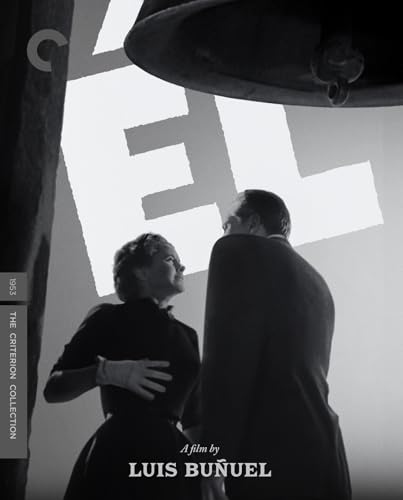
CAPSULE: ÉL (1953)

AKA This Strange Passion

366 Weird Movies may earn commissions from purchases made through product links.

Recommended

DIRECTED BY:

FEATURING: Arturo de Córdova, Delia Garcés

PLOT: A Mexican landowner seduces a woman into marrying him, but his paranoid jealousy quickly poisons the union.

Still from El (1953)

COMMENTS: The career of Luis Buñuel breaks cleanly into three periods: the avant-garde (or first French) period, the Mexican period, and the renaissance (or second French) period. He begins in Paris with the revolutionary experiments of Un Chien Andalou, L’Age d’Or, and Land Without Bread; moves to Mexico where he directs commercially-oriented films after an unsuccessful flirtation with Hollywood; and then, in the twilight of his career, returns to France to produce masterworks such as Belle de Jour (1967) and Discreet Charm of the Bourgousie (1972) with the assistance of new collaborators Serge Silberman (producer) and Jean-Claude Carrière (writer). Of these eras, the Mexican period, from 1947-1965, is the longest—and it can itself be split into early and late periods, as Buñuel again achieves international notoriety with Viridiana in 1961, and re-emerges into surrealism with 1962’s The Exterminating Angel.

The Mexican period is often overlooked, and it’s undeniable that Buñuel was far less experimental in this era, placing commercial realities above personal passions, and sneaking in surrealism and social commentary where he could. But Buñuel was honing his craft in Mexico, and these films are still fascinating to see the development of his aesthetic. Naturally, he also made some great movies in these years, among which the psychologically astute Él (which translates in this context as “he”) is a standout.

The film begins, without dialogue and somewhat mysteriously, with priests ritualistically washing the feet of young men on Maundy Thursday. The gaze of our protagonist, Francisco, scans a line of boys’ feet and priestly hands until it alights on a pair of high heeled shoes supporting shapely calves; his eyes then turn at a right angle to travel vertically up the body to briefly meet the eyes of a young woman, whom we will later learn is Gloria. What this opening means—with its nods to the director’s foot fetishism and his complicated relationship to Catholicism—is a point for academic debate. But no matter; the story immediately takes a turn for the melodramatic, following Francisco as he seduces the demure Gloria (stealing her from her fiancé, an associate of Francisco’s), while expressing his vain desire to recreate his ancestral real estate empire. Francisco’s irrational jealousy emerges as early as the honeymoon, where he gets into a fight with an old friend of his bride’s that the couple coincidentally encounters. Gloria quickly realizes she has made a terrible mistake. Things escalate through beatings, a dangerous scene in a bell tower (which anticipates Vertigo), and finally a disturbing and menacing bit where Francisco gathers up surgical equipment for purposes you can certainly guess. In the end, Francisco has a complete psychotic break, allowing Buñuel to deploy some light surrealism (via editing) to portray the triumph of paranoia over objective reality. (This climax occurs, naturally, inside a church.) An ironic epilogue shows Francisco, now convalescing in a monastery, his demons at least temporarily at bay, zig-zagging down a straight garden path.

Buñuel‘s own process during the Mexican period follows the same path: he follows the inevitable line of conventional narrative, but zigs and zags into his own obsessions. The director claimed that Él was one of his most personal works, and we know from his wife Jeanne’s autobiography that Buñuel himself suffered from irrational jealousy and sexual repression. Thus, he identifies with Francisco, but only in a masochistic and self-reflective way: he’s too perceptive to deceive himself, as his protagonist does, into thinking he’s always in the right. The source novel, by a woman speaking from personal experience, reportedly focuses on social critique of the Mexican patriarchy and its mistreatment of women; this subject interests Buñuel as well, but he leans into the character study aspect of the material. It is a way to exorcise his personal demons, and despite the conventionality of the approach, Él is at heart a typically vituperative strike by Buñuel at the hypocrisy of the human heart.

WHAT THE CRITICS SAY:

“…a dark, troubling, classily produced melodrama. It may not have the showy, surreal touches of Buñuel’s best known work but it still packs a punch.”–David Brook, Blueprint: Review (Criterion Blu-ray)

Él (The Criterion Collection) [Blu-ray]

  • Movie dvd

List Price : 39.95 $

Offer: 25.34 $

Go to Amazon

Celebrating the cinematically surreal, bizarre, cult, oddball, fantastique, strange, psychedelic, and the just plain WEIRD!