All posts by Alfred Eaker

Alfred Eaker is the director of Jesus and Her Gospel of Yes!, voted Best Experimental Film in the 2004 New York International Film and Video Festival (which can be downloaded from DownloadHorror.com here), and the feature W the Movie. He writes the column "Alfred Eaker's Fringe Cinema" for this site, covering the world of underground film, as well as regularly contributing essays on other subjects.

TALES THAT WITNESS MADNESS (1973) & FROM A WHISPER TO A SCREAM (1987)

‘ Tales That Witness Madness, made for World Film Services in 1973, is clearly patterned after the Amicus horror anthologies. Of course, what better way to emulate the competition than to acquire the man who directed nearly half of the Amicus franchise, along with several of that studio’s top draw actors?

The setup is simple and familiar enough: is the resident psychiatrist of an asylum, giving friend Jack Hawkins (in his final film) a tour of the grounds. Along the way, he tells the stories of four inmates.

In “Mr. Tiger,” Russell Lewis’ imaginary feline pet beast takes a sour view of his master’s verbally abusive parents. Just how imaginary the tiger is questioned after some clawing on the door and blood splattering on Oedipal walls.

A time traveling bicycle is at the malevolent heart of “Penny Farthing.” It stars Peter McEnery as an antique shop owner and Suzy Kendall as his wife. Soon, they discover the bike is literally antique and … we’re so sorry, Uncle Albert.

Still from "Mel" from Tales That Witness Madness (1973)“Mel” stretches credibility when Michael Jayston is more interested in an oddly shaped tree than he is in oversexed wife Joan Collins in something pink from Frederick’s of Hollywood. It’s the most remembered segment for a reason—it’s a camp hoot, with Collins channeling her inner jealous diva. The tree tries to upstage the human competition, which is not an easy task against Joan in a flimsy nightie, wielding an axe.

Rita Hayworth was originally cast in the final segment, “Luau,” but bowed out, citing health reasons. replaces her and gives a pallid performance as another jealous diva who happens to be a cannibalistic mother. Although not as well known or as assured as the best Amicus entries,Tales is still an enjoyable example of the genre that confirms Francis as an underrated director.

Most horror anthologies succumb to moralizing. One that avoids that route altogether and revels in its gore and perversity is the underrated From a Whisper to a Scream (1987), Jeff Burr’s first solo feature film. It’s an impressive debut that unfortunately did not lead to bigger and better projects for the director. co-stars with Martine Beswicke, , Rosalind Cash, Terry Kiser, Clu Gulager and the always underrated misfit . Price gives a solid performance in the wraparound as a Tennessee librarian whose knowledge of local history is put to use as he relays four tales to reporter Tyrell, who just came back from the execution of the librarian’s serial killer niece. The cast is uniformly good, especially Gulager who gives a hell of a performance in the first segment as an aging, pathetic grocery clerk whose relationship with his ailing sister (Gulager’s real-life wife Miriam Byrd-Nethery) is clearly incestuous. However, an unrequited love for his boss (Megan McFarland) quickly turns things uncomfortably south, with necrophilia thrown into the sororicidal brew.

White trash thug Terry Kiser is nursed back from the dead by kindly bayou voodoo practitioner Harry Caesar. When Kiser has the chutzpah to bite the hand that feeds him, a horrific fate awaits in this unfathomably grim narrative of dread.

Didi Lanier falls in love with carnival glass eater Ron Brooks, who is trepidatious about running away with her, fearing retaliation from the show’s owner/snakewoman (a delirious Rosalind Cash in her final film appearance). The intestinal finale of imploding razor blades and paper clips is gruesome enough to warrant a shower after. This is also the final film for dwarf Angelo Rossitto, who had most famously starred in Tod Browning’s Freaks (1932).

Cameron Mitchell, once a reliable character actor, emerged from a decade-long slump of in this unsettling Gothic Civil War tale that goes to the “you’re not going there” place. Knowing the war is over, Mitchell and his rogue Union squad take the attitude that it isn’t, but fatefully encounter a band of confederate children. Damien, the Children of the Corn and the killer tykes from that Village of the Damned have nothing on these southern juveniles who reinvent pin-the-tail-on-the donkey and don’t bat an eye at removing one adult limb at a time. Hoping to escape, Mitchell goes pedophile, locking lips with a pubescent and facing a visceral climax.
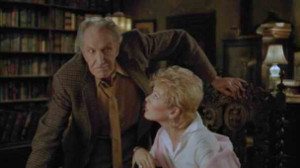
Still fro,m From a Whisper to a Scream (1987)Reportedly, Price had misgivings about the script and was unhappy with the final edit, feeling it too too extreme and devoid of the sense of nostalgia that drives his screen persona. His is a supporting role, no doubt due in part to his (clearly) failing health. Burr, co-writing with Mike Malone, Darin Scott, and Courtney Joyner, fires on all cylinders, without a weak link, and despite a relatively low budget. Obscure enough to rarely be listed, it’s more refreshingly original than the more familiar fare. Burr considers it as his only authentic film, having since been consigned to commission work.

1972 EXPLOITATION TRIPLE FEATURE: DRACULA A.D. 1972, VAMPIRE CIRCUS, AND THE THING WITH 2 HEADS

1972  is perhaps the most prolific year in the most prolific decade of horror and exploitation films. It’s also the year for what may be the quintessential midnight cult move: ‘ Pink Flamingos, now enshrined as one of the 366 weirdest movies of all time. Blood Freak, which is the first and only “Christian” movie to date about a turkey serial killer, is another Certified Weird 1972 exploitation picture. Competing with Freak fro sheer awfulness was Don Barton’s Zaat (AKA Blood Waters of Dr. Z), which went onto “MST3K” infamy.

In its Blu-ray presentation, ‘s maligned Baron Blood has proven better than its reputation, despite a miscast in the title role. Like most of Bava, it’s stylishly irresistible. The 1972 Amicus omnibuses Asylum and Tales from the Crypt both starred , and were critical and box office successes. Ben, Dr. Phibes Rise Again, and Beware The Blob were all inferior sequels—which is saying a lot in the case of an original monster who was just moving silly putty. tackled the two big undead kahunas (with plenty of added sex) in The Erotic Experiences of Frankenstein and Daughter of Dracula. The Count rose yet again in Count Dracula’s Great Love, starring Paul Naschy. Future King of Cartoons (William Marshall) and director William Crain fused horror with blacksploitation for the first time in Blacula. It was a enough of a box office success to warrant  (superior) sequel in 1973. Unfathomably busy, Cushing and teamed up for ‘ underrated Creeping Flesh, Gene Martin’s cult favorite Horror Express, Peter Sasdy’s misfire Nothing but the Night, and the Hammer opus Dracula AD 1972 (directed by Alan Gibson).

Widely scorned, Dracula A.D. 1972 reunited Cushing’s Van Helsing with Lee’s bloodsucker in a modern setting, even though Dracula himself is confined to a Gothic church. It’s one of ‘s favorite movies. The contemporaneous critical backlash was mostly justified. Lee, probably the best cinematic Count, is reduced to second vampire-in-waiting. But as an artifact of its time, Dracula A.D. 1972 is not entirely without virtue, enough to explain Burton’s affection.

It opens in the previous century with Dracula and Van Helsing locked in mortal combat aboard a stagecoach, which crashes, causing the vampire to be impaled on the spokes of the coach’s wheel. As Dracula attempts to free himself, a battered and bleeding Van Helsing interferes, driving the spokes in deep enough to snuff out the life of his nemesis before dying himself. Witnessing the scene is a Dracula disciple who, of course, leaves with the vampire’s relics (handy for later resurrection). Despite the preposterous   accidental impalement, it’s a red-blooded, Gothic prologue that is followed by 1972’s swinging hippies.

Still from Dracula 1972 ADInitially sounding more like old fuddy-duddy Edward Van Sloan than Peter Cushing, Lorimer Van Helsing, grandson of Abraham, lectures his granddaughter Jessica (Hammer babe Stephanie Beacham) all about the wrong crowd and premarital sex. Pooh-poohing gramps, Jessica heads straight for the wrong crowd, Continue reading 1972 EXPLOITATION TRIPLE FEATURE: DRACULA A.D. 1972, VAMPIRE CIRCUS, AND THE THING WITH 2 HEADS →

1971 EXPLOITATION TRIPLE FEATURE: TOMBS OF THE BLIND DEAD, WEREWOLVES ON WHEELS, AND WILLARD

1971 began with one of the most stylish horror films ever produced: The Abominable Dr. Phibes, a near-perfect collaboration between director and star .  produced a “masterpiece” of a very different kind with Dracula vs.Frankenstein, featuring the most (unintentionally) frightening performance of poor .’s career and the most hilariously inept portrayal ever of the Transylvanian vampire count (by “Zandor Vorkov”). Director Eddie Romero and “star” John Ashley teamed up for both Beast of Blood and Beast of the Yellow Night, which may be as unimaginative as they sound, but would make a worthwhile, howling triple feature with Adamson’s opus.

 was still gifting the world lesbian vampires with Caged Virgins (AKA Requiem for a Vampire) and The Shiver of the Vampires. Following suit were Stephanie Rothman with The Velvet Vampire, Ray Austin’s The Virgin Witch (starring twins Anne and Vicki Michelle), and with the bluntly titled Vampyros Lesbos and She Killed In Ecstasy, both starring the tragically short-lived cult figure . Not to be outdone, Hammer Studios contributed to the thriving same-sex bloodsucker subgenre with as a “Calgon Take Me Away” Countess Dracula (directed by Peter Sasdy), and with Lust for a Vampire (directed by Jimmy Sangster and starring Yutte Stensgaard). Neither of these were as explicit as they promised and probably should have been. Considerably better was another Hammer opus with identical siblings (Playboy playmates Mary and Madeleine Collinson): Twins of Evil, stylishly directed by John Hough and featuring a superb authoritarian performance by . However, it was ‘s Belgian Daughters of Darkness, starring and Danielle Ouimet, that made the biggest impact, becoming an international cult hit that is still referenced today. Of course, hetero bloodsuckers were not be left out and had their moment under the sequel moon in The Return of Count Yorga (directed by Bob Kelljan and starring Robert Quarry), which failed to repeat its predecessor’s success. Night of Dark Shadows by Dan Curtis improved on the previous years effort, despite an absent Jonathan Frid. Oddly, it was the Japanese who were perhaps most suited to Transylvanian folklore in 1971 with Lake of Dracula (directed by Michio Yamamoto).

Still from Tombs of the Blind Dead (1971)Amando de Osario charted unexpected territory with his zombie monks in Tombs of the Blind Dead, the first of his Blind Dead series (he had previously made the unrelated vampire opus, Fangs Of The Living Dead, in 1968). Although short on actual plot, it’s arguably Osorio’s finest moment. Scenes of the blackened, dead Templars rising from their graves (resurrected by Satan) and mounting horses (juxtaposed to Anton Abril’s highly effective, eerily faint score) to ride into the slaughter (filmed in slow motion) are spine tingling.

These are zombies of a different sort who raise their swords to slash at victims, before draining their blood. Scenes of the Spanish Inquisition, failed crusades, misogynistic torture of women, and lesbianism are surprisingly low-key, and often poetically surreal. Although Osorio’s influences (including Mario Bava’s color palette) are in full evidence, his is a strongly original film, almost painterly. Decaying abbeys and a potential victim standing motionless to avoid the army of blind marauders evoke a sense of dread. Even a massacre on a train is artfully restrained.

Michael Winner presented a literal-minded prequel to Harry James’ Continue reading 1971 EXPLOITATION TRIPLE FEATURE: TOMBS OF THE BLIND DEAD, WEREWOLVES ON WHEELS, AND WILLARD →

AMICUS ANTHOLOGIES, PART TWO (1972-1974)

Part Two of a two-part series on Amicus horror anthologies; Part One is here.

Tales from the Crypt (1972, directed by and written by Milton Subotsky) is the first of two anthologies directly adapted from Amicus’ spiritual inspiration, EC Comics.

A group of five explorers encounter a crypt keeper (no, not that one, but rather as a hammy monk) in an underground cavern. Each are shown the fate that awaits them.

“And All Through the House” taps into Francis’ best qualities, making for an excellent opening segment. While her daughter is sleeping fitfully upstairs waiting for Saint Nicholas to arrive on Christmas Eve, Joan Collins is smashing a poker over her husband’s skull so she can collect his insurance money. Meanwhile, an inmate has escaped from a nearby asylum, dressed as Santa Claus, and someone is going to open the door. Collins is, naturally, perfectly cast as a bitch from hell in the guise of a sex bomb. The dialogue is pared down to bare minimum, making this a visual segment, alight in Christmas colors and blood, and choreographed to holiday music. It’s the original Silent Night, Deadly Night.

“Reflection Of Death” is the weakest link here, about an adulterer (Ian Hendry) who leaves his wife and kids and suffers the consequences when his car crashes. Its twist ending is disappointingly inevitable, but Francis (barely) holds our attention with some innovative POV perspectives.

Still from "Poetic Justice" from Tales from the Crypt (1972)“Poetic Justice” features a superb, moving performance from as Grimsdyke. He’s one of those despicable poor people: you know the ones who are always looking for free stuff, health insurance, and government handouts, just like the ones Jesus used to kick in the ass. Although a little senile, he’s kindhearted, loved by the neighborhood children, and communicates with his deceased wife (who is poignantly represented by a portrait of Cushing’s actual late wife). He’s also hated by his neighbors, especially the greedy, uptight James Elliott (Robin Phillips), who drives Grimsdyke to suicide and… this may be the first and only film of a zombie with an elegiac heart, forced to rip out the heartless. Cushing channels his grief to craft what may be his finest character acting.

“Wish You Were Here” is a pallid reworking of “The Monkey’s Paw,” and delivers a “moral lesson” about being careful what you ask the genie for and how you ask it. Neither Richard Greene (as a zombie) nor Barbara Murray can salvage it.

“Blind Alleys” features delivering a strong performance as a blind nursing home resident revolting against dictatorial director Nigel Patrick, who is so adept at patriarchal evil that we Continue reading AMICUS ANTHOLOGIES, PART TWO (1972-1974) →

AMICUS ANTHOLOGIES, PART ONE (1965-1972)

With Dr. Terror’s House of Horrors (1965, directed by Freddie Francis and written by Milton Subotsky) Amicus Productions (spearheaded by Subotsky and Max Rosenberg, who previously produced for Hammer and was a cousin to ) established itself as a vital competitor to Hammer Studios. Rather than imitating Hammer’s modernization of Gothic classics, Amicus developed its own niche with omnibus films. They were successful enough to be in full-fledged production for a decade, establishing a reputation as the go-to studio for horror anthologies. This, their introductory portmanteau film, clearly influenced by EC Comics, sets a pattern of to-be-expected unevenness. Still, Amicus installs themselves as a horror studio to be reckoned with, sparing no expense in procuring Hammer’s top actors: (who would  star in all but one of the Amicus anthologies) and . For its wraparound segment, Dr. Terror’s House of Horrors opens to the duo (among other passengers) on a train. Dr. Schreck ((“Shreck” is German for “terror,” and a nod to the famous star of ‘s Nosferatu.)) (Cushing, saddled with a terrible German accent and glued on brows) pulls out a deck of tarot cards. “Pick a card, any card, and tape it three times,” Schreck tells his fellow passengers. Each participant will hear of a fate that may await them. Among the passengers is Christopher Lee who will, of course, factor into one of the five narratives.

In “Werewolf,” Neil McCallum is an architect renovating an old dark house, which turns out to be cursed. The title monster is featured in this pedestrian tale of ancestral revenge with a “twist.”

With Alan Freeman  (better known as the U.K D.J. for “Pick of the Pops”) served up as a snack for a venus fly trap, “The Creeping Vine,” thankfully doesn’t take itself so seriously. It is refreshingly lightheaded hokum.

“Voodoo” is the worst of the lot; badly dated in its stereotypes, with Kenny Lynch belting out a stolen voodoo tune.

Still from "Diembodied Hand" from Dr. Terror's House of Horrors“Disembodied Hand,” has elitist art critic Franklin Marsh (Lee) driving artist Eric Landor (Michael Gough) to suicide. Landor’s severed hand returns to exact revenge on the mean critic. It’s in the spirit of The Beast with Five Fingers, among others, and chock-full of two-dimensional caricatures of both artists and critics. It holds no surprises, but with Lee and Gough engaged in a bit of whistling-while-they-work fun, it’s easily the best episode.

“Vampire” feature a young who discovers he is married to… a vampire! It barely raises a pulse.

Seen today, Dr. Terror’s House of Horrors is more camp than horror, and its appeal is one of genre nostalgia. Still, the phenomenal box office success of Dr. Terror green-lighted a second portmanteau film in 1967, entitled Torture Garden (directed by Freddie Francis and written by Robert Bloch). It contains no torture nor any garden. Burgess Meredith (in a preposterous disguise, reminding us of the Penguin) is Old Nick himself, going by the pseudonym of Dr. Diablo and moonlighting as a carnival barker who promises a tortuous exhibit that can reveal the future. “You’ll shake, you’ll shiver, but it’s all good fun,” Diablo hammily tells his patrons. Unfortunately, only one of the four tales lives Continue reading AMICUS ANTHOLOGIES, PART ONE (1965-1972) →