All posts by Gregory J. Smalley (366weirdmovies)

Gregory J. Smalley founded 366 Weird Movies in 2008 and has served as editor-in-chief since that time. He is a member of the Online Film Critics Society, and his film writing has appeared online in Pop Matters and The Spool.

CAPSULE: HARVEST (2024)

366 Weird Movies may earn commissions from purchases made through product links.

DIRECTED BY:

FEATURING: , , Arinzé Kene, Frank Dillane,  Rosy McEwen, Thalissa Teixeira, Neil Leiper

PLOT: Life in a Scottish farming village changes dramatically with the arrival of a new lord.

Still from Harvest (2024)

COMMENTS: In a nameless village in an uncertain time—sometime after the arrival of tobacco, but before the Industrial Revolution has reached rural Scotland—Walter (Caleb Landry Jones) eats bark and sticks his tongue into a knothole on an oak tree. You can’t get much more at one with the land than that.

The village Walter lives in has no name. That changes when a chart-maker comes to map out the area. The natives see cartography as a threat; naming things is the first step to owning them, and the village operates (although somewhat hypocritically) on the principle of communal ownership of the land. Not that these people are noble savages, exactly; they’re as cruel, superstitious, and racist as they are poor. Walter wasn’t born there, but married a native and is now a widower; he is a close confidant of the beneficent landowner Master Kent, also not native born. He is a semi-outsider, caught between worlds, not fully accepted by the villagers but lacking another place to call home. His liminal status turns him into an observer. He befriends the cartographer, but also scolds him for “flattening” the land by mapping it. Walter is also spineless, sensing danger but as unable to stop progress from marching into the literal one-horse town as is the weak-willed Mater Kent. A fire in the Master’s stable foretells evil to come. Then, three outsiders are pilloried—for the crime of being outsiders. Walter is the only one who sympathizes with the trio,  but he is unable to muster the strength or courage to challenge any decision of the powers that be.

Harvest is beautifully shot (sometimes reminiscent of the “harvest” subgenre of European painting) and impressively scored (one peasant threshing song is synced to the rhythm of swinging scythes). But the storytelling is confusing, the dialogue can be stiff, and the feckless protagonists supply little dramatic momentum as the story limps to its inevitable conclusion. The “hallucinatory” element suggested in Harvest‘s promotional materials is vastly oversold; in truth, the strangeness (mostly coming from the slightly alien behavior of the village’s peasants) never rises beyond the occasionally odd. Nor is the movie, as a few have claimed, folk horror (there’s plenty of folk, including some authentic-sounding bagpipe tunes, but no real horror). With this project, director/co-scripter distances herself from her association with the “Greek Weird Wave,” delivering an on-the-nose exploration of the ruthlessness with which capitalism replaced agrarian societies. Weirdophiles may safely skip this one; arthouse fans with a taste for historical, class-conscious narratives might find it worthwhile.

WHAT THE CRITICS SAY:

” Smatterings of the earthy, the occult, the hallucinatory and the neo-realist never coalesce into a pacy narrative…”–Carmen Paddock, The Skinny (contemporaneous)

CHANNEL 366: UZUMAKI (2024)

366 Weird Movies may earn commissions from purchases made through product links.

DIRECTED BY: Hiroshi Nagahama, Yûji Moriyama

FEATURING: Uki Satake, Shin’ichirô Miki; Abby Trott, Robbie Daymond (English dub)

PLOT: Residents of a small Japanese town are increasingly haunted by spirals.

Still from Uzumaki (2024)

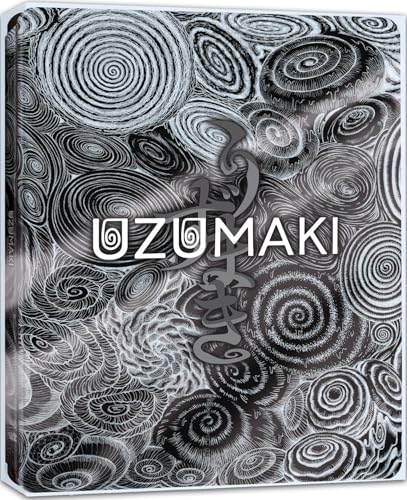
COMMENTS: Most horror story monsters are inspired by symbols of death, disease, and predation, not unthreatening geometric shapes like the humble spiral. Leave it to eerie manga star Junjo Ito to choose the spiral as his avatar of evil. Uzumaki (which had previously been adapted as a live-action feature) plumbs every possible devious iteration of the humble coil; it shows up in the story as whirlwinds, whirlpools, DNA, snail’s shells, hair curls, staircases, mosquito swarms, corkscrews, springs, and the twisted, intertwined bodies of snakes (and people). Watch with disquietude as everyday objects in the town gradually get twisted as the story spirals towards its grim conclusion.

The bizarre antagonist is not the only weird element here. The originally-serialized story lurches forward as a series of vignettes, with a threatening new spiral form dominating each mini-arc. In between episodes, normality resets. After the first girl’s head dissolves into a spiral, we would think the two high school protagonists would flee town; instead, the incident is never mentioned again. After the first kid turns into a human-snail hybrid, you would think the town would panic; instead, they accept it as the new normal, building a pen for the newly-minted escargot boy to live in. The commonsense idea of fleeing the town doesn’t even arise until the second episode, when one pair of aspiring refugees are frustrated in their attempt—but our main characters never even attempt to leave until the final episode, when the narrative finally proffers an explanation for their inability to escape. A particularly intense, vampire-adjacent incident dominates the third episode, but again, after a jarring edit, this horror is entirely forgotten. The characters’ incapacity—and their resigned unwillingness—to escape their situation lends the story an especially irrational, nightmarish quality. In fact, Uzuamki‘s entire structure, oscillating between grotesque visions and uneasy pseudo-normality, suggests madness; perhaps our main characters are actually trapped inside their own obsessive delusions, imagining spirals everywhere.

The art style is done entirely in black and white and imitates the intricate linework of Ito’s original drawings, sometimes recreating particularly bizarre panels. When animated, the absurdity of some of Ito’s visions—a dramatically curling tongue, a pair of eyeballs rotating independently—can be as weirdly comic as they are frightening. But the artwork is almost always strange and affecting, no matter the overall emotional effect. Much was made in anime fandom of the fact that the animation quality declines as the series progresses (probably due to budgetary mismanagement). By the final episode, the directors and producers aren’t even credited. I think that this complaint is mostly overstated, at least for the average viewer. I noted the decline in the cartoon’s fluidity and detail with each new episode, but it wasn’t as drastic as I feared; if I hadn’t been forewarned, I’m not sure how much I would have noticed. Perhaps I benefited from having my expectations lowered; perhaps you will, too. Although Uzumaki hobbles a bit on the way to the finish line, it eventually crosses it. It’s not the wall-to-wall masterpiece the first episode promised, but I wouldn’t say it exactly circles the drain, either.

WHAT THE CRITICS SAY:

“…this work is very much playing in the realm of weird fiction, a sub-genre focused on the unknown and inexplicable… macabre, strange, and utterly unique, even if some of its characters feel a bit thin at times.”–Elijah Gonzalez, Paste (episode 1)

CAPSULE: BEST WISHES TO ALL (2022)

Mina ni ko are

366 Weird Movies may earn commissions from purchases made through product links.

Best Wishes to All is currently available for purchase or rental on video-on-demand.

Recommended

DIRECTED BY: Yûta Shimotsu

FEATURING: Kotone Furukawa, Masashi Arifuku, Yoshiko Inuyama

PLOT: A nursing student returns from Tokyo to visit her grandparents remote village, where she finds they are acting oddly.

Still from best wishes to all (2022)

COMMENTS: We first meet the nameless young star of Best Wishes to All as a kindly nursing student who, based on sinister musical cues and subtle expressions, seems nervous to travel back to the village she grew up in to visit her aging grandparents. Part of her reluctance may be the family’s obsession with happiness. Since she was a young girl, they have been asking her “are you happy?”; her affirmative replies ring uncomfortably insincere. Dim, disturbing memories from childhood centered around bumps in the night and a perpetually locked door in the upper level of the house also give her pause. And perhaps she also foresees her outwardly pleasant grandparents’ odd behavior, such as their tendency to snort like pigs when eating pork.

In fact, their strange habits are accelerating, to the point where the heroine wonders if they might be experiencing dementia. But her own reactions become equally strange as the movie goes on. Relatively early on, the true horror of the situation is revealed; and while, at first, our heroine reacts as expected, then the movie shifts into a more dreamlike register. Beginning with an absurd automotive accident, the semi-logical horror story dissolves into a more impressionistic and nightmarish experience. It goes from ominously eccentric to full-on surreal, ending up in blood, betrayal, and, somehow, a middle aged man dancing in his underwear.

The village nonchalantly accepts the unnatural brutality of the movie’s premise, and the heroine is pressured into believing that this is just the way of the world. The happiness of the lion is the misery of the gazelle. Best Wishes to All posits the logically questionable but metaphorically sound proposition, “does the happiness of one person require the misery of another?” Although the thesis, taken literally, is absurd, the hypothetical is provocative. Who makes the smartphones, coffee, chocolate, diamonds, pornography, and food that you enjoy in your daily life? Wouldn’t you be happier if you didn’t know? Or, at least, if you could pretend that you don’t?

WHAT THE CRITICS SAY:

“…almost 90 minutes at the intersection of happiness and weirdness.”–Sharai Bohannon, Horror Movie Blog (festival screening)