Tag Archives: Horror

CAPSULE: VIY [Вий] (1967)

366 Weird Movies may earn commissions from purchases made through product links.

Must See

AKA Viy, Spirit of Evil; Vij

DIRECTED BY:  Georgi Kropachyov & Konstantin Yershov

FEATURING: Leonid Kuravlyov, Natalya Varley

PLOT:  In medieval Ukraine, a seminarian must spend three nights praying over the corpse of a witch.

viy

WHY IT WON’T MAKE THE LIST:  This faithful adaptation of Nikolai Gogol’s 1835 short story is a classic of world horror, deserving a place alongside the quintessential Universal fright films.  Like the works of Gogol’s contemporary, Edgar Allen Poe, Viy may have been regarded as a “weird” tale on its original publication, but today it seems a relatively straightforward ghost story, demonstrating how what was once weird may be subsumed into the mainstream over time.  It’s still unconditionally recommended, especially for fans of sublime supernatural horror storytelling that relies on atmosphere and foreboding rather than blood and guts.

COMMENTS: Viy is an unusual and exotic experience for Western viewers, for whom witches are not the prototypical supernatural villain, but most will quickly feel comfortable inside the film’s recognizable folk tale structure.  The story is impeccably told; Kuravlyov’s seminarian, who begins with a mischievous frat-boy brashness but ends up bullied and harried by both Cossacks and witches, is an eminently fallible but very likable comic-turned-tragic hero.  Varley’s nameless and mostly mute witch is eerily pretty, and manages to create a tremendous sense of menace simply by grasping blindly at the seminarian while he’s hidden from her view inside the holy circle he has drawn on the chapel floor with chalk.  The special effects aren’t always seamless (although you may wonder how some were achieved), but they are always artful and elegant, and their artificiality is an asset, creating a universe that’s far more otherworldly than it otherwise might be.  (Think of the difference between Willis O’Brien’s dreamlike and iconic stop-motion animated King Kong and Peter Jackson’s photorealistic but forgettable ape).  The gibbering gray demons that threaten to swarm over the hero in the exhilarating climax are as unforgettable an assortment of ogres as you are likely to see on film.

Mario Bava’s classic Black Sunday [La Maschera del Demonio] [1960] was also inspired by Viy, but that story veers so far from Gogol’s tale it can hardly be considered an adaptation.  Foolishly, a Russian remake of Viy is currently in the works.  The original was done perfectly, and CGI graphics cannot improve upon the stylish charm of the 1967 production.  The Russico DVD contains abundant extras, including lengthy excerpts from three silent Russian horror films: Queen of Spades, Satan Exultant, and The Portrait.

WHAT THE CRITICS SAY:

“Basically a folk tale at heart, this adaptation by Konstantin Yershov and Georgi Kropachyov follows the main story beats, but it’s completely schizophrenic in balancing satire, low humour, and horror… Karen Khachaturyan’s score is equally uneven, although he may have been following the filmmakers’ weird blend of comedy and horror.”–KQEK.com

(This movie was nominated for review by reader “Natalia.” Suggest a weird movie of your own here.)
TOD BROWNING’S ‘DRACULA’ (1931): CHALLENGING THE REVISIONISTS

Guest review by Alfred Eaker

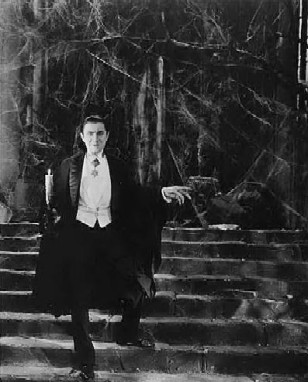
Tod Browning’s Dracula is often compared to Murnau’s unauthorized Nosferatu. It is an unfair comparison:the two are very different films, which merely happen to share the same literary inspiration.  (Neither are mere adaptations.  The only film to fairly compare to Murnau’s would be Herzog’s remake with Kinski and, indeed, it compares very favorably).  The vampire of Murnau and Schreck is an accursed, repulsive animal, the carrier of a dreaded plague and the beast fights fiercely to sustain its life, like a rodent in its death throes.  The Dracula of Browning and Lugosi is an outsider, a mesmerizing and intensely austere intruder, who comes to nourish on the aristocratic London Society, who he, paradoxically, yearns to to join (fittingly, for a genuine outsider, it is to no avail of course; he makes rather pronounced overtures and goes to extraordinary lengths to fulfill his ambition there).

Dwight Frye’s pre-bitten Renfield is nearly as strange an outcast as he is after his transformation, albeit in a far dracula1different light. Renfield is a bizarre, urban effeminate in an old meat, potatoes and superstition land. The villagers are outcasts too, but among them, Renfield is the doomed jester, misguidedly blinded by his foolhardy feeling of superiority over them and stubbornly oblivious to the peasants’ warnings.
The introduction to the inhabitants of Castle Dracula is among the most discussed in the annuls of Universal Horror and, to many viewers, it is also most perplexing. This is quintessential Browning. The static silence is punctuated with genuine dread, surreal humor, and the unnerving whimpers of a opossum. Karl Freund’s camera pans over a decidedly unreal set. The vampire brides slowly emerge as a bee scampers out of its little coffin. An opossum seems to be ducking for cover in its dilapidated coffin and its cries are the only living sounds we hear as we are introduced to Lugosi’s Count staring directly at the camera.

Renfield’s journey to Castle Dracula perfectly captures the sensory view of a crepuscular world. Indeed, no other Universal horror film would convey it as vividly and attempts to do so in later films proved pale imitations.

Renfield’s arrival to the castle, and state of confusion, is juxtaposed against the awkward but pertinacious emergence of Dracula. Lugosi’s emergence seems to partake of a genuine struggle and this echoes the delivery of his greeting which follows. This emergence sharply contrasts with the startling and confused appearance of armadillos scurrying in the ruins below, which also heightens Renfield’s confused state.

Critics have unfavorably compared this scene to Melford’s much more fluid shot of Villar’s Count appearance atop the stairwell in Dracula (The Spanish Version). Continue reading TOD BROWNING’S ‘DRACULA’ (1931): CHALLENGING THE REVISIONISTS →

16. CARNIVAL OF SOULS (1962)

“We hoped for the look of a Bergman film and the feel of Cocteau.”–variously attributed to screenwriter John Clifford or director Herk Harvey

Must See

DIRECTED BY: Herk Harvey

FEATURING: Candace Hilligoss, Sidney Berger

PLOT:  Mary Henry, a church organist, is the lone survivor of an accident when the car she’s riding in plunges over the side of an old wooden bridge.  Looking to start over, she takes a job as an organist at a new church in a town where she knows no one.  She finds herself haunted by the sight of a pale grinning man who appears to her when she is alone, and fascinated by an old abandoned carnival pavilion visible from the window of her boarding house that she senses hold a mysterious significance.

carnival_of_souls
BACKGROUND:

  • Carnival of Souls was made in three weeks for less than $100,000 (figures on the budget vary, but some place it as low as $33,000).  The film was a flop on its initial release, but gained a cult following through late night television showings.  The film was restored and re-released in 1989 to overwhelmingly positive reviews.
  • Director Herk Harvey, screenwriter John Clifford and composer Gene Moore worked together at Centron Corporation, an industrial film company, creating short safety documentaries such as Shake Hands with Danger and high-school propaganda/hygiene films such as What About Juvenile Delinquency? None were ever involved with a feature film again.
  • Mesmerizing star Candace Hilligoss acted in only one other feature film, 1964’s The Curse of the Living Corpse, before retiring to raise a family.
  • The movie has been very influential on other films, particularly low-budget horror films.  Director George Romero has said that the ghostly figures in Carnival of Souls inspired the look and feel of the zombies in The Night of the Living Dead (1968).  Other writers see a Carnival of Souls influence on films such as Eraserhead (in regards to its ability to evoke the nightmarish quality of everyday objects), Repulsion (disintegration of the mind of a sexually repressed woman), and even Apocalypse Now (the shot of Martin Sheen rising from the water mimics a similar scene involving The Man–thanks to Matthew Dessem of “The Criterion Collection” for the catch).
  • Carnival of Souls was “remade” in 1998, although the plot (about a clown killer and rapist) shared nothing with the original except the name and the final twist.  Wes Craven produced.  The remake went direct to DVD and was savaged by critics and audiences alike.

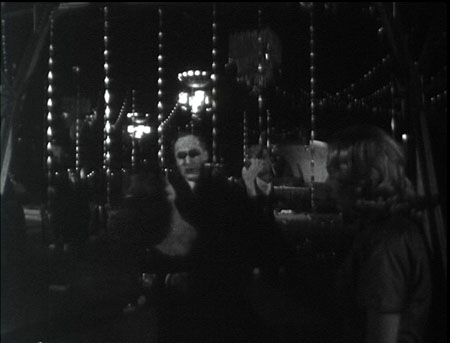
INDELIBLE IMAGE: What else, but the titular carnival? Ghostly figures waltz to an eerie, deranged organ score on what appears to be an old merry-go-round at the abandoned amusement park. The tableau recurs twice in the film: once clearly in a dream, and once near the end as a scene that may also be a dream, but may be another state of being entirely.

WHAT MAKES IT WEIRD: Carnival of Souls is set in the ordinary, everyday world, but as seen through the eyes of an alienated, frightened woman. The world the film depicts is familiar, but made maddeningly strange, and its the subtle, grubby touches rather than ghostly apparitions that allow this creepy low-budget wonder to seep deep under your skin.


Trailer for Carnival of Souls

COMMENTS: Carnival of Souls is a minor film miracle. There was little reason to suspect Continue reading 16. CARNIVAL OF SOULS (1962) →

CAPSULE: THE MOTHMAN PROPHECIES (2002)

DIRECTED BY: Mark Pellington

FEATURING: Richard Gere

PLOT:  A Washington Post reporter loses his wife in an automobile accident,

mothman_prophecies

then finds himself spirited away to a West Virgina town where the residents are spotting monsters and undergoing horrifying precognitive hallucinations.

WHY IT WON’T MAKE THE LIST:  Not weird enough.  Taking its cues from parapsychology and cryptozoology, and positioning itself as a “true story,” The Mothman Prophecies paranoidly posits a world where omniscient Mothmen are simply a part of the natural order.  I wouldn’t want to dishonor the producer’s sincere “the truth is out there” vision by suggesting there’s something a little weird about it.  On a more serious note, The Mothman Prophecies is an effective chiller with a mildly unique spin on a conventional horror yarn that generates enough unease to make it worth checking out for fans of the eerie side of the weird, but it’s ultimately too lightweight and conventional to be more than a passing diversion.

COMMENTS: Director Mark Pellington, who previously explored themes of conspiracy and paranoia in the thriller Arlington Road, translates his talents to horror well and does a very fine job of pleasantly chilling the viewer’s blood through the early segments of the Mothman Prophecies.  Unexplained occurrences, from an impossible car detour that lands our protagonist on the Ohio border with West Virginia to a yokel who swears he’s been visited by Richard Gere before, pile on top of each other until the viewer is pleasantly on edge and disoriented.  When the antagonist is eventually revealed, his powers verge on the omnipotent and his motives lie firmly in the realm of the inscrutable.  The conclusion ties things up in a nice little bow–sort of, because all the pieces resolved belong to subplots.  The central mystery of  the Mothman is never even touched, which frustrated viewers who crave nothing more than narrative cohesion but shouldn’t bother weirdophiles a bit.  Despite its silly premise, Mothman is a highly effective unease-generating machine, which is (or at least, should have been) its only aspiration. 

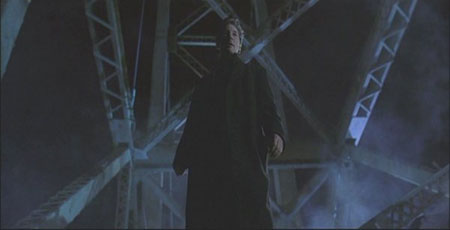
The “based on a true story” angle is patently a scam.  Although it’s true that there were “Mothman” sightings in West Virginia in the 1960s and a bridge collapsed soon thereafter, anyone who doesn’t recognize the convenient presence of an attractive romantic foil for Richard Gere and the archetypal visit to the reclusive old wizard for a bit of exposition and dire warnings as the work of a screenwriter rather than a documentarian probably should be permanently ineligible for jury duty.

WHAT THE CRITICS SAY:

“…thriller that purports to be based on true events but operates in that bombastic plane of reality reserved for the apocalyptic horror movie.”–Jan Stuart, Los Angeles Times (contemporaneous)

CAPSULE: CORALINE (2009)

366 Weird Movies may earn commissions from purchases made through product links.

Recommended

DIRECTED BY: Henry Selick

FEATURING: Dakota Fanning (voice), Teri Hatcher (voice)

PLOT:  A petulant little girl finds a parallel universe behind a hidden door in an old house, a world where her parents are more attentive, her neighbors more fascinating, and the entire universe seems set up to pamper and delight her; she can stay there forever, but of course there’s a catch.

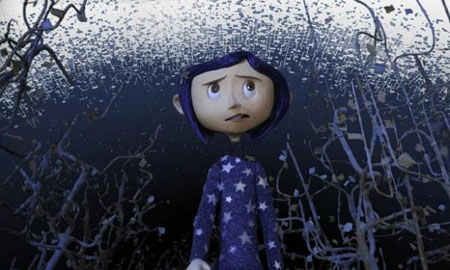
Still from Coraline (2009)

WHY IT WON’T MAKE THE LIST:  I attended a screening with a ten-year old and asked him if he thought the movie was “weird.”  His answer: “Nah, not unless you think every fantasy movie is weird.”  Smart lad.

COMMENTS:  Coraline is a welcome dark fantasy for children, although its themes of evil Doppelgänger moms, frightening buttons, and implied eye-gouging are too scary for very little ones.  Since it’s from Hanry Selick, the director of the borderline weird Nightmare Before Christmas, we suspect going in that the art direction and stop-motion animation will be the real stars.   Selick does not disappoint, shuffling the viewer through three distinct visual styles: the dingy earth tones of real life, a brightly colored, eye-popping fantasy world, and a sinister, disintegrating universe with an insect trapped in a spiderweb theme.  The storyline, and the unexpected scares once the movie shifts from childhood fantasy to childhood horror in the third act, make Coraline more than just eye candy for the kiddies.

Presented in theaters in 3-D, but the novelty doesn’t add anything significant to experience: I would have been just as happy to watch the same moving pictures tell the same story on an unabashedly flat screen.  Though there’s nothing really weird to be found here, Coraline, in the best children’s’ movie tradition, is worth a trip even for adult fans of fantasy and pure escapism.

WHAT THE CRITICS SAY:

“Coraline discovers a Wonderland filled with surreal characters and dark implications that make a kid grow up quick… those who tough it out with this twisted, trippy adventure in impure imagination will only be the better for it.”–Peter Travers, Rolling Stone