All posts by Shane Wilson

CAPSULE: AMAZON WOMEN ON THE MOON (1987)

DIRECTED BY: Joe Dante, Carl Gottlieb, Peter Horton, John Landis, Robert K. Weiss

FEATURING: “Lots of Actors”, including Arsenio Hall, , , Steve Forrest, David Alan Grier, B. B. King, , , , , , , Andrew Dice Clay,

PLOT: A collection of sketches parodying late-night TV content, anchored by a specific parody of goofy 1950s space operas.
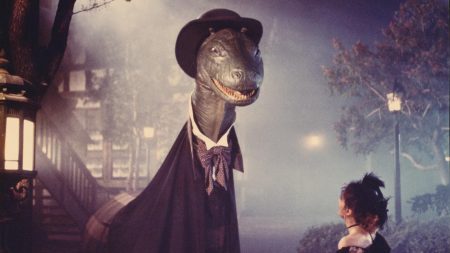
Still from Amazon Women on the Moon (1987)

WHY IT WON’T MAKE THE LIST: The sketch film has always been rare enough to merit a double take when one appears in cinemas, but this particular example of the form isn’t especially unusual, with nothing particularly outlandish or shocking, and the majority of sketches being of the one-joke variety.

COMMENTS: Although anthologies have been a recurring genre since early cinema, the heyday of the “sketch film” variant was the early 1970s: The Groove Tube, TunnelVision, and king-of-the-form Kentucky Fried Movie all parodied television’s challenge to attention spans. The form was also fairly economical, providing quick work to underemployed actors and aspiring comedy writers alike. None of these were box office bonanzas, though, so when Amazon Women on the Moon came along more than a decade later, it was fair to ask if it was a bold attempt to refresh the formula, or a last gasp for a format that had never truly lived.

Let’s go with B. First and foremost, Amazon Women is a comedy, but while it has quite a few solid jokes, it reveals time and again that it doesn’t have much else. Let’s consider one of the film’s best sequences, a vivid re-creation of 1930-era Universal horror movies starring Ed Begley, Jr. as the son of ’ Invisible Man. The black-and-white atmosphere is rich, and Begley even gets to repeat the famous bandage-removal scene. The catch: he’s not invisible at all. It’s a funny joke, as he obliviously cavorts about the room in the nude. The problem is, the sketch has another two minutes to go, and so we get more variations on the same joke, searching for an end.

This happens a lot. Scenes have a funny premise at their core, but then they have to keep going to justify their presence in a Hollywood motion picture: David Alan Grier sings in a super-white way—then he does it some more. A funeral turns into a Catskills roast—and we get the whole roast. Other sketches are shorter, but their jokes are smaller, too, and the scenes still feel stretched and padded. Amazon Women on the Moon has a tight five minutes; it gets an hour-and-a-half.

The film is not without its charms. The parodies have a clever eye for their sources, such as a 30s-era scare propaganda film that subtly re-dresses the same set over and over. Several performances capture the desired anarchic spirit, such as Griffin Dunne’s incompetent doctor and Carrie Fisher’s gullible ingénue. And every now and then, the film manages to tap into something sublimely silly; my personal favorite is an In Search Of/Unsolved Mysteries amalgam that manages to mashup the sordid deeds of Jack the Ripper with a more supernatural tale. But Moon’s a film that earns smiles more than laughs.

Ultimately, Amazon Women on the Moon is “Saturday Night Live” with slightly better production values: the jokes are hit and miss, and there’s a lot of work to get to the end of each sketch. It’s not the worst of its kind (that would be the execrable Movie 43), but it’s far from the finest. That honor probably belongs to Kentucky Fried Movie, and the filmmakers know it; references to fictional producer Samuel L. Bronkowitz mark Moon as Movie‘s spiritual sequel. But bad news, Sam: Amazon Women on the Moon is no Fistful of Yen.

WHAT THE CRITICS SAY:

“Amazon Women on the Moon is everything that Movie 43 wished it could have been, trenchant, hilarious, weird, and just plain fun.” — Sean Patrick, Geeks

(This movie was nominated for review by roastphoenix. Suggest a weird movie of your own here.)

327. GODMONSTER OF INDIAN FLATS (1973)

366 Weird Movies may earn commissions from purchases made through product links.

“Once upon a time, director FREDRIC HOBBS made a sex film called Roseland that turned out to be one of the weirdest, wackiest, oddballest sex films ever made. This time he’s made a monster movie called Godmonster of Indian Flats that, no surprise, is one of the weirdest, wackiest, oddballest monster movies ever made.”–“Something Weird” ad copy for Godmonster of Indian Flats

DIRECTED BY: Fredric Hobbs

FEATURING: , , , Steven Kent Browne, Karen Ingenthron

PLOT: When a cowboy is cheated out of his casino winnings by the rough crowd at the local saloon, he drunkenly falls asleep in a nearby stable, where he wakes up next to a strange mutant sheep embryo. A scientist comes across the pair and transports them back to his cavern laboratory, where he attempts to grow the sheep to full size in an effort to exploit its size and strength for good—or evil. Meanwhile, a ruthless land baron schemes to keep his tight grip on his town, using his power and wiles to shut down the machinations of speculators from back east, particularly the credulous representative sent to acquire the property.

Still from The Godmonster of Indian Flats (1973)

BACKGROUND:

  • Auteur Fredric Hobbs is a respected artist and sculptor, with work in the permanent collection of the Fine Art Museums of San Francisco. He proposed a school of thought called ART ECO, which combines fine art with environmentally conscious living.
  • Hobbs released two films in 1973. The other, Alabama’s Ghost, has been described as a “magic/vampire/voodoo/Nazi/musical blaxploitation tale”. His X-rated musical comedy Roseland from 1971 has never been released on DVD and is hard to find even on VHS, while his first experimental film, 1969’s Troika, is now little more than a lonely IMDB entry. He never made another film after Godmonster.
  • Godmonster is set in and around Virginia City, Nevada, a historic town where Samuel Clemens famously introduced his pen name, Mark Twain. Today, it serves primarily as a tourist district, featuring re-creations of an Old West town, which Hobbs incorporated into the film.
  • icon Erica Gavin has a brief appearance as a bar girl. She’s hard to spot, although she has helpfully posted the first six minutes of the film online to help narrow the search. (Stuart Lancaster was also a Meyer regular.)
  • Ingenue Karen Ingenthron is Hollywood royalty, the granddaughter of The Munsters’ Grandpa Al Lewis.

INDELIBLE IMAGE: A bunch of apple-cheeked youngsters enjoying an all-American picnic under the midday sun, blissfully unaware of the mutated, woolly, camel-faced abomination lumbering toward them.

THREE WEIRD THINGS: Fake funeral for a furry friend; Mariposa dances with mutton; riot at the old dump

WHAT MAKES IT WEIRD: Godmonster of Indian Flats has no idea what it’s doing, and it does so with tremendous confidence, flair, and reckless abandon. Cross-breeding two radically different notions—a blatantly silly monster movie and what is either an angry screed against or a secret manifesto for fascist leadership—results in scenes that consistently blow the mind, culminating in a finale that is justly remembered for being outrageously outré.


Something Weird trailer for Godmonster of Indian Flats

COMMENTS: Like the very best of truly bad movies, Godmonster is a Continue reading 327. GODMONSTER OF INDIAN FLATS (1973) →

CAPSULE: DARK ARC (2004)

DIRECTED BY: Dan Zukovic

FEATURING: Sara Strange, Dan Zukovic, Kurt Max Runte

PLOT: Three people are drawn together by their obsession with artistic imagery and the persistence of memory into a web of deceit, manipulation, and violence.

Still from Dark Arc (2004)

WHY IT WON’T MAKE THE LIST: With meticulous visuals, florid dialogue, and a mannered indifference to others, Dark Arc is certainly not a typical movie. Most of the strangeness, however, lies in its attitude, which may be strikingly aggressive toward its audience, but isn’t particularly “weird” for the purposes of our list.

COMMENTS: I have a vivid memory of my first visceral reaction to a piece of art. Several pieces, actually. It was at the MoMA in New York, and I wandered into a room filled with paintings by Piet Mondrian, an artist who I had previously mocked as being easily reproduced with three primary colors and a roll of gaffer tape. But walking into a gallery filled with five or six of these abstract window-like creations, I was immediately struck by their power. Given their resemblance to stained glass, it wouldn’t be inappropriate to call it a sacred experience.

Watching Dark Arc, I suspect that writer-director-star-songwriter Dan Zukovic—or at least his pretentious blowhard art critic character—would mock my reaction and attempt to trap me in a room full of red, yellow, and blue squares. His movie, ostensibly about the power of art but more accurately a look at unchecked obsession, exudes great hostility for… well, everyone, really, but especially anyone who is committed to a vision or a goal. Our heroes are poorly or not-at-all employed, indifferent to or contemptuous of the rest of humanity, and barely tolerant of themselves. So art is less of an escape and more of a millstone around their necks.

Dark Arc is frequently referred to as a comedy, and I suppose it might be, in the Chekhovian sense of featuring pathetic people who are trapped by their own absurdities. Viscount Laris, the ex-critic whom Zukovic plays like a vampiric John C. McGinley, even references Chekhov’s gun when he references a narwhal tusk that will “go off in the final act.” (It doesn’t, entirely.) But Zukovic treats these people with deadly seriousness. Laris and Lamia, the “no-sex escort” whom he enlists in a strange campaign to screw with the head of a graphic designer who he once encountered in his youth, spar with dialogue like screwball comedians with advanced degrees, but they are absolutely committed to the nastiness of their scheming. The movie emerges as a quasi-spin on Dangerous Liaisons, particularly in the film’s finale, which reads as a sort of punishment for having ever interacted with a piece of art.

It’s tempting to assign more prescient thoughtfulness to the picture than was probably intended. Dark Arc posits that art has the ability to burn itself into our brains, and its stars go to extraordinary lengths to recapture the initial power of an image. Like fans obsessed with their favorite blockbuster franchise or smartphone owners who can’t tears their gaze away from the screen, these characters are in thrall to the visuals, and their efforts to re-create them are so all-consuming as to evoke a drug addict’s chase for the thrill of that first high. Their actions are equally anti-social, not just isolating but actively against society.

And give credit to Zukovic for having an eye for a picture. In a film so dependent upon the conviction that someone could throw away their own life for an image, he’s come up with some powerful ones to make the case. The most potent is the keystone image of Strange alone in a colorless field, arrestingly unmissable in a shocking pink raincoat, a snapshot that could have been plucked right out of Pleasantville. It’s hardly surprising that the tableau opens and closes the film, in addition to its many recurrences.

But one image does not a great or even a weird film make, and Dark Arc can’t wring much out of a conflict that is ultimately so evitable. In fact, the film walks such a straight line to its conclusion as to make a lie out of its title: these are dark people, walking deliberately and unwaveringly toward a dark end, but there is no arc. Nobody changes, nobody advances, nobody has a single thought that would dispute Zukovic’s thesis that everyone is awful. One might argue that there’s more of an arc in a bunch of black lines and colored squares.

WHAT THE CRITICS SAY:

“I almost get the feeling that Mr. Zukovic watched a lot of David Lynch films, and decided to try to replicate the haunting noirish tones that are present in each of Lynch’s movies but came up a little short.”–Mike D, The Film Philosopher

(This movie was nominated for review by David Veleker, who called it “an extremely bizarre, psycho-surreal noir-ish Art Film… Great twisted stuff.” Suggest a weird movie of your own here.)

LIST CANDIDATE: AVIDA (2006)

DIRECTED BY: Benoît Delépine, Gustave de Kervern

FEATURING: Gustave de Kervern, Benoît Delépine, Eric Martin, Velvet

PLOT: A simpleton stumbles into a job at a zoo and is conscripted into a heist involving the theft of a dog; through a mishap, the thieves end up leading the pet’s owner up the side of a mountain so that she may die there.

Still from Avida (2006)

WHY IT MIGHT MAKE THE LIST: Avida is deliberately surreal, piling offbeat scenarios on top of mysterious images until they constitute a puzzle to be solved. Ironically, the film’s final image suggests a level of logic that is almost too sensible for all that has preceded it.

COMMENTS: Avida sets up a theme right from the get-go, as a picador psyches himself to go into the ring against a formidable opponent. Once his foe is revealed to be a rhinoceros, we get our first taste of the film’s surreal view of the battle between man and animal. From there, we meet our mute hero working as a dog trainer whose job seems to be primarily a target for the animals’ aggression. But when he is too distracted to help his employer in a moment of need, he finds himself adrift in the world. It’s like Being There, but with more barking.

Our theme quickly gives way to a picaresque journey in which the nameless protagonist reveals that he has no idea how to get on in the world. He attacks a golfer for his shoes, pushes down a woman to take her wristwatch (she seems disappointed that his intentions are not more lascivious), and raids a fancy restaurant to steal some lobsters. His visit to a ian job fair lands him at a zoo, where a new array of characters and settings emerges.

The film has the feel of a sketch show, with scenes careening from one to the other. Two men shooting each other with pellet guns give way to a restaurant where the zoo’s animals are on the menu. There’s a plot, but only just enough, and characters who are only germane insofar as their names give them purpose: the Distracted Nanny, the Benevolent Singer, the Man With the Head of Scotch Tape. Avida doesn’t think about these people for too long, and neither should you.

In its first half, Avida is frequently funny, with choices that amuse through surprise. The filmmakers clearly subscribe to the view that anything seen long enough will become amusing in time, as when a bodyguard who has failed to stop the dognapping calmly reaches into an unexpectedly deep arsenal to take aim at the perpetrators. Eventually, though, we meet up with the title character (the only one given a name) who demands that the Mute and his colleagues deliver to her death in a barren wasteland filled with mirrors and armoires, and the humor gives way to a look at humanity’s more pathetic traits.

What Avida is ultimately about is unclear and up for debate. The final image, and the only one in color, is a Dali-esque painting that seems to suggest that everything we have seen is the reasonable explanation for such an artwork, or perhaps that all Surrealist images have their origin in the kind of hijinks that have unfolded before us. The message is further muddied with an epigram from the Native American leader Chief Seattle that cautions against carelessness toward our animal friends—hearkening back to the early theme, but also reminding us that it hasn’t been relevant to the film for quite some time. Avida is idiosyncratic to a fault, and that fault seems to be a lack of trust. The movie bends over backwards to justify its quirks, rather than just letting them be.

WHAT THE CRITICS SAY:

“Somewhere between Monty Python, Jacques Tati and a slideshow of New Yorker cartoons, this critique of life’s cruel inconsistency confirms the French co-directors’ gift for reinterpreting surrealism in a humorously modern key. Though their often disgusting imagery may alienate the squeamish and send fans of conventional comedy running for the exit, pic’s very wildness could earn it a cult following via festivals and maybe attract younger audiences.” – Deborah Young, Variety (contemporaneous)

(This movie was nominated for review by Donya, who deemed it “an intelligent beautiful poetic ‘weird” movie.” Suggest a weird movie of your own here.)

CAPSULE: BLUE (1993)

DIRECTED BY: Derek Jarman

FEATURING: Voices of Derek Jarman, John Quentin, Tilda Swinton, Nigel Terry

PLOT: Filmmaker Jarman documents his physical decline from AIDS, with his failing vision represented by a continuous, unchanging blue screen.

Still from Blue (1993)

WHY IT WON’T MAKE THE LIST: A movie where the screen is a single solid color for the full running time is, without dispute, unusual. But beyond that unconventional visual strategy, Blue is a straightforward, often bracingly direct audio memoir, contemplating death with sober and unvarnished clarity.

COMMENTS: When cinematographer Christopher Doyle, the man behind the striking visuals in the films of directors like Wong Kar-Wai and Yimou Zhang, was invited by the Telegraph to pick a single film to discuss for a series on influences, his choice was immediate and without hesitation. Blue, he said, was “one of the most intimate films I’ve ever seen.”

It’s surely an odd choice for an acclaimed cinematographer, given that the biggest part of the film’s reputation is dedicated to its unorthodox visual: a screen filled—edge-to-edge, start-to-finish—with a single color, International Klein Blue, never changing, never varying. It’s fair to ask if a movie where nothing moves, where nothing appears, is even a movie at all.

In the truest sense, Blue is a radio essay, a production-heavy tone poem that wouldn’t be totally out of place on “This American Life.” (Indeed, after the film’s release, Britain’s Radio Three broadcast the audio on its own). One of the much-trumpeted merits of radio is that the listener can create pictures in the imagination that go beyond the limits of visual media. With Blue’s lush audio production (for which particular credit must be given to sound designer Marvin Black and composer Simon Fisher-Turner) and Jarman’s rich, sonorous British baritone as anchor, surely pictures aren’t even necessary.

But even in physical decline, Jarman remains a filmmaker, an artist with a discerning eye. And if the only thing he can see is the color blue, then that’s what his film will look like. The auteur theory posits that the director is a figure of singular vision, and this film carries that notion to its extreme: when you look at blue for the duration of the film, you are witnessing the director’s literal vision transferred to the screen.

Jarman himself is a sterling performer. When he extols the artistic virtues of the color blue, he reads as both erudite and heartfelt, while his lament for his fading vision is composed as it measures the weight of the loss. He lends warmth to the narration, even as his thoughts on death are calm and resigned. This can be hilarious in counterpoint, as when an introspective passage is immediately followed by a lewd gay parade chant. It can also be wrenching, such as his cool recitation of the myriad ways in which friends have met their own ends at the hands of the AIDS virus.

But while Jarman’s pain and frustration are clearly in evidence, what really dominates the telling of the tale is his growing recognition of the absurdity of it all. His descriptions of endless medical indignities—lesions and pills, long waits and painful IV drips, lengthy stays in waiting rooms—are delivered without anger, without passion. Stories of war and catastrophe have lost their power to sting. Even a quick impulse to go shoe shopping quickly fades. “The shoes I’m wearing at the moment will be sufficient to walk me out of life,” he observes. Jarman’s journey is one of growing disconnection from the world. Just as his vision has been reduced to a single color, his engagement with life is being pared down to the bare essentials. Put another way, the narrator we meet in Blue is in full DGAF mode, and finds beauty even in that.

A frequent parry to the claim of weirdness is that the thing deemed “weird” is actually “artistic.” There’s no reason that an artwork can’t be both, of course; one of the expectations of artists is that they see the world differently and their output reflects their unique point of view. But the distinction seems critical in assessing Blue. A mainstream moviegoer might look at the blue screen and see something too strange to comprehend, but Jarman is an artist, assembling every tool at his disposal (or, in the case of his eyesight, a tool lost) to make a statement. The art world seems convinced; the Tate Modern, MoMA, and the Getty are among the museums that have placed Blue on exhibit. Static screen be damned; Jarman has made a movie, and it is a powerful cinematic valedictory.

WHAT THE CRITICS SAY:

“Still fiercely experimental and controversial, with no visual images other than an unchanging blue screen, Blue is perhaps not the most accessible film from Derek Jarman and it will certainly appeal more to fans of the director who will better appreciate the insight it provides into the director’s mindset during the final years of his life. On the other hand, dealing with notions of mortality and creativity when faced with illness and death, the film also has a much wider interest and poetic resonance in its words, sounds, music and in the impact on the retina of watching a pure blue screen for 75 minutes.” – Noel Megahey, The Digital Fix

(This movie was nominated for review by Nick. Suggest a weird movie of your own here.)