Tag Archives: Must see

CAPSULE: VIY [Вий] (1967)

366 Weird Movies may earn commissions from purchases made through product links.

Must See

AKA Viy, Spirit of Evil; Vij

DIRECTED BY:  Georgi Kropachyov & Konstantin Yershov

FEATURING: Leonid Kuravlyov, Natalya Varley

PLOT:  In medieval Ukraine, a seminarian must spend three nights praying over the corpse of a witch.

viy

WHY IT WON’T MAKE THE LIST:  This faithful adaptation of Nikolai Gogol’s 1835 short story is a classic of world horror, deserving a place alongside the quintessential Universal fright films.  Like the works of Gogol’s contemporary, Edgar Allen Poe, Viy may have been regarded as a “weird” tale on its original publication, but today it seems a relatively straightforward ghost story, demonstrating how what was once weird may be subsumed into the mainstream over time.  It’s still unconditionally recommended, especially for fans of sublime supernatural horror storytelling that relies on atmosphere and foreboding rather than blood and guts.

COMMENTS: Viy is an unusual and exotic experience for Western viewers, for whom witches are not the prototypical supernatural villain, but most will quickly feel comfortable inside the film’s recognizable folk tale structure.  The story is impeccably told; Kuravlyov’s seminarian, who begins with a mischievous frat-boy brashness but ends up bullied and harried by both Cossacks and witches, is an eminently fallible but very likable comic-turned-tragic hero.  Varley’s nameless and mostly mute witch is eerily pretty, and manages to create a tremendous sense of menace simply by grasping blindly at the seminarian while he’s hidden from her view inside the holy circle he has drawn on the chapel floor with chalk.  The special effects aren’t always seamless (although you may wonder how some were achieved), but they are always artful and elegant, and their artificiality is an asset, creating a universe that’s far more otherworldly than it otherwise might be.  (Think of the difference between Willis O’Brien’s dreamlike and iconic stop-motion animated King Kong and Peter Jackson’s photorealistic but forgettable ape).  The gibbering gray demons that threaten to swarm over the hero in the exhilarating climax are as unforgettable an assortment of ogres as you are likely to see on film.

Mario Bava’s classic Black Sunday [La Maschera del Demonio] [1960] was also inspired by Viy, but that story veers so far from Gogol’s tale it can hardly be considered an adaptation.  Foolishly, a Russian remake of Viy is currently in the works.  The original was done perfectly, and CGI graphics cannot improve upon the stylish charm of the 1967 production.  The Russico DVD contains abundant extras, including lengthy excerpts from three silent Russian horror films: Queen of Spades, Satan Exultant, and The Portrait.

WHAT THE CRITICS SAY:

“Basically a folk tale at heart, this adaptation by Konstantin Yershov and Georgi Kropachyov follows the main story beats, but it’s completely schizophrenic in balancing satire, low humour, and horror… Karen Khachaturyan’s score is equally uneven, although he may have been following the filmmakers’ weird blend of comedy and horror.”–KQEK.com

(This movie was nominated for review by reader “Natalia.” Suggest a weird movie of your own here.)

18. NAKED LUNCH (1991)

“It’s impossible to make a movie out of ‘Naked Lunch.’ A literal translation just wouldn’t work. It would cost $400 million to make and would be banned in every country of the world.” –David Cronenberg

Must SeeWeirdest!

DIRECTED BY: David Cronenberg

FEATURING:  Peter Weller, Judy Davis, Julian Sands

PLOT:  Bill Lee is a writer/exterminator in New York City whose wife begins mainlining the bug powder he uses to kill roaches, and convinces him to try it as well. He becomes addicted to the powder, and one night shoots his wife dead while playing “William Tell.” Lee goes on the lam and lands in Interzone, an exotic free zone reminiscent of Tangier or Casablanca (but which may exist only in his mind), where he begins taking ever more powerful drugs and typing out “reports” partially dictated to him by his living, insectoid typewriter.

Naked Lunch (1991) still

BACKGROUND:

  • William S. Burroughs’s original novel Naked Lunch was selected as one of the 100 best English language novels written after 1923 by Time magazine.
  • The novel was held not to be obscene by the Massachusetts Supreme Court in 1966. This was the final obscenity prosecution of a literary work in the United States; there would be no subsequent censorship of the written word (standing alone).
  • Several directors had considered filming the novel before David Cronenberg got the project. Avant-garde director Anthony Balch wanted to adapt it as a musical (with Burroughs’s blessing), and actually got as far as storyboarding the project and getting a commitment from Mick Jagger (who later backed out) to star. Among others briefly interested in adapting the novel in some form were Terry Southern, John Huston, Frank Zappa, and Terry Gilliam.
  • Because the novel was essentially a plotless series of hallucinatory vignettes (what Burroughs called “routines’), David Cronenberg chose to make the movie a thinly veiled tale about Burroughs’s writing of the novel, incorporating only a few of the actual characters and incidents from the book. Actors in the film portray real-life writers and Burroughs associates Jack Kerouac, Allen Ginsberg, and Paul and Jane Bowles.
  • The episode in the film where Lee accidentally shoots his wife while performing the “William Tell routine” is taken from Burroughs real life: he actually shot his common law wife while performing a similar trick in a Mexican bar. Burroughs felt tremendous guilt through his life for the accident and has said “I would have never become a writer but for Joan’s death.”
  • Naked Lunch won seven awards at the Genie Awards (the Canadian equivalent of the Oscars), including Best Movie and Best Director.
  • Producer Jeremy Thomas has somewhat specialized in bringing weird and unusual fare to the largest possible audience, producing not only Naked Lunch but also Cronenberg’s Crash (1996) and Tideland (2005).
  • Following a definite theme for the year, Judy Davis also played an author’s muse and lover in another surrealistic 1991 movie about a tortured writer, Barton Fink.

INDELIBLE IMAGE:  Clark Nova, Lee’s territorial, talking typewriter, who alternately guides and torments the writer. He’s a beetle who has somehow evolved a QWERTY keyboard as an organ. When he speaks, he lifts his wings to reveal a sphincter through which he dictates his directives.

WHAT MAKES IT WEIRD: It begins with an exterminator who does his rounds wearing a three piece suit and fedora. His philosophy is to “exterminate all rational thought.” His wife steals his insecticide and injects it into her breast to get high, and gets him hooked on the bug power, too. A pair of cops question him on suspicion of possessing dangerous narcotics, and leave him alone in the interrogation room with a huge talking “caseworker” bug who explains that his wife is an agent of Interzone, Incorporated, and is not even human. And this is just the setup, before the film turns really weird.


Original trailer for Naked Lunch

COMMENTS:  Make no mistake: Naked Lunch is clearly David Cronenberg’s movie, not Continue reading 18. NAKED LUNCH (1991)

CAPSULE: ANNIE HALL (1977)

Must See

DIRECTED BY:  Woody Allen

FEATURING: Woody Allen, Diane Keaton

PLOT:  Neurotic NYC comedian Alvy (Allen) falls in love with would-be cabaret singer

Annie Hall still

Annie Hall (Keaton), but his inability to relax and enjoy life ultimately dooms their relationship.

WHY IT WON’T MAKE THE LISTAnnie Hall isn’t weird, at all.  Some people, however, believe it’s weird, and have even tagged the film as “Surrealism” on IMDB.  I doubt Luis Buñuel would agree.  What people misperceive as weird in Annie Hall are the numerous “breaking the fourth wall” stylistic techniques: speaking directly to the camera, having the adult Alvy visit his own flashbacks and comment on the action, including subtitles explaining what Alvy and Annie are really thinking as they flirt at their first meeting, and including an animated non sequitur explaining that Alvy most identified with the Wicked Queen in Disney’s Snow White.  These techniques, however, are employed in the service of the most conventional plot Allen had conceived up to that time: a true-to-life, impeccably characterized tale of the rise and fall of a romance.  The directorial tools he uses to tell his tale may be unconventional and self-conscious, but they sure ain’t weird.

COMMENTS: Notwithstanding the fact that it’s clearly lodged in the comedy genre, Annie Hall was Woody Allen’s first “serious” movie.  As a dual character study of hapless Alvy and flighty but lively Annie, it shows more depth and ambition than Allen’s previous wacky comedies that had no higher aspirations than too make audiences laugh (and to depict Allen as someone so smart that the audience feels flattered to get his references to Kierkegaard or whomever).  Annie Hall is shamelessly autobiographical (Allen and Keaton really were ex-lovers), and doesn’t try to hide it.  Fortunately, the film’s laden with memorable gags that will stick with you the rest of your life: Alvy’s schoolmates describing their adult interests (one is a methadone addict); Christopher Walken’s brilliant, brief turn as Annie’s unhinged brother; Jeff Goldblum’s even briefer single sentence bit as a trendy Hollywood meathead; and Allen’s classic one-liner regarding masturbation.  Most of the jokes tend towards the witty instead of the sidesplitting, eliciting an appreciative chuckle rather than a hearty belly laugh, but the witticisms come so fast and furious that they keep the audience on edge to see what Allen will come up with next.  They also effectively hide the underlying pain of the tale: Alvy is masochistically self-sabotaging and will never be happy in a relationship, and Annie is too full of life to let Alvy drag her down.  All in all, it’s not quite as relentlessly funny as the comedies that preceded it—BananasSleeper and Love and Death—but Allen’s crafty direction shows a mastery of this particular material that’s hard not to admire.  Allen let the critical praise heaped on him for this serious effort go to his head, turned to directing dramas at the peak of his comic success, and would be only sporadically funny again—a tragic loss for the world of comedy.

The original screenplay was titled “Anhedonia”, a psychological condition describing the inability to experience pleasure.

WHAT THE CRITICS SAY:

“The movie gave a fresh confidence to Woody and a generation of solipsistic stand-up comics and it created a new genre, what we might call ‘the relationship picture’, that dispensed with formal narrative… the actual production was a chaotic affair and the picture only came into focus when its editor Ralph Rosenblum reduced the first cut of 140 minutes to a tight 95 in which the real and the surreal co-exist.”–Phillip French, The Observer(DVD)

SHORT: THE HEART OF THE WORLD (2000)

Must SeeWeirdest!
DIRECTED BY: Guy Maddin

PLOT: “State scientist” Anna studies “the heart of the world” and learns it is in desperate shape, all while trying to chose between suitors: brothers Osip (a mortician) and Nicolai (an actor playing Christ in a passion play), along with “dark horse” industrialist Akmatov.

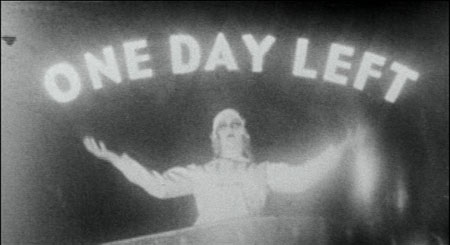
the_heart_of_the_world

WHAT MAKES IT WEIRD:  Maddin pulls out all the stops in this dreamlike, hyperkinetic tribute to silent films (especially Soviet Constructivist films such as Aelita, Queen of Mars).

COMMENTS:  This six minute minor masterpiece was produced for the Toronto International Film Festival in 2000, where it became an immediate sensation and the hit of the festival.  An incredible technical achievement, the film resurrects simple camera tricks such as multiple exposures, creative use of intertitles, expressionist shadows, and blaring lighting that creates auras or halos around the actors, techniques which were largely forgotten or abandoned when films moved from black and white to color.  Add angular 1920s costumes and sets inspired by Metropolis and Aelita, a propulsive, minimalist theme from Soviet composer Georgi Sviridov, and a blazing fast editing style (it is said that the film averages two shots per second), and you have a film that is packed full of pure cinematic images, almost exhausting to watch, yet all too brief.

There is not time to develop much plot in this fabulous sprint.  The Heart of the World is more an exhibition of virtuoso visual technique than a narrative film.  Although the overwhelming emphasis is on visual style, Maddin does include boldly drawn, archetypal characters to help guide the viewer to the film’s triumphant end.  Their presence begs an allegorical interpretation of the film, although I’m not sure anything coherent can be formulated.  Osip the mortician seems to represent the body, and he is blatantly associated with sexuality (he’s seen dragging a knife across a naked woman’s torso, then later builds a phallic cannon to try to impress Anna).  Nikolai represents the spirit (again rather obviously: the chap dresses like Jesus at the crucifixion).  Anna must chose between the body and the spirit, though its not clear why.  And it’s also not clear what Anna may represent: she begins as a scientist, and ends, presumably, as a self-sacrificing artist.  And why does Akmatov, the capitalist antagonist, suddenly appear to seduce Anna away from the other two with money?  And what does all of this have to do with saving the heart of the world, anyway?

In the end, all that’s clear is this: Maddin has taken the style of a Soviet propaganda film, and turned it into propaganda for the art of cinema.

The Heart of the World is available on the DVD, “The Guy Maddin Collection” (buy), along with the feature films Twilight of the Ice Nymphs and Archangel.

WHAT THE CRITICS SAY:

“…an experiment oozing with creativity, layered in a knowledge of cinematic theory, history, and artistry.” –S. James Snyder, The New York Sun

8. DONNIE DARKO (2001)

Gretchen: “You’re weird.”

Donnie: “Sorry.”

Gretchen: “No, it was a compliment.”

Must See (Theatrical Cut)

-or-
Recommended (Director’s Cut)

DIRECTED BY: Richard Kelly

FEATURING: Jake Gyllenhaal, , Mary McDonnel, , , Kathryn Ross

PLOT:  Troubled teen Donnie sees visions of a six foot tall demonic bunny rabbit named Frank, who demands that he commit acts of vandalism in a sleepy suburban town in 1988.  Donnie narrowly escapes a freak accident when a jet engine crashes into his bedroom after Frank has awoken him and called him away.  Frank tells Donnie that the world will end in 28 days, on Halloween night, and Donnie attempts to figure out what he can do to save the world while simultaneously dealing with a new girlfriend, bullies, a motivational speaker he sees as a cult leader, and ever-escalating hallucinations.

BACKGROUND:

  • This was the first feature film for writer/director Richard Kelly.
  • With Barrymore, Swayze and Ross attached, there was a tremendous buzz for the film going into the Sundance Festival.  The movie was not a hit at there, however, and was only picked up for limited theatrical distribution by Newmarket Films at the last moment.
  • Although Donnie Darko was initially a flop on its domestic release, a strong showing overseas helped it to nearly break even.  The film then became a cult hit on video, earning back more than double its production cost.
  • The director’s cut, containing about 20 minutes of extra footage and including pages from the fictional book “The Philosophy of Time Travel,”  was released in 2004.  It was controversial due to the added footage, which  caused some fans to complain that Kelly didn’t seem to understand his own movie.
  • Kelly created a website (now hosted at donniedarkofilm.com), which is structured like a puzzle.  Navigating the website can reveal supplemental material and backstory to the film.
  • Donnie Darko is one of the most talked about films on the Internet, with several competing fan sites and FAQ’s that attempt to clarify and explain the convoluted plot.
  • Followed by a poorly received direct-to-video sequel about Donnie’s sister called S. Darko (2009), which angered many fans.

INDELIBLE IMAGE: Frank, the six-foot tall man dressed in a twisted, metallic bunny suit, who only Donnie can see.

WHAT MAKES IT WEIRD: Donnie Darko at first appears to be a dizzying collision of genres, themes and ideas. For the first few reels of the film, the audience can have no conception where the film is heading. The director drops clues through these opening segments that appear at the time to be simply bizarre, but spark numerous “a-ha!” moments later, when incidents that seemed like throwaway moments or coincidences at the first glance turn out to make a sort of sense.  The identity of Frank, the demonic bunny, is the most thrillingly chilling such moment. Donnie Darko creates a sense of wonder and mystery throughout its running time, and sparks hope and faith in the watcher that all will be made clear before the curtain drops. It nests this expectancy inside a bed of genuine empathy for tormented Donnie and his colorful cast of supporting characters.  But perhaps the weirdest thing about Donnie Darko is that it asks us to take its plot at face value; it works very hard to try to convince us that what appear on the surface to be the hallucinations of a paranoid schizophrenic teenager are, in fact, real occurrences with a metaphysical explanation.

Trailer for Donnie Darko

COMMENTS: Even putting the mindbending plot aside for a moment (we’ll come back to Continue reading 8. DONNIE DARKO (2001)