Tag Archives: 2002

CAPSULE: CUBE 2: HYPERCUBE (2002)

DIRECTED BY: Andrzej Sekula

FEATURING: Kari Matchett

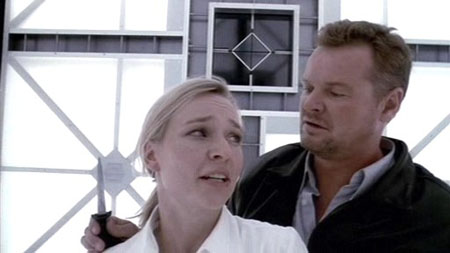
PLOT: Just as in the 1997 surprise hit, eight strangers wake up stripped of
cube_2_hypercube

their memories in a mysterious, deadly cube composed of indistinguishable rooms–but this second generation “hypercube” has some new tricks to play on its captives.

WHY IT WON’T MAKE THE LISTCube 2: Hypercube can get pretty weird, especially when the film throws in gratuitous alternate realities in an attempt to up the original Cube‘s ante.  The sequel also does a fair-to-middling job of recreating the atmosphere of paranoia and existential anxiety from the original.  The first movie is a classic, but if there is to be room for more than one Cube movie on the list of 366, Hypercube needs to take the series in a startling, original new direction.  This, it fails to do; the sequel merely attempts to provide this audience more of what they loved about the first movie.  It can’t possibly achieve this feat, however, because what people loved about the original was it’s originality: the shock and surprise of finding a low-budget independent science fiction gem that was thoughtful, exciting, and weird.

COMMENTSCube 2: Hypercube is of interest mainly to fans of the original who want to revisit the cube and hope only for a few new twists.  The CGI special effects are mildly upgraded, and the cube has a new gleaming white color scheme, which may make some happy.  One of the things that made the original so exhilarating, however, was the varying reactions of characters to the predicament of being trapped inside the bizarre structure: some fight to survive, some give up hope, some become paranoid and suspect their fellow travelers know something about the cube and are trying to deceive them, some simply go mad.  The way the trapped inmates bounced off one another made Cube at times seem more like a character-centered play rather than an effects-centered movie.  Although Cube 2 tires to recapture this interplay, wooden acting from several of the leads frustrates the attempt.

Cube 2: Hypercube also stumbles when it takes baby steps towards trying to explain why the cube exists.  In the original, although the structure exhibited signs of order that suggested a diabolical intelligence behind it, there was no unambiguous hint to its origin or purpose; this made the cube a powerful metaphor for brute existence.  While trying to recapture the ambiance of the first movie, Cube 2 deliberately takes steps towards demolishing its essence.

WHAT THE CRITICS SAY:

“…Cube 2 is somewhat more gimmicky and certainly less conceptually neat than the first Cube was. There’s lot of fascinatingly weird happenings and these are all eventually given an explanation – alas not one that comes with the beautiful sense of a puzzle falling into place that we saw in the first film. The disparity can clearly be seen in comparing the story structure of the two – the first film has the logic of a detective story unfolding, whereas Cube 2 is merely a flight through a collapsing labyrinth.” –Richard Scheib, Moria: The Science Fiction, Horror and Fantasy Movie Review Site

CAPSULE: ADAPTATION (2002)

Recommended

DIRECTED BY: Spike Jonze

FEATURING: , , Chris Columbus

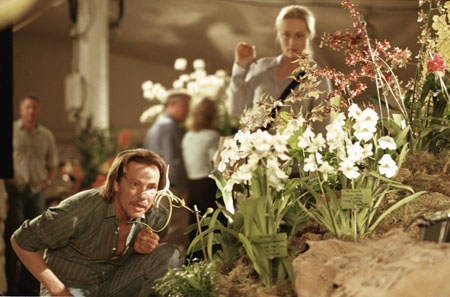
PLOTAdaptation tells two stories: in one, a “New Yorker” journalist (Meryl Streep) becomes obsessed with the subject of her nonfiction book, a trashy but passionate collector of orchids (Chris Cooper); in the other, a depressed screenwriter (Nicolas Cage) struggles to adapt her book “The Orchid Thief” into a movie, while fending off his chipper and vapid twin brother (also played by Cage), himself an ersatz screenwriter.

adaptation

WHY IT’S ON THE BORDERLINEAdaptation is a metamovie, the filmed equivalent of metafiction (a literary style where the real subject of the work is not the ostensible plot, but the process of creating of the work itself).  In Adaptation, screenwriter Charlie Kaufman (Being John Malkovich) inserts a fictionalized version of himself into the script, writing and rewriting the story as the movie progresses.  Adaptation may appear unusual, and even weird to those who aren’t used to this kind of recursive style, but it’s a purely intellectual exercise about the creative process, and the mysteries presented in the movie have a purely logical explanation when considered in their literary context.

COMMENTSAdaptation sports perhaps the smartest script written in this young millennium, a story which twists and turns back upon itself with sly wit and playful intelligence.  (The screenplay was nominated by the Academy for “Best Adapted Screenplay”; maybe it would have won if it had been properly nominated in the “Best Original Screenplay” category).  In addition, the acting by the three principals—toothless and trashy Chris Cooper as the orchid thief, Meryl Streep as a jaded, intellectual journalist drained of passion, and Nick Cage as the twins, Charlie and Donald Kaufman—shows three veterans at the very peak of their games.   All three were nominated for Oscars, and Cooper won for “Best Supporting Actor.”   As good as Cooper was, it’s Cage’s magical performance as the writer paralyzed by artistic ambition and self-doubt, and also as his clueless doppelganger with a maddening Midas touch, that carries the film.  This is easily Cage’s best performance in an uneven career.

Despite the superlative script and performances, Adaptation falls just short of being an unqualified classic.  The problem is that the secondary plot—despite such welcome spectacles as Meryl Streep trying to imitate a dial tone while tripping balls—pales beside the more intriguing internal struggle of poor Charlie Kaufman.  When Streep and Cooper are on screen, we are always anxious to get back to Cage throwing barbs at himself.  Adaptation is geared towards a specialized audience—mainly writers, movie reviewers and other highly creative types—but will also appeal to fanatical film fans and industry insiders and would-be insiders who want to have a good wicked laugh at the cutthroat compromises required to bring a screenplay to life in Hollywood.

WHAT THE CRITICS SAY:

“…an occasionally maddening and sometimes brilliant motion picture that varies between being insightfully sharp and insufferably self-indulgent…  I can’t imagine Adaptation having much mainstream appeal, but, for those who look for something genuinely off-the-wall in a motion picture, this will unquestionably strike a nerve.”  -James Berardinelli, Reel Views